
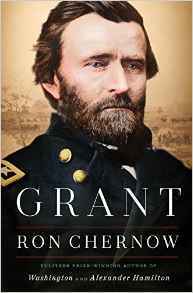
 I’m tempted to add this title to my Southern fiction shelf. For a Pulitzer winner to be so careless with his facts is egregious. I got 200 pages or so in, and I found a glaring error. To be honest, I thought maybe it was me. I haven’t taught the American Civil War in 8 years now; am I slipping? Because I could swear that the famous tidbit about a single battle killing more soldiers than the American Revolution, War of 1812, and war with Mexico all added together was about the battle of Antietam, yet here is Chernow, saying it’s Shiloh.
This is when it’s nice to have a physical library nearby. I rummaged on my Civil War shelves and plucked Battle Cry of Freedom, which he (rightly) appears to cite more often than anything except perhaps Grant’s Memoirs, and I also grabbed McPherson’s book on Antietam, and I double-checked. Yup. The reference is to to Antietam, not Shiloh.
At this point I wondered what else might be amiss. There’s a Sherman quote that’s supposed to be in a section in BCF, but the page number Chernow cites is actually in a section about the nurses of the ACW. Well, of course there are different editions, so page numbers may shift a bit, especially in a lengthy source. But I chose–randomly, from the citations at the back–3 other quotes from BCF, and read 8 or 10 pages before and after the page where the quote or fact is supposed to be located, and didn’t find them. A more meticulous reader might have different results, but I am not running a courtroom prosecution; I am trying to decide if I now trust this author enough to believe him regarding other information. And I am not all that sure I do.
I have a lovely hardcover copy of this biography given me by one of my sons at Christmas, and I would hate to abandon it entirely at the 200 pp. mark; but I’ll tell you one thing. I’m rereading Battle Cry of Freedom again before I turn another page of this biography. Because at the very least, this is a work to be read critically, rather than with innocent faith in its author. I like some of the analysis Chernow offers, but I would hate to see a newbie miseducated by using this title as an introduction to Grant or to the Civil War. As for me, I am going to strengthen my own foundation before I approach this tome, which must be read cautiously.
 Tara Westover’s memoir has created a lot of buzz, and all of it is justified. It’s the story of one woman’s journey from a fundamentally loving yet untenable home life, to the civilized world she has been raised to fear. Each chapter focuses on one meaningful event in the author’s life, and it’s told with sensitivity, grace, and yes, also a sprinkling of rage, because how can she not? But all told, Westover permits the balm of time and distance to balance her perspective. This book is for sale now, and it’s going to be read for a very long time.
 Grant and Sherman are my favorite generals of all time, and Flood is a highly respected author. This book was on my must-read list, and so I searched it out on an annual pilgrimage to Powell’s City of Books, and I came home happy. It turned out to be even better than I anticipated.
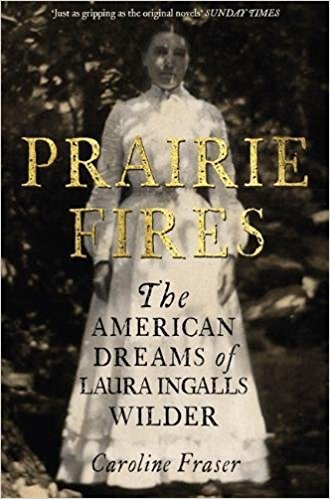 Are the classic “Little House” books memoir or historical fiction, and were they written by Laura or by her daughter? If you’re confused, you’re not alone. In this epic, absorbing biography of her great-grandmother, Fraser tells us. Between her congenial narrative and careful, detailed documentation, this author has created a masterpiece. Lucky me, I read it free and early thanks to Net Galley and Henry Holt Publishers. This book is now for sale.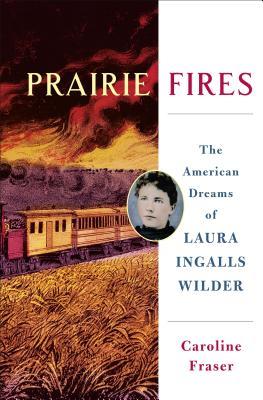
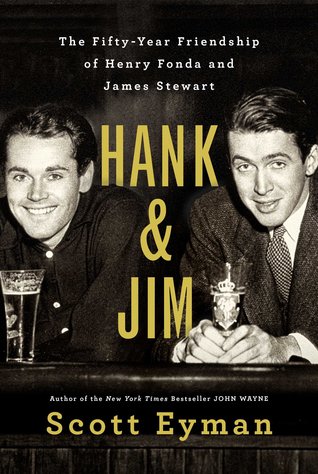 Fans of Henry Fonda and Jimmy Stewart will want to read this biography, written by the author that recently wrote a biography of John Wayne. I was invited to read and review by Net Galley and Simon and Schuster, and so I read it free in exchange for this honest review. It’s for sale now.
 Ta-Nehisi Coates is pissed. He has a thing or two to say about the historical continuity of racism in the USA, and in this series of eight outstanding essays, he says it well. I read it free and early thanks to Net Galley and Random House, and I apologize for reviewing it so late; the length wasn’t a problem, but the heat was hard to take. That said, this is the best nonfiction civil rights book I have seen published in at least 20 years.
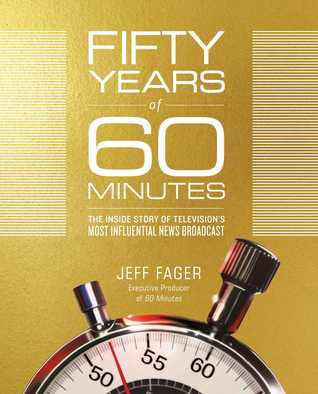 60 Minutes first aired in 1968, a year for news if ever there was one. It was brilliantly conceived as a television news magazine, covering multiple unrelated news stories in a single broadcast. Executive producer Jeff Fager offers the reader an insider’s peek; lucky me, I read it early and free thanks to Simon and Schuster and Net Galley. It’s for sale today.
 Actor Leah Remini was a child when her mother discovered Scientology; the church was in many ways her parent. When she rebelled against it, she was smart and very public, and she spells the entire thing out for us right here.
 Seattle Book Mama