Evelyn in Transit, by David Guterson**

Maybe we should call it the Harper Lee syndrome; you write one absolutely amazing novel. It becomes iconic, and then, nothing else ever works again. I hope that’s not what has happened to David Guterson, the author of Snow Falling on Cedars. For whatever reason, his new book, Evelyn in Transit, is a complete wash for me.

My thanks go to W.W. Norton, RB Media, and NetGalley for the review copies. This book is for sale now.

We have two protagonists, Evelyn and Tsering. Evelyn is a curious and somewhat oppositional child in Indiana; Tsering is in Tibet. We see their separate stories in the beginning, but the transitions are abrupt and I cannot find any emotional connection with either of them. Ultimately, they are connected within the story when a group of lamas (people, not llamas) turn up on the now-grown Evelyn’s porch to tell her that her kindergartener is the reincarnation of the Dali lama that has recently died.

The promotional blurb tells us that the story is written in “a spare, precise style of extraordinary beauty, full of surprising humor and luminosity.” I’ll vouch for the “spare” part; I think of it as a “see Spot run” style, reminiscent of early grade school reading texts. The humor and luminosity, however, have eluded me.

 It might have helped to have more of an internal monologue, particularly for Evelyn; she did and said so many things that were surprising and inappropriate, and if I had a better handle on her motivation, she might have seemed more like a seeker and less like an antisocial outlier. Tsering was even worse.

I had access to both the audio and digital review copies; the reader did a competent job, but couldn’t save the narrative. I don’t think anyone could have. I can’t recommend it.

Bad Asians, by Lillian Li**-***

Lillian Li is the author of Number One Chinese Restaurant (2018), a tale of sibling rivalry and complex family issues that was in turns suspenseful and hilarious. It was, and remains, one of my all-time favorites from 14 years of reviewing, and because of it, I have followed Li on every possible site, waiting to pounce whenever her next novel became available. And perhaps this oversized expectation has fed into my disappointment this time around. Bad Asians is not a dreadful book, but it’s not close to being on par with that first magnificent novel.

My thanks go to NetGalley and Henry Holt for the invitation to read and review. This book will be available to the public February 17, 2026.

Bad Asians tells the story of four young Chinese-Americans who finish college, yet find the American dream they’ve been expecting is still nowhere in sight. Then an old classmate named Grace returns to the neighborhood. Grace had the keys to the kingdom growing up; she had the fanciest house by far, the nicest clothes, and was a source of awe for all of them. Grace seemed to have it made. Now she’s back, and she wants to feature the four of them in her documentary. They agree, albeit without great expectations; the movie will most likely never see the light of day, they figure. Instead, it goes viral on a streaming platform, and it shows all of them as caricatures of their worst selves. They are recognized on the street; they are mocked.

Grace, meanwhile, is in dire financial straits herself; she appeared to have it made, yet that was an illusion.

For some reason, the narrative doesn’t flow as cleanly as Li’s last one, and the frequent changes of setting, both in time and place, are a fair amount of work to follow. I had access to both the digital and audio versions, and whereas the narrator does a decent job, I find myself wondering whether I would have been more successful in keeping track of the story’s many moving parts if I had stuck to the digital version alone. Had I been excited about its potential, I might have backtracked and tried reading it again, but I wasn’t and didn’t—although I did reread small portions of it.

I am probably not within the targeted demographic, since I am not young and not Asian; yet one feature grates on my sensibilities throughout it, and that is the treatment of “Asian-American” and “Chinese-American” as synonyms. It’s true that all of the protagonists are of Chinese origin, but at some point, I would like to have seen recognition that there are other Asian-Americans. Yes, all Chinese-Americans are Asian-Americans, but the reverse is not true, and though I’ve tried to set it aside, I can’t get past the apparent assumption that Americans of Filipino, Japanese, Korean, or Pacific Island heritage—not to even mention many more that hail from other regions of Asia– are irrelevant.

I can’t recommend this novel to you, although I will still happily read Li’s next book. She did it once, and I believe that she can do it again, but this isn’t it.

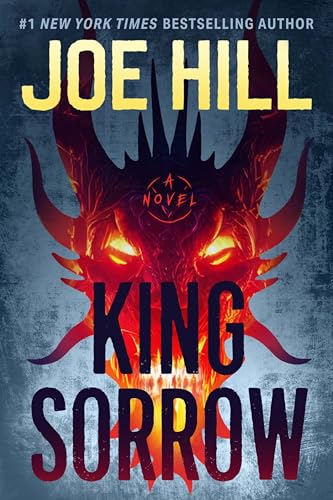
King Sorrow, by Joe Hill*****

Arthur Oakes is in a jam. He is a student at Rackham College in Maine, and to make ends meet, he has a work-study position in the library’s rare books collection. But he finds himself unexpectedly being blackmailed into stealing books from that very place, a nightmare of epic proportions; the solution proves to be an even greater nightmare. He and his friends summon a dragon to get rid of the blackmailers, but now the dragon won’t go away.

My thanks go to NetGalley and William Morrow for the review copy. This outstanding tome is for sale now.

This author has no doubt learned to take comparisons between his writing and that of his mega-famous father, Stephen King, in stride. My own impression from reading both is reaffirmed here: he’s every bit as good and perhaps, at times, better. His father has mellowed in his old age, and he’s become reluctant to kill his most sympathetic characters. Hill, however, has no such compunctions. It increases the suspense to know, while reading, that he actually might do that.

Arthur has become involved with a townie, Gwen Underfoot, whose family has cleaned for the family of his friend, student Colin Wren, for generations. Add in some other friends, Alison Shiner and the twins, Donna and Donovan—clever of Hill to insert some D&D into a dragon story—and we have a cabal.

One of the earliest points of interest for me is that nobody in this circle of friends seems to doubt for a moment that the effort to summon a dragon will be successful. I had expected self-conscious eyerolling, but their approach is well researched and oddly businesslike. King Sorrow arrives with a vengeance, and he does not disappoint! The saga that unspools from there is an epic one, over 800 pages, so those that like to hurry through short novels will need to steer clear or adjust their thinking. As for me, never at any point did I see anything that resembled padding. There is never a slow moment, and while at the outset I made a point not to read this story too close to bedtime, lest it affect my dreams, once I reached the story’s climax there could be no stopping till the journey was completed.

I don’t read a lot of horror these days; most grandmas don’t. But when I make an exception, I want it to be damn good, and this book qualifies. Highly recommended to those that appreciate things that go bump in the night, and especially dragons.

The Old Fire, by Elisa Shua Dusapin***

Elisa Shua Dusapin is the author of The Old Fire. My thanks go to NetGalley and Simon and Schuster for the invitation to read and review. This book is for sale now.

The promotional materials describe this brief work of literary fiction as the author’s “most personal and moving novel yet.” If that is truly the case, I don’t think I want to read her earlier work. It’s not a terrible novel necessarily, but given the hype, I am a little surprised. Someone else praised it as “subtle,” and I can vouch for its subtlety; but for me, it is a story in which I keep waiting for something to happen, and in the end, I’m still waiting.

In broad contours, it is a story in which our protagonist, Agathe, must return to the tiny hamlet in France in which she was raised following the death of her father. Her sister Vera is still there, but they haven’t seen one another in a long time. Her mother is alive, but the parents split up when she and Vera were children, and they don’t see her. She and Vera must deal with the estate, hence the title.

As Agathe returns to the house where she was raised, there are all sorts of issues hovering in the background. She is pregnant, deciding what to do about it; her sister Vera, who is mute due to some physical but unexplained cause, resents her for moving to New York when they were both still fairly young; Agathe has a partner back in New York that wants a commitment, but she holds him at arm’s length. She used to have a crush on a neighbor in their French village; does she still?

As the book ends, none of these things is addressed much. Agathe and Vera sort through their father’s effects and make decisions, not always agreeing; there’s a great deal of inner monologue; and when Agathe leaves to return to New York, nothing much has changed or been decided about anything. And I am left with questions and more questions. What’s with Vera’s mutism? Why don’t they and their mother talk? Agathe comes to France, and not even a phone call…? What does Agathe even think of the man back in New York that’s waiting for her?

I’m inclined to recommend this book to insomniacs as a sure cure, but it’s probably not that simple. I note that it was a huge hit in France, and has been translated into dozens of languages, yet most English-speaking readers seem as underwhelmed as I am, and so I have a hunch that my lack of enthusiasm may be cultural. But I can only report my own impressions, and my impressions say that this book is a snooze fest.

The Pelican Child, by Joy Williams***

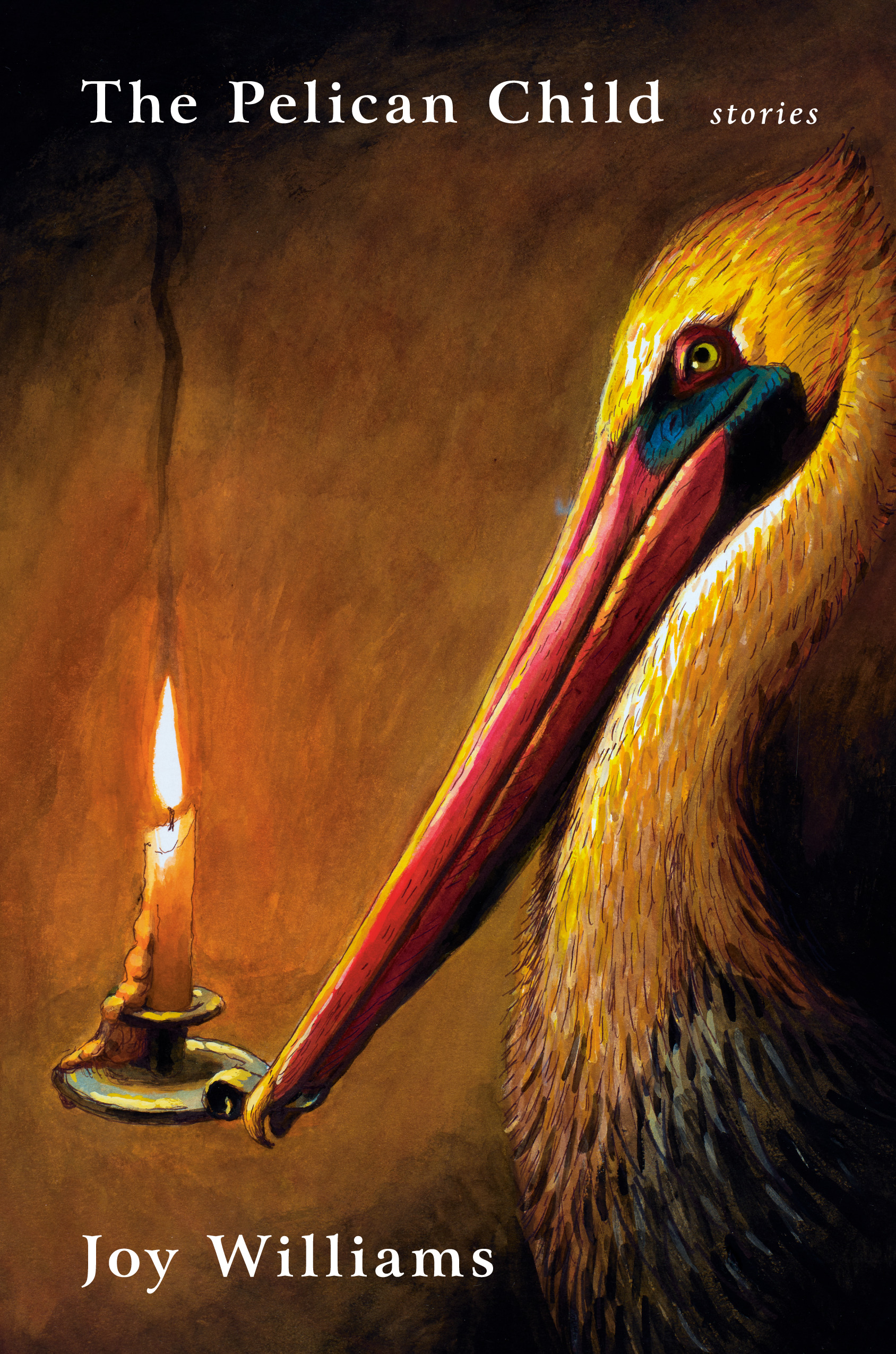
This is one of the few times that I’ve chosen a book based on its cover. I do like short stories, but I had no prior knowledge of Joy Williams’s writing. Sometimes when I take a chance, it leads to serendipity; on other occasions, it’s a case of reader’s regret. This time it’s not clearly either one, but I didn’t find the magic that other readers have found.

My thanks go to NetGalley and Knopf Publishing for the review copy. This book is for sale now.

There’s no question that Williams is a fine wordsmith; however, I prefer stories that have a clean, definite ending and a definable story arc. I didn’t find that here. Whereas the title story is my favorite, there is nothing here that makes me want to stand up and cheer—apart, of course, from the art on the cover. I expected a lot, based on the hype, and in the end, I am underwhelmed. If you decide to read this one, I recommend getting your copy cheaply or free unless your pockets are deep ones.

Wildwood, by Amy Pease*****

“It was in the ratio of good to bad that monsters were distinguished from decent people.”

My thanks go to NetGalley and Atria Books for the invitation to read and review. This book is for sale now.

This book is the second in a new series by Amy Pease; this is her sophomore debut. I didn’t read the first, so I can tell you with certainty that you don’t have to, either. There are frequent enough references to the backstory here that I could follow it just fine, yet I also wondered why I was invited to read this one without having read the first. I’m over it. This is a terrific series, and when the third installment is written and available, I’ll be ready for it.

The setting is an idyllic small town in Wisconsin. “There was something in the water in Shaky Lake that turned even the toughest people into extras in a Hallmark movie.” Yet things are not as tranquil as they appear. A woman is reported missing, and the authorities that enter find blood spattered all over the walls, pooled on the mattress. Why would anyone do this to a young woman that lived alone in a singlewide trailer? But soon we see that nothing is as it appears.

Our protagonist is Deputy Sheriff Eli North, a recently deployed vet recovering from PTSD and alcoholism. I cringe when I read the latter, burned out as I am on alcoholic crime busters, but happily, booze is not at the forefront of this mystery. The sheriff, Eli’s boss, is also his mother. And this is a breath of fresh air; for a while, it seemed as if every mother in every book was a terrible person.

This is Eli’s investigation, but before we know it, the Feds are involved, too. Turns out that the missing woman—she of the blood-covered trailer—was also a confidential informant of the FBI. From there, the story unfurls in a way I find captivating. The ratio of crime-solving to character development is perfect. Whereas one has to suspend disbelief a little bit, it’s not more so than in most mysteries, and I like the way the ending plays out.

Highly recommended to mystery lovers.

Vigil, by George Saunders*****

George Saunders is a luminary in the world of literary fiction. His latest novel, Vigil, tells the story of Jill Blaine, also called “Doll,” a formerly alive person who’s now tasked with escorting dying souls on Earth to their next destination.

My thanks go to NetGalley and Random House for the review copy. This book will be available to the public January 27, 2026.

Ms. Blaine, our protagonist, has been tapped hundreds of times to transition the dying to their next stop, but this time it’s different. Others needed to be comforted and consoled; KJ Boone, however, does not. He’s an oil company executive that has oh, so much for which to atone, but he doesn’t see it that way. Boone has more self-esteem, more rampant self-regard, than almost anyone else on the planet. So, in one sense, Blaine isn’t really needed, and yet she is.

Saunders writes some of the most whimsical prose I’ve read anywhere. This novel isn’t getting as much love from some other reviewers, and when I read what they have to say, a bit puzzled by the lukewarm responses, I see why. Saunders has written other books, in particular, two other massively successful novels, Lincoln in the Bardo and Tenth of December.  To reviewers that read and loved either of these, that is the standard to which he will forever be held. I have no such outsized yardstick by which to measure this writer. Both of those books are in my queue, but I haven’t read a word of either one yet, so I measure his novels by the same yardstick as I use for every other author, and frankly, that seems fairer to me.

Therefore, when Jill Blaine plummets to Earth headfirst and sinks nearly to her waist in the dirt, feet sticking up, then has to pull herself back out, I read it and laugh like hell.

I won’t give any of the plot away; this is a short book, after all, and you deserve to be surprised by everything that takes place inside it. However, in addition to its original and vast humor, the story examines some philosophical questions. What do we owe the world and its people? What is chosen, and what is inevitable? Humor is a great way to explore these issues, because we are confronted with them while we’re in a relaxed state; we don’t become defensive before a question is even asked.

Highly recommended to those that love fantasy and philosophy and can use a good, hearty laugh.

The Briars, by Sarah Crouch*****

In 2024 author Sarah Crouch made her novelistic debut with Middletide, a hauntingly atmospheric mystery set in her native Pacific Northwest. This year she’s produced The Briars, which shows that where Crouch is concerned, there’s no such thing as a sophomore slump.

My thanks go to NetGalley and Atria Books for the review copy. This book will be available to the public January 13, 2026.

Annie is an Oregon game warden, but a ruined relationship sends her packing across the border of Washington State to the isolated hamlet of (fictional) Lake Lumin. There she finds friendship and a measure of solace, as well as an unexpected connection with the area’s mystery man. But all of it threatens to come crashing down when a teenage girl is brutally murdered and left in the woods near his property.

I enjoyed Crouch’s debut novel, but I love this one even more. Crouch depicts the wilderness of Washington State flawlessly, and I can practically smell the evergreen trees and damp, decaying bark as I read. But The Briars is even more about character, and I feel I know Annie, the mystery man known as Daniel, and local ranger Jake intimately. I am sure by about the halfway mark that I know exactly whodunit, but I tell myself that I don’t mind because the narrative is so compelling. In the end, the joke is on me; I don’t already know who killed that girl, and yet the solution makes sense.

I highly recommend this outstanding mystery to all that love the genre.

Charlie and Me, by Mary Neiswender, Kate Neiswender

Mary Neiswender was the first and primary journalist that the notorious serial killer Charles Manson was willing to talk to. She did so at a time in history in which women in journalism were exceedingly rare, and she put up with a whole lot of crap, first in order to remain in her field, and then later to rise to its pinnacle, receiving a Pulitzer nomination.

My thanks go to the University of Nebraska press and NetGalley. This book is for sale now.

Charles Manson was the leader of a group that called itself “The Family,” almost entirely made up of girls and young women that had nowhere else to go. However, people came and went within it, and so those that spoke of it as a cohesive entity were mistaken. Manson was handsome and charismatic despite his small physical form, and he was convicted of the 1969 Tate-LaBianca murders even though he was almost certainly not present at the time.

Neiswender regarded him as a killer, but also was convinced that he hadn’t had a fair trial. She makes a good case. She delayed writing this book until Manson’s death in prison in 2017, as she had promised to keep much of what he said off the record. Once he died, she considered herself to be freed from that agreement. Neiswender died in March of this year, and her daughter has assisted her in seeing that the book was completed and published.

I don’t read a lot of true crime, but I couldn’t put this book down. Neiswender’s observations and insights are fascinating, and she does a fine job of bringing Manson to life—in a way that the public can appreciate without the physical threat the man represented in person.

Highly recommended.

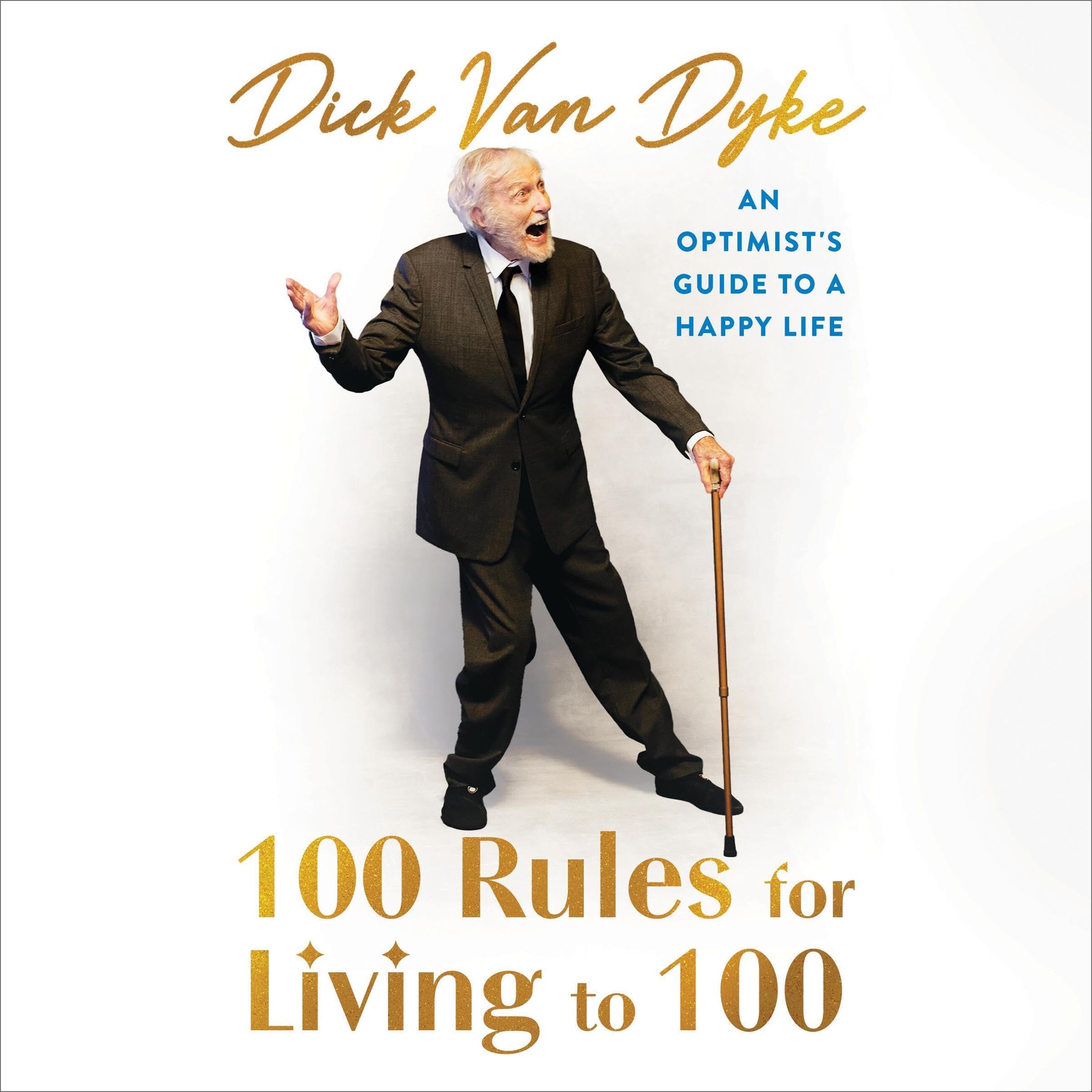
100 Rules for Living to 100, by Dick Van Dyke****

Version 1.0.0

Dick Van Dyke was a wonderful part of my childhood, and this lovely audiobook has put a little more bounce in my step. It’s not really about rules, of course, but the format is a perfect scaffold for a combination memoir and self-help book. My thanks go to NetGalley and Grand Central Publishing for the review copy; this book is for sale now.

Van Dyke entered my consciousness when I was a kindergartener, and the original movie Mary Poppins brought droves of families to theaters. I was not the only family member that was entranced, and all of us sang along to the sound track once the record was on our stereo turntable. The movie, and its lead characters, played by Julie Andrews and Van Dyke, glowed with humor and optimism.  What a wonderful message to share, the idea that the best we can give our children is our time and our attention. In the early 1960s, the suggestion that adults ought to listen to children was ahead of its time and much needed.

Many of the anecdotes the author conveys have to do with experiences shared between him and Arlene, his current wife. Despite the May-December romance, it sounds like a wonderful union. He talks about the recent and horrific events with the Santa Ana fires that took the homes of so many—though his own was spared. My favorite parts, though, are the ones in which he discusses the future roles he’d like to play, because he isn’t really retired from the industry. Way to go, Dick!

Reader Tom Bergeron does a nice job, and as a bonus, he sounds quite a bit like the author.

I recommend this little gem to everyone that could use some positive energy, and to all that love the author.