
“There’s nothing ‘not political’ in Palestine, habibi.”
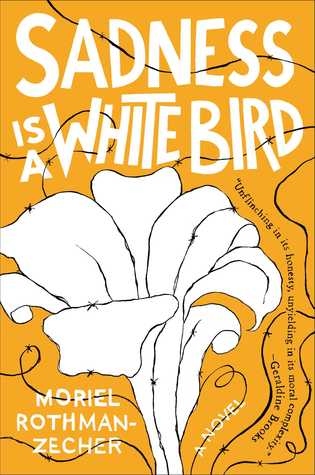 Jonathan grew up in the United States, but now his family is in Israel, the land of his mother’s birth. He’s visited Auschwitz where much of his family died, and he can’t wait to turn eighteen so that he can train to be an Israeli paratrooper. Enough with being ‘people of word’, he figures; he wants to be a Jewish warrior, the ‘people of the sword,’ and exact some payback. A friendship with two Palestinian teenagers complicates his life in ways he didn’t expect. I received an advance review copy of this exquisitely rendered story free, courtesy of Net Galley and Atria Books in exchange for this honest review.
Twin siblings Laith and Nimreen are Palestinians, but long days at the beach and twilit evenings spent with Jonathan, getting high and telling ridiculous jokes, blur the social boundaries observed by most Jews, and by most Palestinians. With the absurd idealism peculiar to young people that haven’t run up hard against life’s limitations, Jonathan thinks that he can have both, that he can become an Israeli soldier and keep his friendships separate from his new career. His friends know better, but still they love him.
There’s only one way to tell a story like this one, and that’s as a tragedy; that’s exactly what Rothman-Zecher does, but he does it better than anyone else I can imagine. This doomed friendship becomes more deeply intimate the closer the day comes when Jonathan must report for duty. Ultimately it becomes a bizarre love triangle in which our young protagonist has a sexual relationship with both of them—though fortunately not simultaneously. For a good long while this lodges in my craw, and as the story continues, I am too revolted to focus. As brilliantly written as this story is, I was headed in the direction of a four star review in protest; that was true, anyway, until I recognized the allegory. Then I was over it.
Nimreen is a teenager too, but she lives with the partitioned state every damn day of her life. She knows that Jonathan can’t have it both ways, but she hopes against hope that he’ll change his mind, that he won’t go into the service. And as Jonathan and his friends try to do anything, go anywhere where there are other people, we see exactly how polarized this place has become. They can’t hitchhike together; there are so many places where either Jonathan isn’t safe, or Laith and Nimreen are not permitted. He goes through a checkpoint where, without his suspicious-looking friends, he would simply have been waved through, and he finds out what it’s like to have one’s homeland invaded.
Rothman-Zecher does a splendid job of depicting exactly how difficult this question is. If I ask myself, have Jews been systematically robbed of their possessions, their homes, and sometimes their lives across not just hundreds of years, but across centuries? I know the answer is yes. I knew it before, but this story drives it home in a way that is visceral. And do Jews deserve to have a home that nobody can ever, ever take from them again? Again, the answer is absolutely yes.
But then we look at the Palestinians, indigenous people living in the Third World at a bare subsistence level. Their homes are almost all they possess, and does anyone have the right to march in, evict them from this place and chase them away from their homes, their families, their livelihoods? Oh hell no, of course not.
In this epic story, Rothman-Zecher bridges the scholarly with the deeply personal, fulfilling a task that can only be achieved by excellent fiction. This searing debut has put this writer on the map definitively and marked him as a new voice in literature.
Highly recommended.
 Ta-Nehisi Coates is pissed. He has a thing or two to say about the historical continuity of racism in the USA, and in this series of eight outstanding essays, he says it well. I read it free and early thanks to Net Galley and Random House, and I apologize for reviewing it so late; the length wasn’t a problem, but the heat was hard to take. That said, this is the best nonfiction civil rights book I have seen published in at least 20 years.
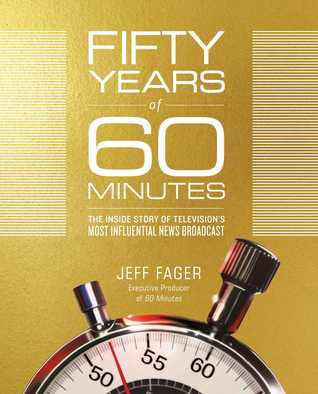 60 Minutes first aired in 1968, a year for news if ever there was one. It was brilliantly conceived as a television news magazine, covering multiple unrelated news stories in a single broadcast. Executive producer Jeff Fager offers the reader an insider’s peek; lucky me, I read it early and free thanks to Simon and Schuster and Net Galley. It’s for sale today.
 Unless you’ve been hiding under a rock somewhere, you already know that Allende is a luminary that owns the literary lane of magical realism, and is renowned for her fictional immigration stories. But it’s her accessibility, the way she spins her tale as though speaking to a good friend, along with her sparkling great humor and feminist spirit that keep me coming back for more. My bookshelves may be crowded, but when I have to clear old books away to make room for new, my Allende shelf is never up for grabs. These are books I will read again, and that’s a thing I don’t do much. In the Midst of Winter is one I read digitally and free, thanks to Net Galley and Atria Books in exchange for this honest review, but sooner or later I will have to find a hard copy to complete my shelf. You will want to read it too.
 I received an advance copy in return for this honest review, thanks to Net Galley and G.P. Putnam. I expected to absolutely love it; I came of age when the South African revolution against the Apartheid state was in full flower and before anything about it showed on mainstream media, which was all we really had then apart from underground films shown in the basements of coffee houses near campus. I loved Mandela’s Long Walk to Freedom, and had attended dozens of talks given by members of the African National Congress that were forced into exile. So when I saw that this novel was set in revolutionary South Africa, I was pumped. Popular fiction about one of the greatest political events to occur in my lifetime? Oh yes indeed. Count me in!
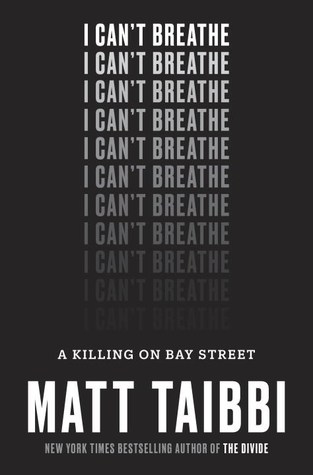
 A hard look at the American penal system–from cops, to court, to prison–is past due, and within this scholarly but crystal-clear series of essays, the broken justice system that still rules unequally over all inside USA borders is viewed under a bright light. Isn’t it about time? Thank you to Doubleday and Net Galley for the DRC. It’s for sale, and anyone with an interest in seeing change should read it. Caucasian readers that still can’t figure out why so many African-Americans are so upset should buy this book at full price, and they should read it twice. If you read this collection and still don’t understand why most Civil Rights advocates are calling out that Black Lives Matter, it likely means you didn’t want to know. But bring your literacy skills when you come; well documented and flawless in both reason and presentation, it’s not a book that individuals without college-ready reading skills will be able to master.


 Devlin write this, her autobiography, when she was all of 23 years old. Had it been anyone else I would have considered it ridiculous, a juvenile pretention, but Bernadette Devlin was one of the primary fighters for Irish freedom during the tumultuous 1960s, ‘70s, and ‘80s, and given how events played out, it is likely that she wrote this while fully anticipating that she’d be killed in the struggle fairly early on. Goodness knows, the British cops tried. Here’s a bit of background information from Wikipedia:
