
 I had never read Ward’s work before, and now that I have I will follow her anywhere. Sing Unburied, Sing is a literary masterpiece, and one that fits the time in which we live. It opens up all sorts of thorny questions for examination, but like most thorns, it stings. I received my copy free and early courtesy of Scribner and Net Galley. This title is available to the public now.
Jojo and Kayla have been raised by their grandparents in rural Mississippi; Mam and Pop are their source of love and stability. Leonie, the mother they call by her first name as if she were a sister, drifts in and out, using copious amounts of meth and other drugs. Michael, the children’s Caucasian father, is being released from Parchman, the notorious prison where he has been sent after having killed Leonie’s brother, Given. Given comes to her when she’s high. She doesn’t know it, but Jojo and Kayla can see him, too.
The contours of this story have to look familiar to a lot of people, and we are faced with unanswerable questions. Is it better, for example, for children to be raised by grandparents, though they are infirm and exhausted and have earned some time to themselves in peace and without dependents, or is it better for their parent or parents to take them, although they have no money, job, or parenting skills?
Whether it’s the right thing to do or not—and I’ll tell you right now that for Jojo and Kayla, it isn’t—Leonie swoops in and after overcoming her mother’s resistance, takes the children and heads for Parchman to pick up her man. There is no plan at all in place for once he’s been retrieved. Leonie is not the swiftest deer in the forest, and then of course she’s high a lot of the time, and seems to have been solipsistic from the get-go; at one point in the story Mam tells Jojo that his mama just doesn’t have the mothering instinct.
It’s the understatement of the century.
On their odyssey they encounter racist cops, a Caucasian drug-dealing attorney, and a host of other beings, living and not. The narrative is told in the first person by Leonie and Jojo alternately, with a voice from Pop’s past peeking in once the adventure is underway. Although the characters are traveling physically through most of the story, it’s not about setting; it’s about character. We learn these characters so intimately that it’s almost as if we ride beneath their skins, and we also learn Pop’s terrible secret.
None of this description can convey Ward’s alchemy, her capacity to take the language and shape it into something much more than its parts, nor does it adequately relay her skill, authority, and overwhelming power. Ward is a lion.
That said, if you need a feel-good novel, this book is not for you. It’s a dark, tragic, terrible story, and the characters are largely unlovable ones, but none of this should keep you from it. This novel will be talked about for a long, long time.
Highly recommended to those that love excellent fiction.
 The German Girl arrived in my mailbox, a nice surprise from Atria Books. This novel is historical fiction, an international bestseller translated into many languages; it tells the story of Hannah, a survivor of the Holocaust who was sent to Cuba, and her namesake, Anna, who lives in present day Manhattan. This title is available for purchase now.
 I received an advance copy in return for this honest review, thanks to Net Galley and G.P. Putnam. I expected to absolutely love it; I came of age when the South African revolution against the Apartheid state was in full flower and before anything about it showed on mainstream media, which was all we really had then apart from underground films shown in the basements of coffee houses near campus. I loved Mandela’s Long Walk to Freedom, and had attended dozens of talks given by members of the African National Congress that were forced into exile. So when I saw that this novel was set in revolutionary South Africa, I was pumped. Popular fiction about one of the greatest political events to occur in my lifetime? Oh yes indeed. Count me in!
 A hard look at the American penal system–from cops, to court, to prison–is past due, and within this scholarly but crystal-clear series of essays, the broken justice system that still rules unequally over all inside USA borders is viewed under a bright light. Isn’t it about time? Thank you to Doubleday and Net Galley for the DRC. It’s for sale, and anyone with an interest in seeing change should read it. Caucasian readers that still can’t figure out why so many African-Americans are so upset should buy this book at full price, and they should read it twice. If you read this collection and still don’t understand why most Civil Rights advocates are calling out that Black Lives Matter, it likely means you didn’t want to know. But bring your literacy skills when you come; well documented and flawless in both reason and presentation, it’s not a book that individuals without college-ready reading skills will be able to master.


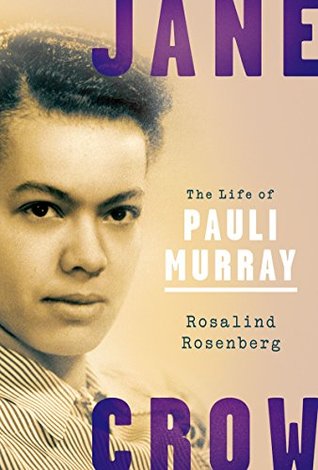 Pauli Murray is the person that coined the term “Jane Crow”, and was the first to legally address the twin oppressions of color and gender. I had seen her name mentioned in many places, but this is the first time I’ve read her story. Thank you to Net Galley and Oxford University Press for the opportunity to read it free in exchange for this honest review. This biography is for sale now.
 I was invited to read and review this title by Net Galley and Open Road Media. At first I thought it looked like a real winner, and in many respects it is. For me, one glaring problem made it impossible to finish; more on that in a minute. For those interested in the Resistance during World War II, this may prove a successful read and an interesting one if you can get past the hurdle that stopped me.
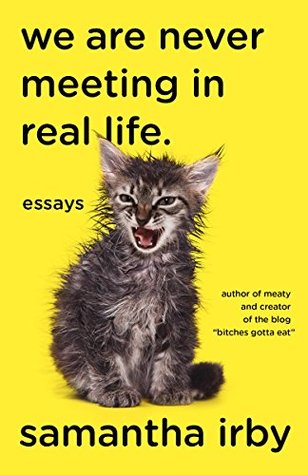 Get out your plastic and go use the restroom, because this book will leave you holding your sides. Samantha Irby mines what ought to be old material but isn’t, at least not by the time she is done with it, and her edgy, plain-truth humor may leave you breathless by the time the last page is turned. My thanks go to Net Galley and Knopf Doubleday for the DRC, which I received free and early in exchange for this honest review. This book has just been released and is available for purchase.
 “’All right. They’re on our left. They’re on our right. They’re in front of us, they’re behind us. They can’t get away this time’.”
