 Nelson Mandela’s hundredth birthday approaches. His grandson Ndaba, whom Mandela raised following his release from prison, talks about growing up with the titan that led the movement against Apartheid in South Africa. He reflects on Xhosa culture and the role that it played in the struggle and in his own development, and it is within this framework that he talks about his grandfather, and about the future of his people.
My thanks go to Net Galley and Hachette Books for the review copy, which I received free and early.
Ndaba spent his early years moving between his parents’ households. His mother struggled with alcoholism and other disorders; his father was ill, and would later die from AIDS. He tells of the surreal juxtaposition of the slum that had been his entire experience with his grandfather’s house, where he had his own room, food that was healthy and prepared for him, clothing, and even a video game system; it was just about everything a child could ask for, but it came at the price of separation from his mother, and he rebelled and acted out in response. As a man with a wider view of the past, he recognizes that this was by far the best outcome, but for many years he resisted, yet was safe because of his grandfather’s stable influence and wisdom.
He speaks of having come to Disney World as a youngster, where he was engaged in conversation with a friendly American, who asked him, as they stood in line for a ride, how big the lions are in Africa. Ndaba, of course, grew up in an urban environment and had no more seen a lion wandering around than the questioner had. He came to realize that these are the stereotypes that the Western world has for Africa: lions in rural areas, and crime in the cities. Dangerous animals; dangerous people. He suggests that the U.S.A. improve its own police forces before presuming to talk to South Africans about theirs.
He has a point.
The entire memoir is told using Xhosa folk tales as allegory, and the result is glorious and deeply moving. Although I seldom become teary while reading, a good hard lump formed in my throat when he spoke of taking his grandfather on his final journey to Capetown.
Highly recommended to everyone, whether you know the history of the South African Revolution or are new to it.
 This one is a crushing disappointment. I seldom buy books anymore, but I was so pumped about this collection that I went all out and got a hard copy, expecting to love it enough to keep it in my home library forever. Sadly, this isn’t what I expected.
 Tara Westover’s memoir has created a lot of buzz, and all of it is justified. It’s the story of one woman’s journey from a fundamentally loving yet untenable home life, to the civilized world she has been raised to fear. Each chapter focuses on one meaningful event in the author’s life, and it’s told with sensitivity, grace, and yes, also a sprinkling of rage, because how can she not? But all told, Westover permits the balm of time and distance to balance her perspective. This book is for sale now, and it’s going to be read for a very long time.
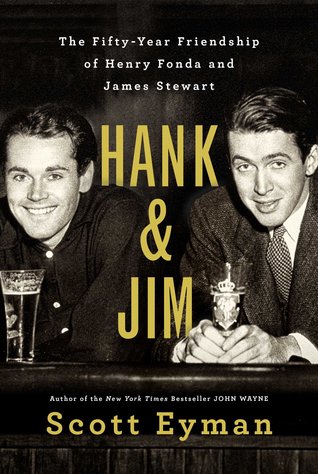 Fans of Henry Fonda and Jimmy Stewart will want to read this biography, written by the author that recently wrote a biography of John Wayne. I was invited to read and review by Net Galley and Simon and Schuster, and so I read it free in exchange for this honest review. It’s for sale now.
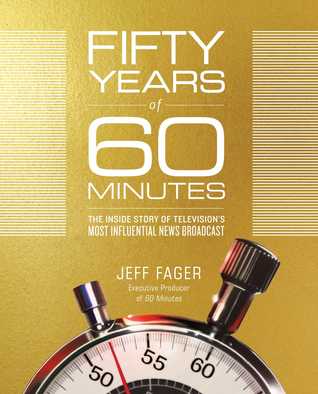 60 Minutes first aired in 1968, a year for news if ever there was one. It was brilliantly conceived as a television news magazine, covering multiple unrelated news stories in a single broadcast. Executive producer Jeff Fager offers the reader an insider’s peek; lucky me, I read it early and free thanks to Simon and Schuster and Net Galley. It’s for sale today.
 Actor Leah Remini was a child when her mother discovered Scientology; the church was in many ways her parent. When she rebelled against it, she was smart and very public, and she spells the entire thing out for us right here.
 I posted this review almost two years ago, and at the time most of us considered that Petty had a lot of gas left in his tank. Of all the musical memoirs and biographies I have read–and there are many–this is the one I loved best. The loss of this plucky badass rocker hit me harder than the death of any public figure since Robin Williams died, so reposting this here is my way of saying goodbye to him. Hope he’s learning to fly.
 During World War II, the Japanese Imperial Army forced over 400,000 women into sexual slavery; though the Korean comfort women have been recognized for a long time, the survivors in the Philippines lived with the trauma and appalling social stigmatization for decades, unheard. Recently 173 of them, now very elderly, filed suit against the Japanese government. This collection includes interviews with 16 Filipina women whose lives were ruined by this atrocity. Thanks go to Net Galley and Northwestern University Press for the DRC, which I received early and free in exchange for this honest review. The collection is for sale now.
 Devlin write this, her autobiography, when she was all of 23 years old. Had it been anyone else I would have considered it ridiculous, a juvenile pretention, but Bernadette Devlin was one of the primary fighters for Irish freedom during the tumultuous 1960s, ‘70s, and ‘80s, and given how events played out, it is likely that she wrote this while fully anticipating that she’d be killed in the struggle fairly early on. Goodness knows, the British cops tried. Here’s a bit of background information from Wikipedia:
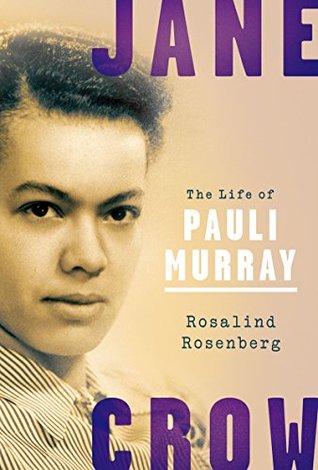 Pauli Murray is the person that coined the term “Jane Crow”, and was the first to legally address the twin oppressions of color and gender. I had seen her name mentioned in many places, but this is the first time I’ve read her story. Thank you to Net Galley and Oxford University Press for the opportunity to read it free in exchange for this honest review. This biography is for sale now.

