
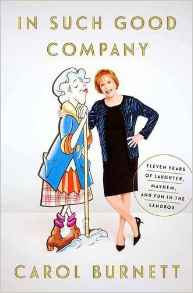
In Such Good Company: Eleven Years of Laughter, Mayhem, and Fun in the Sandbox, by Carol Burnett****

suchgoodcompany  When I saw that Burnett had published a memoir of her years as America’s favorite comedic performer on The Carol Burnett Show, which ran from 1967 through 1978, my first thought was, what, another memoir? She’s already published at least three others, one of which I have read and reviewed. But the fact is, she hadn’t used up all her juice yet. Each of her memoirs focuses on some particular aspect of her life, and so this book is new, it’s original, and it’s probably the stuff you were hoping she’d talk about in her other memoirs. Lucky me, I read it free thanks to Net Galley and Crown Archetype. It was published September 13 and I am sorry to be on the late side, but I scored my own copy just prior to publication; I had no idea it was available till Crown put a promotion up on Facebook and it showed up on my home page.  I genuinely held my breath as I logged onto Net Galley to see if I was too late, and happily, the Literature Fairy smiled on me.

As the memoir begins, I am at first a trifle disappointed, because it appears as if she is just going to list every single person that’s ever appeared on her show and gush about how nice they were.  But she’s just warming up, and it gets more interesting. She describes how she made her way into show business, and though she skims over the early years, knowing that the reader wants to get to the show, it sounds very much as if she was the overnight success that aspiring actors only dream of becoming.  She was on a show that I wasn’t around yet to watch called “The Garry Moore Show”, and she must have made not only a tremendous impression, but also a lot of friends, because she was offered her own variety show—think of it!—and then was able to bring a head writer, a choreographer, a bunch of dancers and some other people west with her from New York to Los Angeles.

This show was a fixture in my childhood and adolescence. One of Burnett’s regular satirical sketches lampooned soap operas, and it was called “As the Stomach Turns”. It was one of the few things that made my parents and me laugh out loud at the same time. My friends and I spent ridiculous, late night hours creating our own satire of a satire, which we dubbed “As the Stomach Churns”, and which featured imaginary illicit relationships among our own teachers along with the administration, janitorial staff, and especially our librarian, a book hoarder that chased away all potential clientele from her sacred gates.  So when I saw that Burnett was writing about the show, I had to see what she’d written, because she had been an intrinsic part of my own development.

All comers that want to read this should do it near an internet source if at all possible, because the comedic sketches can be viewed on television and now also on YouTube. This is fairly new: I tried to view them a couple of years ago and they weren’t there yet, so this is exciting all by itself.

And if you have never seen any of her work and wonder what I am carrying on about, check it:


https://www.youtube.com/watch?v=LUKYH3jtDMM


and with Robin Williams:


The life that she led sounds like something most actors could only dream of. She got up, got her kids off to school, started work on the show mid-morning Monday-Friday, with a single run-through on Thursday followed by a live show before a studio audience Friday, and then they were done at three o’clock and she was done by the time her kids were out of school. It came down to disciplined behavior on the part of the cast and crew, and to the unusually respectful atmosphere in which the show was done. Once a guest misbehaved and when he threatened to storm off the set, she let him go and said good riddance; they did the show without him.  (She won’t give us a name, but he was short. I have been speculating ever since.)


She does tell the many spoofs that were done on movies of the past, and which actors called to say they just loved what the show had done with their film, and which either called up and were angry or sent indirect messages that they were not amused. And she  offers a retrospective look at the way women in show business were expected to behave back then; she was sometimes a doormat, and exultantly recounts how Edie Gourmet, on a guest visit, gave some of it back to those that bullied Carol.


Some of the funniest bits of writing are included, and some of the regular cast’s best onstage moments are recounted, along with those of favorite guest stars. A complete list of every show and which guests were featured is at the back of the book for those that want to look up particular entertainers, or  peruse it for fun.


But the bottom line is that this is pure gold for those that love Burnett and the show, and that can follow along some of the high performance points online. If you aren’t interested in her work, then the memoir won’t mean much to you.


Recommended to Burnett’s many fans.


Michelle Obama: A Life, by Peter Slavin****

michelleobama I received this book as a birthday gift from a gracious house guest. I think he chose it for me because he knew of my strong interest in civil rights issues. Although this is actually out of my wheelhouse, I decided to read it, and I was surprised how much of it I enjoyed. Of particular interest was the beginning of the book, where a surprising amount of the narrative was devoted to African-American history, especially in Chicago. I hadn’t expected it and found it both interesting and useful.

I don’t generally follow the lives and careers of mainstream American politicians or their spouses, so  I didn’t know much of anything about Michelle Obama, other than that she had made it plain, upon taking up that famous residence, that her family would be her main focus and if the public didn’t like it they could lump it. After all, nobody was paying her a salary, so she had some choices.

Reading of how her parents struggled in order to get Michelle and her brother excellent educations, and of the tenacity with which Michelle approached school, social justice issues, and her career, I found myself feeling strangely sorry for her. Before her husband decided to pursue politics, her career outshone his. She was in demand and had a lot of choices. When she headed to the Ivy League, her classmates and professors were almost all white people, and the pressure was on her not only to succeed, but to be the one African-American that would be the example, the cultural education for a whole lot of privileged white people. That kind of hot spotlight would undo some people, make them decide to go on home and enroll at a school closer to home, but Obama—then Robinson—did it and did it well, and then she went back to her hometown, Chicago, to find ways to use her education to serve her community.

As the first Black first lady (FLOTUS), she’s had to make some difficult choices, and there would be a certain level of criticism no matter what she chose to undertake. Her career had been ascending like a rocket, and she took what will likely be a permanent leave of absence in order to keep her family well tended. She hadn’t wanted her spouse to go into politics, because she was convinced, as I am, that being a politician doesn’t end up making a difference. She urged Barack to become an inspirational instructor, or a school administrator, or go to work for a strong nonprofit, but that wasn’t what he wanted to do. He wrote a book; it didn’t sell. (Occupying the Oval Office would change that.) But when two parents put their careers on a fast track simultaneously, often the ones that pay the price are the kids, and she wouldn’t have that for their girls. If it came down to her career versus their development, she was determined to be there for them. And who am I to say that wasn’t the right thing to do?

Slavin is not an official biographer; in fact, after leaving the White House, Michelle plans to publish memoirs of her own. However, this writer was given interviews with people very close to the First Family with Michelle’s blessing, and maybe that is why some noteworthy items are glossed over.

Because whereas this memoir is about her more than him, a fair amount of the president works its way into the text. Their lives are joined, after all. And it does seem a little myopic not to have addressed the elephant in the room: the first Black president can’t prevent cops all over the country from shooting Black men—and sometimes women—all the damn time and for no good reason. After all the protests that took place all over the nation, with chants and signs of “Hands Up, Don’t Shoot!” and “I Can’t Breathe!”, you’d think it would merit at least a paragraph.

It’s like it never happened.

So if you are an admirer of the Obamas, this is not a bad book certainly. And it’s tempting to jump into their court, so to speak, based solely on the amazingly stupid things about birth certificates and loyalty that the ultra-right has come out with, questions that a white presidential family would never have to confront.

But when push comes to shove, this book won’t make a big difference, and sad to say, neither will the Obamas’ eight years in the White House. It’s good to know that American society has moved forward enough to elect a Black president, but like all the presidents before him, his authority is limited and to some degree, illusory.

I recommend this memoir to those with an interest in Michelle Obama. Those eternally present polls that reflect the public’s perception of those in the White House show that a much greater number of Americans admire her than approve of the president. But of course, one doesn’t have to be American to want to read this; one only needs to be interested in the life of this historically first, First Lady.

Pancakes in Paris, by Craig Carlson****

pancakesinparisThe American dream has become harder for ordinary people to attain, but Carlson is living proof that it can happen; yet some of us may need to go somewhere else to find it. In his upbeat, congenial memoir, “the pancake guy” chronicles his journey, from the kid of a wretchedly dysfunctional home—and I don’t use the term lightly—to the owner of Breakfast in America, his own restaurant franchise in France. This title was a bright spot in my reading lineup last month, and it can be a bright spot in yours too. Thank you to Sourcebooks and Net Galley for the DRC, which I received free in exchange for an honest review.
Is this a thing that any kid in America could have done? Not so much. Carlson has a rare blend of  intelligence, organization, and social skills; above and beyond all else, he possesses unstoppable determination, clear focus, and a work ethic that never flags for one tiny minute until he discovers he is close to working himself to death. Those lacking talent and determination may never reach the end of the rainbow as this author has done; that much is clear. But oh, what fun to share the ride with him!

Given his family’s expectations for him, or lack thereof, it’s amazing he finished high school, and his acquisition of a college education is more remarkable still. But it is his junior year at a state college in Connecticut that plants the seed that will sprout and grow into a way of life; he is invited to spend his school year in Paris. Once he’s there, the tumblers click, and he knows that he has found his people.

As Carlson’s story unspools, he debunks stereotypes believed by many Americans, and a few of them are ones I believed too until I read this memoir. Carlson delivers setting in a way much more immediate than any number of Google searches can provide, but it’s his insights regarding French culture, law, and society that make his memoir so captivating. The prose is lean and occasionally hilarious. He plucks choice, juicy vignettes from his journey all along the way, and this makes us feel as if we are riding quietly on his shoulder taking it all in as he goes.

If you’ve never been to France and don’t intend to, you can still enjoy this book. If you don’t like pancakes or any aspect of the traditional American breakfast, it doesn’t matter. Carlson is enormously entertaining, and so his story stands on its own merits. I am furthermore delighted to see that the only recipe that is inserted into his narrative is actually a joke. A small collection of actual recipes is inserted at the end, and although I never, ever, ever do this, I intend to try one of them out tonight! But even if you skip the recipe section entirely, you should read this memoir. It’s too much fun to miss. The best news of all is that it’s available for purchase right now.

Get it, and read it!

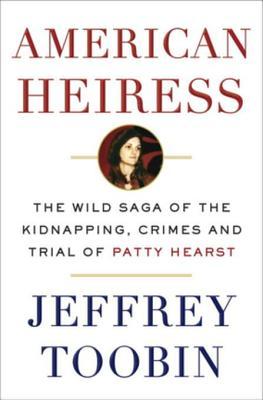
American Heiress: the Wild Saga of the Kidnapping, Crimes and Trial of Patty Hearst, by Jeffrey Toobin****

AmericanheiressSometimes the truth is stranger than fiction, and the Patty Hearst fiasco was definitely a case in point. This reviewer is old enough to remember the news coverage at the time; here Toobin presents us with what is likely the most objective and well researched account of the kidnapping and subsequent crime spree in which Hearst was a participant. Thanks go to Net Galley and Doubleday for the DRC, which I received in exchange for an honest review. This book was released digitally earlier this month and is available to the public now.
In February of 1974 Patricia Hearst, favorite daughter of Randolph Hearst, the publishing magnate, was kidnapped from the Berkeley apartment she shared with her fiancee. The group that grabbed her called themselves the Symbionese Liberation Army, or SLA. It was an historical time when many young people considered themselves revolutionaries, inspired by the Civil Rights movement, the women’s movement, and the Vietnamese and Cuban revolutions. But the SLA was an odd formation at best. They were the product of students from the University of California at Berkeley that had been part of a project to tutor prisoners at the Vacaville penitentiary. Instead of the prisoners gaining literacy, the students were mentored by a handful of prisoners in how to handle explosives and commit crimes against private property and the US government. The entire SLA, it would later be learned, consisted of seven Caucasian people under the age of 30 and one Black man named Donald DeFreeze. By the time this group of irresponsible nut wings made headlines, there wasn’t a legitimate group on the Left that would have anything to do with them.

But the story gets weirder still. The heiress had become bored with her boyfriend and was a terrible student; her future was looking lackluster, even depressing when the kidnapping took place. Within a few weeks, Hearst had joined her captors, brandishing an automatic weapon during a bank robbery, one of a number of crimes in which she participated. And the enormous amount of media attention paid to this band of misfits set tongues to wagging from city, to suburb, to the hinterlands: was Hearst truly a convert, or was she just following orders to stay alive?

Other books have been published about this bizarre series of events, but as far as I know, all of them have been written by those with a stake in the outcome. Toobin, an independent journalist who’s written for the New Yorker, has examined court documents and a host of other primary resources to ferret out the truth. Hearst chose not to cooperate with his book, which is the most objective treatment of the subject I have seen.

Most of the book chronicles events that are too strange to be fictional, and there is tragedy as well. But my favorite passage is when things are falling apart and one of the kidnappers tells a friend on the outside that a “Ransom of Red Chief” situation is developing, and everyone would really like to release this woman so the cops would stop searching so hard, but she just won’t go home. I also enjoyed the anecdotes regarding attorney F. Lee Bailey.

This is a fast read, with plenty of dialogue. There are no slow spots. And I can almost guarantee that no matter how off kilter your own life is right now, Hearst’s adventures will make it look tame indeed.

War and Turpentine, by Stefan Hertmans***

warandturpentineI received a DRC of this memoir from Random House through its First to Read program. I read the book free in exchange for an honest review. Though it wasn’t a good fit for me, I think there are niche readers out there that might enjoy it.
This memoir chronicles the life of the author’s grandfather, Urbain Martien, a Dutch worker that fought in World War I. The son of a brilliant artist, Martien worked whatever jobs were available until the war broke out. He had hoped to become an artist like his father before him, but instead wound up painting buildings just to earn a living.

Apart from its historic aspect, this title is one that I knew would be outside my comfort zone. Since retirement I’ve pushed myself outside my usual well-worn paths and taken a few risks, and though it doesn’t always work out for me, a few unlikely choices have affected me so favorably and so deeply that I have continued to push my own walls outward. I don’t know a thing about art, but I thought it might not matter. I pushed myself to read The Goldfinch, which was about a stolen museum painting but also much more, and once I did I couldn’t believe I had let the DRC pass me by. So I had this in my mind; War and Turpentine might be one more opportunity that I shouldn’t miss.

The basis for the memoir is a series of notebooks that the author’s grandfather gave him, a journal of sorts, and the memoir itself is done not in the usual linear fashion, but as a series of snapshots. I confess I prefer my memoirs to start at the beginning and end at the end, if not the end of life, then at the end of the period being discussed. But an artist would perhaps not have thought that way; I can see the reason for selecting a different format, but because there was no discernible story arc, I found myself floundering and eventually avoiding the book altogether.

The prospective reader should know that along with some really strong imagery and other word smithery, the memoir contains some very graphic violence.

I suspect the ideal reader for War and Turpentine would be one that loves art, art history, and European history.  It is for this niche audience that I recommend this book.

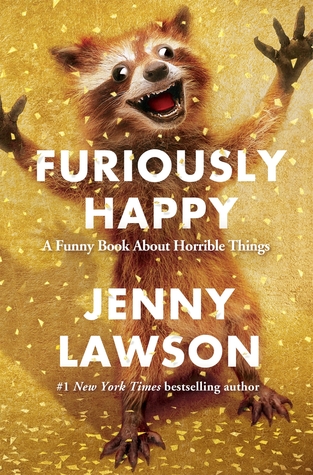
Furiously Happy: A Funny Book About Horrible Things, by Jenny Lawson****

furiouslyhappyJenny Lawson is well known as The Blogess (the blogger that came up with Beyonce, the metal chicken). She won awards for her previous memoir, Let’s Pretend This Never Happened.  The only DRC I saw for this title was for readers in UK and Australia, so I waited till I could scoop it cheaply and bought it digitally. Those that read my reviews often know I almost never do this. For the $3 it cost on an Amazon Prime daily deal, it was worth it to me.

Lawson is one of a handful of authors that talks candidly and often very humorously about her own struggle with mental illness and autoimmune disorders. Her capacity to create imaginary scenarios totally out of left field is her greatest strength, second only to the ability—sometimes—to find a way to laugh at the nest of spiders that occasionally takes over her brain. And sometimes she is painfully candid. Try this one on:


“Sometimes being crazy is a demon. And sometimes the demon is me…And some of us just carry around our tiny demon as he wreaks havoc in our mind, tearing open old dusty trunks of bad memories and leaving the remnants spread everywhere. Wearing the skins of people we’ve hurt. Wearing the skins of people we’ve loved. And sometimes, when it’s worst, wearing our own skins.”


She rants about the well intentioned but ignorant advice she’s received from clueless amateurs. At various times she’s been told to shake it off, to stop eating gluten, and to let Jesus into her heart in order to experience a full and immediate cure.

Sure.

Her musings about flying, which her fame requires her to do a great deal of, though she is afraid both of flying and of leaving home, are brilliant. This reviewer crowed out loud from glee at Lawson’s suggestion that flight attendants be permitted “to whack one person per flight with a piñata stick for being the stupidest damn person on the plane.”

My favorite section is the one in which she details the horrors of remodeling in a way that makes me howl. And goodness knows we all need to do that.

Lawson inserts women’s reproductive anatomy into almost any sort of discussion, and whereas I applaud the feminist spirit that demands the word “vagina” no longer be treated like a dirty word, I confess it was a bit much for me. But then, I am probably older than you are; this may be a generational thing. And there may also be plenty of women from the Boomer generation that think her use of the word is great.

Now and then there’s an odd moment in which I stop reading and stare at the text. What? Did she proof read this, and did her editors? There are occasional remarks that strike me as racially insensitive. She spins a thread about the wild things in the out of doors, and cautions us that since bears don’t play, we should shoot one first and ask questions later. Assuming said bear is in one’s back yard or trying to fit through a window of one’s home, I can see the point, but it came out of left field and made me wonder. Really? Just shoot bears? And the thread further spins itself into a bison-and-Native-Americans discussion in which she assures us that it’s not great to have bison in one’s yard, but it would be awesome to keep a lot of Native Americans out there. My e-reader says, “?!?”

But then she drops and is off onto another stream-of-consciousness spiel before I can fully digest what’s been said. She does it a couple of other times also. And it occurs to me that she has perhaps the ultimate excuse, having said up front that she has known for most of her life that she is “not right” in the head, but I still wonder that her editors didn’t look at that and say, “Umm…Jenny? This part right here…?” There are no overt racial slams or this review would have a lot of empty stars, but there are small moments where I wonder if she understands how others may read what she’s said.

Many of her entries if not all of them are drawn from her blog, and it’s possible that if you’ve read her blog faithfully, you won’t want to pay for this book. As for me, I found it worth the three bucks to be able to get everything at once in a well organized format—known as a book—that I could read comfortably. I confess I would not have paid full jacket price for it now that I get most books free and also have less money to spend on them than when I was working, but for others it may well be worth it.

On the whole, this is a courageous and often eloquent, fall-down-funny memoir, and with the small reservations mentioned above, I recommend it to you.

Notorious RBG, by Irin Carmon****

notoriousrbgIf I were to review the subject of this memoir rather than the book itself, it would be a slam-dunk five star rating. As it is, I can still recommend Carmon’s brief but potent biography as the best that has been published about this fascinating, passionate justice of the Supreme Court of the United States. I have no doubt many more will follow, and it’s possible I will read every one of them. As it stands, this is a rare instance in which I turned my back on my pile of free galleys long enough to ferret this gem out at the Seattle Public Library, because I just had to read it. You should too.
I’m an old school feminist from the seventies, but Ginsberg is one from the fifties. How is that even possible? Imagine the courage it would take to step forward at a time when no women’s movement even existed! She sued Rutgers University for equal pay and won. Later, she was the first female law professor at Columbia University, and she sued them for equal pay too. She volunteered as an attorney for the New Jersey American Civil Liberties Union, represented custodians in a class action suit, and later, when the Free Speech Movement on campuses in the 1960s began to warm up, she was already red hot and ready to go.

The best parts of Carmon’s memoir are the primary documents, because we get to see RBG’s own words. Ginsburg was made a federal appeals judge by President Jimmy Carter and moved to fill a vacancy on the U.S. Supreme Court by President Bill Clinton. She’s issued a number of tremendously eloquent decisions, and has chosen to read her dissent aloud, a thing not usually done, a record-breaking five times at the time this book was written. The lacy-looking necklace that fans out on all sides of her neck is her dissent collar, and so those that hear the Court deliver its decision can see exactly where Justice Ginsberg stands as soon as they see what she is wearing.

At times such as these, in which a woman in Indiana was recently sentenced to 20 years in prison for having an abortion [reference mine], it gives women hope to know that there is a fighter on the Supreme Court who’s looking out for our interests. It doesn’t mean that women can step away from this political battle, but it’s a thing that encourages us and lends us fortitude.

In January, it is rumored that Ginsberg will release her own memoir, one that relies heavily on her court decisions. Likely this will be an even better memoir than this one. For now though, this uplifting, funny, well-documented memoir is as good as it gets. Go get it.

They Left Us Everything, by Plum Johnson***

theyleftus Plum Johnson is gathered, together with her siblings and other family members, at the family manse following the death of her mother. This memoir focuses on the things she’s learned and the insights she gains over the course of the year it takes to empty and sell the property. Thank you to Net Galley and Putnam Penguin for the DRC, which I received free in exchange for this honest review.
I knew when I requested this story that I was stretching my comfort zone. It paid off big time a couple of times recently–one of them was The Goldfinch—and since there seemed to be a lot of buzz generated around this title, I thought I’d go for it. And I have to admit, this time it was not a good fit. But I am confident that there are readers out there that will enjoy it. Different strokes and all that.

The first thing that jarred me was right up front, and it was a small thing, yet a big thing. The pet the author remembers so fondly—the one that’s buried on the property—was named Sambo. I felt like I’d been slapped, to be honest. If that was the pet’s name, I’d think an author today would have had the sensitivity to change it for purposes of publication.

Sambo???

Enough; let’s get on with the meat of the story. The author has spent years under the domineering gaze of her dying mother. The woman didn’t go fast, and she didn’t go out a pleasant person. In some ways it makes it harder to grieve when someone goes out ugly, because it sends all sorts of conflicting emotions rocketing through one’s senses, which are already jumbled sufficiently at the loss of a family member. And it is in taking time to go through her mother’s things, the more personal ones apart from the things that have resale value, the letters, the journals, the things she saved for so many years, that the author feels as if she really knows who her mother used to be.

I think there are a lot of us out here, Boomer-era adults that have said goodbye to parents or are still doing so, that can relate to this. Often it takes a fair amount of experience to appreciate our parents’ better moments, to realize that some of the things they did for us that we took for granted were not  the same things everyone’s parents did. Plum’s musings made me think of my own mother, a woman that died disappointed with life and darned cranky about it, but who told me about the internment of Japanese Americans and made me use standard English by the time I was five. Like Plum, I find myself wishing my mom could return for a visit to give me one more chance to thank her for the things she did right.

We get a glimpse of the author’s life, the choices she made and what her mother had to say about them. But it was difficult for me to relate to them, not only because of the level of affluence that is demonstrated here, but also because it’s depicted as being part of the everyday landscape. Plum doesn’t feel more fortunate than others, but rather this is what her normal looks like, and while I understand that for some people that is reality, I found it alienating. Art versus tennis? That’s the controversy? In addition, for most of the book we also assume that people are white, because that’s what normal looks like to Plum. There are a few places that break this up a little bit, and it is for that reason, together with the fluency with which the memoir is written, that I rated this 3 stars rather than 2.5.

Figure out who you are, and that will tell you whether this book is your book. It’s for sale to the public July 19, 2016.

The Butler’s Child: An Autobiography, by Lewis M. Steel****

thebutlerschildLewis M. Steel has a long, noteworthy career as a civil rights attorney.  He was an observer during the Attica Prison riots; worked for the NAACP during the Civil Rights movement, and later defended boxer Hurricane Carter against a frame-up charge of murder. And I was permitted to read this story free and in advance, thanks to Net Galley and St. Martin’s Press in exchange for this honest review. I rate it 3.5 stars and round upwards; it is now available to the public.

When I first approached this title I expected to see what the life of a butler’s son was like. In fact, Steel’s social class is at the other end of the spectrum. An heir to the Warner Brothers fortune, he spent much of his time in the company of the family butler, and he was deeply affected by the emotional distance that this family servant, whom he had innocently regarded as a father figure, began to demonstrate as Steel grew older. Later, as an adult, he realized that this faithful retainer, an African-American man, surely had a family and life of his own that he went to visit on his two half-days off work, and he began to wonder what he might do to tear down the wall between the worlds of Caucasian families and Black folk. Ultimately he decided to become a civil rights attorney, and he credits the man that helped raise him as a key reason.

The NAACP of the Civil Rights era—the National Association for the Advancement of Colored People– was deeply immersed in litigation as a means to end segregation. Again and again, racist judges sat in court, north and south alike, and they told the NAACP to go to hell even when their evidence and research was baldly, plainly in the plaintiff’s favor. The NAACP continued to push litigation over mass action because of a strong conviction that if they could get a case heard by the Supreme Court, relatively liberal in many regards and headed by Chief Justice Warren, then surely justice would be done.

It didn’t shake out that way. Outraged over the way the nation’s highest court failed to provide equal protection to its Black citizens, Steel wrote an article for Time Magazine titled “Nine Men in Black Who Think White”, and was summarily fired from the NAACP, who still wanted to curry favor with that court. Many of his colleagues walked out of the NAACP offices in protest.

A common question among Caucasians that want to fight for the rights of people of color in the USA is what can we do?  How can one use this white privilege that exists whether it should or not, to change US laws and society for the better? And this question is raised exponentially when one is an heir, a ruling class scion that can do a tremendous amount for the cause in which he believes.

This reviewer has a friend that found himself in this situation. The distant but only heir of a corset magnate’s fortune, he decided that the best way to seek justice was to walk his talk. Reserving a small percentage of the fortune for himself—which is still a tasty enough chunk to own a middle class home in Seattle, take a vacation abroad annually, and eat in restaurants instead of his own kitchen—he donated the vast majority of his personal wealth to the organization he thought best. He doesn’t live in an all white neighborhood; doesn’t have a household staff; and he does blue collar work on the railroad so that he can talk politics with other working people. Because to help people the most, one needs to be among them and facing similar circumstances to those they face. So he gets up at crazy o’clock in the morning, goes out and gets greasy and banged up with everybody else, and then he goes home and cleans his own house and mows his own grass. He gets that more people listen when you put your life where your mouth is, and he believes the future of the world lies with the working class.

So when Steel commences his hand wringing over how wealthy, how privileged he is and how bad he feels about it, I want to say, Cry me a river. Steel freely admits that he enjoys his lovely home that looks down on Central Park and allows him a lovely view of the Macy’s Parade every Thanksgiving. He enjoys the servants, and his neighborhood is all white. He sent his children to all white private schools even as he fought to integrate the public schools that he wouldn’t let his own children attend in any case.

At one point, Steel mentions that his therapist told him to stop whining, and I wanted that doctor here in the room so I could offer him a high five.

Now that I have addressed the elephant in the room, I have to say that Steel’s memoir, despite the wealthy liberal whining, is worth a read for those interested in Civil Rights history and in particular the part of it that has played out in the courtrooms. You don’t have to like the author to benefit from the treasure trove of information in the pages of this memoir. Steel has been involved in some landmark cases, and he is at his best when he talks about the cases he has taken and how they shook out.

Black lives DO matter, and those of  us that think so need all the information available to fight that fight, and there are many worthwhile lessons that still apply right here, this book is worth your time and money regardless of whose memoir it is.

This book was released earlier this month, and is available for sale now.

Fragments of Isabella: A Memoir of Auschwitz, by Isabella Leitner****

fragmentsofisabellaIsabella Leitner was a Holocaust survivor, and she scribed her memoir using brief entries similar to a diary in format. The length is just 120 pages, about the size of a novella. I was asked to read and review this memoir free of charge before it was released digitally. Thanks go to Net Galley and Open Road Integrated Media for the invitation. This title was just released, so it is available now for purchase.

I confess I struggle with Holocaust memoirs these days. Part of me has decided not to read any more of them. I am out of the classroom, so my ability to educate young people of today about the horrors of the past is nearly at a standstill, apart from the knowledge I pass on to my grandchildren. Reading another Holocaust memoir isn’t going to make the ending any better; it’s always going to be horrifying, and heaven help me if I should become so accustomed to reading about the Holocaust that it doesn’t affect me that way anymore.

So though I swear off Holocaust memoirs from time to time (and am doing so right now, again), when a particular memoir is offered, frequently there is some aspect of this one that sets it apart from the crowd, and so it is with Isabella’s memories. Not many survivors managed to get out with family members at their side; Isabella and her sisters were unusually clever and imaginative in finding ways to survive. This along with the invitation induced me to roll up my sleeves and revisit this calamitous part of history once more.

When the notorious Mengele motioned with his deadly white glove to send Isabella and one of her sisters to the extermination side, they found a way to creep back around and intermingle with the side selected to be kept alive as workers. At one point they escaped and found an outstanding hiding place…but before they were identified as missing, the Germans began cooking potatoes, a luxury Isabella and her sisters could not resist, and they slunk out of their haystack and into the food line. There are a number of these instances, and I found the short chapters merciful, because I could only read this in small bits and pieces.

Most powerful of all, as far as I am concerned, is the clear, unmistakable truth that Germans knew, absolutely had to know, exactly what was going on around them. As their own lives improved materially, they chose to look the other way as skeletal work crews of Jewish and other prisoners were marched directly down the main streets of towns and villages on a daily basis:

“Germany was one giant concentration camp, with Jews marching the length and breadth of the country, but these refined, sensitive Germans never saw us. Find me a German who ever saw me. Find me one who ever harmed us.”

The memoir is of necessity harsh in its remembrance. The teaser for this story bills it as having been written for young adults, but the background material required to understand some of what is said requires a good deal of pre-teaching.  In other words, if a teacher or home-school supervisor has run out of social studies time and is looking for a shortcut to make up for teaching about the Holocaust, this isn’t it. Frankly, this reviewer and teacher wonders how a full unit regarding the Holocaust could be lower on the chain of important social studies curriculum than anything else, apart from possibly the Bill of Rights (for US students). But if one is determined to substitute one memoir for a longer unit that gives more information, use Elie Wiesel’s Night, which stands on its own.

Finally, any teacher or prospective reader needs to consider exactly how searing this material is, and all the more so to the young mind; to Jewish readers; to anyone with triggers.

I should also mention that a bisexual guard at Auschwitz, a woman that was interested sexually in one of the prisoners, is referred to as “aberrant”, not for being a guard at such a place, but for her sexual orientation.

Do I recommend this memoir to you? Those that are studying the Holocaust should read it; the fact that it’s written by a survivor makes it a primary document. But those that are looking for an engaging, enjoyable slice of history should look elsewhere. There are no light moments, no surprisingly kindly individuals that go out of their way to help. It’s a cold, hard story, and the only joy is provided up front when we learn that she gets out alive and not alone, as so many Holocaust survivors found themselves.

It’s a hard, hard lesson, but given that revisionists are diligently trying to deny that the Holocaust actually occurred, attempting to rake over the evidence as if it were not nearly as serious as we may believe, it also has a great deal of value.

Because Isabella was there.