
“‘Wille Nelson?’ Mike said in disgust. ‘Willie Nelson? I said Winnie and Nelson–as in Mandela!’ And then with real attitude he snapped, ‘Heard of them?’ He ended with a classic Mike Wallace line: ‘Excuse me, I didn’t realize I had wandered into the toy department.’ Mike then left the office and, walking down the hall, shouted back to Josh, ‘Good luck with your next career move!'”
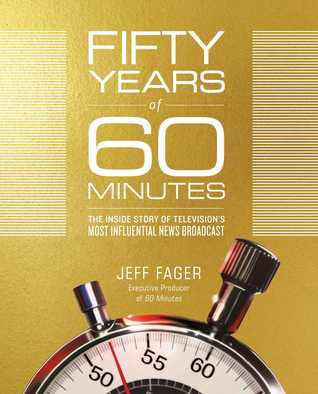 60 Minutes first aired in 1968, a year for news if ever there was one. It was brilliantly conceived as a television news magazine, covering multiple unrelated news stories in a single broadcast. Executive producer Jeff Fager offers the reader an insider’s peek; lucky me, I read it early and free thanks to Simon and Schuster and Net Galley. It’s for sale today.
60 Minutes did the stories nobody else was doing, and its correspondents were geniuses at persuading their subjects to open up and tell the world what it wanted to know. From President-elect Richard Nixon, who promised to ‘restore respect to the presidency’, to the torture of prisoners at Abu-Ghraib, 60 Minutes has been there and spoken to those that have done these things or borne witness to them. I’ll bet I am not the only viewer that remembers the interview with the bitter, dying tobacco executive with throat cancer, rasping out what he knows on television. From Miss Piggy to the Ayatollah Khomeini, from Lance Armstrong to Khadafi, everyone has 15 minutes of fame…did they interview Andy Warhol? I’ll bet they did.
Just as on the show, the book touches briefly but meaningfully on each subject, complete with lovely color photographs, both formal and candid, and then moves on before one can become bored. The careers of the professionals that worked on the show, behind the scenes and on it, are also described. Perhaps the most poignant anecdote is when ancient Andy Rooney, past 90, developing Alzheimer’s, but still in the saddle, keeps forgetting that he is supposed to give a farewell address. He keeps returning long after he was going to get gone, and finally his son has to write cue cards for him to read on the air. Rooney seems vaguely puzzled when he discovers he has retired.
The whole thing is organized in congenial sections, decade by decade, but it’s the sort of book you can leave on your coffee table for guests to flip through. If they are adults, I can almost guarantee they’ll say, “Oh hey. I remember this!” What a wonderful ice breaker.
Highly recommended; buy it in the hardcover format.
 I posted this review almost two years ago, and at the time most of us considered that Petty had a lot of gas left in his tank. Of all the musical memoirs and biographies I have read–and there are many–this is the one I loved best. The loss of this plucky badass rocker hit me harder than the death of any public figure since Robin Williams died, so reposting this here is my way of saying goodbye to him. Hope he’s learning to fly.
 Devlin write this, her autobiography, when she was all of 23 years old. Had it been anyone else I would have considered it ridiculous, a juvenile pretention, but Bernadette Devlin was one of the primary fighters for Irish freedom during the tumultuous 1960s, ‘70s, and ‘80s, and given how events played out, it is likely that she wrote this while fully anticipating that she’d be killed in the struggle fairly early on. Goodness knows, the British cops tried. Here’s a bit of background information from Wikipedia:
 I confess I was miffed when I wasn’t granted a DRC for this title, and after reading a couple of reviews, I decided I could live without it. I began to wonder about my choice when I saw it hover on the best seller lists where it remains as of this writing nearly a year after its publication, But the clincher came when my younger daughter came to me and said that she had read it digitally and believed I would enjoy it. She said it had to do with the culture of mining families, and that the dedication was to the writer’s “Mamaw and Papaw”.
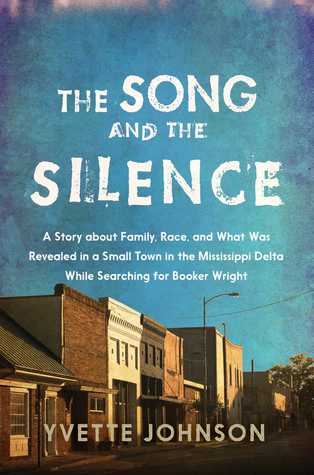 I was browsing the pages of Net Galley and ran across this gem of a memoir. Often when someone that isn’t famous gets an autobiography published by a major publisher, it’s a hint to the reader that the story will be riveting. Such is the case here; my many thanks go to Net Galley and Atria for the DRC, which I read free in exchange for this honest review. You can order it now’ it comes out Tuesday, May 9.
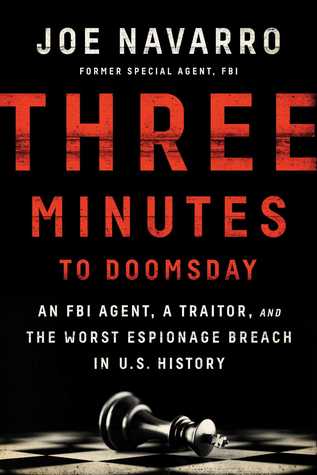 “Nothing’s ever over till the fat lady sings.”
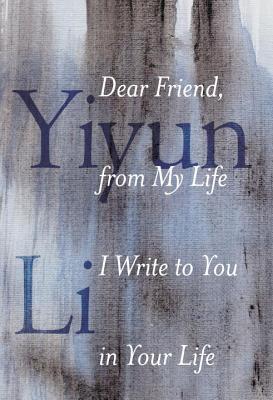 It’s an honor to be invited to review any book by Random House and Net Galley, and so when the email came, I accepted without hesitation; I thank them for thinking of me and wish I could honestly recommend this one. Others have referred to this memoir, whose title is taken from a quote by Katharine Mansfield, as “exquisite, intimate, and lyrical”, and the author has won awards for her novels. I looked carefully to see if I could locate the genius in this book, but it eluded me completely.
 Dorothy Day is an interesting historical figure, the woman that founded The Catholic Worker, which was initially a combined newspaper, homeless shelter, and soup kitchen. I once subscribed to The Catholic Worker, and since it cost one penny per issue, you couldn’t beat the price. I saw this biography available and snapped it up from Net Galley; thanks go to them and Scribner, who provided me with a DRC in exchange for an honest review. This title was published in late January and is now available for purchase.
 John Dean was counsel to the president during the Nixon administration, and was the first to testify against all of the Watergate conspirators, including Nixon and including himself, a bold but necessary decision that led to Nixon’s resignation—done to avoid imminent impeachment—and Dean’s imprisonment. Dean’s story is a real page turner, and Nixon-Watergate buffs as well as those that are curious about this time period should read this book. I read the hard copy version, for which I paid full jacket price, shortly after its release, and when I saw that my friends at Open Road Media and Net Galley were re-releasing it digitally, I climbed on board right away. This title is available for sale today, December 20, 2016.
 What is it about mobsters that draws our attention? National Book Award winner Deirdre Bair takes on America’s most famous mobster, Al Capone, and examines the myths and legends that have sprung up in the time since his death. I thank Net Galley and Doubleday for permitting me the use of a DRC, which I received free in exchange for this honest review. The book is available to purchase now.
