
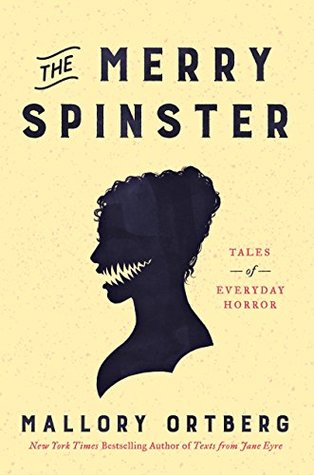
The Magic Spinster, by Mallory Ortberg*****

themerryspinsterMallory Ortberg’s feminist horror collection is bound to be the best short story collection of 2018, darkly funny, cleverly conceived and brainier than I realized when I signed on for it. Many thanks go to Henry Holt and Net Galley for the review copy, which I read free and early in exchange for this honest review. This title is for sale now.

Ortberg takes well known children’s stories and fairy tales and injects sinister elements into them, sometimes starting with the exact wording of the story, cited in her endnotes, and then changing it a tiny bit at a time. If you don’t know the story quite well, you may not be able to pinpoint the exact place Ortberg goes off script; some of these are Grimm’s Fairy Tales, which are fairly, uh, grim in the first place and not originally intended for small children. She often combines the influence of a second fairy tale, and everything is beautifully documented at the back, just so you can see how she did it.

At first I wondered if I would react badly to this; I am a grandmother of tiny children as well as a retired teacher, and these stories tread on sacred ground. But it’s done with such genius that all I can do is shake my head in admiration.

There are eleven stories. One of my favorites is the title story, in which a woman is held prisoner by a captor that builds her a fabulous library, but tells her that he will decide what she will read. There’s horror for you. There’s a takeoff on The Little Mermaid that left me with half the story highlighted out of admiration. The Thankless Child features a fairy godmother that is more of a mafia figure, like a supernatural, female Godfather.

But perhaps my very favorite is The Rabbit, which is a takeoff on The Velveteen Rabbit. I began this one with a furrowed brow, because the original story is so dear to my heart, a cherished experience held with each of the four babies I bore and raised. But my prior knowledge is actually a useful thing, because with the original more or less committed to memory, I can see where she begins to alter the story. At first she changes just the tiniest things, and then gradually adds more…and in her version, the rabbit loathes the boy and seeks revenge. In the end it is the same story, and yet different enough that it doesn’t offend me as I suspected it might. She started with apples and made bleeding red oranges.

Ortberg has created a masterpiece of feminist fiction replete with some of the best word smithery found in contemporary prose. It can be read at the surface level, just for your amusement—which is guaranteed to all that enjoy gallows humor—or as a scholarly endeavor. I expected this book to be full of darkly ridiculous stories themed around women’s issues. Instead it is even better, both brainy and hilarious, the best surprise of 2018.

Highly recommended to all that appreciate great feminist fiction and enjoy dark humor.

Not That I Could Tell, by Jessica Strawser****

NotThatIOne year ago today, I reviewed Strawser’s debut novel, Almost Missed You. When I received an invitation to read and review this, her second novel of suspense, I privately wondered whether she had written the same story all over again: missing spouse, missing kids, and is it foul play or a voluntary departure? But although there are many common elements, possibly what will become a signature aspect of her work, I can promise you that this is a very different story. Thanks go to Net Galley and St. Martin’s Press for letting me read it free and early. This book is for sale now.
Our setting is Yellow Springs, Ohio, and our protagonists are the women of the neighborhood, primarily Izzy, who comes in search of a fresh start after her sister marries the man she had her heart set on, and Clara, a stay-home mom that also recovering from a traumatic past event that is alluded to frequently but whose particulars are withheld till near the story’s climax. And we have Kristen, college administrator and estranged wife of Doctor Paul. All are close neighbors, and these women–along with other women in the neighborhood–form a tight bond.

At the outset I feel as if I’m the wrong reader for this story. It’s all so light and fluffy; I don’t need to know the name of every child in the neighborhood, nor what everyone is wearing. But I also remember that I felt that way at the start of Strawser’s last novel, and I didn’t feel at all that way further into the book, and so I keep reading. Sure enough, the adverbs drop, the wardrobes and cute kiddies fade into the background, and the tone darkens nicely (said the evil book blogger with a sinister smile).

After a lovely fall evening spent bonding with friends around a backyard bonfire, Kristen and the twins have disappeared. The police take a hard look at Paul, who is seeking half of the hefty sum in Kristen’s savings account in the divorce proceedings, but nobody can prove anything. There are no bodies; she may have taken the kiddies and left. Some things are missing that make us think she’s taken off voluntarily, and yet other aspects of her absence send up flags.

Paul, for instance, is a smooth operator, but he isn’t a nice guy.

Strawser weaves a complex, credible plot with a strong feminist subtext, one that tells us there needs to be greater support for victims of domestic violence, and also that for some of us, happy endings are possible without romantic relationships. In addition, it is heartening to see a strong work of fiction that mostly features women characters.

I recommend this novel to women and those that love them, and I look forward to seeing more of Strawser’s feminist fiction in the future.

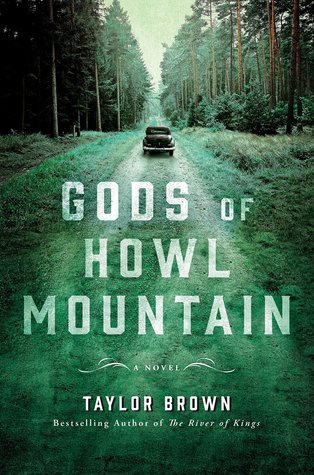
Gods of Howl Mountain*****

GodsofHowl“Christ’s father let him die on that cross,” she said. “I understand why he done it.” She leaned closer, whispering, “But Christ never had no granny like me.”

Rory Docherty has come home from overseas “with war in his blood”; he’s come home to the mountains of North Carolina, and home to Granny May, the local herbalist—some also say she’s the local witch. His mother Bonni is in a mental institution, which was even a worse place to have to go in the 1950s than it is now.  Rory doesn’t know for sure what broke her, because she hasn’t said one word in the years between then and now; Granny May knows, and withholds this powerful secret for reasons of her own. The life of the Docherty family is seldom easy, having Bonni erased from their midst has hit them hardest of all.

I read this book free and early, thanks to Net Galley and St. Martin’s Press. I’m not permitted to share my galley with anyone else, but I can do this: I can read it as many times as I damn want to. And although I can count on one hand the number of times I’ve done that, out of the five or six hundred free novels that I’ve received in the last few years, I’ll do it with this one.

But back to Rory, to Granny May, and to Eustace, the wily, ruthless old bootlegger that owns Howl Mountain and almost everyone on it. And back to the sweet-faced preacher’s daughter that has lit a fire under Rory’s troubled heart. Granny May would have him stay away from those snake-handling holy rollers, but Rory is utterly bewitched, and when the lights are on at the storefront church, he finds himself there too.

The characters and the setting are what drive this novel, but what also drives it are the cars, most specifically Maybelline, the custom-made vehicle that can outrun Federal revenue agents.  I’m generally not interested in cars; if they run, that’s good, and if I will be comfortable inside them, that’s better. But Brown has some magic of his own, and the way he crafts this ride, which is the family’s main source of income and their most valuable piece of property apart from the mountain itself, is magnetic. It is almost a character itself.

The balance of power is shifting on Howl Mountain now. Rival Cooley Muldoon seeks to unseat the Docherty clan; threats to Granny May have taken ominous forms, and she waits on the porch with her pipe and her gun late into the night. She storms into the brush to find what, exactly, has made the cry like a panther on her roof.

“Death, which walked ever through these mountains, knew she would not go down easy.”

This is likely the go-to novel of 2018. I cannot help but think that Rory Docherty, Eustace, and Granny May will join the ranks of beloved literary characters whose names are recognized by a wide swath of the English-speaking world.

If nothing else, Brown has taken the hillbilly stereotype that some still cling to and in its place leaves believable characters with nuance, ambiguity, and heart.  It’s a showstopper, and you won’t want to miss it.

Eloquent Rage, by Brittney Cooper****

EloquentRageCooper has had enough, and who can blame her?
I received my copy of Cooper’s essays free and early, thanks to Net Galley and St. Martin’s Press. Her prose is clear, articulate, and full of fire.

Had I read my post-Trayvon civil rights titles in a different sequence, I might very well have called this a five star collection. However, I read Samantha Irby, Ta-Nehisi Coates, Angela Davis, and Matt Taibbi first, and so the bar was set somewhere in the stratosphere when I opened this galley. I wanted Cooper’s viewpoints to be accompanied by some hard facts, complete with citations. However, for those looking to have their world view clarified and their consciousness raised, Cooper’s collection is recommended.

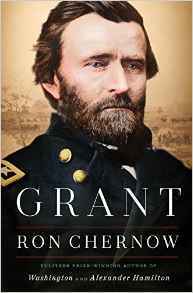
Grant, by Ron Chernow**

grantI’m tempted to add this title to my Southern fiction shelf. For a Pulitzer winner to be so careless with his facts is egregious. I got 200 pages or so in, and I found a glaring error. To be honest, I thought maybe it was me. I haven’t taught the American Civil War in 8 years now; am I slipping? Because I could swear that the famous tidbit about a single battle killing more soldiers than the American Revolution, War of 1812, and war with Mexico all added together was about the battle of Antietam, yet here is Chernow, saying it’s Shiloh.

This is when it’s nice to have a physical library nearby. I rummaged on my Civil War shelves and plucked Battle Cry of Freedom, which he (rightly) appears to cite more often than anything except perhaps Grant’s Memoirs, and I also grabbed McPherson’s book on Antietam, and I double-checked. Yup. The reference is to to Antietam, not Shiloh.

At this point I wondered what else might be amiss. There’s a Sherman quote that’s supposed to be in a section in BCF, but the page number Chernow cites is actually in a section about the nurses of the ACW. Well, of course there are different editions, so page numbers may shift a bit, especially in a lengthy source. But I chose–randomly, from the citations at the back–3 other quotes from BCF, and read 8 or 10 pages before and after the page where the quote or fact is supposed to be located, and didn’t find them. A more meticulous reader might have different results, but I am not running a courtroom prosecution; I am trying to decide if I now trust this author enough to believe him regarding other information. And I am not all that sure I do.

I have a lovely hardcover copy of this biography given me by one of my sons at Christmas, and I would hate to abandon it entirely at the 200 pp. mark; but I’ll tell you one thing. I’m rereading Battle Cry of Freedom again before I turn another page of this biography. Because at the very least, this is a work to be read critically, rather than with innocent faith in its author. I like some of the analysis Chernow offers, but I would hate to see a newbie miseducated by using this title as an introduction to Grant or to the Civil War. As for me, I am going to strengthen my own foundation before I approach this tome, which must be read cautiously.

The Bathwater Conspiracy, by Janet Kellough*****

TheBathwaterConFeminists rejoice! Janet Kellough, known for the Thaddeus Lewis mystery series, has cut loose with a genre-bending science fiction mystery novel that’s cleverly conceived, brilliantly written, and funny as hell. I was invited to read it free of charge, courtesy of Edge Publishing and the author.
The story is set in a post-apocalyptic, dystopian world. Women have inherited the Earth, emerging victorious from the Testosterone War, but that was a long time ago. About the only time anyone even thinks about them is in an academic setting, and it wouldn’t even come up now, except that a student from the Men’s Studies field of history has been murdered. Even stranger, the Darmes—the future equivalent of the FBI, perhaps—are hushing it up.

This presents a problem for city police detective Carson MacHenry, who gets the call initially. First she’s told to solve the case; then she’s told not to. And while most of us, in a similar situation, would yield fairly quickly, Carson is disturbed by the skullduggery involved in this whole thing. Who the hell wants a cop to NOT solve a crime, especially a murder? Add to this Carson’s workaholic tendencies since her split with Georgie; home is too damn lonely, and a meaty case like this one is far more alluring than returning to her cat and her empty home.

Given the setting, which is more disorienting than it seems on the surface, it’s helpful that Kellough soft-pedals the invented language and coding that many science fiction and fantasy writers favor, keeping it minimal so that we are not scrambling to catch up with a complex plot.

Carson is assigned a rookie partner, an annoying, punctilious young cop named Susan Nguyen. In order to pursue the investigation she’s been warned away from, Carson sends her hapless partner off on one snipe hunt after another, and from about the halfway mark I found myself waiting for the other shoe to drop, because there’s no way that’s all there is to Nguyen. And of course I am not going to tell you how this aspect plays out, but it’s hilarious.

There are deeper issues lurking beneath the surface here, issues of philosophy and ethics related to genetics, research, and science. In addition, even the most die-hard feminist readers will catch themselves assuming, at some point, that one or more characters are male, even though we have been told everyone is female. Back in the day we called this consciousness raising; you can call it anything you want to now, but it is bound to make you think harder.

At bottom, though, the voice is what makes this a terrific read rather than merely a good one. The wry humor and side bits are so engaging that I was sorry to see the story end.  I laughed out loud more than once.

Those that love strong fiction and lean to the left should get this book. Fans of police procedurals, science fiction, LGTB fiction and above all, smart stories written with great, droll humor have to read it too. It’s for sale now at about the price you’d ordinarily pay for a used book. Go get it.

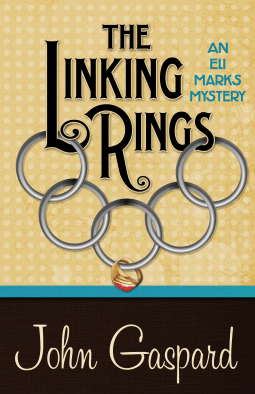
The Linking Rings, by John Gaspard****

TheLinkingRingsThis title is the fourth in the Eli Marks series; I read the one before it and loved it, but you will be fine if you’re jumping in uninitiated. Thanks go to Net Galley and Henery Press for the review copy, which I received free and early in exchange for this honest review. The book is now for sale.
Eli and his girlfriend, Megan, head to London, where he and his Uncle Harry are attending a sort of reunion with a group of magicians. When one of them is murdered, Harry is arrested and so Eli investigates in order to clear his uncle. Along the way more magicians are killed, and Eli discovers that another magician, a TV magician that holds little respect from his peers, has stolen Eli’s signature act.

Gaspard writes a solid mystery, with a manageable number of characters with a complex but blessedly linear plot. His sense of humor slays me. That said, I blanched a few times at the gender stereotypes, which aren’t entirely redeemed by the brief discussion about sexism in the industry. However, the last fifteen percent of the story is so brilliantly crafted—and so hilarious—that I could only bow in awe when it was over.

Recommended to those that enjoy a cozy mystery.

The Big Get Even, by Paul Di Filippo*

TheBigGetEvenDon’t do it, don’t do it. Put your wallet away.

I received a galley of this story free and in advance from Net Galley and Blackstone Publishing in exchange for this honest review. That said, if I’d been given a free copy plus a million dollars, I wouldn’t be able to write this thing a favorable pitch. An indifferent product rates 2 stars, sometimes 3 if there are redeeming aspects; when I give 1 star, it means I’m pissed.

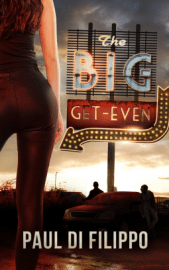
Part of my indignation, to be sure, comes purely from disappointment. The book jacket looks for all the world like an entertaining read is in the offing. I was so certain this would be a rousing good time that I held it away from myself as an incentive to make myself plow through what I thought would be a couple of less promising projects. And the story’s hook, the voice that arrests us at the outset, also promises us big fun. My first reading note to myself says, “Oh hell yes.”

As we move into the story, a tale of a combination of grift and revenge on the part of two ex-convicts, cracks start to form. For starters, Glen, our protagonist, who tells us he is lazy, free of all ambition, and has enough gold buried in the backyard to keep him happy for a good long while, is attacked by a man that has been watching him. Our protagonist is offered two options: to go in with his attacker on a plan to buy land on speculation and fraudulently sell it to a man the attacker hates, or else be robbed. This is the basis for a partnership. Glen agrees to let all of the gold be placed in a bank account bearing the name of the attacker’s girlfriend, a large, fierce woman that doesn’t do much in this story except make out with Stan and at one point, Glen. And at no point does Glen hatch a plan to get his money back and escape; instead, an instant friendship forms. The hell?

So the story doesn’t hang together very well from the start, but a strong writer can get us to believe almost anything, and I am ready to buy this premise in order to move forward.

There are a number of nasty little remarks about “queers” that frankly don’t set well with me, and they have nothing to do with the plot, apart from establishing Glen and Stan as real live he-men. But at this point I am still prepared to breeze past the offending references, make brief mention of them, and look toward a 4-star rating. If the rest of the book had been well-written and as engaging as the first chapter, I could even have seen a 4.5 rating rounded up. I had seen the bad reviews others had written, and I wanted to be the blogger that steps forward to tell the world that those folks are wrong, and that this is a terrific novel. I was primed and ready.

“Oh hell yes” becomes “Oh hell no” when the partners settle into their newly purchased resort and our middle-aged protagonist wakes up to find the barely-legal desk clerk giving him a blow job. Because, you know, she couldn’t stay away from him.

There is one other female character here. Vee also wants revenge against the mark targeted by Stan, and so she is brought aboard. But like Sandy (Stan’s girlfriend) and Nellie (the blow-job clerk), she has to have a roll in the hay with Glen, and as with Sandy and Nellie, Vee’s greatest role in the story is sexual. At this point I feel as if the author cannot decide whether he wants to write a tale of bold adventure and high stakes crime, or soft porn for middle-aged men; my eyes rolled so high they nearly lodged themselves in my hairline. However, there is foreshadowing that lets us know that the women in Glen’s life are “not through with me” and are going to surprise him, so I read to the end, hoping against hope that there will be a second shoe dropping, a colossal punchline in which the three women turn out to have pulled one over on him and his testosterone-laden (but not queer, oh please!) buddy. Maybe this whole absurd fuckathon is actually leading up to the revenge of the women.

No.

As if the whole thing wasn’t a big fat mess already, Di Filippo puts one last, ruinous flourish on this pitiful tale by adding a host of additional information right at the end that makes it impossible for readers to guess the outcome. This hunk of junk is so badly crafted that not only do I not recommend it, I won’t read this author again.

Educated, by Tara Westover*****

educatedTara Westover’s memoir has created a lot of buzz, and all of it is justified. It’s the story of one woman’s journey from a fundamentally loving yet untenable home life, to the civilized world she has been raised to fear. Each chapter focuses on one meaningful event in the author’s life, and it’s told with sensitivity, grace, and yes, also a sprinkling of rage, because how can she not? But all told, Westover permits the balm of time and distance to balance her perspective.  This book is for sale now, and it’s going to be read for a very long time.
I received my copy of Educated free and early, thanks to Random House and Net Galley. That said, if you have to pay full jacket price for this book, your money will be well spent.

Westover grows up in a large family that is nominally Mormon (Latter Day Saints, or LDS), but she and her siblings are denied the tight-knit communal bond that most members of that faith experience.  Their father is deeply suspicious of the outside world including other church members, and as his pathology grows, they are increasingly isolated. Basic social expectations such as personal hygiene and clean clothing; inoculations against deadly diseases; a birth certificate; and an understanding of how to navigate within the greater society are denied her, as Dad’s survivalist views kick into gear. She is told the story of Ruby Ridge from the time she is tiny, but grows up believing this is an event that has happened to her own family, and that Federal agents might break into her own home at any time.

Veteran teachers like me are fascinated by the differences in how students process traumatic events, and Westover is a strong case in point. Some students experience the death of a beloved grandparent or divorcing parents, and they come undone and aren’t able to function normally for several years. Then there are remarkable young people like Westover that experience horror after horror exponentially and yet somehow, with little external assistance, they are able to claw themselves free of the rubble and become high achievers.

As Westover leaves home against the strident objections of her father, she struggles to reconcile the wider world with everything that she has been taught from the cradle, and she also struggles to win her family’s forgiveness and acceptance. As she is battered, sometimes physically, by one cruel rejection after another, a friend asks her, “Have you ever thought maybe you should just let them go?” And yet, for Tara, this is unthinkable.

There’s a lot of gritty material here, along with a number of experiences that are just weird, such as Tara’s brain-damaged mother becoming a local folk hero with her own brand of witch-doctor medicine.  There are also moments of dark humor that break up the misery and terror, along with an occasional kind or enlightening act on the part of a family member or member of the public that is able to wink through for a brief time in Tara’s life. But ultimately the thing that makes it possible to wade through the nightmare that constitutes much of Tara’s childhood is our knowledge, set within the book’s title and author description, that she will emerge triumphant.

Westover tells us that the bizarre system of beliefs and taboos practiced by her family are not typical of Mormon families, and in fact a bishop that counsels her once she arrives at Brigham Young University tries to help her separate herself, to some degree, from the madness that awaits her at home during school breaks.  This reviewer grew up alongside a number of Mormon classmates, and I have to agree that none of the things Westover’s parents brought down on her and her siblings is attributable to that church. That’s not how they work.

I highlighted dozens of passages that range from the wry, to the stupefying, to the outrageous, but when all is said and done, each is better when read within context. Go out and get this book. You won’t be sorry, and at the end of it, you’re almost guaranteed to look at your own family in a gentler light.


Interview with Westover:  https://www.cbsnews.com/video/tara-westovers-journey-from-off-the-grid-childhood-to-cambridge/

Sadness is a White Bird, by Moriel Rothman-Zecher*****

“There’s nothing ‘not political’ in Palestine, habibi.”

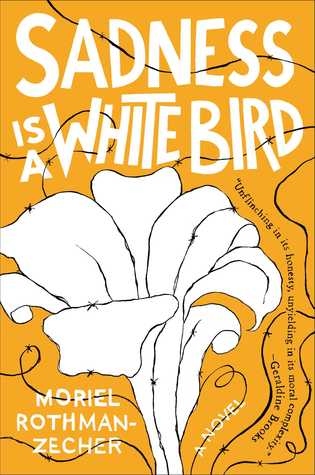
SadnessisaJonathan grew up in the United States, but now his family is in Israel, the land of his mother’s birth. He’s visited Auschwitz where much of his family died, and he can’t wait to turn eighteen so that he can train to be an Israeli paratrooper. Enough with being ‘people of word’, he figures; he wants to be a Jewish warrior, the ‘people of the sword,’ and exact some payback.  A friendship with two Palestinian teenagers complicates his life in ways he didn’t expect. I received an advance review copy of this exquisitely rendered story free, courtesy of Net Galley and Atria Books in exchange for this honest review.

Twin siblings Laith and Nimreen are Palestinians, but long days at the beach and twilit evenings spent with Jonathan, getting high and telling ridiculous jokes, blur the social boundaries observed by most Jews, and by most Palestinians. With the absurd idealism peculiar to young people that haven’t run up hard against life’s limitations, Jonathan thinks that he can have both, that he can become an Israeli soldier and keep his friendships separate from his new career. His friends know better, but still they love him.

There’s only one way to tell a story like this one, and that’s as a tragedy; that’s exactly what Rothman-Zecher does, but he does it better than anyone else I can imagine.  This doomed friendship becomes more deeply intimate the closer the day comes when Jonathan must report for duty. Ultimately it becomes a bizarre love triangle in which our young protagonist has a sexual relationship with both of them—though fortunately not simultaneously.  For a good long while this lodges in my craw, and as the story continues, I am too revolted to focus. As brilliantly written as this story is, I was headed in the direction of a four star review in protest; that was true, anyway, until I recognized the allegory. Then I was over it.

Nimreen is a teenager too, but she lives with the partitioned state every damn day of her life. She knows that Jonathan can’t have it both ways, but she hopes against hope that he’ll change his mind, that he won’t go into the service. And as Jonathan and his friends try to do anything, go anywhere where there are other people, we see exactly how polarized this place has become. They can’t hitchhike together; there are so many places where either Jonathan isn’t safe, or Laith and Nimreen are not permitted. He goes through a checkpoint where, without his suspicious-looking friends, he would simply have been waved through, and he finds out what it’s like to have one’s homeland invaded.

Rothman-Zecher does a splendid job of depicting exactly how difficult this question is. If I ask myself, have Jews been systematically robbed of their possessions, their homes, and sometimes their lives across not just hundreds of years, but across centuries? I know the answer is yes. I knew it before, but this story drives it home in a way that is visceral. And do Jews deserve to have a home that nobody can ever, ever take from them again? Again, the answer is absolutely yes.

But then we look at the Palestinians, indigenous people living in the Third World at a bare subsistence level. Their homes are almost all they possess, and does anyone have the right to march in, evict them from this place and chase them away from their homes, their families, their livelihoods? Oh hell no, of course not.

In this epic story, Rothman-Zecher bridges the scholarly with the deeply personal, fulfilling a task that can only be achieved by excellent fiction. This searing debut has put this writer on the map definitively and marked him as a new voice in literature.

Highly recommended.