“Blood is one thing. The sight is another. But courage—that is rarest of all, Vasilisa Petrovna.”
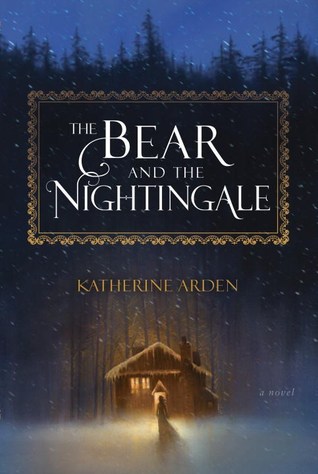
The Bear and the Nightingale is the most brilliant fantasy novel I’ve seen since Tolkien wrote, and I want you to understand how different, how special it is. I received my copy free in exchange for an honest review—and those of you that read my last two reviews know that this privilege has never made me obsequious. Thank you Net Galley and Random House Ballantine for the advance copy. It’s worth its weight in spun golden magic, and it will be available to the public this Tuesday, January 10, 2017.
“The brave live…The cowards die in the snow.”
Our protagonist is Vasilisa, affectionately known as Vasya; she’s an adolescent with many talents, some of which are supernatural. She generally keeps these abilities to herself, lest she be called a witch. Her father, Pyotr, is a minor prince in the frozen Northern hinterlands of Russia during the 14th century. The setting here is mesmerizing, and from the first page I understood that this particular story is one I would save for late nights when my family is asleep. Let my other reading be interrupted by the minutiae of running a household, but not this one. This is a juicy tale, perfect for a cold winter night burrowed beneath the quilts. I open this magical tale and am lost inside it.
Our setting is ancient Northern Russia, then known as ‘Rus’, since no central government had formed yet. This is a time when women carry about as much social worth as a poker chip or livestock, and yet as the story progresses, I realize that this is a stand-up-tall feminist folk tale of the highest order; in fact, it’s a lot of things. This is the sort of debut that most likely causes writers like Harper Lee to go back in the house and never publish anything else, lest the second novel be considered a let-down after the first. I hope, however, that we’ll see a lot more of Arden.
Our story commences in the house of Pyotr, a minor prince whose wife has died in childbirth. He loved Marina dearly, but as his daughters grow closer to marriageable age, he knows he must go to Moscow to seek a new bride to run his home, and marry his elder daughter Olga to a man of wealth and power. And though Olga’s match is a good one, it’s in Pyotr’s remarriage that things go badly wrong.
A brief note about the setting and other details involved with time and place. First know that this story does require a relatively high literacy level; for those that struggle with a high vocabulary level, it may prove to be more work than fun. However—for those reading digitally especially—please note that there’s a glossary at the back of the book. And those that are able to read this digitally on a device with a touch screen will be happiest of all, because it’s so easy to touch a word and get a definition immediately. I also ran a few searches due to curiosity, since I was not at all eager for this book to end. I took my time with it, and while I was buried in this magical world, I was nevertheless learning details of history and geography that I hadn’t known before.
Because I taught teenagers how to write for a number of years, it’s my natural inclination, even in an absorbing story such as Arden’s, to go back and look again to see what specifically produced this alchemy. Undoubtedly, the development of multiple characters in a deft, expert manner is essential. There’s not one character in this story that I don’t believe. Every last one of them is real to me, a feat in and of itself when writing fantasy. It takes confidence and authority to tell the reader that although the story contains all manner of supernatural elements, it’s all true, and so are its characters.
But also, there are real life details true to the time and place that Arden weaves in seamlessly. As I reread some key passages, I note that when the men come indoors from the snowy woods, they aren’t merely cold, dirty and tired; they’re covered in scratches, they’re voracious, and their boots steam and stink up the room once they remove them. In another scene, when Pyotr travels far from home, he can afford fine guest lodging, but although he gets a big, soft, fluffy bed, he also has to put up with vermin, because they were a part of everyone’s life. Such details contribute to the immediacy of the story.
It’s Arden’s outstanding word smithery that makes this story a standout. When Arden writes, the mists clear and we are transported, quivering in the snowy forest of the 14th century Russia, tearing pell mell across frozen ground on the back of a noble stallion, facing down death as demons scream and shadows dance.
I won’t spoil any of the subsequent plot points for you, but please know that this is a multifaceted story with a lot of secondary threads that contribute to the main story rather than distracting us from it. To do so in a debut novel is stunning. A particularly interesting side character is Dunya, the nurse that has raised Vasya and has held onto a talisman intended for Vasya at great personal cost.
Messages and possible themes come out of the woodwork once one looks for them. A story such as this one, in which Vasya defends the old pagan deities against the religion of Kostantin, would once upon a time have caused conservative Christian parents to come screaming to the school with their lawyers on their cell phones in one hand and a flaming torch in the other. It could happen still, but what greater honor could Arden ask than to find her way into the ten most frequently banned books?
Meanwhile, in this trying time for independent women, we need strong female characters like Vasya and Dunya to remind girls and women that we are powerful, and that together, we can conquer those that would strip us of our autonomy and march us barefoot back to our kitchens. I have no idea whether any such direct political purpose is intended by Arden, but it certainly serves as a potent message: we will be oppressed only if we let that happen. Those that have even a fraction of Vasya’s independence, confidence and courage can not only prevent the door opportunity from slamming shut; we can knock that door off its fucking hinges, for ourselves, our daughters, and theirs as well.
“’All my life,’ she said, ‘ I have been told ‘go’ and ‘come.’ I am told how I will live, and how I must die. I must be a man’s servant and a mare for his pleasure, or I must hide myself behind walls and surrender my flesh to a cold, silent god. I would walk into the jaws of hell itself, if it were a path of my own choosing. I would rather die tomorrow in the forest than live a hundred years of the life appointed me.’”
Those looking for themes here have a banquet of opportunities. Though I would say the story is one of solidarity among women, or of woman’s independence, there are so many other possibilities. One could make a case that this story is about loyalty; one could claim it’s about family. One could say it’s about the victory of the collective good over the pride, greed, and ambition of the individual.
One thing I can say for certain is that The Bear and the Nightingale is impressive any way you approach it. It holds the potential to become a favorite of the genre, handed down lovingly from one generation to the next. Buy it for yourself, for your daughter, your mother, or for any woman that you love, or for someone that loves women and good fiction. A book like this doesn’t come along every day.
Don’t even think of missing this book. You can get it Tuesday, or better still, you can pre-order it now.

 This book was just what the doctor ordered. Whenever I find myself steeped in too much important-yet-grim literature, I have a handful of go-to authors that are guaranteed to leave me feeling better about the world. Jackson is one of them. I bought my copy of this book used via Powell’s City of Books, online using the gift certificate they bestow on reviewers from time to time. I recently won another one and have ordered some more books by this writer to brighten the winter to come.
 During World War II, the Japanese Imperial Army forced over 400,000 women into sexual slavery; though the Korean comfort women have been recognized for a long time, the survivors in the Philippines lived with the trauma and appalling social stigmatization for decades, unheard. Recently 173 of them, now very elderly, filed suit against the Japanese government. This collection includes interviews with 16 Filipina women whose lives were ruined by this atrocity. Thanks go to Net Galley and Northwestern University Press for the DRC, which I received early and free in exchange for this honest review. The collection is for sale now.
 Voice, voice, voice; nobody writes like Sharyn McCrumb. Here her dry, dark humor combines with her expertise in Appalachian culture and above all, her deep respect for the working poor, and the result is a masterpiece of an historical mystery. Thanks to Net galley for the DRC, and to Atria for sending a hard copy galley and a finished copy of this excellent novel. However, had I paid full freight, I’d have come away happy. This book will be available to the public September 12, 2017.


 Devlin write this, her autobiography, when she was all of 23 years old. Had it been anyone else I would have considered it ridiculous, a juvenile pretention, but Bernadette Devlin was one of the primary fighters for Irish freedom during the tumultuous 1960s, ‘70s, and ‘80s, and given how events played out, it is likely that she wrote this while fully anticipating that she’d be killed in the struggle fairly early on. Goodness knows, the British cops tried. Here’s a bit of background information from Wikipedia:
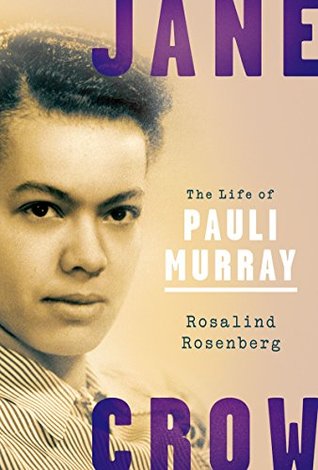 Pauli Murray is the person that coined the term “Jane Crow”, and was the first to legally address the twin oppressions of color and gender. I had seen her name mentioned in many places, but this is the first time I’ve read her story. Thank you to Net Galley and Oxford University Press for the opportunity to read it free in exchange for this honest review. This biography is for sale now.
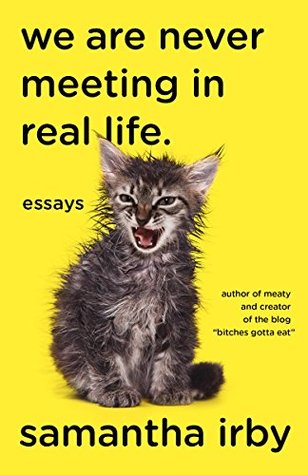 Get out your plastic and go use the restroom, because this book will leave you holding your sides. Samantha Irby mines what ought to be old material but isn’t, at least not by the time she is done with it, and her edgy, plain-truth humor may leave you breathless by the time the last page is turned. My thanks go to Net Galley and Knopf Doubleday for the DRC, which I received free and early in exchange for this honest review. This book has just been released and is available for purchase.
 Dorothy Day is an interesting historical figure, the woman that founded The Catholic Worker, which was initially a combined newspaper, homeless shelter, and soup kitchen. I once subscribed to The Catholic Worker, and since it cost one penny per issue, you couldn’t beat the price. I saw this biography available and snapped it up from Net Galley; thanks go to them and Scribner, who provided me with a DRC in exchange for an honest review. This title was published in late January and is now available for purchase.

