
 3.5 stars rounded up. Thanks go to Net Galley and Doubleday for the DRC, which I received free and early in exchange for this honest review.
The story begins with a US spy plane being shot down over Soviet (Russian) airspace in 1960. This is embarrassing. Eisenhower’s people decide to make something up; after all, nobody survives an airplane crash over dry land. Moreover, the pilot was provided with a cyanide capsule—James Bond style—so even if he survived, he must be dead; likewise, the plane was likely blown to bits, with not much left for the Soviet investigators to learn.
Let’s say it was a weather plane. It wandered off course, and those mean Soviets shot it down.
But oh dear, this is even more embarrassing: the pilot lived, and he didn’t feel like taking the poison pill. Would you? So the Russians know what he was flying, and they know who he is. They’re telling the world.
Just reading the teaser for this book, I was hooked. But just as a brilliant writer can take dross and make a good tale of it, so can an indifferent one take compelling information and make it into a snooze. For me, this was not an entertaining read. I had agreed to write about it, so I had to read it, and it felt like work.
I want to be fair here: there are people that will read this book and like it. There’s a lot of technical information about the spy plane, and about many other spy planes, some of which were never built. Apart from the truly bizarre one that was supposed to be landed on its belly (no landing gear), or the ridiculous idea of a nuclear powered plane, I found my attention drifting during these descriptions. But I am not interested in aviation, and if you are, you may like this.
The other aspect that causes my attention to wander is the history 101 aspect of it. I’m a retired history teacher. I don’t need an author to walk me through the Cuban Missile Crisis or the Bay of Pigs. However, I note that other reviewers came to this work with no knowledge of either, and they are delighted to be clued in. For newbies, count this as a win.
Finally, I have to credit the source work. Reel didn’t take the easy way out. His end notes are first rate.
For those that are relatively new to this chapter of American history, this may be a compelling read. For those interested in the history of American aviation, it is recommended. For those that are well read in the field, maybe not.
This book is now for sale.
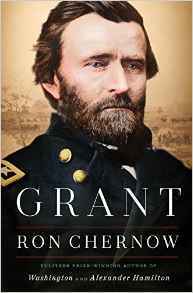 I’m tempted to add this title to my Southern fiction shelf. For a Pulitzer winner to be so careless with his facts is egregious. I got 200 pages or so in, and I found a glaring error. To be honest, I thought maybe it was me. I haven’t taught the American Civil War in 8 years now; am I slipping? Because I could swear that the famous tidbit about a single battle killing more soldiers than the American Revolution, War of 1812, and war with Mexico all added together was about the battle of Antietam, yet here is Chernow, saying it’s Shiloh.
 Ta-Nehisi Coates is pissed. He has a thing or two to say about the historical continuity of racism in the USA, and in this series of eight outstanding essays, he says it well. I read it free and early thanks to Net Galley and Random House, and I apologize for reviewing it so late; the length wasn’t a problem, but the heat was hard to take. That said, this is the best nonfiction civil rights book I have seen published in at least 20 years.
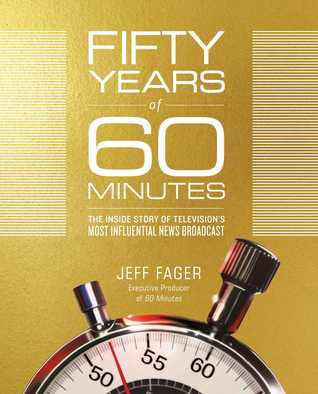 60 Minutes first aired in 1968, a year for news if ever there was one. It was brilliantly conceived as a television news magazine, covering multiple unrelated news stories in a single broadcast. Executive producer Jeff Fager offers the reader an insider’s peek; lucky me, I read it early and free thanks to Simon and Schuster and Net Galley. It’s for sale today.


 I was invited to read and review this title by Net Galley and Crown Publishing. Thanks go to them for the DRC, and my apologies for being late, late, late. The title was published last month and is available now.


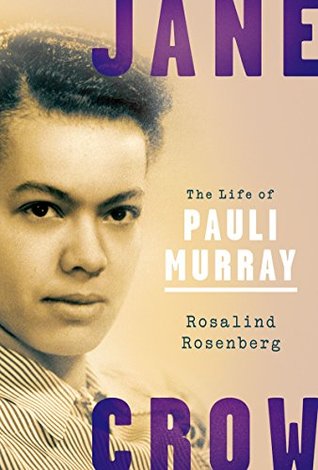 Pauli Murray is the person that coined the term “Jane Crow”, and was the first to legally address the twin oppressions of color and gender. I had seen her name mentioned in many places, but this is the first time I’ve read her story. Thank you to Net Galley and Oxford University Press for the opportunity to read it free in exchange for this honest review. This biography is for sale now.
 I was invited to read and review this title by Net Galley and Open Road Media. At first I thought it looked like a real winner, and in many respects it is. For me, one glaring problem made it impossible to finish; more on that in a minute. For those interested in the Resistance during World War II, this may prove a successful read and an interesting one if you can get past the hurdle that stopped me.
