
“I was perhaps Daddy’s most important legacy of all.”

Thanks go to Bloomsbury and Net Galley for the review copy, which I read free and early in exchange for this honest review.
I was a child during the Civil Rights era, and although I didn’t live in the American South, I recall news footage of Kennedy’s father, George Wallace, the man that the author rightly attributes as a harbinger of the Trump movement. Instead of “Make America Great Again,” Wallace urged his constituents—including the Klan, whom he openly welcomed to his campaign—to “Stand Up for America.” When the federal government signaled that it would enforce the segregation ban, Wallace made headlines around the world by literally standing in the door of the schoolhouse in order to turn the first Black student away from a public school in Alabama. My own father was a redneck of the first order, but even he distanced himself from this extremist. Wallace ran for U.S. president but was defeated; upon returning to the governor’s mansion, he was shot and paralyzed from the waist down. By that time Malcolm X was dead and could not have told us that this was a case of chickens coming home to roost, and yet it may well have been.
Although the book’s summary suggests that Kennedy is vastly different from her father politically, her prose indicates that her true, bitterest grievances all center on his philandering betrayal of her sainted mother and his failure to be a strong provider and dedicated family man. She tells us that even in the 1960s, she felt his racist rhetoric was wrong, and so I waited for what I thought must surely come next: the moment she either confronted him or simply moved out of the house to another part of the country to restart her life in saner surroundings. None of this happened, as it turns out. She stayed in the governor’s mansion, thrilled by the relative affluence and privilege she regarded as her due following a tumultuous, sometimes impoverished childhood.
The title is taken from a Hemingway quote, and in her own story designated the location of her maternal grandparents, whose simple, homespun nurturance provided relief to her mother and herself when her father went on the road politicking and didn’t send money home for them to live off of. At the beginning of the book she uses the expression often enough to beat it to death, but once her father becomes governor she rarely speaks of these kind, gentle people. Toward the end, she parenthetically notes that her grandmother died at some point back in the middle of the book.
It’s interesting that although Lurleen Wallace was elected governor in order to circumvent what was at the time a state law against successive terms for her husband, the author says nothing at all about her mother’s civil rights policies. We see that she won the governorship in a landslide and was loved by all, and yet if her policies diverged much from George’s, that would have created screaming headlines. It’s just one of the many inconsistencies within this memoir.
The last several chapters are devoted to her father’s redemption politically, or so she asserts. He never hated African-Americans, she tells us, but only did and said those things in order to gain office. Later in life, he asked a handful of Civil Rights leaders for forgiveness and spoke in Black churches about his error. She follows this up by pointing to the large numbers of Black voters that returned him to the Capitol.
I find myself wondering a lot of things, and foremost among them is why anyone would consider a candidate that makes the cold-blooded decision to promote violent racism for the sake of gaining office to be morally superior to one holding the genuine belief in the inferiority of other races and ethnicities. Wallace, she tells us, didn’t sign onto the Klan’s program because of his convictions, but because of what they could do for him. And while the parallels she draws with Nixon are apt ones, the rationalization of her late father’s destructive, ethically bankrupt lifetime is chilling in its own way, but she underplays this aspect of his career.
Her “daddy” lived long enough to appoint her 26-year-old attorney husband to the state bench.
The second star here is reluctantly provided because she does some very nice things at the outset with regard to her description of time and place in the life of poor white folks in mid-twentieth century rural Alabama. If you’re looking for a silver lining to this wretched work, there it is. It’s all I can find.
I would place this book in the child-revenge category along with Christina Crawford, Patti (Reagan) Davis, and Carrie Fisher. Read it if you want to wallow, but when you’re finished, you will likely want to shower and gargle.


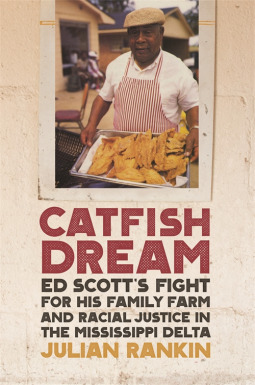 Ed Scott Junior was one of the first Black catfish growers in the USA, a “Delta titan,” and he was the very first to own a catfish processing plant. My thanks go to Net Galley and the University of Georgia Press for the review copy. It’s inspirational, well written, and well sourced. The book will be available to the public tomorrow, July 10, 2018.
 Ta-Nehisi Coates is pissed. He has a thing or two to say about the historical continuity of racism in the USA, and in this series of eight outstanding essays, he says it well. I read it free and early thanks to Net Galley and Random House, and I apologize for reviewing it so late; the length wasn’t a problem, but the heat was hard to take. That said, this is the best nonfiction civil rights book I have seen published in at least 20 years.
 A hard look at the American penal system–from cops, to court, to prison–is past due, and within this scholarly but crystal-clear series of essays, the broken justice system that still rules unequally over all inside USA borders is viewed under a bright light. Isn’t it about time? Thank you to Doubleday and Net Galley for the DRC. It’s for sale, and anyone with an interest in seeing change should read it. Caucasian readers that still can’t figure out why so many African-Americans are so upset should buy this book at full price, and they should read it twice. If you read this collection and still don’t understand why most Civil Rights advocates are calling out that Black Lives Matter, it likely means you didn’t want to know. But bring your literacy skills when you come; well documented and flawless in both reason and presentation, it’s not a book that individuals without college-ready reading skills will be able to master.


 Pauli Murray is the person that coined the term “Jane Crow”, and was the first to legally address the twin oppressions of color and gender. I had seen her name mentioned in many places, but this is the first time I’ve read her story. Thank you to Net Galley and Oxford University Press for the opportunity to read it free in exchange for this honest review. This biography is for sale now.
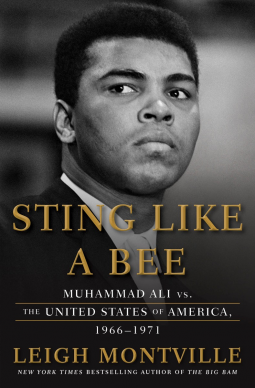 “’It takes a lot of nerve for somebody, mainly a white, to ask me do I hate. I haven’t lynched nobody and hid in the bushes.’”


 Seattle Book Mama