
3.5 rounded up; thanks go to Net Galley and Simon and Schuster for the review copy.

Dave is seventy, and his dog Lucy is up there in years as well. Unlike most of Barry’s essays and books, this one has a reflective aspect and a bit of advice for those nearing or entering their senior years. There’s still a great deal of humor, but there’s a gently philosophical self-help thrust not present in his earlier work. As a 60-year-old retired reader that loves her dog, I represent his target demographic. And I also have to say—his demographic is clearly Caucasian, and this made me a mite uncomfortable. I’ll get back to that in a minute. I have to, since apparently no other reviewer anywhere is going to address it. *
Dave breaks his advice down into seven suggestions, all of which are in some way inspired by Lucy. None of his points are especially new or profound, but because he is so capable in describing and explaining them, he makes old tired advice seem worthy of my attention. A number of his observations left me nodding my head, and he includes liberal humorous anecdotes that in some cases, made me laugh out loud. And here I will put on my teacher hat and tell you that brain studies reveal that learning is easier when there is positive emotion that goes with it.
Dave wants senior citizens to stop merely being content—which is exactly what I am—and take the occasional trip out of our comfort zones. He describes a family trip to a wildlife preserve in Africa to illustrate his point, and his story is so hysterical that it leaves me gasping for air. I can never imagine myself participating, as Dave has, in a parade involving decorated lawnmowers, but I love reading about it. And he reminds senior men to find their friends and tell them how important they are. A great many men have friends that are very important, and that they haven’t talked to in person or even by phone for years. What are you waiting for? At some point, one of you will be dead, and then the survivor will realize his mistake. Barry argues for seizing the moment. (He also makes me glad I am female. My friends hear from me all the damn time, and when I leave the planet, they will know what they meant to me.)
I began reading Barry’s work in the 1980s, and during the ‘90s and ‘00s, I used one of his columns, “How to Play with a Dog,” to teach middle school students expository writing. Step by step, he told us how to do it, and in the most enjoyable way; and that’s what expository writing is. Kids that didn’t like to write sat up and listened to this. It is a genius piece of work, and because of this, and because of the long period during which I loved each and every thing he wrote, this book receives a favorable rating from me. Because there’s also a big problem with it. Keep reading.
I loved the way Barry skewers the whole ‘mindfulness’ shtick even as he also advocates for some of its better aspects. When he digs into the topic of the diversity workshop, I feel a little hitch in my breathing, a twinge of anxiety. I read Dave Barry Does Japan, and the things he said about the Japanese demonstrated that his understanding of other races and cultures needs an upgrade. Here he tells us that his wife is half Cuban, half Jewish, so we know he’s probably not an alt-right white supremacist, but at the same time, some of the jokes he makes are cringe-worthy at best. When he tells us that if he was ever forced to sit through another diversity workshop (as was required by the Miami Herald,) he would join the Klan and the Black staff members would go with him, I slumped. Aw, shit. Dave, statements like this are why diversity training even exists. If there’s a training and you are invited, run there and get you a real good seat. In fact, there’s a chance that other staffers had to go to a workshop that was mostly aimed at you!
I have had a similar experience with 3 or 4 other books I’ve reviewed, and there’s always someone out there that will leave a comment saying it’s ridiculous to fuss over one little sentence in the book. In anticipation, I have an analogy just for those people, and here it is:
imagine you have been invited to a potluck supper. You hand your contribution, maybe a bowl of potato salad to the host to add to the collection of food, and you grab a plate. There are three long tables, and you move down the row selecting from among the crispy fried chicken, the smoky ribs, watermelon, three-alarm chili, coleslaw, nachos, garden salad, pasta salad, fruit salad, a bowl of human excrement, baked squash with cinnamon, homemade cherry pie, key lime pie, shrimp salad, pesto salad, deviled eggs, and of course, your own contribution, the potato salad. But once you sit down, your appetite has fled, hasn’t it? You came in feeling hungry. You skipped a meal before this thing, cause you knew there’d be a lot of good things to eat. And of course, when you passed that bowl of human poo, you didn’t take any of it, and like everyone else, you politely diverted your eyes away from it once you were satisfied that it was exactly what it looked like. What the hell…? After a glance around the room to see whether a joke is about to be sprung, or at least a conversation had about this inappropriate addition, you edge toward the garbage, where you quietly deposit your uneaten meal, and then you edge toward the door…all because of that one thing.
Why would you toss a plateful of delicious food merely because there was one distasteful thing on the table? Because neither you nor your food could be close to that mess for even a minute.
So that’s how I see the Klan reference. It’s hard to chuckle after a bomb like that has been included, and he even includes a snarky remark after it about the fact that some will be offended, which comes off like an extended middle finger to anyone that doesn’t like a Klan-friendly joke.
And maybe that’s how it rolls with him; he has all the money he needs, and he doesn’t care if there are people that don’t like what he wrote. But I cannot for the life of me understand why someone would write a memoir like this, one intended to provide an excellent philosophy for his aging readers, one which will also be a part of his legacy after he’s gone, and then include something that will hurt some of the people that read it. I just don’t get it.
Do I recommend this book to you? From where I sit, if you want it, don’t pay full price for it. I wouldn’t buy it for anyone I like, but now you have my take on it, so the as always, the decision rests with you.
*Sigh!


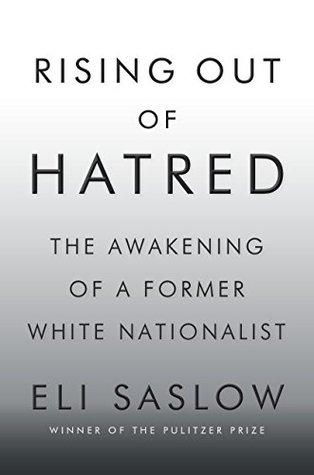 Derek Black was the heir apparent to the White Supremacist throne, godson of David Duke, and the son of the founder of the largest hate site in the U.S. This gripping biography tells the story of his transformation, from racist wunderkind to social justice proponent. Thanks go to Net Galley and Doubleday for the review copy. This book is for sale now.
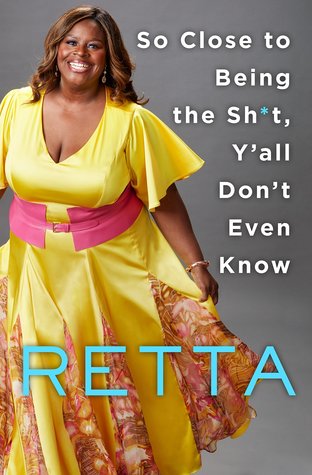 Huh. Go figure.
 This one is a crushing disappointment. I seldom buy books anymore, but I was so pumped about this collection that I went all out and got a hard copy, expecting to love it enough to keep it in my home library forever. Sadly, this isn’t what I expected.
 Tara Westover’s memoir has created a lot of buzz, and all of it is justified. It’s the story of one woman’s journey from a fundamentally loving yet untenable home life, to the civilized world she has been raised to fear. Each chapter focuses on one meaningful event in the author’s life, and it’s told with sensitivity, grace, and yes, also a sprinkling of rage, because how can she not? But all told, Westover permits the balm of time and distance to balance her perspective. This book is for sale now, and it’s going to be read for a very long time.
 Fans of Henry Fonda and Jimmy Stewart will want to read this biography, written by the author that recently wrote a biography of John Wayne. I was invited to read and review by Net Galley and Simon and Schuster, and so I read it free in exchange for this honest review. It’s for sale now.
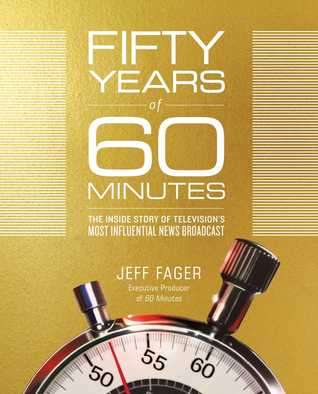 60 Minutes first aired in 1968, a year for news if ever there was one. It was brilliantly conceived as a television news magazine, covering multiple unrelated news stories in a single broadcast. Executive producer Jeff Fager offers the reader an insider’s peek; lucky me, I read it early and free thanks to Simon and Schuster and Net Galley. It’s for sale today.
 I posted this review almost two years ago, and at the time most of us considered that Petty had a lot of gas left in his tank. Of all the musical memoirs and biographies I have read–and there are many–this is the one I loved best. The loss of this plucky badass rocker hit me harder than the death of any public figure since Robin Williams died, so reposting this here is my way of saying goodbye to him. Hope he’s learning to fly.
 Seattle Book Mama