
 Markley’s thunderous debut is not to be missed. My thanks go to Simon and Schuster and Net Galley for the review copy, which I read free and early, but this is one of the rare times I can say that if I’d paid full hardcover price, it would have been worth it. This is the summer’s best fiction, and it’s available to the public August 21, 2018.
Our story is broken into a prelude and four additional parts, each assigned to a different protagonist, all of whom knew one another, traveling separately from four different directions; they were born during the great recession of the 1980s and graduated from New Canaan High in 2002, the first class to graduate after 9/11. We open with the funeral parade held for Rick Brinklan, the former football star killed in Iraq. His coffin is rented from Walmart and he isn’t in it; wind tears the flag off it and sends it out of reach to snag in the trees. The mood is set: each has returned to their tiny, depressed home town, New Canaan, Ohio, for a different purpose. The town and its population has been devastated economically by the failure of the auto industry:
“New Canaan had this look, like a magazine after it’s tossed on the fire, the way the pages blacken and curl as they begin to burn, but just before the flames take over.”
At the mention of football, I groan inwardly, fearing stereotypes of jocks and cheerleaders, but that’s not what happens here. Every character is developed so completely that I feel I would know them on the street; despite the similarity in age and ethnicity among nearly all of them, there is never a moment when I mix them up. And the characters that are remembered by all but are not present are as central to the story as those that are. As in life, there is no character that is completely lovable or benign; yet almost everyone is capable of some goodness and has worthwhile goals.
Families recall the closure of an industrial plant with the same gravity with which one would remember the death of a beloved family member; the loss has been life changing. Residents are reduced to jobs in retail sales and fast food, welfare, the drug trade, and military service due not to legal compulsion, but economic necessity. Everyone has suffered; Walmart alone has grown fatter and richer.
This is an epic story that has it all. We see the slide experienced by many of New Canaan’s own since their idealistic, spirited teenaged selves emerged from high school to a world less welcoming than they anticipated. One of the most poignant moments is an understated one in which Kaylyn dreams of going away to school in Toledo. This reviewer lived in Toledo during the time when these youngsters would have been born, and I am nearly undone by the notion that this place is the focus of one girl’s hopes and dreams, the goal she longs for so achingly that she is almost afraid to think of it lest it be snatched away.
Because much of each character’s internal monologue reaches back to adolescence, we revisit their high school years, but some of one person’s fondest recollections are later brought back in another character’s reminiscence as disappointing, even nightmarish. The tale is haunting in places, hilarious in others, but there is never a moment where the teen angst of the past is permitted to become a soap opera.
Side characters add to the book’s appeal. I love the way academics and teachers are depicted here. There’s also a bizarre yet strangely satisfying bar scene unlike any other.
Those in search of feel-good stories are out of luck here, but those that treasure sterling literary fiction need look no further. Markley has created a masterpiece, and I look forward to seeing what else he has in store for us.
 Ed Scott Junior was one of the first Black catfish growers in the USA, a “Delta titan,” and he was the very first to own a catfish processing plant. My thanks go to Net Galley and the University of Georgia Press for the review copy. It’s inspirational, well written, and well sourced. The book will be available to the public tomorrow, July 10, 2018.
 Huh. Go figure.
 4.5 rounded up. What a way to make a debut! Ripley’s creepy new thriller will have you locking your windows and looking under the bed at night. Thanks go to Atria Books for the review copy, which I received free of charge. I didn’t ask for it, didn’t expect it, but once I flipped it open and began reading, there was no question that I would finish it. You’ll feel the same.
 3.5 stars, rounded upward.
 Nelson Mandela’s hundredth birthday approaches. His grandson Ndaba, whom Mandela raised following his release from prison, talks about growing up with the titan that led the movement against Apartheid in South Africa. He reflects on Xhosa culture and the role that it played in the struggle and in his own development, and it is within this framework that he talks about his grandfather, and about the future of his people.
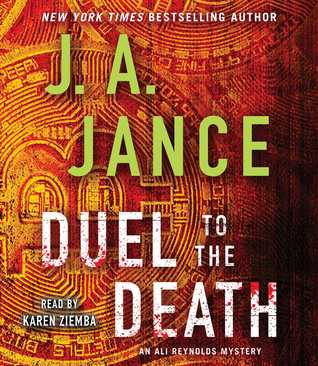 Jance is one of my favorite hometown writers, author of the J.P. Beaumont series and other books, and so I was pleased to see this title offered on Net Galley. Thanks go to that site and Touchstone for the free review copy. It’s for sale now.
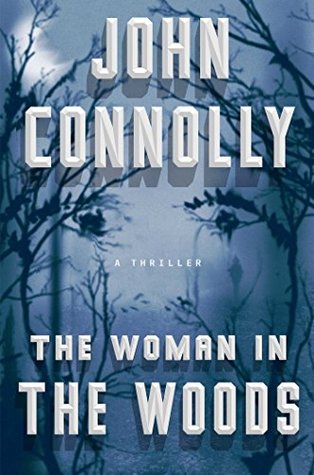 Connolly is one of a handful of writers whose names I search when I go to Net Galley. He’s consistently brilliant, and so I am grateful to Atria Books and Net Galley for the review copy. This book is for sale now.
 Thank you to Net Galley and Sourcebooks for the review copy, which I received free of charge in exchange for this honest review. This book is for sale now.
 Jim Crace is an award-winning author with an established readership, but he is new to me. Thanks go to Net Galley and Doubleday for the review copy. This book will be available to the public Tuesday, June 19, 2018. Those that love literary fiction should take note.
 Seattle Book Mama