Prairie Fires, by Caroline Fraser

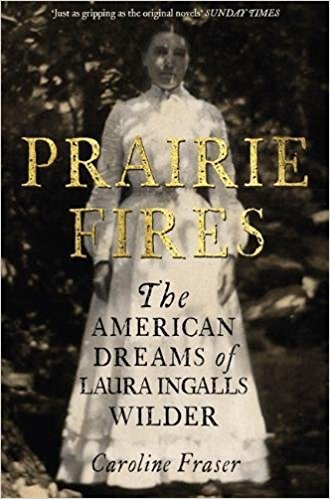
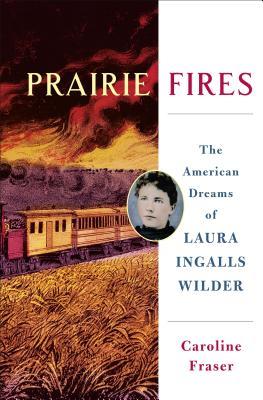
prairiethe_Are the classic “Little House” books memoir or historical fiction, and were they written by Laura or by her daughter? If you’re confused, you’re not alone. In this epic, absorbing biography of her great-grandmother, Fraser tells us. Between her congenial narrative and careful, detailed documentation, this author has created a masterpiece. Lucky me, I read it free and early thanks to Net Galley and Henry Holt Publishers. This book is now for sale.

Laura’s early life was considerably harder than the sepia-toned, heartwarming stories with which she recounts it. Little children could not stand to hear the grueling poverty and crushing losses her family sustained.


“Her autobiographical novels were not only fictionalized but brilliantly edited, in a profound act of American myth-making and self-transformation. As unpublished manuscripts, letters, and documents have come to light, we have begun to apprehend the scope of her life, a story that needs to be told, in its historical context, as she lived it. That tale is different from the one she wrote. It is an adult story of poverty, struggle, and reinvention—a great American drama in three acts…Showing American children how to be poor without shame, she herself grew rich.”

Wilder was a legend unto herself, a fierce, strong woman that could survive anything, anything, and everything. Her story recounts not only personal hardships, but the wide sweeping history that she lived through, from the Westward movement and Manifest Destiny to the suffrage movement, the Dust Bowl, and the Great Depression, as well as the elephant in the room: Indian removal and genocide.

The book, some 600-plus pages, recounts not only Wilder’s story, but that of her daughter, Rose Ingalls Wilder, who was, frankly, a real piece of work. Their lives were so intensely intertwined that to do this any other way would render Wilder’s story incomplete.  And I appreciate the scholarly objectivity with which Fraser treats her subject; it’s not without warmth, but she is clearly not manipulating facts, as some authors do when writing about famous relatives. PrairieFires

And although I previously named a different title as the go-to biography of 2017, I have to recognize that Fraser’s book is a contender.  Highly recommended.

Best of the Year: 2017

Gallery

This gallery contains 3 photos.

2017 has been a stellar year for literature, and when I sat down to rate my top ten, I found myself stymied. Working up to it by offering the best of each genre seems more approachable, although still daunting. Most … Continue reading

Hank & Jim, by Scott Eyman****

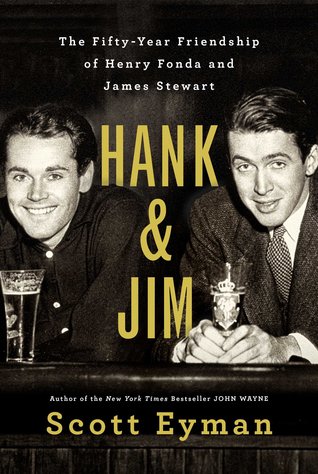
HankandJimFans of Henry Fonda and Jimmy Stewart will want to read this biography, written by the author that recently wrote a biography of John Wayne. I was invited to read and review by Net Galley and Simon and Schuster, and so I read it free in exchange for this honest review. It’s for sale now.

The book is well crafted, and multiple aspects contribute to its success. The first is the unglamorous but essential research. Eyman used extensive interviews with both actors’ families as well as directors and other actors that had worked with them. The second is the thoughtful analysis. Eyman’s insights are intelligent and fairly measured, never becoming prurient, gossipy, or mawkish. The third is his friendly, congenial narrative, peppered with telling anecdotes that keep the pages turning.  It’s well organized and doesn’t rely on photographs to tell the story.

These actors belonged to my parents’ generation, and so for a long time I was not much interested in them. More recently, though, I’ve found it’s interesting to see their craft, their lives, and their work  as creatures of the time in which their careers blossomed, and as part of American entertainment history.

The truth is that I never cared much for Henry Fonda. The only one of his movies I saw in the theater was On Golden Pond, and the harsh way he spoke to his daughter on the screen—who was also his daughter in real life, Jane—was so brutal that I never wanted to see anything more that he’d done, apart from the occasional old movie I ran across on television.  Learning later that he was more or less the same father to her in real life didn’t help much. Eyman is unsparing as he describes this aspect of the Fonda family, but he also points to the mellower man he became later in life, and to the tremendous loyalty he showed his friends, Stewart foremost among them.

I was more interested in Jimmy Stewart, who left a more timeless body of work. Harvey is a film I loved enough to search out and watch in turn with each of my children.  Of course, at Christmas time I am inclined to pull out It’s a Wonderful Life, although none of my kids would watch it with me more than once. There was such heart in his roles.

Because I like Stewart’s work, I had already read one biography fairly recently. Robert Matzen’s Mission: Jimmy Stewart and the Fight for Europe dealt well with his war years as well as the early years of his life, and so I didn’t enjoy the first half of Eyman’s book—which covered the same ground again—as I did the second half, which I found both comforting in places as well as mesmerizing.  The second part also has more quotes by his children, who weren’t around for much of the stars’ earlier lives. And I came away with renewed respect for Jane Fonda, who had a harder road than I had previously understood.

Now I have half a dozen movie titles I want to watch, or watch again; that’s a sure sign of a strong biography. And it makes me think warmly of my own longstanding friends, some of whom I’ve known and loved almost as long as the 50 years that Hank and Jim were friends.

Recommended to fans of Fonda and Stewart, and to those that love good biographies; this would also make a nice Christmas gift for older relatives.

Petty, by Warren Zanes*****

pettyI posted this review almost two years ago, and at the time most of us considered that Petty had a lot of gas left in his tank. Of all the musical memoirs and biographies I have read–and there are many–this is the one I loved best. The loss of this plucky badass rocker hit me harder than the death of any public figure since Robin Williams died, so reposting this here is my way of saying goodbye to him. Hope he’s learning to fly.

Petty, by Warren Zanes*****

Hannibal, by Patrick N. Hunt***

HannibalHannibal was the first general to defeat the forces of Rome, and Hunt is the man qualified to tell us about it. I read my copy free and early thanks to Net Galley and Simon and Schuster. This book becomes available to the public July 11, 2017.

Early history has never been my area of concentration, but since retirement, I push myself out of my usual comfort zone, often to excellent result. This time it proved to be a mixed blessing. On the one hand, Hunt is unquestionably qualified to discuss this topic. He is an historian of renown and has dedicated years to the study of Hannibal, even embarking on an expedition across the Alps in order to see what Hannibal experienced—or the closest proximity to it in modern times. On the other hand, I confess I was in it for two things: military strategy and history, which does interest me, and of course, the elephants.

Imagine riding into battle on the back of an elephant. Not only is an elephant massive, it is also impervious to most of the weaponry available at this time. Spears and javelins would just bounce off its hide. War elephants had their tusks sharpened, and being charged by such a force had to be terrifying. And in reading this history it occurred to me that Hannibal’s men would have been bemused indeed if they had known that elephants would be regarded by many of us, in future days, with great sentimentality. They would never have believed the elephant might become endangered. Who could kill elephants? But these are my musings, not Hunt’s.

Hunt is meticulous in demonstrating what Hannibal did and why he did it. He starts with his family background, in particular that he was the son of the great general Hamilcar, who took him to a temple, made him stand at the altar where the live sacrifice had been made, and swear lifelong hatred of Rome, whose government and military made war against Carthage and caused a lot of suffering. Hunt carefully separates what actually happened, from what probably happened, from what maybe happened, but the speculative language—may have, would have, almost certainly—slows me down, because each time the narrative picks up and I immerse myself in the text, I see the modifiers and draw back. I go back and reread in order to find out what is actually known, mentally removing all of the guesses and educated guesses, and then I am left with what is known. And although I appreciate that there are not vast treasure-troves of primary documents sitting around for Hunt to access, given the antiquity of the subject, I wish there were some way to read only the known facts. At the 70% mark I became frustrated and bailed.

Hunt quotes often from Livy and Polybius, both of whom I read many years ago as an undergraduate, and which still grace my shelves. My initial impression was that it might be more useful to go dig up those books, reread them, and give this one a miss. However, what Hunt does is sift through their information and provide an analysis that is deeper and more objective than theirs. Livy was, after all, a Roman; he is renowned as a scholar, but not necessarily objective.

And so those that have a serious interest in the history of Northern Africa and/or Southern Europe, or an interest in military history, can count this as a strong title to add to their historical libraries. To put it another way, what it lacks in terms of easy flowing narrative, it makes up for in accuracy and analysis.

Recommended to those that have a serious interest in world history or military history.

Summertime, and the Reading is Easy

On my radar for July and August:

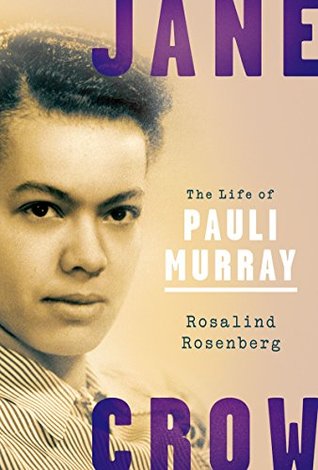
Jane Crow, by Rosalind Rosenberg****

JaneCrowPauli Murray is the person that coined the term “Jane Crow”, and was the first to legally address the twin oppressions of color and gender. I had seen her name mentioned in many places, but this is the first time I’ve read her story. Thank you to Net Galley and Oxford University Press for the opportunity to read it free in exchange for this honest review. This biography is for sale now.

Murray was born in North Carolina and was a labor activist during the turbulent 1930s. She was academically gifted and hardworking, but tormented by the issue of gender. 100 years ago, in the time and place into which fate dropped her, there was no recognition of trans people, and so her sense of herself (the pronoun she used) was that surely there was some unseen physical aspect to her body that must be male. She searched high and low for a surgeon that would perform exploratory surgery to discover whether she had an undescended testicle or some other material explanation to explain why she was convinced that she was actually male. It hurts to think about it. Those born after the early-to-mid-20th century cannot comprehend how the suggestion that gender could be binary was seen, and Murray was a devout Christian as well, and became an ordained Episcopal priest. By the time trans people gained respect from a significant percentage of Americans, Murray was no longer here.

Despite the misery and confusion that was inherent in such a life, Murray was prolific. She was declined a place at the University of North Carolina because of her race, and later denied a place at Harvard Law because of her gender. She graduated at the top of her class at Howard Law, the only woman in her class. Later she would be largely responsible for inclusion of the word “gender” in the title VII in 1964. Those of us that have benefited from that law—and there are a lot of us—tip our hats to her memory in gratitude.

Rosenberg has done a fine job in telling us about Murray. Her documentation is flawless and her narrative clear. At times—particularly in the beginning, before Murray’s career really catches fire—it’s a trifle dry, but I would prefer a clear, scholarly, linear narrative such as this one, over an exciting but sensationalized, less well documented telling any day of the week.

Those interested in the American Civil Rights movement and the history of the women’s rights movement in the USA should get this book and read it. Even if used primarily as a reference tool, it’s an indispensable resource, particularly to those with an interest in legal matters relating to discrimination and equity.

Coming Up

Celebrations here in the family domicile have momentarily distracted me, but that all ends tomorrow. Before I commence partying with family tonight, I thought I’d show you the books you can expect to see reviewed here over the weekend. Some are memorable and others not-so-much, but I am surprised by which are which. Wait for it:

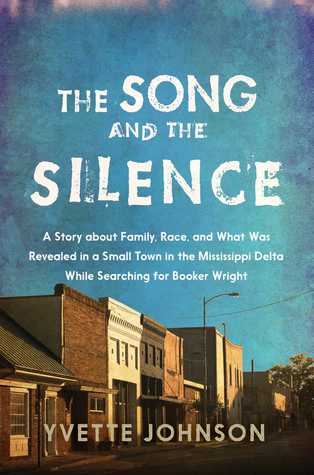
The Song and the Silence, by Yvette Johnson*****

TheSongandtheSilenceI was browsing the pages of Net Galley and ran across this gem of a memoir. Often when someone that isn’t famous gets an autobiography published by a major publisher, it’s a hint to the reader that the story will be riveting. Such is the case here; my many thanks go to Net Galley and Atria for the DRC, which I read free in exchange for this honest review. You can order it now’ it comes out Tuesday, May 9.

It probably says a great deal, all by itself, that I had never heard of Booker Wright before this. I have a history degree and chose, at every possible opportunity, to take classes, both undergraduate and graduate level, that examined the Civil Rights Movement, right up until my retirement a few years ago. As a history teacher, I made a point of teaching about it even when it wasn’t part of my assigned curriculum, and I prided myself on reaching beyond what has become the standard list that most school children learned. I looked in nooks and crannies and did my best to pull down myths that cover up the heat and light of that critical time in American history, and I told my students that racism is an ongoing struggle, not something we can tidy away as a fait accompli.

But I had never heard of Booker.

Booker Wright, for those that (also) didn’t know, was the courageous Black Mississippian that stepped forward in 1965 and told his story on camera for documentary makers. He did it knowing that it was dangerous to do so, and knowing that it would probably cost him a very good job he’d had for 25 years. It was shown in a documentary that Johnson discusses, but if you want to see the clip of his remarks, here’s what he said. You may need to see it a couple of times, because he speaks rapidly and with an accent. Here is Booker, beginning with his well-known routine waiting tables at a swank local restaurant, and then saying more:

https://www.youtube.com/watch?v=GM-zG…

So it was Booker and his new-to-me story that made me want to read the DRC. Johnson opens with information from that time, but as she begins sharing her own story, discussing not only Booker but her family’s story and in particular, her own alienation from her mother, who is Booker’s daughter, I waited for the oh-no feeling. Perhaps you’ve felt it too, when reading a biography; it’s the sensation we sometimes feel when it appears that a writer is using a famous subject in order to talk about themselves, instead. I’ve had that feeling several times since I’ve been reading and reviewing, and I have news: it never happened here. Johnson’s own story is an eloquent one, and it makes Booker’s story more relevant today as we see how this violent time and place has bled through to color the lives of its descendants.

The family’s history is one of silences, and each of those estrangements and sometimes even physical disappearance is rooted in America’s racist heritage. Johnson chronicles her own privileged upbringing, the daughter of a professional football player. She went to well-funded schools where she was usually the only African-American student in class. She responded to her mother’s angry mistrust of Caucasians by pretending to herself that race was not even worth noticing.

But as children, she and her sister had played a game in which they were both white girls. They practiced tossing their tresses over their shoulders. Imagine it.

Johnson is a strong writer, and her story is mesmerizing. I had initially expected an academic treatment, something fairly dry, when I saw the title. I chose this to be the book I was going to read at bedtime because it would not excite me, expecting it to be linear and to primarily deal with aspects of the Civil Rights movement and the Jim Crow South that, while terrible, would be things that I had heard many times before. I was soon disabused of this notion. But there came a point when this story was not only moving and fascinating, but also one I didn’t want to put down. I suspect it will do the same for you.

YouTube has a number of clips regarding this topic and the documentary Johnson helped create, but here is an NPR spot on cop violence, and it contains an interview of Johnson herself from when the project was released. It’s about 20 minutes long, and I found it useful once I had read the book; reading it before you do so would likely work just as well:

https://www.youtube.com/watch?v=_xxeh…

Johnson tells Booker’s story and her own in a way that looks like effortless synthesis, and the pace never slackens. For anyone with a post-high-school literacy level, an interest in civil rights in the USA, and a beating heart, this is a must-read. Do it.

Michael Collins, by Tim Pat Coogan****

MichaelCollinsTo date, this is the single best volume that’s been written about Collins, and it’s a meal. I purchased this title on an annual pilgrimage to Powell’s City of Books in Portland, Oregon when I was there to visit family a few years ago. Although the length of the book is listed as 480 pages in paperback, the reader needs to come prepared. The type is tiny and dense, and it took me a long time to wade through it. If it were formatted using more standard guidelines, it would be a great deal longer.

As I write this review I am halfway through Coogan’s epic history of the IRA (Irish Republican Army), and the style in which he writes is consistent in both books. Coogan tells us everything that is historically important, and he also tells us everything else he finds out, with no apparent filtering. His writing is half Irish history, half family Bible in the sense that if someone was briefly or peripherally involved with Collins, their proud relatives can probably find that person and his or her historical role somewhere in these pages. His shoe size is here, and the names of every girl he flirted with. For a man that lived so briefly, he left a large shadow, and the author was plainly unwilling to let even the tiniest bit of research go to waste, relevant or no.

I am somewhat surprised that Collins doesn’t rate more favorably with the author, given that his name is the one most associated with the creation of an independent Ireland. But Coogan does due diligence in establishing the brutality of the British occupiers, who killed indiscriminately with the use of terror. At one point, soldiers opened fire on a school yard where little children were at play; these royal ambassadors were the original school shooters, killing six little ones for being Catholic. In the protests that followed, women and girls knelt before British tanks and said their rosaries for those that had been killed for their Fenian identities.

The Irish freedom struggle took place at a time when the whole world was on fire. The Russian Revolution was unfurling with breathtaking speed; at the same time, there was no established Marxist revolution to look to for guidance, and Irish freedom fighters had no single idea of what political ideology should shape the struggle. Most of the revolutionaries were barely old enough to shave, and a lot of errors were made because of this lack of clear vision. The results were often tragic.

There’s an interesting discussion of whether Irishmen should become German allies during World War I. There is a strong resistance to becoming shills for the British, and so the question, then, is whether to remain neutral, or take the side of Britain’s enemy in the hope of receiving reciprocal assistance. In the end, nobody was organized enough, in this era of little technology, to come up with a cohesive plan, so the point was a moot one.

Should you read this biography? I think it depends upon how much time you have, and how strong your interest level is. One consideration might be to purchase it as a reference volume and flip through it to tease out the most relevant information, but be forewarned: sifting through the minutiae is not an easy enterprise. For researchers, the photos alone might be of interest, since they constitute primary documents.

Recommended for those with strong basic knowledge of Irish history that want to flesh out the details, and for those building a reference library.