
Hungry Heart, by Jennifer Weiner*****

hungryheart“I wanted to write novels for the girls like me, the ones who never got to see themselves on TV or in the movies, the ones who learned to flip through the fashion spreads of Elle and Vogue because nothing in those pictures would ever fit, the ones who learned to turn away from mirrors and hurry past their reflections and unfocus their eyes when confronted with their own image. I wanted to say to those girls, I see you. You matter. I wanted to give them stories like life rafts…I wanted to tell them what I wished someone had told me…to hang on, and believe in yourself, and fight for your own happy ending.”

Many thanks go to Net Galley and Atria for the DRC, which I received a couple of months after the publication date. Having read this memoir makes me want to read more of this author’s work. It’s for sale now.

The fact that I’ve never read anything by this author makes me something of an outlier in terms of her target audience. I’m also slightly older than she is, not in need of a mentor. But none of that matters, because quality is quality, and feminist messages like this one are always good to read.
Weiner writes with an arresting combination of candor and wit, and she talks about the things we grew up being taught not to mention. Those of us that saw role models like Twiggy—a British model with a nearly anorexic appearance—and Mia Farrow, yet were ourselves unable to shake the persistent amount of what kindly adults called baby fat, never thought to argue that we were as worthwhile as these bony fashion icons. Weiner deals with the topic of body image and media head on. And while she’s there, she talks about facing down anti-Semitism in the classroom, and the dry hiss of another child on the playground suggesting that she has killed Jesus. She talks about also being the chunky, unfashionable member of her kibbutz to Israel in the unforgettable chapter titled “Fat Jennifer in the Promised Land”.

At times I confess I am annoyed by appear to be petit bourgeois concerns. You struggled to choose between Princeton and Smith? Oh you poor dear! But later when I read that she is called in to the administration’s offices and told to get her things and go because her tuition hasn’t been paid, I forgive her immediately.

Weiner takes on questions that many feminist writers pass by. I’ve never seen another writer address the fact that if a woman cannot successfully breast feed her baby or even just doesn’t want to, the child will most likely not starve. This and a host of other seldom spoken issues having to do with combining career and motherhood can help other mothers, whether working or taking time away from the workplace to raise a child, feel less isolated.

Every woman needs a funny female version of Mister Rogers to tell us that we are fine just the way we are. Every mother needs another woman that can tell her—sometimes in hilarious ways—that every rotten thing that ever happens to her child is not her fault.

Highly recommended for women seeking wisdom and snarky kick ass commentary, and to those that love them.

Always, by Sarah Jio****

alwayssarahjioAlways, Sarah Jio’s much anticipated new release, takes on the homelessness epidemic using the powerful medium of fiction. I received my copy in advance in exchange for an honest review; thank you Net Galley and Random House Ballantine for the DRC. This title is available to the public today, and if you have enjoyed Jio’s other novels, I am confident you’ll like this one too.

Kailey Crane is a journalist living in Seattle during the 1990s, and she has the whole package: a great job, a wonderful city, and a wealthy, handsome fiancée. It’s the life other little girls dreamed of but didn’t get.  Then one night as she and Ryan are leaving a restaurant, she literally bumps into a long lost love. Cade McAllister is the man Kailey had been going to marry until he disappeared. He practically vaporized. Stunned and humiliated, she picked herself up and rebuilt her life, and now here he is, a half-crazed homeless man living downtown on the streets.

What the heck happened?

Kailey wants to marry Ryan, but she also wants to help Cade find housing, medical care, and food. Ryan makes it easier by agreeing that she should do the right thing. Quickly she learns that it isn’t as simple as it seems. There’s a whole safety net in place for people like Cade, except that it doesn’t work. In fact, without her own ready access to Ryan’s money, she can do virtually nothing for Cade. But it’s all right, because Ryan is on the side of the angels; he sees that this cause is a just one, and he’s a generous guy. He’s in love, and he’s feeling expansive.

The problems begin when Kailey starts missing key wedding events because she’s off helping Cade, or trying to. She becomes so involved with one thing and another that before she knows it, she’s over an hour late. There are out of town relatives that are present, but where’s the bride? And before we know it, she’s telling lies, and sometimes they don’t even seem necessary. I want to reach through the pages of the book, yank Kailey into the kitchen and talk to her.

What  are you doing, girl?

Fissures in her relationship with Ryan turn into fractures as he senses the level of her obsession, and he doesn’t see things as she does anymore. His material interest is involved, since a project his development corporation is about to undertake conflicts with an already established homeless shelter in Pioneer Square, a historic part of Seattle’s downtown. He questions why so many resources are required for the homeless; aren’t these mostly drug addicts and crazy people? There ought to be a simple way to dispatch the problem.

A strong story overall is somewhat tarnished by what feels like a glib ending. I recall a favorite episode of the Muppets when Miss Piggy is working a jigsaw puzzle, and she hates to be wrong, so she slams a piece into a hole where it doesn’t belong and howls, “I’ll make it fit!” The ending of this story brought the episode back to me, because Jio seems to be doing more or less the same thing.

Recommended to fans of this successful romance writer.

Dorothy Day: The World Will Be Saved By Beauty, by Kate Hennessy***

dorothydayDorothy Day is an interesting historical figure, the woman that founded The Catholic Worker, which was initially a combined newspaper, homeless shelter, and soup kitchen. I once subscribed to The Catholic Worker, and since it cost one penny per issue, you couldn’t beat the price. I saw this biography available and snapped it up from Net Galley; thanks go to them and Scribner, who provided me with a DRC in exchange for an honest review. This title was published in late January and is now available for purchase.
I always had a difficult time getting a handle on what The Catholic Worker stood for. The name suggests radicalism, and indeed, Day was red-baited during the McCarthy era. Day was a Catholic convert and a strong believer in sharing everything that she had with those that had nothing. She worked tirelessly and selflessly, and despite often living an impoverished existence somehow made it into her eighties before she died, an iconic crusader who became prominent when almost no women did so independently—though she was no feminist, and believed that wives should submit to husbands. Since her demise, speculation has arisen as to whether she might be canonized.

What was that huge crash? Was it a marble statue being knocked the hell off its pedestal? Hennessy takes on the life and deeds of her famous grandmother with both frankness and affection. In the end, I came away liking Day a good deal less than I had when I knew little about her. Her tireless effort on behalf of the poor included anything and everything her very young daughter had in this world, and at one point she remarked that she felt unable to ask others to embrace a life of poverty if her child wasn’t also a part of that. It was a different time, one with no Children’s Protective Service to come swooping down and note that the child was sleeping in an unheated building in the midst of frigid winter; that there was no running water, since the building was a squat; that the only food that day was a single bowl of thin soup and perhaps a little hard bread donated from the day-old stores of local bakeries; that even small, personal treasures and clothing given the child by other relatives and friends would either be stolen by homeless denizens or even given away by her mother, a woman with the maternal instincts of an alley cat. Day did a lot of good for a lot of people, and no one can say she did it for her own material well being, but she more or less ruined her daughter’s life, and even when grown, Tamar’s painful social anxiety and panic attacks derailed her efforts to build a normal life for herself.

Nevertheless, the immense contribution that Day made at a time when the only homeless shelters were ones with a lot of rules and sometimes religious requirements cannot be overlooked. She is said to have had a commanding presence, endless energy (and the mood swings that accompany such energy in some people), and a mesmerizing speaking voice. Day’s physician also treated the great Cesar Chavez, and reflected that their personalities were a lot alike.

I confess I was frustrated in reading this memoir, because I really just wanted the ideas behind the Catholic Worker laid out for me along with the organizational structure. Was the whole thing just whatever Day said it was at the moment, or was there democratic decision making? I never really found out, although I gained a sense that the chaotic events shown in the memoir reflected an unarticulated organizational chaos as well. This is a thing that sometimes happens with religious organizations; the material underpinnings are tossed up in the air for supernatural intervention, and the next thing they know, there’s an ugly letter from the IRS.

Only about half of this memoir was actually about Day; my sense was that the author did a lot of genealogical research and then decided to publish the result. The first twenty percent of the book is not only about Day’s various romantic entanglements; a significant portion of the text is mini-biographies of those men, and frankly, I wasn’t interested in them. I wanted to know about Day. Later I would be frustrated when long passages would be devoted to other relatives and their lives. Inclusion of daughter Tamar was essential, because Dorothy and Tamar were very close all their lives and shared a lot, and so in some ways to write about one was to tell about the other. But I didn’t need to know about Day’s in-laws, her many and several grandchildren, and so on. I just wanted to cut to the chase, but given the nature of the topic, also didn’t want to read Day’s own writing, which has a religious bias that doesn’t interest me.

Those with a keen interest in Dorothy Day and the Catholic Worker may want to read this, because not many books are available that discuss her life and work. On the other hand, I don’t advise paying full cover price. Get it free or at a deep discount, unless you are possessed of insatiable curiosity and deep pockets.

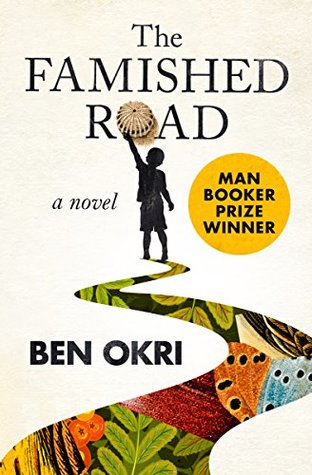
The Famished Road, by Ben Okri**

thefamishedroadI surrender! Thanks go to Net Galley and Open Road Media, from whom I received a DRC in exchange for an honest review; however, try though I have, I cannot push past the molasses-like allegory and other figurative language to locate a plot. After painfully forcing my way through the first 20% of the book, I went to Goodreads to see what other reviewers had to say about it. Some felt as I did, but others swore that if the reader could endure the first two-thirds of the story, the last third would not only be so amazing, it would also enlighten us as to why the earlier part was necessary. Seeing this, I vowed to persevere. By the 25% mark, I found I was avoiding this DRC, because just about every other galley in my possession was either more enjoyable to read, or more rewarding, or both.
Tonight I decided it was time to put up or shut up. Maybe this is one of those rare occasions when one should read a book out of sequence. I skipped to the 70% mark and found it was pretty much more of the same. The allegory pointed toward the horrific debt load that cripples African nations, but I already knew that, and if that is actually where this story is supposed to lead me–because really, I am still not sure–then it’s a disappointment. I already knew about the impact of colonial overlords on African nations, and this did nothing to improve either my knowledge or my appreciation for that, or for literature.

I will add, however, that I have also never liked magical realism. Either write fiction or nonfiction, don’t try to do both at once. Even the work of literary goddess Isabel Allende makes me crazy this way: we are in the midst of what feels like a genuine memoir, and then someone turns bottle-green and levitates. No, no, and no.

Those that have a great love of magical realism and thirst for African fiction may find joy here. This book has won prestigious awards, and I had anticipated that reading it would be rewarding. Just because it didn’t happen for me doesn’t mean it won’t happen for you; but if you come to feast at Okri’s table, bring a high literacy level with you, or you’ll find yourself leaving it still hungry.

This title is available for purchase now.

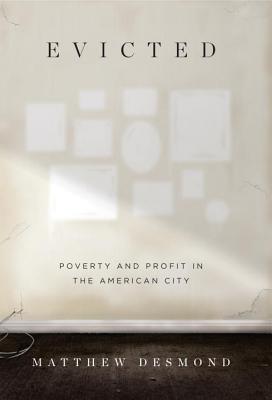
Best of 2016: Nonfiction

I didn’t have to think twice about this one. This category includes any nonfiction published for the first time this year except for biographies and memoirs, which have their own category on this site. If you haven’t read this one, you should. It’s not only important, but oddly fascinating.

Gone to Soldiers, by Marge Piercy*****

gonetosoldiersBrevity isn’t possible here. Settle in and get comfy. Here we go.

The word “epic” gets overused in the world of advertising, and so as a reviewer, I have learned to take the promise with a grain of salt. However, Piercy is renowned, an iconic presence for feminists and for anyone that approaches life from a class perspective. I read this book when it first came out in the 1980’s for no discount whatsoever, and I loved it. Books come and go at my house, since space on the bookshelf is itself a commodity, but Piercy has a permanent shelf all her own; when I saw that Open Road Media had released this book digitally, I jumped on it, even though the release date had passed and even though I already had the book, because I wanted to help promote it, and I was happy to read it again. I rate it 4.75 stars and of course, round it upward.

There are two myths that get told, are believed by others, and then they are retold about World War II. The most recent one is that told by Holocaust deniers, who say that the whole death camp thing was just a huge exaggeration. Yes, there were prisons; yes, guards were mean sometimes; yes, people died, because nobody was getting enough food in Poland and other non-German parts of Europe anyway. This is a lie, but as eyewitnesses grow old and die, it takes a certain vigilance to keep this damnable untruth from gaining a toehold. Piercy tells the truth, and she does it really well. More on that in a moment, but let’s deal with the other lie first.

The second myth, one that’s understandably popular as patriotism grasps the human heart and we wish that our rulers, past and present, were truly noble, is that the USA joined its allies in a quest to preserve democracy and save those poor Jews and other unfortunates tucked away in those hellish camps. Piercy approaches this palace of straw from many different angles and razes it to the ground.  Jews that wanted out faced tremendous obstacles, from nations—the USA included—that were extremely choosy about how many Jews they would take. The US and UK governments were more obstructive than helpful, and countless men, women, and children died because of these exclusions.

Piercy is a brilliant storyteller, and in her hands, the period and its people are so believable, nearly corporal, that I carry them with me still.

This story is told through the eyes of ten characters whose narratives are staggered. There are French characters, British, and Americans; men and women; straight, gay, lesbian, and bisexual.  They hail from a variety of socio-economic circumstances and are affected by the war in different ways. It’s miraculous to see a writer develop even one of these characters as fully and thoroughly as Piercy does; how is it that she does so with a wide range of characters, yet has never been nominated for a prestigious award?

Those of us that are old and perhaps cynical may consider that the very political perspective that makes her prose so rich may be what kept her from landing on a short list. I guess we’ll never know for sure.

Piercy is a scholar and she approaches this historical period with sources in hand. She doesn’t interpret loosely, and her note to the reader tells us in what instance she has taken liberties, for example not wanting to have a whole string of people that have the same first name. Always she is aware of the subtext, the stereotypes that women aviators faced, for example.

My most beloved characters were Jacqueline, a hero of the French resistance, along with her lover, Jeff, and her little sister Naomi, one of the fortunate few who’s sent to live with American relatives before it’s too late. I liked Louise’s moxie, and I loved what happened to Duvey. I also really enjoyed the unusual perspective that Daniel and his fellow code-breakers shared, becoming so familiar with the Japanese point of view that they bonded with the men whose communications they were deciphering.

As we discuss the Japanese, we come to the .25 that I deducted. I did this as a token objection to the use of the racist vernacular that I know was commonplace during the time. This reviewer grew up with a father that served during this war, and reminiscences among the guests he and my mother entertained were so frequent that I, in youthful ignorance, rolled my eyes and decided they were impossibly dull. And my mother taught me that the terms he and they used to speak of Germans, of Jews, of Japanese were never, ever to be used in my own conversations with anyone at any time. And so yes, racist references and ethnic slurs were common to this era.

But I note that whereas our author has had the good taste and the good sense not to repeat the ugly terms by which Jewish people were called, and seldom repeats the anti-German slurs, the “J” word is used dozens of times, usually by the character that fights in the Pacific. And I have to say, it really stings.

There were fewer Asian Americans during the period when Piercy wrote this than there are today, particularly in the author’s own New England home. For anyone writing this today, and for anyone less venerable and also less influential for me personally during my formative years, I would lop off at least a couple of stars from my rating. It’s ugly to repeat these epithets, and it’s particularly painful to me to read them. This is my husband we’re talking about; it’s my daughter, too. It’s my in-laws, one of whom fought, as good Japanese citizens were expected to, for the Japanese Imperial Army. So I would not care to see her go back and insert the horrible terms hurled at Jews and Germans for the sake of consistency; I’d just rather see the “J” word used less often. She could mention it in her introduction if she feels the reader needs to know that she’s made an adjustment.  That’s my viewpoint, and I’m sticking to it.

But it’s also true that when I was young and confused, Piercy was one of the bright feminist lights in literature to whom I looked for guidance. So I am moved not only by the excellence of this work, but also by the shining legacy she has provided for women during an uncertain time.

One further note: though I have a degree in history and have taught it, I have seldom seen much written—at least in English—about the French Resistance. This part is arguably the most deeply resonant part of this novel, and though I had read the book before, it’s amazing what one can forget over the course of twenty or thirty years. I don’t read many books twice because there are so many I haven’t read at all yet; and still this is one that I may read a third time, as I feel my recollection of the fine details already slipping away.

For those that treasure excellent literary fiction; that have the stamina for a novel of this length; that love outstanding historical fiction; that enjoy stories that are told from a feminist viewpoint and that recognize social classes and the way they affect us; this story is unparalleled. Get it and read it.

Small Great Things, by Jodi Picoult*****

smallgreatthings“Is it worth being able to say what you need to say, if it means you land in prison?”
Small Great Things is a courageous novel, one that will excite a fair amount of controversy, and it’s one that needed to be written; it’s the most important novel released this year. Thanks go to Net Galley and Random House Ballantine for the DRC, which I received free of charge in exchange for my honest review. This book will be available to the public October 11, and you should read it.

Picoult’s readers will recognize the familiar format presented here, the alternating points of view of the novel’s main characters. Foremost is Ruth Jefferson, a middle aged labor and delivery nurse at Mercy Hospital in New Haven, Connecticut. Ruth is African-American. She’s making the rounds, doing a fairly perfunctory newborn check when Turk, the father of little Davis Bauer orders her out of the room. He wants to see her supervisor; he wants a note on his son’s chart that no Black person may touch his child. Turk is a white supremacist; he has the Confederate flag tattooed on his arm. The chart is flagged to indicate that no Black medical personnel—which in this hospital and on this ward means Ruth, since she’s the only African-American there—may touch or care for Davis Bauer.

She is told it’s for her own protection too.

But an emergency unfolds, and just as in real life, the hospital is understaffed. There are a limited number of nurses that can take care of emergencies, and when the rotation is full, the only person to keep an eye on Davis following his circumcision is Ruth. The nurse that had been attending him swears she’ll be back in just a few minutes. After all, what could go wrong?

What could go wrong does go wrong, as bad as it gets: Davis dies, and Ruth is blamed. She is suspended not only from the hospital but from nursing, and ultimately, when the hospital hears from the Bauers’ attorney, the administration decides to toss Ruth under the bus. She is arrested and charged with murder.

I have to say here that those that have big ugly reactions to triggers may not be able to read this thing. The language is harsh. There are dead babies in multiple places; if you or someone close to you has lost a baby, decide whether you can go here. There are lots of vicious racist and sexist terms tossed about, not carelessly or as a shortcut to establishing that someone is a bad guy, but because there’s no authentic way to voice a white supremacist character without using them. And I am frankly uncomfortable hearing Turk’s voice, and even more so with the amount of care Picoult uses to develop this character. It makes the book much more powerful, and those that wonder just what in hell makes someone turn out this way can watch it unfold. Is her depiction realistic? I have no clue. However, I can say I believe she has done due diligence with research, and it can’t have been easy.

Until now we have heard alternating voices, those of Ruth and Turk.Once Ruth is in trouble, we add a third character, that of Kennedy McQuarrie, the clueless attorney who sits down with Ruth and explains to her that she doesn’t see race. And ultimately the struggle isn’t about getting Ruth out of jeopardy and back to her job; it’s about how to do that.

Because Ruth, who has been more than tolerant around well intentioned Caucasian people that say offensive things without any idea how terrible they sound, has had enough. She went through Cornell University, but first she had to endure the hallway whispers that she only got in because she was Black. She speaks Standard English, and is fed up to here with being told she is too White. And she was paying close attention when Trayvon’s murderer walked away free; she doesn’t want her son to be the next young man in a hoody sweatshirt shot by cops terrified not of weapons or behavior, but of skin color.

So Ruth wants to go to court and she wants to talk about race. But Kennedy tells her that this is a losing strategy; only by sticking closely to the procedural aspects of the case will Ruth be able to reclaim her life. And Ruth is having none of it.

The people that really need to read this book are those that really think “all lives matter” is an encompassing slogan. I fear many of them will be too afraid of this story to go there. Likely those of us that understand that this slogan is a veiled way to say that only White lives matter are the ones that will be drawn into this story.

The ending felt contrived to me, but the rest of this novel is so well done that I’m not going to split hairs here.

I was somewhat taken aback by the author’s note suggesting that Caucasian readers should take the message back to “other White people”, in our “own” communities. And I do understand that much of the USA is still segregated, but I have been the only Caucasian in my house for a lot of years, and I wasn’t sure quite what to do with her assumption, particularly given that the theme of this story could very well be that nobody has the right to assume things about a person based on that person’s race or ethnicity. But I can live with it, because the story itself is much more powerful than the notes at the end, and I understand that her ultimate message to White folks is that we must not try to be “white knights” that rush in and take over the struggle, but rather allies that follow and support.

I wish it could be required reading for everyone…especially for those that say they don’t see race.

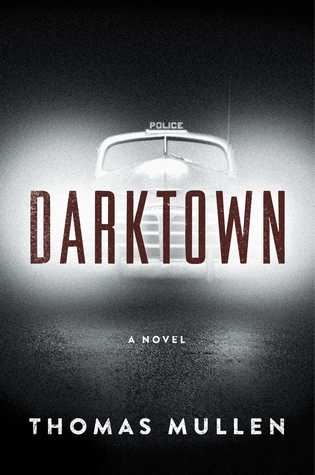
Darktown, by Thomas Mullen*****

darktown I was originally turned down for a DRC of this novel when I requested it last spring, and I took the unusual step of following up with Atria, more or less begging for it. I’ve been reviewing titles for Net Galley for two years and have received nearly 300 DRCs, so it is a sign of my interest level that I went to this extreme to read this one in advance in exchange for an honest review, and it’s a sign of decency and responsiveness that a representative from Atria Books invited me to review it after all. Although I am grateful , this five star review is not about gratitude, but a measure of the importance I attach to the issues it addresses and the skill with which the story is told.

The story centers on the first African-American cops hired in Atlanta; the year is 1948. This is considered an experiment, and to say the least, it’s awkward. The basic plan is that a small number of Negro—which is the polite term at this time in history—officers will report to a Caucasian supervisor, and they are responsible for patrolling the Black section of Atlanta. There are just eight men in this force.  They have no authority to make an arrest, so if someone has to go to jail, they must call for Caucasian police who are considered real police by higher-ups within the city administration.

To say the very least, it’s hard to take.

Mullen’s protagonists here are African-American officers Boggs and Smith, and the problem arises when they witness a crime, the assault of a woman by a Caucasian man in a car. The woman disappears, and no Caucasian cops are interested in hearing what these officers saw that night. The white cops that come in response to the report of a crime demean the Black officers, calling them “boy” and a variety of other horrible slurs.  As the white cops leave the scene, “Boggs was still standing in the street. If his rage had been a physical thing, it would have split the car in two.”

Eventually one of the white cops, a man named Dunlow, goes too far in the eyes of his rookie partner, Rakestraw, and the latter finds himself in a tenuous, secret alliance with Boggs.

Light banter breaks up tension in places, but no mistake, this is a brutal story. If it wasn’t harsh, it wouldn’t be the truth. This is one of the rare instances when the frequent use of the N word and other racist, vulgar language is actually historically necessary; you’ve been forewarned. Though Darktown is a useful history lesson, its greater value comes from causing readers to think more deeply about the role police play in western society.

A question I found myself considering, and not for the first time, is how much good Black cops can do even today to combat racism and other ugly biases by the department that employs them. Clearly cop violence toward people of color remains ever present.  If this book had been published ten years ago, I would have been concerned that in focusing on past racism, the story might have left us with the impression that racism was a problem only in the past, as if all that mess is over now.

But in 2016, we all know otherwise.

I hope you’ll read this painful but well crafted novel, and reflect some about how the dynamics of power have developed and why. Will a more diverse police presence be the key to equity for those that are so frequently crushed beneath the boot heel of what passes for a justice system in the United States, or is meaningful police reform impossible as long as cops are employed primarily to protect the property of the rich?  Would ordinary people be better off if we can, in the words of the old folk song, “…raze the prisons to the ground”?

This book becomes available to the public September 6, 2016. Highly recommended.

Only the Road/Solo el Camino: Eight Decades of Cuban Poetry, by Margaret Randall, editor****

Margaret Randall is an old-school feminist and socialist, and I recognized her name when this volume of Cuban poetry became available. Thank you to the author, Duke University, and Net Galley for permitting me to access the DRC, which I received free in exchange for this honest review.

onlytheroadMany people don’t know much about Cuba, the tiny island nation a mere 90 miles from the coast of Florida. The American media has distorted the Cuban Revolution for as long as I can remember. Before the revolution, which took place in 1959, Havana was like Bangkok, a place where little girls prostitute themselves so they won’t starve to death, where wealthy visitors can experience every pleasure, innocent or corrupt, known to humanity but where most citizens have little chance of even having their basic human needs met. Cuba’s alliance with the Soviet Union (USSR) helped the Cuban people defend themselves from US efforts to overthrow the revolutionary government, but the alliance also led to a period of Stalinist repression that darkened artists’ worlds for a period of time. Randall discusses all of this in her introduction. Following the period Cubans call the Rectification Period (reference mine), Stalinist practices were peeled away, and more freedom of expression created a more hospitable environment for artists, in addition to strengthening the revolution itself. In Cuba art is not privately sold as a general rule, and artists receive a salary for what they do, paid by the Cuban people.

Randall’s collection of poetry is encyclopedic, including a vast stylistic range representative of a range of generations, some little-known voices as well as a number of LGBTQ writers. Randall translates each poem and gives a comprehensive biographical note for each poet. If anything, I might have preferred a slightly more stripped down version, but what Randall has done is very scholarly she documents well.

Since this reviewer does not speak Spanish, I cannot evaluate the translations personally, but given that Randall’s background I would be astonished if it were not rock solid.

That said, I also found myself lamenting my lack of Spanish, because I know that the flow of sound is an important part of poetry, and even the best translator can’t rectify this. Those that speak Spanish will likely get more from the collection; both Spanish and English versions are included.

Those that love poetry and are interested in seeing the work of Cubans, and especially those that also speak Spanish, should get this excellent collection. It becomes available to the public October 14, 2016.

Notorious RBG, by Irin Carmon****

notoriousrbgIf I were to review the subject of this memoir rather than the book itself, it would be a slam-dunk five star rating. As it is, I can still recommend Carmon’s brief but potent biography as the best that has been published about this fascinating, passionate justice of the Supreme Court of the United States. I have no doubt many more will follow, and it’s possible I will read every one of them. As it stands, this is a rare instance in which I turned my back on my pile of free galleys long enough to ferret this gem out at the Seattle Public Library, because I just had to read it. You should too.

I’m an old school feminist from the seventies, but Ginsberg is one from the fifties. How is that even possible? Imagine the courage it would take to step forward at a time when no women’s movement even existed! She sued Rutgers University for equal pay and won. Later, she was the first female law professor at Columbia University, and she sued them for equal pay too. She volunteered as an attorney for the New Jersey American Civil Liberties Union, represented custodians in a class action suit, and later, when the Free Speech Movement on campuses in the 1960s began to warm up, she was already red hot and ready to go.

The best parts of Carmon’s memoir are the primary documents, because we get to see RBG’s own words. Ginsburg was made a federal appeals judge by President Jimmy Carter and moved to fill a vacancy on the U.S. Supreme Court by President Bill Clinton. She’s issued a number of tremendously eloquent decisions, and has chosen to read her dissent aloud, a thing not usually done, a record-breaking five times at the time this book was written. The lacy-looking necklace that fans out on all sides of her neck is her dissent collar, and so those that hear the Court deliver its decision can see exactly where Justice Ginsberg stands as soon as they see what she is wearing.

At times such as these, in which a woman in Indiana was recently sentenced to 20 years in prison for having an abortion [reference mine], it gives women hope to know that there is a fighter on the Supreme Court who’s looking out for our interests. It doesn’t mean that women can step away from this political battle, but it’s a thing that encourages us and lends us fortitude.

In January, it is rumored that Ginsberg will release her own memoir, one that relies heavily on her court decisions. Likely this will be an even better memoir than this one. For now though, this uplifting, funny, well-documented memoir is as good as it gets. Go get it.