On my radar for July and August:

Horror


Southern Fiction

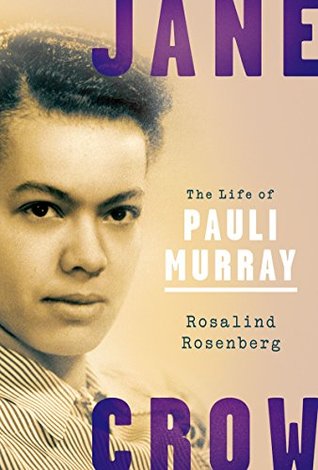 Pauli Murray is the person that coined the term “Jane Crow”, and was the first to legally address the twin oppressions of color and gender. I had seen her name mentioned in many places, but this is the first time I’ve read her story. Thank you to Net Galley and Oxford University Press for the opportunity to read it free in exchange for this honest review. This biography is for sale now.
Murray was born in North Carolina and was a labor activist during the turbulent 1930s. She was academically gifted and hardworking, but tormented by the issue of gender. 100 years ago, in the time and place into which fate dropped her, there was no recognition of trans people, and so her sense of herself (the pronoun she used) was that surely there was some unseen physical aspect to her body that must be male. She searched high and low for a surgeon that would perform exploratory surgery to discover whether she had an undescended testicle or some other material explanation to explain why she was convinced that she was actually male. It hurts to think about it. Those born after the early-to-mid-20th century cannot comprehend how the suggestion that gender could be binary was seen, and Murray was a devout Christian as well, and became an ordained Episcopal priest. By the time trans people gained respect from a significant percentage of Americans, Murray was no longer here.
Despite the misery and confusion that was inherent in such a life, Murray was prolific. She was declined a place at the University of North Carolina because of her race, and later denied a place at Harvard Law because of her gender. She graduated at the top of her class at Howard Law, the only woman in her class. Later she would be largely responsible for inclusion of the word “gender” in the title VII in 1964. Those of us that have benefited from that law—and there are a lot of us—tip our hats to her memory in gratitude.
Rosenberg has done a fine job in telling us about Murray. Her documentation is flawless and her narrative clear. At times—particularly in the beginning, before Murray’s career really catches fire—it’s a trifle dry, but I would prefer a clear, scholarly, linear narrative such as this one, over an exciting but sensationalized, less well documented telling any day of the week.
Those interested in the American Civil Rights movement and the history of the women’s rights movement in the USA should get this book and read it. Even if used primarily as a reference tool, it’s an indispensable resource, particularly to those with an interest in legal matters relating to discrimination and equity.
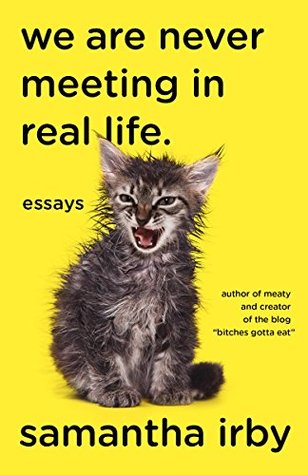 Get out your plastic and go use the restroom, because this book will leave you holding your sides. Samantha Irby mines what ought to be old material but isn’t, at least not by the time she is done with it, and her edgy, plain-truth humor may leave you breathless by the time the last page is turned. My thanks go to Net Galley and Knopf Doubleday for the DRC, which I received free and early in exchange for this honest review. This book has just been released and is available for purchase.
Much of the base level subject matter is eternal and well worn: needing to use the bathroom while stuck in traffic; dating; racism; attempting to lose weight. But Irby has a fresh take on everything. She refers to herself as “old”, and since at 36 she is the age of this blogger’s eldest child, I suspect that I am not her target audience. But so much of what she says is eternal, and her take on current social concerns such as cop violence and the horror of stumbling upon a bunch of white people in the hinterland performing a Civil War reenactment complete with Confederate flags is welcome and resonant. The thread in which she voices the horror of being away from a major urban center is one I share. I have not laughed at potty humor since I was twelve, but the essay containing the traffic jam bathroom emergency on the way home from the dorm made me laugh hard enough to shake the bed, and my husband—a silver-haired Japanese gentleman old enough for Social Security—laughed hard enough that he was doubled over. The passage where she discusses having squandered money on things she doesn’t need just to prove she can do it is just one instance where I laugh because I am surprised. What writer ever admits this? Irby does.
Other aspects of this wonderful collection of essays were more educational than resonant, but also good to read. Can Black women admit they have mental health issues and still be Black?
Her cover model represents the cat from hell, Helen Keller:
“’I know where they keep the euthanasia solution,’ I whispered into the downy fur on top of her head.”
Every book blogger knows the pressured feeling that comes with scooping up a galley right before publication. When I begin the book, all I want is to read it fast so I can review it in a timely manner; yet by the time I turn the final page, I am disappointed that we are done here.
Highly recommended to strong women with an offbeat sense of humor, and those that love them.
“’There’s been an incident…Mrs. White in the study with a revolver.”
Mulhern is on a roll. This is the fifth book in the Country Club Murders series, but I plunged in without having seen the first four, and it was still a treat. Thank you, thank you to Net Galley and Henery Press for the DRC, which I snagged free and in advance in exchange for this honest review. It is now available to everyone.
The story is set among the Caucasian upper middle class of the 1970s, and Mulhern renders the period—when this reviewer was a mere, blushing wisp of a girl—so well that I checked twice to see whether it was an older title being re-released.
Ellison Russell is our protagonist, and people keep dying at her domicile. It’s become a nuisance, and there’s a cop that thinks it’s too great a coincidence. Ellison’s in a jam, and her thirteen-year-old daughter Grace isn’t helping. She sulks when they are told they must leave the house for a few days because it’s a crime scene, exclaiming that people have died at their house before and they didn’t have to leave. It’s just not fair!
Ellison is a widow, and a merry one at that; she has a flirtation going with a local cop whose name is Anarchy—a guy who believes in rules– but her main man is Mr. Coffee. He’s always there for her.
I moan when Ellison’s mother is introduced—yet one more overbearing mother, I thought, and authors always blame everything on mothers, just like everyone else does—but then I am surprised by where she takes it. I won’t say more lest I ruin it for you. But I will say this: every overused or overworked plot element is here for a reason, either to take it apart, or to make fun of it. Mulhern considers every word in this dandy novel carefully, and the result is splendid.
As the story unfolds there are other witty tidbits tucked in here and there, such as a character named Margaret Hamilton who is such a witch. But the frippery and snarky humor aren’t the whole package; while the mystery is a romp, serving up the snobbery of the petit bourgeoisie with a sharp skewer, this excellent novel is also a nicely turned feminist manifesto. While the mystery is a fine 4-star beach read, the author’s purpose is a strong one that’s delivered well. It is for this aspect that the fifth star is given.
Highly recommended for strong women and those that love them.
 “’It takes a lot of nerve for somebody, mainly a white, to ask me do I hate. I haven’t lynched nobody and hid in the bushes.’”
I received an advance copy free from Net Galley and Doubleday in exchange for this honest review. The book is now available for purchase.
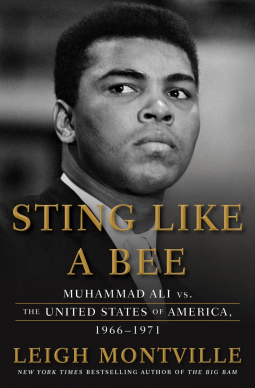
Muhammad Ali died of Parkinson’s disease one year ago. By the time of his passing, he had earned the respect and recognition he craved. In this popular biography, Montville gives an overview of his rise to fame, but focuses primarily on Ali’s legal challenge to the US government, which strove to draft him to fight in Vietnam despite his professed status as a conscientious objector.
During the 1960s and 1970s, almost all of Caucasian America and a goodly number of African-Americans regarded Ali’s public statements either with derision or fear. Born Cassius Clay, he joined the Nation of Islam as a young adult and changed his name in the same way Malcolm X had before him. He did it in order to shuck the slave name given him at birth and adopt a new religion that taught him that Black men were not only equal to white folks, but better. Malcolm X had advocated Black pride and scared a lot of people, but he had done it from the point of view of a political activist. Ali was the first Black athlete to stand up tall and tell all of America that he was the greatest. The descendants of slave owners that willingly or not bore the guilt of the oppressors were absolutely terrified. This was the fear they seldom made themselves face, the notion that the descendants of those so grievously wronged might rise up belatedly and give back some of what their ancestors had been dealt. I was there; I remember.
Ali personified the white man’s fear of the jungle. Dude, here he comes; he’s strong, he’s angry, and he’s free!
Montville recognizes up front that when Ali died, he was an icon, both as an athlete and as a civil rights advocate. But the tone of his prose shifts from a more or less neutral journalistic tone, to a wry one—because Ali did say some outrageous things by anyone’s standard—and then, again and again, to a derisive one. The first time I saw it, I told myself I was tired and grumpy, and that I was probably being overly sensitive. My own family is racially mixed; I have raised a Black son. Sometimes I get touchy when I read things written by white authors about Black people. I should put the book down and examine it tomorrow with fresh eyes.
When I picked it up the next time I was immediately taken with the writer’s skill. His pacing is impeccable. Some of the quotes he chose are really delicious ones, although with Ali, it’s also kind of hard to go wrong. And at this point I considered that since we were on a roll, I should take the next step and examine the end notes and documentation.
Huh. Apart from a list of sources, most of which are biographies written by other people, there’s nothing. There are the in-text references a popular biographer uses, telling us, for example, that a direct quote comes from the magazine Sports Illustrated, without telling us what issue or who wrote it. And to be fair, that’s how a popular biography is written. It’s there for the masses that love boxing and aren’t going to check your footnotes. Everything within my academic heart recoils at this kind of biography, but it sells. I may not like it much, but people will buy it and they’ll read it.
But to write about a legal challenge of this magnitude and not provide specific documentation?
I could mention this within a review—as I have—and say that given this particular caveat, the biography is a four star read, and I thought that I might do that. But when I continued reading, there it was again. The author makes fun of the guy. And so just before the halfway mark, I started making careful notes of my own, because I wanted to see for myself how it is possible for a writer to appear to be neutral much of the time and yet also mock his subject. What I came away with is that the more straight-forward, respectful material is buried in the middle of each section, but the briefer sneering, snide material is usually right at the end of the section in one sentence, set apart from everything that came before it.
Writers do this for emphasis.
Fans of Ali will have to swallow hard to make it through this biography. Fans of boxing will find that it’s mostly about the legal challenge, and although Ali’s boxing matches are included, you’ll find a lot more about those in any one of the numerous other Ali biographies published earlier. And those interested in his legal fight may want to hold out for a more scholarly treatment.
When all is said and done, Ali was the greatest, but this biography is not.


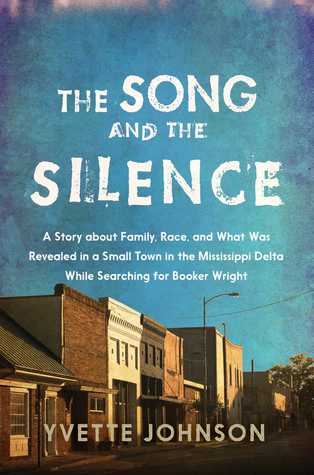 I was browsing the pages of Net Galley and ran across this gem of a memoir. Often when someone that isn’t famous gets an autobiography published by a major publisher, it’s a hint to the reader that the story will be riveting. Such is the case here; my many thanks go to Net Galley and Atria for the DRC, which I read free in exchange for this honest review. You can order it now’ it comes out Tuesday, May 9.
It probably says a great deal, all by itself, that I had never heard of Booker Wright before this. I have a history degree and chose, at every possible opportunity, to take classes, both undergraduate and graduate level, that examined the Civil Rights Movement, right up until my retirement a few years ago. As a history teacher, I made a point of teaching about it even when it wasn’t part of my assigned curriculum, and I prided myself on reaching beyond what has become the standard list that most school children learned. I looked in nooks and crannies and did my best to pull down myths that cover up the heat and light of that critical time in American history, and I told my students that racism is an ongoing struggle, not something we can tidy away as a fait accompli.
But I had never heard of Booker.
Booker Wright, for those that (also) didn’t know, was the courageous Black Mississippian that stepped forward in 1965 and told his story on camera for documentary makers. He did it knowing that it was dangerous to do so, and knowing that it would probably cost him a very good job he’d had for 25 years. It was shown in a documentary that Johnson discusses, but if you want to see the clip of his remarks, here’s what he said. You may need to see it a couple of times, because he speaks rapidly and with an accent. Here is Booker, beginning with his well-known routine waiting tables at a swank local restaurant, and then saying more:
https://www.youtube.com/watch?v=GM-zG…
So it was Booker and his new-to-me story that made me want to read the DRC. Johnson opens with information from that time, but as she begins sharing her own story, discussing not only Booker but her family’s story and in particular, her own alienation from her mother, who is Booker’s daughter, I waited for the oh-no feeling. Perhaps you’ve felt it too, when reading a biography; it’s the sensation we sometimes feel when it appears that a writer is using a famous subject in order to talk about themselves, instead. I’ve had that feeling several times since I’ve been reading and reviewing, and I have news: it never happened here. Johnson’s own story is an eloquent one, and it makes Booker’s story more relevant today as we see how this violent time and place has bled through to color the lives of its descendants.
The family’s history is one of silences, and each of those estrangements and sometimes even physical disappearance is rooted in America’s racist heritage. Johnson chronicles her own privileged upbringing, the daughter of a professional football player. She went to well-funded schools where she was usually the only African-American student in class. She responded to her mother’s angry mistrust of Caucasians by pretending to herself that race was not even worth noticing.
But as children, she and her sister had played a game in which they were both white girls. They practiced tossing their tresses over their shoulders. Imagine it.
Johnson is a strong writer, and her story is mesmerizing. I had initially expected an academic treatment, something fairly dry, when I saw the title. I chose this to be the book I was going to read at bedtime because it would not excite me, expecting it to be linear and to primarily deal with aspects of the Civil Rights movement and the Jim Crow South that, while terrible, would be things that I had heard many times before. I was soon disabused of this notion. But there came a point when this story was not only moving and fascinating, but also one I didn’t want to put down. I suspect it will do the same for you.
YouTube has a number of clips regarding this topic and the documentary Johnson helped create, but here is an NPR spot on cop violence, and it contains an interview of Johnson herself from when the project was released. It’s about 20 minutes long, and I found it useful once I had read the book; reading it before you do so would likely work just as well:
https://www.youtube.com/watch?v=_xxeh…
Johnson tells Booker’s story and her own in a way that looks like effortless synthesis, and the pace never slackens. For anyone with a post-high-school literacy level, an interest in civil rights in the USA, and a beating heart, this is a must-read. Do it.
 “A loaded gun wants to go off.”
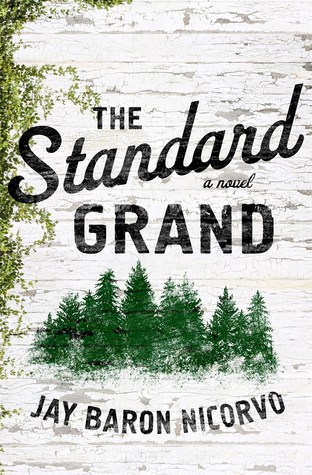
Critics have compared Nicorvo’s brilliant debut novel to the work of Heller, and indeed, it seems destined to become the go-to story of those that have served in the unwinnable morass created by the US government against the people of the Middle East: “a drawdown war forever flaring up”. It’s created a tremendous amount of buzz already. I was lucky enough to read it free and in advance for the purpose of a review, thanks to Net Galley and St. Martin’s Press, but today it’s available to the public. You should buy it and read it, maybe more than once.
The story starts with a list of the characters involved, but the way it’s presented provides a tantalizing taste of the author’s voice. The page heading tells us these are “The Concerns”, and the subheadings divide them into practical categories, such as The Smith Family, the Employees of IRJ, Inc., and The Veterans of The Standard Grande (misspelling is mentioned later in the story). Then we proceed to list The Beasts, and The Dead, and The Rest, and right then I know this is going to be good.
Antebellum Smith is our protagonist, and she’s AWOL, half out of her mind due to PTSD, anxiety, and grief. She’s sleeping in a tree in New York City’s Central Park when Wright finds her there and invites her to join his encampment at The Standard Grand. Here the walking wounded function as best they can in what was once an upscale resort. One of the most immediately noticeable aspects of the story is the way extreme luxury and miserable, wretched poverty slam up against one another. Although the veterans are grateful for The Standard Grand, the fact is that without central heat, with caved in ceilings, rot, and dangerous disrepair, the place resembles a Third World nation much more than it resembles the wealthiest nation on the planet.
On the other hand, it’s also perched, unbeknownst to most of its denizens, on top of a valuable vein of fossil fuel, and the IRJ, Incorporated is sending Evangelina Cavek, their landsman, out in a well-appointed private jet to try to close the deal with Wright. She is ordered off the property, and from there things go straight to hell.
Secondary and side characters are introduced at warp speed, and at first I highlight and number them in my reader, afraid I’ll lose track of who’s who. Although I do refer several times to that wonderful list, which is happily located right at the beginning where there’s no need for a bookmark, I am also amazed at how well each character is made known to me. Nicorvo is talented at rendering characters in tight, snapshot-like sketches that trace for us, with a few phrases and deeds, an immediate picture that is resonant and lasting. Well drawn settings and quirky characters remind me at first of author James Lee Burke; on the other hand, the frequently surreal events, sometimes fall-down-funny, sometimes dark and pulse-pounding, make me think of Michael Chabon and Kurt Vonnegut. But nothing here is derivative. The descriptions of the main setting, The Standard Grand, are meted out with discipline, and it pays off.
As for Smith, she still has nightmares, still wakes up to “the voices of all the boys and girls of the wars—Afghan, Iraqi, American—like a choir lost in a dust storm.”
There’s so much more here, and you’re going to have to go get it for yourself. It’s gritty, profane, and requires a reasonably strong vocabulary level; I’m tempted to say it isn’t for the squeamish, yet I think the squeamish may need it most.
Strongly recommended for those that love excellent fiction.
 “You can fuck any girl you like here tonight; they’re all hockey-whores when we win.”
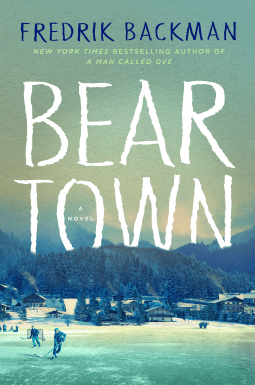
Fredrik Backman is a sly writer, and he has a way of spiraling around his central point so that readers are mighty close by the time they recognize where they are. He writes with philosophical grace tinged with wit, and his novels are popular because of it. And so it cheers me to see him examine what might happen to a small depressed town whose hopes are all hinged on youth sports. Thanks go to Net Galley and Atria Books for the DRC, which I read free of charge in exchange for this honest review. Beartown is available to the public today.
In Beartown, everyone dreams of hockey, and those that don’t are stuck on the outside looking in. A man’s glory days are done before he’s 40; a woman has no glory days at all, since women cannot play on the men’s team and there is no women’s team. Everything comes second to hockey: education, social skills, and even the law are bent, sometimes to the breaking point, in order to accommodate star athletes. Hockey is the town’s only remaining business, and it seems to provide the only possible hope for young men that have grown up in the forest and don’t want to leave it to seek work.
Backman has a genius for drawing the reader in. Some of the scenes in this story actually make me laugh out loud. His respect for women is a breath of fresh air as well. In literary terms, though, the greatest success of this piece is the way a large number of characters are developed so that readers genuinely feel that we know not just a protagonist, but a whole town. We know who is related, what private baggage exists between individuals and families, which marriage is happy and which is not, and it’s delivered to us in a way that never feels gossipy or prurient. Rather, Backman makes us feel as if we are part of the town, and so everything is important to us as well.
Fans of Backman’s will be pleased once again here. My sole quibble is that I see a character at the end behave in a way that is so inconsistent with what we know of him so far that I can hear the violins play. It’s heartwarming, but if the same thing had been achieved more subtly, it would be credible as well.
Nevertheless, you won’t want to miss this book. Regardless of the ugly things that are said and done at various points, the author comes back, as he always has before, to the innate goodness of the human spirit, and it’s messages like this one that we need so badly today. Recommended to those that enjoy good fiction.
Bennett’s provocative new novel tackles domestic abuse. I was invited to read this one free and in advance by a representative from Endeavor Press in exchange for an honest review.
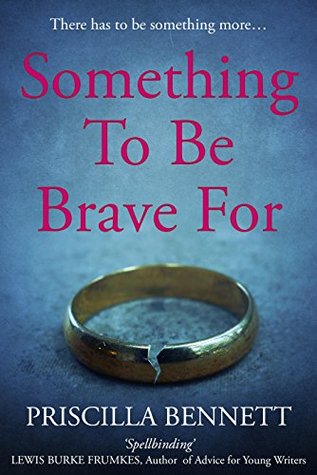 Katie Giraud is the daughter of a successful surgeon. Her father is disappointed when she chooses not to go into medicine, but he is overjoyed when she falls in love with his protégé, Claude Giraud. Claude is the son he never had. Katie is an art lover, and now she can enjoy her passion while being well provided for. Her husband is a handsome, charming Frenchman who woos her with roses and jewelry. It’s like something out of a fairy tale.
The trouble commences when the wedding is done and real life begins. You see, Claude has a wicked temper. He has enormous control issues, and he’s unpredictable. You just don’t know when he’s going to lash out. Next thing she knows, Katie is bleeding and cowering beneath the grand piano. But after daughter Rose is born, things are better, but they’re worse; Katie is more willing to try to escape this abusive relationship because she knows that it traumatizes her little girl to see Claude hurt her, but having a daughter also makes flight more complicated.
It isn’t as easy as it sounds.
Feminists everywhere can rejoice that the problem is so well demonstrated. Even in a home where there is such affluence, leaving isn’t as easy as it sounds. Her husband’s reputation is excellent, and he’s a smooth liar. Her parents love him, and he’s friends with the chief of police. Every effort she makes is thwarted. I appreciate this as I read it, because in cases of domestic abuse, societal conversation tends to question the victim: what is wrong with her, to make her stay in a situation like that? Why not develop a spine, get up, walk out? And yet statistics tell us that a woman is much more likely to be killed by a violent spouse, or former spouse, after she has left him, than to be killed by him while still in the marriage.
Leaving is dangerous.
That said, it seems strange that I never feel bonded to Katie. I know she is an art lover, a battered wife, and a devoted mother, and I know some of her physical attributes, but beyond these things her character remains blurry and underdeveloped. Better character development would move the entire story forward and add greater impact to the overall message.
The ending feels simplistic and somewhat formulaic. But those that care about domestic violence and champion women’s issues may want to read it anyway because it adds to the discussion, one that so often is stifled as its victims remain isolated in the shadows.
This book was published April 3, 2017 and is available for sale now.
Narratives with a Nuance
Voice-Driven Reviews + Nerdy Extras
Author of contemporary novels including "Beautiful & Terrible Things"
Author of of the multi-award-winning novel, As Far as You Can Go Before You Have to Come Back
Reviews of extraordinary books: Metaphysics and Metaphysical SFF
Educación, reflexiones y cultura general.
Almost Meaningful
Synastry & Karmic Astrology
Life should taste as good as books
A page for writing short stories, essays, poetry and lyrics.
The Writing Life: Focus on Fiction- Adult, Young Adult, Historical, Literary
Sharing the SHIFT moving from the Natural to the Supernatural within my Spiritual Life's Journey
Just another WordPress.com weblog
A fine WordPress.com site
Book reviews, rambling thoughts, and a bit of nonsense.
Most of my reviews are fiction ~ mystery, thrillers and many different tropes of romance 💕
like a "historian" but with books

