 Bryan was a journalist and author during the mid-twentieth century, and Friendly Fire, which originally began as a story for the New Yorker and grew into something more, tells the story of the Mullen family and their response to the death of Michael, a clean-cut young man that answered his draft notice, dutifully served and was killed by friendly fire not long after he was sent to Vietnam. Thanks goes to Open Road Integrated Media and to Net Galley for the invitation to read and review. This is right up my alley and I found it compelling. It was published digitally May 10, 2016 and is now available for purchase.
Michael Mullen was the favorite son of Iowan farmers Gene and Peg Mullen, working farmers steeped in traditional values and respect for authority, who had never questioned the US involvement in Vietnam. If the government said that US forces were fighting there to contain the spread of communism and keep Americans safe, then it must be so. Michael was the kind of young man that called people “ma’am” and “sir”. When his effects were delivered to his family following his death, there were no fewer than three rosaries he’d carried on his person. He had expected to return from service, as his father had done from an earlier war, and inherit the family farm. His family was part of the Silent Majority to which governmental authorities referred when defending the role of the USA in Indochina.
In short, they were the last people anyone would have expected to see become anti-war activists.
Michael’s death rocked parents Peg and Gene, and their grief eventually alienated them from the three children left to them. The part of their story that galvanized me was in reading their intelligent, sharp responses during the initial period following their bereavement. For many of us facing the loss of any loved one—and the death of a child is the worst loss of all—ferreting out information about that person’s days, weeks, even months is our last link to them. But Peg and Gene took it to another level when they realized that some of the information they had received was untrue. Peg became an organizational whirlwind, searching for the names and stories of other Iowa boys that had died in that conflict and she realized that the casualties that were being reported to and in the media were incorrect. The responses she received from everyone from US officials to the parish priest were so insensitive, so baldly insulting that she and husband Gene made the war and those near their son when he died into an immense research project, reaching out to newspapers and television news widely. This reviewer grew up during this period and when I read that Peg was on the phone with national newscaster Chet Huntley’s secretary in New York, my jaw dropped! In this era before satellites gave us phones in our pockets and information available at the touch of a keyboard, they typed letters, made long-distance phone calls, and in time even traveled to Washington D.C. in order to know how and why their son had been killed and who was to blame.
The fifth star here is denied because the beginning of the story, which goes into overmuch detail about the family’s genealogical beginnings and its long history in Iowa soil, is deadly dull. When the book was first published, the video game had not yet been invented and readers had longer attention spans. Today if a book does not hook a reader from the start, chances are excellent it will be immediately and forever abandoned. Although the point that the Mullen farm had stood for five generations is surely relevant to the story, the author drags this portion of the story out sufficiently to glaze even the eyes of this history teacher, and together with an awkward introduction that appears to substitute for a bibliography or end notes, a lot of readers won’t get to the interesting part, and that’s a crying shame.
Ultimately the Mullens’ cause alienated them from their community, probably because they were so free in dispensing blame to everyone that drew breath. Everyone that had not actively opposed the war was called out at some point. The heat of their rage and grief lacked focus. In many ways they undid a lot of the good they had done by cursing old friends and neighbors simply because they had never done anything about the war.
The story will interest those that research conspiracies. The Mullens believed more deception was in play than actually was, yet when a person knows he has been lied to about one thing, it is the intelligent thing to do to wonder how much more one was told is also untrue. And so as they relentlessly sought to find one particular officer that might be to blame for the friendly fire that killed their son, I wanted to bang my head on the wall, because it was so much more than that; the conspiracy, we know now, was seated in the Oval Office, jotting more names, possibly their own, onto his enemies’ list. Targeting this soldier or that minor officer was just wrong-headed, but when people are hurt, they lash out, and the Mullens did so exponentially.
The end of the book deals with the author’s own motivation in following the Mullens and their search for the truth so diligently; nevertheless, it seemed strange to find a host of author photos at the end of the book rather than of the Mullen family.
Had the editing of this digital edition been given to me along with permission to do anything I wished, I would have tightened up the beginning, put the author’s notes at the end of the book rather than the start, and deleted the photo section entirely.
Nevertheless, those with an interest in the struggle to end the US war in Vietnam will find this story well worth reading, and to them I recommend this memoir.

 Many people don’t know much about Cuba, the tiny island nation a mere 90 miles from the coast of Florida. The American media has distorted the Cuban Revolution for as long as I can remember. Before the revolution, which took place in 1959, Havana was like Bangkok, a place where little girls prostitute themselves so they won’t starve to death, where wealthy visitors can experience every pleasure, innocent or corrupt, known to humanity but where most citizens have little chance of even having their basic human needs met. Cuba’s alliance with the Soviet Union (USSR) helped the Cuban people defend themselves from US efforts to overthrow the revolutionary government, but the alliance also led to a period of Stalinist repression that darkened artists’ worlds for a period of time. Randall discusses all of this in her introduction. Following the period Cubans call the Rectification Period (reference mine), Stalinist practices were peeled away, and more freedom of expression created a more hospitable environment for artists, in addition to strengthening the revolution itself. In Cuba art is not privately sold as a general rule, and artists receive a salary for what they do, paid by the Cuban people.
 If I were to review the subject of this memoir rather than the book itself, it would be a slam-dunk five star rating. As it is, I can still recommend Carmon’s brief but potent biography as the best that has been published about this fascinating, passionate justice of the Supreme Court of the United States. I have no doubt many more will follow, and it’s possible I will read every one of them. As it stands, this is a rare instance in which I turned my back on my pile of free galleys long enough to ferret this gem out at the Seattle Public Library, because I just had to read it. You should too.
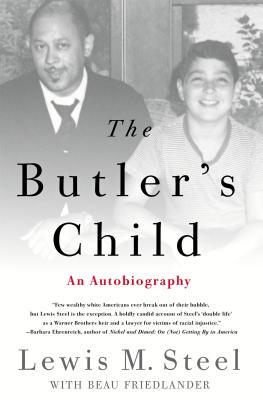 Lewis M. Steel has a long, noteworthy career as a civil rights attorney. He was an observer during the Attica Prison riots; worked for the NAACP during the Civil Rights movement, and later defended boxer Hurricane Carter against a frame-up charge of murder. And I was permitted to read this story free and in advance, thanks to Net Galley and St. Martin’s Press in exchange for this honest review. I rate it 3.5 stars and round upwards; it is now available to the public.
 Fearless women change history.
 Flo Kennedy was a force to be reckoned with, dismissed by a portion of mainstream Caucasian America as a kook, yet far too clever, too cagey, and too damn smart to be wished away by those that wanted to defend the racist, sexist status quo. When I saw that a memoir of her life was up for grabs at Net Galley I requested a copy immediately, and then took a long time to finish reading it. Part of my tardiness is a stubborn dislike for the PDF format, and so I apologize to University of North Carolina Press and my readers for being so slow; yet a small part of it was the surprisingly dry quality of the memoir. Given the subject, I had expected this biography to set my hair on fire.
 I read this memoir, one of the most important of our era, before I was writing reviews. I bought it in the hard cover edition, because I knew I would want it to last a long time and be available to my children and their children. It was worth every nickel. It’s lengthy and requires strong literacy skills and stamina, but if you care about social justice and are going to pull out all the stops for just one hefty volume in your lifetime, make it this one.
 This title was originally published in 1973 during the second wave of feminism that followed the US Civil Rights movement, and then the anti-war movement against the US invasion of Vietnam. Marge Piercy is a prominent veteran writer who spoke to women’s issues during that time and in years to follow. She doesn’t need my review, and neither does Open Road Integrated Media, I suspect, but my thanks go to them and Net Galley for letting me reread this wonderful novel digitally. I received this copy free in exchange for an honest review, but the reader should also know that I came to this galley with a strong, strong affinity for Piercy’s work already, and my bookshelves are lined with paperbacks and hard cover copies of her books. But they are thick and sometimes heavy to the arthritic hand, and it’s a joy to be able to read them on a slender electronic reader. It was released digitally April 12, 2016 and is available for purchase now.
 Tears in the Grass marks the debut of novelist Lynda Archer. It tells the story of three generations of Cree women, and in doing so also provides the reader with that tribe’s rich history and culture. Thank you to Net Galley and Dundurn for the DRC, which I received in exchange for an honest review. This book is available for purchase now.
 The place is Hollywood, California; the time is 1980. Terry Traven is a private detective specializing in finding the runaway children of the wealthy. He is offered a job that appears to be more of the same; a local mogul’s son has disappeared, and Dad wants him found. But then the disappearance turns out to be a kidnapping, and the kidnapping turns out to be a murder, at which point all hell breaks loose. This story is fast-paced and though it’s set a generation or two ago, the issues with police brutality—otherwise known as “the black glove”—make it more socially relevant than your average piece of crime fiction. There are other components that will sit well with those with an eye for social justice, too. Thank you Brash Books Priority Reviewer’s Circle for the DRC, which I received in exchange for a fair and honest review. This book is available for sale right now.
