I received a review copy of this book from Net Galley and Three Hills Publishing, which is affiliated with Cornell University, free of charge. This book is now for sale.
Since retirement, I have often taken my reading outside of my comfort zone, and at times I’ve been rewarded. I took a chance in requesting this biography because I have a peripheral interest in church history, and American history and Irish history are more direct interests. However, in this case there is too much assumed knowledge to be readily accessible to an acolyte of the region. My only trip to New York was a weekend tourist jaunt, and I have never been to the church in question. However, I am drawn to the resistance he put forth during the “Know Nothing” period of anti-immigrant sentiment, and now is certainly the time to receive such a cautionary tale.
The claim that this man “made” Irish America seems overstated to me.
That’s not to say that it won’t interest you. The documentation is as unimpeachable as one would expect from a highly regarded university, and scholars with a specialized area of interest will likely find this a treasure because it is so specific. A niche audience may rate this title as four stars; I find it too dry a read to imagine five. But it isn’t intended to be a popular read but a scholarly one.
A solid niche read for those with interests that are aligned with the author’s.
Ed Scott Junior was one of the first Black catfish growers in the USA, a “Delta titan,” and he was the very first to own a catfish processing plant. My thanks go to Net Galley and the University of Georgia Press for the review copy. It’s inspirational, well written, and well sourced. The book will be available to the public tomorrow, July 10, 2018.
To say that this story is out of my usual wheelhouse is an understatement. I’m a city woman, Caucasian, living in the Pacific Northwest. The two slender ties that drew me to this biography are my interest in civil rights, and my love of a good plate of catfish; yet I enjoyed it a lot, and I think you will too.
Scott was the son of a successful Black farmer, a former sharecropper that bought land incrementally until he owned hundreds of acres in the Mississippi Delta. The first third of the book explains how he did that, and the experiences that Scott Senior and Junior had with the Civil Rights Movement and the local power elite. It’s a little slow at the outset, but the narrative wakes up in a big way around the 35% mark.
As Scott’s farm grows, he encounters one obstacle after another, and the racism is naked and blatant. Local white agribusiness runs him out of the rice growing business—and he has the nerve to drive a better truck than some of the white farmers in the area, which is an affront they can’t let pass. Left with hundreds of acres and no seeds to plant, Scott decides to dig ponds. Rankin is clear: by ponds, he means bodies of water the size of 15 football fields. Big damn ponds.
Caucasian farmers are able to get subsidies and FMHA bank loans, but Scott is declined, not on the basis of his credit score, but because he is African-American. Bank officers and local government officials are so certain of their positions of power that they put their refusals on the basis of race in writing, and up the road, that is what Scott will use to bring them down.
Prior to the 1980s, catfish was not sold in supermarkets. It was considered a lowly bottom-dwelling fish by many, and so its consumption was limited to the families of sport fishermen and poor Southerners . When it made its debut and was purchased by “Midwestern homemakers”, this reviewer was among them, puttering in the back of a Kroger in Toledo, Ohio. “Huh,” I said, “Catfish. Now we’ve never tried that.” I missed the cheap, readily available salmon I’d grown up with in the Pacific Northwest, and was jonesing hard for fish. I had no clue that an immense power struggle lay behind the little foam tray of fish in my shopping cart, but once I’d dipped it in a cornmeal mixture and fried it up, there was no turning back. Yummers.
I read multiple books at a time now that I’m retired, and some of the thrillers I favor make poor companions at bedtime. This biography was perfect then. It’s linear for the most part, focused, and although I was angered by the way Scott was treated, I could tell he was going to emerge victorious, so it didn’t keep me awake after the light was out.
Rankin wants to be clear that there’s a whole lot that needs to change before we will be able to say that every race is treated equally in the Delta, or elsewhere the US. One might hope this would be obvious. But everyone needs to read victory stories to boost their morale and remind them of what is possible. If you need a story where the good guys win, then you should get this book and read it.
This one is a crushing disappointment. I seldom buy books anymore, but I was so pumped about this collection that I went all out and got a hard copy, expecting to love it enough to keep it in my home library forever. Sadly, this isn’t what I expected.
Obviously, no U.S. Supreme Court justice is going to have enough time to sit down and write his or her memoirs, let alone an octogenarian justice, but I had hoped to find a collection of her meaty and sometimes even audacious opinions, particularly her dissents. Instead, this slender volume is packed with filler. There are two co-authors whose names are written on the cover in miniscule print, and it is they that write sometimes windy introductions to just about everything; to make matters worse, they don’t tell us anything you cannot find in other biographies written about this feminist luminary.
And what of Ginsburg’s writing? I didn’t buy the book to see the precocious things she wrote as a child, as an adolescent, or in college. I just want to read her court opinions. That’s it. And that’s not what I got.
I can’t give anything that bears Ginsburg’s name a rating below four stars, but seriously, if your discretionary income forces you to buy books strategically, either skip this one or get it used. Surely at some point something more scholarly will be released, and then I’ll wish I still had the dollars that I spent here.
Where were you when you heard that Robin Williams had died?
I was so stunned and grieved at this loss that I honestly wondered if something was wrong with me. I had admired Williams since Mork “uncorked” in the late 1970s, and for decades I enjoyed his work, but after all, he was a complete stranger. I had never met him; why did my heart drop to my toes and stay there for a while when he left us? But as the internet exploded and friends also responded, I understood that it wasn’t just me. He was so raw, so vulnerable in so much of what he did on screen that he became, in a way unlike most entertainers, a part of who we were.
Huge thanks go to Net Galley and Henry Holt for the review copy. This book is for sale now.
Williams grew up in a well-to-do family, an only child that didn’t learn he had half-brothers till adolescence. His invented characters began in private during childhood with his large collection of toy soldiers, for which he invented complex lives and scenarios; in middle school he began assuming the voices of invented characters as self-defense socially. From his school days all the way through his life, those that spent time with him personally or professionally said that he was unknowable, and he admitted in an interview that in many ways, he was “performing to avoid.”
But none of us knew that when he burst onto the airwaves; all we knew was that this actor was manic, hilarious, audacious, insightful, and unpredictable. Itzkoff deftly segues in and through each period in Williams’ life, through his marriages, parenthood, and friendships, and of course, through the enormous body of artistic work that he amassed over his lifetime. There are perceptive quotes by those that knew him, some wry, some surprisingly hostile, and many of them pithy, and it boggles the imagination to consider how many of these the author began with before he whittled them down to just the right size and number, to provide as complete an account as is possible without allowing the pace to flag.
Here is one favorite clip taken during Robin’s early career:
Some of my favorite sections of the book share behind-the-scenes vignettes from the Robin Williams movies I most enjoyed. One interesting anecdote concerns the making of Dead Poets Society. Disney deemed the title to be too risky; nobody wants to watch something dead, they figured, and so why not change the title to “The Amazing Mr. Keating”? Robin and other cast members laughed; the producers laughed; then they told the Disney people that production would stop immediately if such an attempt were made.
Although usually even well-known movie actors have to audition for Disney animation voice roles just like anyone else would, an exception of great proportions was made for Williams, and in fact, the role of the genie in Aladdin was written for him specifically. Try to imagine that movie without him. Impossible!
I tore voraciously through this absorbing biography of this truly brilliant performer, but as the end neared, the pace of my reading slowed, because I knew, more or less, how it would end. I would have liked the chance to change it, but nobody can do that. It’s a sad, rotten thing to see such a bright star fall so tragically.
Itzkoff’s sources are strong ones, and his tone is intimate without being prurient, affectionate but not fawning. I would read this biographer’s work again in a heartbeat.
I’m tempted to add this title to my Southern fiction shelf. For a Pulitzer winner to be so careless with his facts is egregious. I got 200 pages or so in, and I found a glaring error. To be honest, I thought maybe it was me. I haven’t taught the American Civil War in 8 years now; am I slipping? Because I could swear that the famous tidbit about a single battle killing more soldiers than the American Revolution, War of 1812, and war with Mexico all added together was about the battle of Antietam, yet here is Chernow, saying it’s Shiloh.
This is when it’s nice to have a physical library nearby. I rummaged on my Civil War shelves and plucked Battle Cry of Freedom, which he (rightly) appears to cite more often than anything except perhaps Grant’s Memoirs, and I also grabbed McPherson’s book on Antietam, and I double-checked. Yup. The reference is to to Antietam, not Shiloh.
At this point I wondered what else might be amiss. There’s a Sherman quote that’s supposed to be in a section in BCF, but the page number Chernow cites is actually in a section about the nurses of the ACW. Well, of course there are different editions, so page numbers may shift a bit, especially in a lengthy source. But I chose–randomly, from the citations at the back–3 other quotes from BCF, and read 8 or 10 pages before and after the page where the quote or fact is supposed to be located, and didn’t find them. A more meticulous reader might have different results, but I am not running a courtroom prosecution; I am trying to decide if I now trust this author enough to believe him regarding other information. And I am not all that sure I do.
I have a lovely hardcover copy of this biography given me by one of my sons at Christmas, and I would hate to abandon it entirely at the 200 pp. mark; but I’ll tell you one thing. I’m rereading Battle Cry of Freedom again before I turn another page of this biography. Because at the very least, this is a work to be read critically, rather than with innocent faith in its author. I like some of the analysis Chernow offers, but I would hate to see a newbie miseducated by using this title as an introduction to Grant or to the Civil War. As for me, I am going to strengthen my own foundation before I approach this tome, which must be read cautiously.
Grant and Sherman are my favorite generals of all time, and Flood is a highly respected author. This book was on my must-read list, and so I searched it out on an annual pilgrimage to Powell’s City of Books, and I came home happy. It turned out to be even better than I anticipated.
The beginning is congenial but also fairly basic, and I was saddened—needlessly, as it turned out—believing that I was about to be exposed to a whole big book of American Civil War 101, which I didn’t need. But Flood was just warming up, preparing a readership that might not have the broad outline at its fingertips. Soon the narrative evolved into something much more complex and enjoyable. I found a great many anecdotes that I hadn’t seen in biographies of either of the individual men, or in overall historical works about this conflict. There are quotations from their correspondence, which had to be meaty and specific given the lack of reliable technology at the time. All told, Flood makes the story personal without being prurient, and at the same time gives the reader little-seen information about the deadliest conflict ever experienced by Americans. His thesis—that the relationship enjoyed by these two outstanding generals won the Civil War—is well supported. The end notes show meticulous documentation. Best of all, since this is not a new release, those interested in reading this excellent work can get it for the price of a latte.
“Try to imagine a world where there isn’t a vast unspoken consensus that black men are inherently scary, and most of these police assaults would play in the media like spontaneous attacks of madness. Instead, they’re sold as battle scenes from an occupation story, where a quick trigger finger while patrolling the planet of a violent alien race is easy to understand.”
I received an advance review copy of I Can’t Breathe: A Killing On Bay Street, courtesy of Random House and Net Galley. I had expected this civil rights title to be a good read but also to be anticlimactic, coming out as it did just after publications by literary lions like Ta-Nehisi Coates and Angela Davis. I am surprised and gratified to see that Taibbi, a journalist for Rolling Stone, holds his own quite capably. The title is for sale, and if you care about justice and an end to cop violence in the US, then you should get it and read it.
Many readers will recognize the title, which constitutes Eric Gardner’s last words and became a rallying cry for protests that spanned the globe. Why would any cop, especially one not acting alone, find it necessary to put an elderly man, a large person but not a violent one, in a choke hold over what was, after all, a misdemeanor at most? Taibbi takes us down the terrible urban rabbit hole, deftly segueing from Garner’s story, the events that led up to his death and the legal and political fight that took place afterward, to the cop killings of others, and the bizarre, farcical prosecution that takes place in the unlikely event that a cop is ever charged with having unlawfully killed another person.
Though my own life is free from this type of harassment and though I benefit from White privilege and have done so since birth, I found it hard to breathe myself as I read Garner’s story, and the behind-the-scenes machinations that result in the maintenance of the status quo. And I trembled, and still do, for the Black men in my family.
I think many people over the age of 40 understand that the attacks we see publicized online, one by one, Black boys and men that have done either nothing wrong or committed a minor offense that most Caucasian people would never be stopped for, have been taking place for a very long time. What we didn’t have was proof; what we didn’t have was the long view that allows us to see into cities, rural areas, and small towns in America such as Ferguson, where Michael Brown was killed. And there’s one other thing: we didn’t have to look at it before if it wasn’t happening in our own community, our own neighborhood. Even those of us with racially mixed families didn’t see the scope of it. Some would prefer not to know.
Here’s Taibbi’s take on how it unspooled:
“The civil rights movement ended in a kind of negotiated compromise. Black Americans were granted legal equality, while white America was allowed to nurture and maintain an illusion of innocence, even as it continued to live in almost complete separation. Black America always saw the continuing schism, but white America has traditionally been free to ignore and be untroubled by it and to believe it had reached the “postracial” stage of its otherwise proud history. That was until cell phones and the internet came along. When the murder of Eric Garner hit the headlines, it at first seemed to lift the veil.”
Taibbi’s smooth narrative and expert pacing doesn’t make this any easy book to read; nothing can. If it’s easy, you’re not paying attention. But if we ignore Eric Gardner, Michael and Trayvon and Freddie and Sandra and all the rest, we are complicit in their deaths. Highly recommended, even at full jacket price.
Are the classic “Little House” books memoir or historical fiction, and were they written by Laura or by her daughter? If you’re confused, you’re not alone. In this epic, absorbing biography of her great-grandmother, Fraser tells us. Between her congenial narrative and careful, detailed documentation, this author has created a masterpiece. Lucky me, I read it free and early thanks to Net Galley and Henry Holt Publishers. This book is now for sale.
Laura’s early life was considerably harder than the sepia-toned, heartwarming stories with which she recounts it. Little children could not stand to hear the grueling poverty and crushing losses her family sustained.
“Her autobiographical novels were not only fictionalized but brilliantly edited, in a profound act of American myth-making and self-transformation. As unpublished manuscripts, letters, and documents have come to light, we have begun to apprehend the scope of her life, a story that needs to be told, in its historical context, as she lived it. That tale is different from the one she wrote. It is an adult story of poverty, struggle, and reinvention—a great American drama in three acts…Showing American children how to be poor without shame, she herself grew rich.”
Wilder was a legend unto herself, a fierce, strong woman that could survive anything, anything, and everything. Her story recounts not only personal hardships, but the wide sweeping history that she lived through, from the Westward movement and Manifest Destiny to the suffrage movement, the Dust Bowl, and the Great Depression, as well as the elephant in the room: Indian removal and genocide.
The book, some 600-plus pages, recounts not only Wilder’s story, but that of her daughter, Rose Ingalls Wilder, who was, frankly, a real piece of work. Their lives were so intensely intertwined that to do this any other way would render Wilder’s story incomplete. And I appreciate the scholarly objectivity with which Fraser treats her subject; it’s not without warmth, but she is clearly not manipulating facts, as some authors do when writing about famous relatives.
And although I previously named a different title as the go-to biography of 2017, I have to recognize that Fraser’s book is a contender. Highly recommended.
2017 has been a stellar year for literature, and when I sat down to rate my top ten, I found myself stymied. Working up to it by offering the best of each genre seems more approachable, although still daunting. Most … Continue reading →
Fans of Henry Fonda and Jimmy Stewart will want to read this biography, written by the author that recently wrote a biography of John Wayne. I was invited to read and review by Net Galley and Simon and Schuster, and so I read it free in exchange for this honest review. It’s for sale now.
The book is well crafted, and multiple aspects contribute to its success. The first is the unglamorous but essential research. Eyman used extensive interviews with both actors’ families as well as directors and other actors that had worked with them. The second is the thoughtful analysis. Eyman’s insights are intelligent and fairly measured, never becoming prurient, gossipy, or mawkish. The third is his friendly, congenial narrative, peppered with telling anecdotes that keep the pages turning. It’s well organized and doesn’t rely on photographs to tell the story.
These actors belonged to my parents’ generation, and so for a long time I was not much interested in them. More recently, though, I’ve found it’s interesting to see their craft, their lives, and their work as creatures of the time in which their careers blossomed, and as part of American entertainment history.
The truth is that I never cared much for Henry Fonda. The only one of his movies I saw in the theater was On Golden Pond, and the harsh way he spoke to his daughter on the screen—who was also his daughter in real life, Jane—was so brutal that I never wanted to see anything more that he’d done, apart from the occasional old movie I ran across on television. Learning later that he was more or less the same father to her in real life didn’t help much. Eyman is unsparing as he describes this aspect of the Fonda family, but he also points to the mellower man he became later in life, and to the tremendous loyalty he showed his friends, Stewart foremost among them.
I was more interested in Jimmy Stewart, who left a more timeless body of work. Harvey is a film I loved enough to search out and watch in turn with each of my children. Of course, at Christmas time I am inclined to pull out It’s a Wonderful Life, although none of my kids would watch it with me more than once. There was such heart in his roles.
Because I like Stewart’s work, I had already read one biography fairly recently. Robert Matzen’s Mission: Jimmy Stewart and the Fight for Europe dealt well with his war years as well as the early years of his life, and so I didn’t enjoy the first half of Eyman’s book—which covered the same ground again—as I did the second half, which I found both comforting in places as well as mesmerizing. The second part also has more quotes by his children, who weren’t around for much of the stars’ earlier lives. And I came away with renewed respect for Jane Fonda, who had a harder road than I had previously understood.
Now I have half a dozen movie titles I want to watch, or watch again; that’s a sure sign of a strong biography. And it makes me think warmly of my own longstanding friends, some of whom I’ve known and loved almost as long as the 50 years that Hank and Jim were friends.
Recommended to fans of Fonda and Stewart, and to those that love good biographies; this would also make a nice Christmas gift for older relatives.

 I received a review copy of this book from Net Galley and Three Hills Publishing, which is affiliated with Cornell University, free of charge. This book is now for sale.
 Ed Scott Junior was one of the first Black catfish growers in the USA, a “Delta titan,” and he was the very first to own a catfish processing plant. My thanks go to Net Galley and the University of Georgia Press for the review copy. It’s inspirational, well written, and well sourced. The book will be available to the public tomorrow, July 10, 2018.
 This one is a crushing disappointment. I seldom buy books anymore, but I was so pumped about this collection that I went all out and got a hard copy, expecting to love it enough to keep it in my home library forever. Sadly, this isn’t what I expected.
 Where were you when you heard that Robin Williams had died?
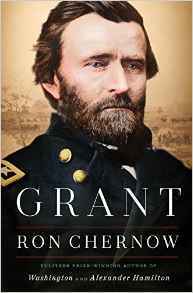 I’m tempted to add this title to my Southern fiction shelf. For a Pulitzer winner to be so careless with his facts is egregious. I got 200 pages or so in, and I found a glaring error. To be honest, I thought maybe it was me. I haven’t taught the American Civil War in 8 years now; am I slipping? Because I could swear that the famous tidbit about a single battle killing more soldiers than the American Revolution, War of 1812, and war with Mexico all added together was about the battle of Antietam, yet here is Chernow, saying it’s Shiloh.
 Grant and Sherman are my favorite generals of all time, and Flood is a highly respected author. This book was on my must-read list, and so I searched it out on an annual pilgrimage to Powell’s City of Books, and I came home happy. It turned out to be even better than I anticipated.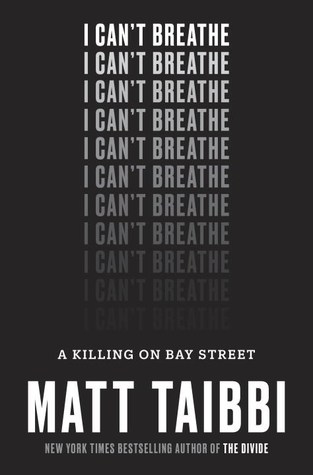
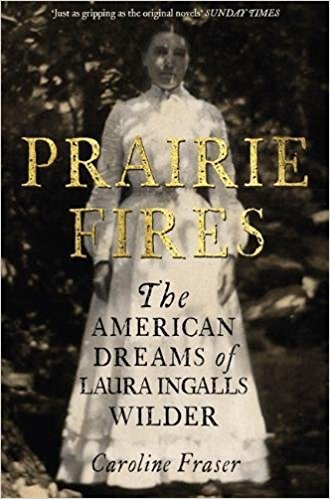 Are the classic “Little House” books memoir or historical fiction, and were they written by Laura or by her daughter? If you’re confused, you’re not alone. In this epic, absorbing biography of her great-grandmother, Fraser tells us. Between her congenial narrative and careful, detailed documentation, this author has created a masterpiece. Lucky me, I read it free and early thanks to Net Galley and Henry Holt Publishers. This book is now for sale.
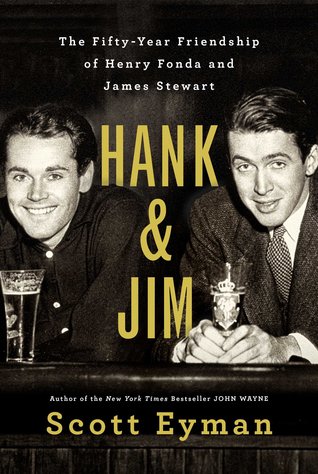 Fans of Henry Fonda and Jimmy Stewart will want to read this biography, written by the author that recently wrote a biography of John Wayne. I was invited to read and review by Net Galley and Simon and Schuster, and so I read it free in exchange for this honest review. It’s for sale now.
 Seattle Book Mama