Best Military History of 2019: Spearhead, by Adam Makos

Best Historical Fiction of 2019: Finding Dorothy, by Elizabeth Letts

Honorable Mentions:


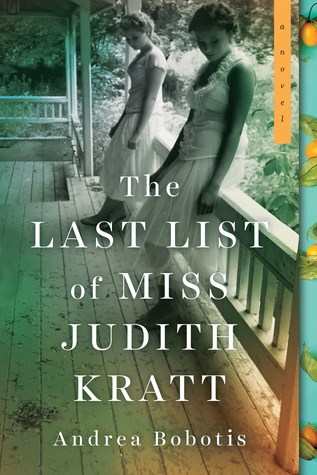
Best Debut Fiction of 2019: The Last List of Miss Judith Kratt, by Andrea Bobotis
Interestingly, my favorite as well as two honorable mentions share a social justice component.
Honorable Mentions:

Best Humorous Book of 2019: The Grammarians, by Cathleen Schine*****


The Last Resort, by Marissa Stapley***-****
3.5 rounded upward. The Last Resort is a novel about a marriage retreat where nothing is as it seems.

Thanks go to Net Galley and Simon and Schuster for the review copy. This book is for sale now.
Readers should know that this novel holds triggers for just about everything, left, right, and center.
Miles and Grace Markell run an intensive marriage therapy camp in Mexico. The affluent couples that come here are desperate to save their crumbling marriages. Everyone is supposed to give up their cell phones and internet privileges, and once they do that, they are more or less helpless, which is part of the proprietor’s plan.
Between the punny title and the teaser that suggests that the couple that runs the retreat has the worst marriage of anybody, I was anticipating that this would be hilarious, and that’s not so. There are a couple of moments of dark humor, but mostly this is a straight-up suspense story. That said, it’s a good book, but nothing special. It took me a good long time to distinguish the couples from each other. The climax is fast approaching, and I’m still trying to remember which person Shell is, and who her husband is, and what problem has brought them here. I would probably have had greater success if I hadn’t read this book at the same time as a handful of others, but if I had been forced to read just one book, I would have chosen most of the others I was reading over this one.
This doesn’t mean you won’t enjoy this book. I had recently read another story about a retreat where everyone’s phones were seized and internet forbidden, and so in some ways my lack of interest here was a fluke. Read the synopsis; if you are interested, I recommend you get this one free or at a deep discount.
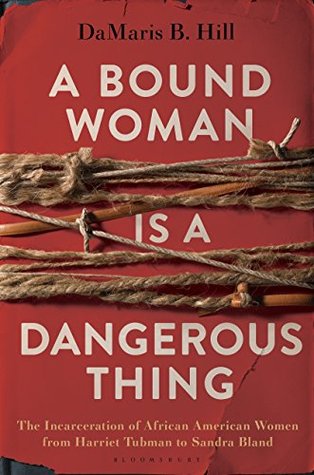
Best Poetry 2019: A Bound Woman is a Dangerous Thing, by Damaris B. Hill*****
Image
Takes One to Know One, by Susan Isaacs****
I have loved Susan Isaacs’s work for decades, and so when I saw her newest novel up for grabs on Edelweiss, I jumped at the chance to read it. This book is for sale now.

Corie Geller is a former FBI agent. Now she is the stay-home mom of a fourteen year old stepdaughter, and the wife of a prominent judge. She works as a scout for quality Arabic fiction. And she’s bored out of her mind.
But old habits die hard, and she can’t help noticing that a member of her regular lunch group, Pete Delaney, has habits that raise red flags. He’s too normal, almost as if he’s working at it. His appearance is forgettable, his occupation is dull…but he always sits facing the door when he goes out to lunch. He sets Corie’s professional sense a-jangling. Is Pete really this bland, or is it a front for something more sinister?
The few people that Corie confides in are sure she is jumping at shadows. She needs a job, or a hobby. Briefly I wondered whether Pete and Corie were going to fall madly in love, but then I remembered who my author is. Isaacs would never.
The one person that takes Corie’s questions seriously is her father, a retired cop who’s bored also. As she and her papa peel away Pete’s façade, they grow closer to uncovering his secrets. And Josh—Corie’s husband, whose work requires a whole lot of travel—knows nothing of any of it.
The thing that elevates Isaacs above other novelists is her feminist snark. It’s put to excellent use here. Aspects that don’t work as well for me are the detailed descriptions of upscale furnishings and other expensive possessions, and the whole Arabic literature thing, which adds nothing at all to the story and is a trifle distracting; I kept wondering when it would become relevant to the story, but then it didn’t. But both of these are minor factors.
The reader should also know that this is not a thriller. There seems to be a trend among publicists to promote all mysteries as thrillers, and perhaps this helps sales in the short run, who knows; but it doesn’t serve the author well in the long run. Isaacs doesn’t write thrillers, she writes solid, feminist mysteries that pull the reader in with the story arc characteristic of strong fiction. When I hit the 62% mark at bedtime one evening, I understood that the next time I read it, I would have to finish it, and indeed, it was too exciting to read flopped in bed as I usually do. I had to sit up straight, and I kept finding myself leaning forward as I read, as if I might need to jump up at any minute.
I would love to see Isaacs use this protagonist in a series. I’ve missed this writer and look forward to her next book, whether it’s another Corie Geller story or something else. I recommend this book to feminist mystery readers that are ready for a chuckle or two.
2019 Best Book by a Pacific Northwest Author: Old Newgate Road, by Keith Scribner

Guest House for Young Widows, by Azadeh Moaveni**
Those of us in the United States don’t have much of a window on the women of ISIS, and I thought this title might help me understand them better. In some ways this proves true, but in the end, I couldn’t finish this book and I can’t recommend it. Thanks go to Net Galley and Random House for letting me read it free and early.

Here’s a quote that provides a thesis:
Many of these women were trying, in a twisted way, to achieve dignity and freedom through an embrace of a politics that ended up violating both…The political fractures from which [ISIS] arose have not been fixed. History has shown that unless conditions genuinely change, a new insurgency always arises from the ashes of an old one.
Moaveni shares the case studies of individual women that have been drawn to the Islamic State. Although the organization provides its women with a measure of security and protection, promoting higher education—in the service of the organization, of course—and sometimes furnishing jobs, it draws not only women that are desperate for food and shelter, but also women from comfortable middle class backgrounds. Once they are in, they find it difficult to leave. Moaveni demonstrates myriad ways in which women provide essential support for ISIS.
There are three things that I liked about this book. The research is well done; the women discussed here provide the reader with individual stories and therefore humanize them; and she acknowledges the disparity between mainstream Islamic belief and ISIS.
On the other hand, despite disclaimers within the narrative, I was overcome by a crawly sensation when I realized that the author’s overall purpose is to rationalize the choices made by women within Islamic State. She says they are relatable; I am appalled and unpersuaded.
Those that dislike a dictatorial regime should indeed advocate for a better system. How great a risk each person is willing to assume is of course an individual decision. But there is nothing that justifies or mitigates the atrocities visited on innocent people by this dreadful pseudo-religion.
When push comes to shove, the only real dilemma for me is whether to provide one star or two in review. The second star is reluctantly assigned on the basis of the writer’s solid research; yet the ideas within it are entirely abhorrent.
Never, never, and never.

