Pride of Eden, by Taylor Brown*****

Taylor Brown is quickly becoming one of my favorite novelists. His 2018 book, Gods of Howl Mountain is one of my ten best loved books among the 1,300 I have reviewed since 2012, so I have been waiting for this book, and it does not disappoint. My undying thanks go to Net Galley and St. Martin’s Press for the invitation to read and review. This book is for sale today.

Pride of Eden is a wildlife sanctuary in Georgia, owned and run by a Vietnam vet named Anse. Anse has PTSD related to his service, and his most searing memory is of the loss of a service dog that sacrificed its life to prevent a soldier from being killed by an explosive device. Anse is a complicated character with a possible death wish, but this aspect of his character is never overplayed, and after a haunting, visceral passage at the beginning, it becomes a subtle quality that runs beneath the surface, as it likely would in real life.

Anse accepts animals of all sorts; some come from illegal private zoos, or from private owners that are surprised that their adorable lion cub has grown up to be a wild animal. But secretly, he is also a vigilante. When he sees an animal in need of rescue whose owner plans to keep it—or sell its dead body for parts—he creeps in at night and liberates it.

Tyler is the preserve’s veterinarian, a buff no-nonsense woman who is also Anse’s girlfriend. My favorite passage involving Tyler is when a man comes to see Anse, and Anse is in a mood and wants Tyler to get rid of the guy. Tyler pushes back; it might be important, and the man has traveled a long way to see him. Anse grudgingly tells her to “Send him in,” and Tyler fires back that she is “not your fucking secretary, Anse.” At the outset of the story, Tyler does not know that Anse does not acquire all of his animals legally.

The third main character is Malaya, who comes to the sanctuary looking for work:

  “What do you want to do?” he asked.

   “Anything.”

    “What are your qualifications?”

“Third infantry, two tours in Iraq. Honorable discharge. Then I contracted in South Africa, tracking ivory and rhino poachers.”

“You catch any of them?”

She uncrossed her arms, buried her hands in the pockets of her shorts. Anse could see her knuckles ridged hard against the denim. “Yes,” she said.

Malaya is complex as well. But I love Malaya not only for her meaty internal monologue, but for the things she isn’t. Most male authors (and some female ones too) wouldn’t be able to resist these tired elements, and once again I admire Brown’s respect for women, which shows vibrantly in the way he frames his characters. Malaya is not romantically interested in Anse, nor does she try to mother him. Malaya and Tyler are not jealous of one another, and they do not compete. Both characters are buff and intelligent, and at no time do they have to be rescued by men. As a result, I could appreciate this story as it unfolded without the distraction of stereotypes or overused, sexist plot devices. Neither female character is motivated by sexual assaults in her past.  

The other two characters are Horn, another damaged vigilante that collects wild animals, and Lope, Anse’s driver, who helps him move large animals.

This is not an easy read. It will attract Brown’s fans, of course, and also animal lovers; yet those same animal lovers have to wade through an awful lot of sorrow, as the story is rife with tales of animal abuse. Brown’s purpose, apart from writing outstanding fiction, is likely to raise awareness of poachers that kill endangered animals for profit, and of private game reserves that send semi-tame animals to an enclosure so that wealthy ass hats can bag some big game, take that animal’s head home to hang in the den.

 Yet there’s nothing at all here that is included to be prurient or sensationalistic; every word has a purpose, either to develop a character or drive the plot forward, or both.

My emotions run the full gamut as I am reading, and this is a sign of excellent literature. I laugh out loud a couple of times; at others, the prose is so painful that I have to walk away for awhile and then come back. But I am never sorry to be reading it. The ending is so deeply satisfying that I want to high-five someone, but alas, I am reading it alone.

Once again, Brown’s novel is destined to be one of the year’s best reads. I highly recommend it.

Fight of the Century, by Michael Chabon et al*****

In celebration of the 100th anniversary of the American Civil Liberties Union, a large cross section of the finest writers alive have written essays, each about one landmark case. Chabon and his co-editor, Ayelet Waldman, contributed their advance to the organization, and all of the contributing authors did so free of charge. As for this reviewer, I’d have been interested in an ACLU publication, even if I hadn’t heard of the writers involved; and I’d have been interested in anything written by Chabon, even if the story or topic wasn’t in my lane. As it is, I count myself beyond lucky to have scored a review copy courtesy of Net Galley and Simon and Schuster. It’s for sale now.

This is the sort of book that invites skipping around, either according to subject, or according to the authors you love best. Because of this, I recommend buying it in paper rather than digitally, because flipping around out of order in digital format is a pain in the butt. Also, this is the sort of classical reference material that you’d want on your shelf. In fact, I want a physical copy for myself.

I haven’t read all of the entries, but I’ve read enough of them to recommend it to you. The cases discussed are meaty and interesting, and they aren’t the standard fodder that shows up in every undergraduate course on Constitutional law. Each entry is succinct, and the writers refrain from self-promotion. The entries I appreciate most so far are by Jesmyn Ward, who discusses the use of anti-loitering laws to transform free Black boys and men into slave laborers; Timothy Egan, who details a 1962 decision regarding the right to receive Communist literature in the U.S. mail; and Louse Erdrich, who discusses digital snooping and surveillance used against the Dakota Pipeline protesters in 2016. I know there are many more I want to read, but I am posting this now so that you can get a copy while it’s in the stores.

Here’s your chance. You can get an outstanding addition to your home library while contributing to a worthwhile organization whose work is more crucial now than ever. Highly recommended.

The Janes, by Louisa Luna****+

 4 stars plus. Louisa Luna debuted in 2018 with the first book in this series, Two Girls Down. When I learned that Alice Vega was returning, I jumped on the galley without a moment’s hesitation. Thanks go to Doubleday and Net Galley for the review copy. This book becomes available to the public tomorrow, January 21, 2020.

Alice Vega is back home in Southern California, and she is hired as a consultant on a case for the local cops. Two dead girls have turned up, both recent immigrants with IUDs in their too-young bodies. All signs point to their having been victims of trafficking for purposes of sexual exploitation, yet there is no evidence of rape. What happened here, and where did the IUDs, which aren’t available in stores, come from? She is offered an astonishing amount of money for her services, and she decides to use some of it to hire her old partner, Max Caplan, who’s back on the Eastern seaboard entertaining job offers. When Vega crooks her little finger, Cap comes running.

Luna has a voice and style not like anyone else’s. One of the things that I love is the way she swaps the stereotypic gender roles of these two main characters. Cap is nurturing, and he loves kids. Vega isn’t a nurturer, and when huge stressors come down on her, she becomes angry and violent, but as a reader I love this because her rage is always spot on. Cap has sex when he’s in love, but Vega has sex to fulfill a biological need, and then wonders why the guy is still hanging around. Clean yourself up and get out of here, dude, I have things to do today. Run along. And while Vega’s vigilante justice would be a terrible thing in real life, in fiction it feels deeply satisfying.

In other words, Alice Vega makes my feminist heart sing.

Luna is better than most authors of the genre in that no matter how off the chain her protagonist is, I never disengage because of an unlikely plot element. We have corrupt cops; we have bureaucrats; we have secrets that would become public if Vega and Cap were prosecuted for crimes committed in the line of duty. My single twinge of regret comes when Cap sustains a head injury that renders him unconscious; wakes up dazed and confused, with some memory loss; and then shakes it off without tests or treatment of any kind. Vega reminds him to get an MRI when everything is over, but it doesn’t feel like enough. I wonder at times whether she meant to do more with it and then edited it back out.

Given that both stories, this one and the last, feature two female victims, I wonder if this will be her signature element throughout the series.

This story differs from the first in that it is darker, less funny, and ramps up to the high octane, pulse-pounding excitement of a true thriller at around 80%. The plot and characters are credible, but they lack the bounce and the zip that made the first book so memorable. Nevertheless, I love Alice Vega and eagerly await the next in the series.

Heartily recommended to those that love the genre and respect women.

Hill Women, by Cassie Chambers*****

Cassie Chambers was born and raised in Owsley County, Kentucky, the poorest county in the United States. With the determination handed down to her by her mother and grandmother, she attended Ivy League schools and became a practicing attorney. This memoir is her story as well as a defense of the women from her homeland, a manifesto opposing stereotypes and misconceptions. I read it free and early thanks to Net Galley and Random House Ballantine. It will be available to the public January 7, 2020.

Eastern Kentucky is in the heart of Appalachian Mountains, and its residents are stereotypically called hillbillies by outsiders. As a scholar whose childhood was rooted there, Chambers is in a unique position to share the culture’s nuances and strengths. She was raised by parents that had to save up to buy her a set of Old Maid cards from Walmart; going out to dinner, which happened Sundays, meant a single Happy Meal at McDonald’s shared three ways. But her mother’s determination to graduate college drove home the value of an education, and when Cassie had the opportunity to spend the last two years of high school at a boarding school for high achieving students, she leapt and her family supported her.

Chambers’ narrative is intimate and deeply absorbing. She weaves her own story into the larger story of Appalachian women: their culture, their history, their strengths and the challenges they face. She discusses the difficulty of receiving public services in an area that is spread out among hills and hollers, devoid of transit and low on personal transportation, and that has no government buildings to speak of; she also describes the pride that sometimes prevents its residents from accepting help for which they are qualified. She has a bottomless well of riveting anecdotes that illustrate the sense of community and willingness to lend assistance to neighbors in need even when those offering help have nothing extra to give; the Justice system often fails those that need protection from domestic abuse, as well as those addicted to drugs and alcohol. And she discusses remedies, including Jeanette’s Law, which reverses Kentucky’s absurd legal requirement that victims of domestic abuse must provide the spouses that they are divorcing with an attorney at their own expense. This was one of Chambers’ most important projects. Another is having expungement fees waived for low income residents, an especially urgent matter since in Kentucky, felons aren’t allowed to vote. Democracy is sidelined when class and race become obstacles to participation in civic life.

But the most memorable tidbits are the more personal stories, for example that of her Aunt Ruth, who married late in life. Before they were wed, Aunt Ruth had a conversation with Sonny, her husband-to-be, in which she explained to him carefully that if he ever hit her, she would be forced to kill him, in his sleep if necessary, using a large claw hammer, and so if this was likely to be a problem then the wedding should be canceled. (It wasn’t.)

The best memoirs combine a social issue or political problem with a personal story told by a top-drawer storyteller, and Hill Women succeeds richly in both regards. I recommend this book to women everywhere, and to those that love them.

Best Overall Nonfiction of 2019: Say Nothing

Your House Will Pay, by Steph Cha*****

The quality that distinguishes Cha from other top-tier mystery writers is her absolute fearlessness in using fiction to address ticklish political issues.  Your House Will Pay is impressive. I read it free and early thanks to Net Galley and Harper Collins. I am a little sick at heart that I’m so late with my review, but this book is rightfully getting a lot of conversations started without me. It’s for sale now, and you should get it and read it.

Our two protagonists are Grace Park and Shawn Matthews. They don’t know each other, but their families intersected one critical day many years ago.  The Parks are Korean immigrants, the owners of a small pharmacy.  The Matthews family is African-American, and they have never stopped grieving the loss of sixteen-year-old Ava, who was shot and killed one evening by Grace’s mother in a moment of rage and panic. The other thing shared by Grace and Shawn is that both were quite young when it happened. Shawn was with his older sister when she was killed and has memories of what happened; Grace has been shielded from the event and knows nothing about it until the past opens itself up in a way that is shocking and very public.

The story alternates between the initial event, which happened in the 1990s, and today; it also alternates between the Park family and the Matthews’.  The development of the characters—primarily Grace and Shawn, but also Shawn’s brother, Ray and a handful of other side characters—is stellar. Throughout the story I watch for the moment when the narrative will bend, when we will see which of these two scarred, bitter families is more in the right, or has the more valid grievance. It never happens. Cha plays it straight down the middle. Both families have been through hell; both have made serious mistakes, crimes against one another. And ultimately they share one more terrible attribute: both families have been callously under-served by the cops and local government, for which relatively poor, powerless, nonwhite families are the dead last priority.

Cha bases her story on a real event, and she explains this in the author’s notes at the end of the book.

As a reviewer, I am closer to this than many will be: my family is a blend of Caucasians, Asian immigrants, and African-Americans. I read multiple galleys at a time, shifting from one to another throughout the reading parts of my day, but it is this story that I thought about when I wasn’t reading anything.

The first book that I read by this author was from her detective series. When I saw that she had a galley up for review, I was initially disappointed that this wasn’t a Juniper Song mystery, but now that I have seen what Cha is doing and where she is going with it, I see that this had to be a stand-alone novel. There isn’t one thing about it that I would change.Highly recommended to those that love the genre and that cherish civil rights in the U.S.; a must-read.

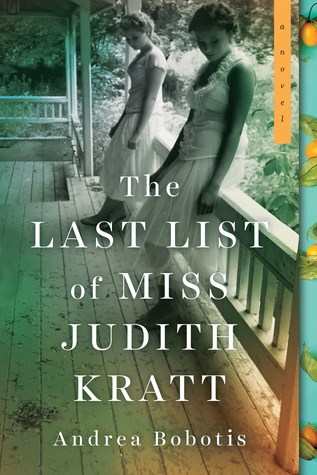
Best Debut Fiction of 2019: The Last List of Miss Judith Kratt, by Andrea Bobotis

Interestingly, my favorite as well as two honorable mentions share a social justice component.

Honorable Mentions:

https://seattlebookmamablog.org/2019/04/13/miracle-creek-by-angie-kim/

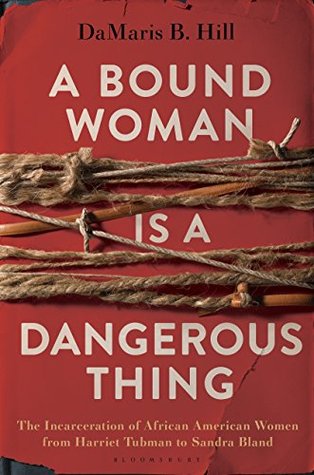
Best Poetry 2019: A Bound Woman is a Dangerous Thing, by Damaris B. Hill*****

Image

The Prison Letters of Nelson Mandela*****

This magnificent collection took 10 years to organize, collecting Madiba’s letters from the many points where they were received, and from the prisons–where many of them were not mailed out, for various technical reasons that were a poor disguise for censorship. The preface suggests that most people will want to flip through it rather than reading it cover-to-cover, but I am a habitual cover-to-cover sort, and so I read the first 50 pages in sequence. And the book’s editor is correct. This is not a cover-to-cover read.

Nevertheless, I am struck immediately by the dignity with which Mandela communicates with his captors. Time and again he writes to them in a courteous, civilized, and highly educated hand about the various ways in which his rights under South African law are being violated and what he is requesting they do to remedy it. He is persistent. He forces them to treat him as a human being. Mandela was an attorney, but he was also possessed of social instincts that nobody can teach anyone. And although I never met him, everything I have read–which is a good deal, where this man is concerned–convinces me that he was also a very nice person.

This is a tome, and it’s a treasure. I am glad I was denied a galley because this is the sort of volume I want as a physical copy. In the end my son purchased it for me for my birthday, and so I thank Benjamin. What a treasure.

If you are looking for just one book about Mandela’s life, read his hefty autobiography, Long Walk to Freedom. However, if you are a collector of books about South Africa, or about civil rights in general, or of course, about Nelson Mandela, go out and get this book now.

Conversations with RBG, by Jeffrey Rosen*****

This is the RBG book I’ve been waiting for. My huge thanks go to Net Galley and Henry Holt Publishers for the review copy. This book will be publicly available November 5, 2019.

Justice Ginsburg wants us to know that the sky is not falling. Though progressive thinkers see great cause for concern, primarily within the executive branch of the federal government, the U.S. Constitution hasn’t changed, and the Supreme Court, she insists, is made up entirely of strong legal minds that revere it. Precedents are still the basis of future rulings; the overturn of precedent is rare and unusual. But for activists—and she loves us—she also points out that public opinion is what alters the course of the law. Congress makes laws based on what their constituency desires. So she isn’t suggesting we put away our pussy hats and our picket signs; she just wants us to know that our advocacy works, and she appreciates everything we do to further women’s rights, civil rights, and gay rights.

Twice previously I read other books about RBG; one is a popular biography that I enjoyed, but that didn’t go deeply enough into Ginsburg’s legal ideas, and the second is just dross, minutiae gathered from her high school year book and whatnot. Whereas part of me just wants her to write an autobiography, I have to recognize that she is very elderly, has faced health challenges lately, and to stand a chance of writing any sort of memoir, she’d probably have to resign from the Court. And goodness knows, I want her to stay there, ideally forever. Instead, Rosen’s series of interviews with this feminist icon serves nicely.

Rosen has been friends with Justice Ginsberg for many years; they were drawn together initially through elevator discussions of opera. His chapters are brief but meaty, organized around key rulings and topical interviews. Rosen explains succinctly at the outset how this friendship formed and grew, but he doesn’t get windy or use the opportunity to aggrandize himself. He keeps the focus strictly on his subject. The interviews flow in an agreeable manner that is literate without being verbose or Byzantine.

We live in politically polarized times, and so even when I am reading about a political figure that I admire, I generally expect my blood pressure to rise a little, perhaps in passionate agreement. But if anyone in this nation has the long view of history and the key domestic issues that have unfolded, particularly with regard to the rights of women, it is RBG. And although I am not as senior a citizen as Justice Ginsburg, many of the changes she mentions that have occurred over the decades are ones that I can also attest to, though I hadn’t thought of them in years. For example, when I came of age in the 1970s, it was still not unusual to try to enter a bar or club only to be barred at the doorway because women weren’t allowed inside. (“Gentlemen only, Ma’am. Sorry.”) I had forgotten about these things; as her recollections unspool I see that she is right. Change happens, but lasting change happens slowly. We are getting there, at least with regard to women’s rights and gay rights. Issues of race and class are something else entirely, and she points up specific instances where justice has not progressed and change is imperative. I could say more, but none of it would be as wise or as articulate as when Ginsburg says it. If you’ve read this far in my review, you should go ahead and order this excellent book now. I highly recommend it to all that are interested in social justice, both formal and informal.