
 Oh hey now…do you hear bells?
There are plenty of reasons to read this luminous, intimate, magical novel, the second in the Winternight Trilogy. You can read it for its badass female warrior, an anomaly in ancient Russia; you can read it for its impressive use of figurative language and unmatchable word-smithery; or you can read it because you love excellent fiction. The main thing is that you have to read it. I was overjoyed to be invited to read it in advance by Atria Books in exchange for this honest review; thanks also go to Net Galley for the digital copy. The book is available to the public tomorrow, December 5, 2017.
Vasya is no ordinary young woman. She sees and hears things few others do. Take, for example, the domovoi that guard the home; the priests discourage belief in such creatures, but they’re right there. She can see them. Then there’s the matter of her extraordinary horse, Solovey, who is nobody’s property and nobody’s pet, but who makes a magnificent friend and ally. And then of course there is the Frost Demon, a mentor and intimate acquaintance with whom she has a complicated relationship. But these are only parts of her story. The whole of it is pure spun magic that no review can adequately describe.
In ancient Russia, there are three kinds of women: some are wives; some are nuns; and some are dead. Vasya is determined to be none of these. Everyone that cares about her tries to explain how the world works so that she can make her peace with it. Her father is dead now, and so her brother, who is a priest, and her elder sister Olga both implore her to be reasonable. And even the Frost Demon wants her to face the facts. He tells her:
“Having the world as you wish—that is not for the young,” he added. “They want too much.”
Nevertheless, Vasya sets out into the winter woodlands with Solovey; she’s dressed as a man for the sake of safety. She learns that bandits have kidnapped the girls of a village that lies in her path, and everywhere she sees the depredations, the burned homes and ruined fortresses that have been laid waste by the Mongol invaders that have preceded her. She vows to rescue the girls and to seek vengeance, and as one might expect, she brings down a world of ruin and pain upon herself in the process.
A character like Vasya comes along perhaps once in a generation. Together with the first story in this trilogy, The Bear and the Nightingale, it has the makings of a classic. My one small wish is not to see it become a romance rather than what it is now—brilliant historical fiction and deeply moving fantasy. At the same time, wherever Arden takes the third volume of her trilogy, I know she can be counted on to do it better than anyone else.
Can this book stand on its own if the first title isn’t available? Arden ensures that the reader has the basic information necessary to jump into the story, and yet I urge readers to get both books if at all possible. To disregard the first in the series is to cheat oneself.
This reviewer seldom keeps review copies on the shelves here at home. There are too many books and never enough space. This title (and the one before it) is an exception to this rule; I will love this series until I die.
You have to read this book.
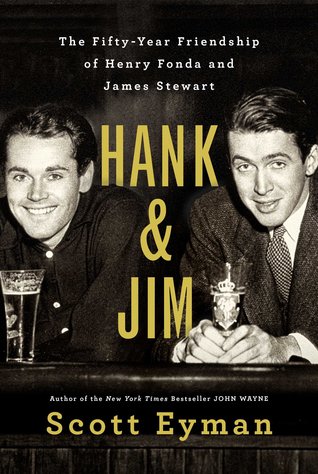 Fans of Henry Fonda and Jimmy Stewart will want to read this biography, written by the author that recently wrote a biography of John Wayne. I was invited to read and review by Net Galley and Simon and Schuster, and so I read it free in exchange for this honest review. It’s for sale now.
 Ta-Nehisi Coates is pissed. He has a thing or two to say about the historical continuity of racism in the USA, and in this series of eight outstanding essays, he says it well. I read it free and early thanks to Net Galley and Random House, and I apologize for reviewing it so late; the length wasn’t a problem, but the heat was hard to take. That said, this is the best nonfiction civil rights book I have seen published in at least 20 years.
 60 Minutes first aired in 1968, a year for news if ever there was one. It was brilliantly conceived as a television news magazine, covering multiple unrelated news stories in a single broadcast. Executive producer Jeff Fager offers the reader an insider’s peek; lucky me, I read it early and free thanks to Simon and Schuster and Net Galley. It’s for sale today.
 During World War II, the Japanese Imperial Army forced over 400,000 women into sexual slavery; though the Korean comfort women have been recognized for a long time, the survivors in the Philippines lived with the trauma and appalling social stigmatization for decades, unheard. Recently 173 of them, now very elderly, filed suit against the Japanese government. This collection includes interviews with 16 Filipina women whose lives were ruined by this atrocity. Thanks go to Net Galley and Northwestern University Press for the DRC, which I received early and free in exchange for this honest review. The collection is for sale now.
 The German Girl arrived in my mailbox, a nice surprise from Atria Books. This novel is historical fiction, an international bestseller translated into many languages; it tells the story of Hannah, a survivor of the Holocaust who was sent to Cuba, and her namesake, Anna, who lives in present day Manhattan. This title is available for purchase now.
 Leah Weiss hits the literary scene with electrifying Southern fiction August 22, 2017. If the Creek Don’t Rise is a story told with tremendous heart, and it’s one you won’t want to miss. Weiss writes with swagger and grace, and her prose crackles with conviction. Thanks go to Net Galley and Sourcebooks Landmark for the DRC, which I received free in exchange for this honest review.
 Voice, voice, voice; nobody writes like Sharyn McCrumb. Here her dry, dark humor combines with her expertise in Appalachian culture and above all, her deep respect for the working poor, and the result is a masterpiece of an historical mystery. Thanks to Net galley for the DRC, and to Atria for sending a hard copy galley and a finished copy of this excellent novel. However, had I paid full freight, I’d have come away happy. This book will be available to the public September 12, 2017.
