Africaville, by Jeffrey Colvin****

Narrated by Robin Miles

My thanks go to Net Galley and HarperCollins for the review copy; after publication, I used an audio book to finish it, thanks to Seattle Bibliocommons. It’s available to the public now.

There are two reasons I was drawn to this story. The first is the setting, which is primarily in Nova Scotia’s Black community. I have never read or heard a story set there, and so I was intrigued. There’s also a Civil Rights Movement tie-in, and for me, that sealed the deal.

The book starts out as a rough read, involving dead babies and “bad luck” babies that weren’t dead but needed killing. I was so horrified that I had to restart the book several times to get past it. Now that I have, I can assure you that once you’re past the introduction, that’s it. The dead babies are done. I’m not sure I would have lead off with this aspect, because I’m probably not the only reader to pick the book up and put it down fast. In fact, had I not owed a review, I would not have returned to it. I’m glad I did.

The story itself is ambitious, covering three generations of a family there. At the outset we have Kath Ella, who has ambition, but also a mischievous streak. I find this character interesting, but there are times when I don’t understand her motivation. The story is told in the third person and not all of her thoughts are shared with us, and so there are times when I’m left scratching my head. When the end of the book arrives, I’m still wondering.

Kath’s son and grandson comprise the second and third parts of the story; apparently the term used back then for passing as Caucasian was called “crowing,” and we see some of that. There are too-brief passages involving the Civil Rights Movement against Jim Crow in the Southern U.S., and I am disappointed not to see more about this or have the characters involved more deeply. What I do see of it is the surface information that most readers will already know.

Toward the end there’s a subplot involving getting an elderly relative out of prison, and I like this aspect of it, in particular the dialogue with the old woman.

The setting is resonantly described throughout.

All told, this is a solid work and a fine debut. I look forward to seeing whatever else Colvin has to offer. As to format, although Miles does a lovely job reading, something of the triptych is necessarily lost when we don’t see the sections unfold. For those that can go either way, I recommend the print version.

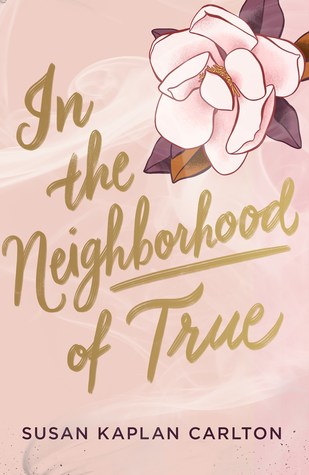
In the Neighborhood of True, by Susan Kaplan Carlton*****

“Shalom, y’all.”

Ruth Robb was born and raised in New York City, but following her father’s sudden death, she moves with her mother and sisters to Atlanta, where her mother’s family lives. The year is 1958. Almost immediately she is faced with a critical choice: should she quietly avoid mentioning her Jewish roots and allow her peers to make assumptions based on her grandparents’ standing in their Protestant church, or should she risk her newfound popularity with candor? My thanks go to Algonquin Books and Net Galley for inviting me to read and review. This book is for sale now.

The family has barely begun to grieve their loss. Everything is tossed into boxes and they leave New York, soon to be embraced by Ruth’s loving grandparents. Their new home, however, is almost too good to be true:  the house is large and luxurious, with a pool; her grandparents are generous and solicitous; their deep roots in the community make for nearly instant acceptance among the girls’ peers. But Ruth’s grandmother, called “Fontaine” within the family, has plans for Ruth and her younger sister, Nattie. They are enrolled in an elite Christian school, and Ruth is sent to private lessons for a “pre-debutante.” There’s a little pink book that serves as a grooming and etiquette guide, and it is specific and proscribed.

What isn’t in the pink book is the synagogue. Fontaine immediately informs the girls that they are, after all, “Half Christian,” but their mother quickly reminds her mother that she is a convert, and the girls are Jewish, period.

The characters are so resonant and believable that I find myself reflecting on the amount of stress that the girls, Ruth in particular, are experiencing. First, they must leave all of their friends, and the culture in which they’ve been raised, behind; their father is gone forever; and now there’s this tension between their loving grandmother, who provides them with everything, and their mother. This is not a dramatic conflict; but it shimmers under the surface constantly. They are a loving family, and they’re civilized. Yet Ruth is torn. But her nearly instant popularity galvanizes her, and she decides not to decide, by skating around questions of church and religion. After awhile her evasions become deception. Her mother is a discreet but unmovable force, with a sort of Jiminy Cricket demeanor: don’t forget who you are, Ruth. When are you going to tell your friends? What do they think you are doing on the weekend? The ante is upped when Ruth falls in love with Davis, who’s a big man on campus.

Things come to a head when the local synagogue is vandalized.

Carlton’s author blurb says that she had a similar experience, although she wasn’t the teenager, she was the mom. No doubt this is responsible for some of the story’s authenticity, but much of the compelling narrative has to be chalked up to excellent writing. There’s never a stereotype, and I never felt I was being lectured. Instead I am absorbed. What the heck is Ruth going to do? And though I am unfamiliar with Atlanta, there are several times when colloquial expressions that have fallen out of use pop into the story, expressions I recall from my early childhood in the 1960s. But the author never leans on pop cultural references; rather, they drop in naturally. It’s smooth as glass.

Sexual references tend toward the general; there is sex included, but not much detail. I include this information for teachers and parents considering including it in their libraries. If in doubt, read it before you present it to the young people in your life.

Since retiring from teaching language arts to adolescents, I have generally avoided reading young adult novels. I’ve been there and done that. But there’s an exception to everything, and I am glad I was given the chance to read this one. Highly recommended.

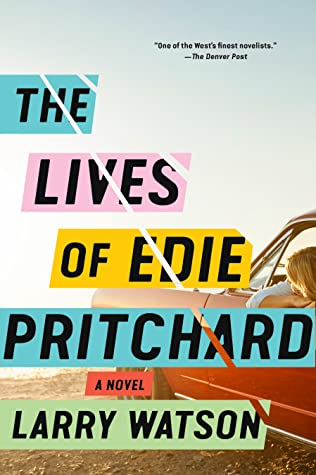
The Lives of Edie Pritchard, by Larry Watson****-*****

It’s not often that a male writer gets it the way that Larry Watson does. My thanks go to Net Galley and Algonquin for the invitation to read and review, as well as the gorgeous hardcover copy. This book will be available to the public tomorrow, July 21, 2020.

Edie’s story is divided into three periods. When we first meet her, she is a young adult, married to Dean. Twenty years later, we find her in a different marriage. The last third finds her a senior citizen. When I saw how the first and second parts were structured, I thought I spotted a formula and that I knew more or less what the last third would look like. I’m delighted to say I was incorrect.

The style in which it’s written is unusual. There’s almost no inner monologue; everything is either action or dialogue. There’s no shifting point of view, either. It’s straight forward and linear. The author takes his time establishing character and setting, and so for a long time, there’s no noticeable plot curve. At about the point where I begin to be nervous, that perhaps I’ve agreed to read and review a book that isn’t very good, it wakes up. I’m not generally a fan of spare prose writing, but this is different.

Edie has married Dean Linderman, whom she dated in high school. He’s a nice guy, but his twin brother Roy is a player. Where Dean is introverted and reflective, Roy is extroverted and aggressive; and one of the ways Roy shows aggression is in trying to seduce his brother’s wife. It never stops. Every single time they are alone together, even for a few minutes, he starts in on her. And every stinking time, she tells him no. Stop it, Roy, I am married to your brother. I love Dean, not you. But getting the guy out of her hair is like trying to herd mosquitoes. And yet, a couple of times I see Edie do or say something that, while not openly encouraging, sends mixed signals, and I think, Aha. Maybe that’s why Roy keeps trying.

 Watson uses nuance and subtlety in a way not many authors do. It makes Edie come alive, because I don’t know what she’s thinking, and Watson isn’t going to take it apart in front of me. I am left to wonder…now why the heck would Edie do such a thing? And while I read, I wonder. And when I am no longer reading, I’m still wondering.

Twenty years later, we find Edie Dunn. She’s married to someone else, and she has a teenaged daughter. Like Dean before him, Gary doesn’t spend a lot of time worrying about what Edie wants. Edie is his wife, and she should do what he wants her to do. And I won’t give any more of this bit away, but once more, Edie surprises me.

Within the last section, Edie’s teenage granddaughter is going to move in with her. Edie’s companion who’s in the car with her asks if she isn’t out of practice with teenagers. Edie says, “It’s like riding a bicycle. Once you’ve fucked up as a parent, you never forget how to fuck up again.” I love this.

When I am sent a physical book to review, as opposed to digital or audio, the book goes into the bathroom. I know that I am hooked if the book comes back out of the bathroom with me at some point. Edie came out at about the sixty percent mark, and after that she didn’t get left alone unless I had to sleep.

The thing about this story that may get in the way of good reviews here is exactly the thing that makes it so good. The way that Roy—and later, other men—follow Edie around and pester her, trying to control her and later, her granddaughter, is repetitious and maddening, and that. Is. The. Point. Though it’s conveyed subtly, we know that Edie is very attractive. And again—I love that we don’t hear constantly about her clothes, her figure, and so on; rather, we know she’s gorgeous by what others say about her, and how they respond to her. And not one living male takes her seriously. They see her, and then they want her, not because they care about her or even know her, but because it would stoke the fires of their self-esteem. And all along, Edie tries, initially, to explain what she wants instead, and not a damn one of them will listen to her. But she does what she has to do, and by the end of the book, I like Edie a great deal.

Those that enjoy strong feminist fiction should get this book and read it.

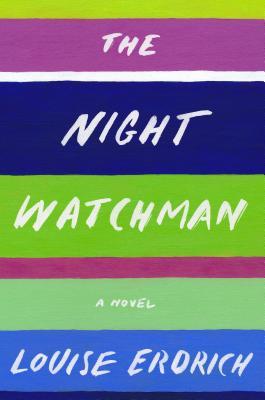
The Night Watchman, by Louise Erdrich*****

I cannot believe it has taken me this long to read the legendary novelist, Louise Erdrich. I had my reasons—wrong ones, as it turns out—and I am grateful to Net Galley and HarperCollins for the review copy, and thus helping me pull my head out of…the place where it was. This excellent novel is for sale now.

Let me explain, first off. Many years ago, I enrolled in an alternative graduate program that emphasized respect for all cultures and races, and which required, as a graduation requirement, attendance at a full day seminar listening to a locally famous Native storyteller.  The story was delivered in a monotone, with a good deal of repetition and no effort at summarization. So, after dutifully suffering through 6 hours of it on one of the hottest days of summer, I pledged to myself that I’d never go through that again.

Twice, good friends have urged me to read Erdrich’s novels, but I was also told she was an American Indian storyteller whose heritage formed a central theme in her writing. My eyes glazed over, and I vowed to give it a miss. When The Night Watchman drew early raves, I realized that my assumptions about Erdrich might be in error, and I hustled back to Net Galley to see if I might still score a galley. It’s a lesson well learned.

The year is 1953, and the place is the Turtle Mountain reservation in North Dakota. Patrice Paranteau has finished school, but she doesn’t want to get married. She has seen her friends do so and turn into old women overnight, shivering as they hang the wash to freeze dry in winter, and collecting snow to melt so that their children can take a bath. No thanks. Instead,

I cannot believe it has taken me this long to read the legendary novelist, Louise Erdrich. I had my reasons—wrong ones, as it turns out—and I am grateful to Net Galley and HarperCollins for the review copy, and thus helping me pull my head out of…the place where it was. This excellent novel is for sale now.

Let me explain, first off. Many years ago, I enrolled in an alternative graduate program that emphasized respect for all cultures and races, and which required, as a graduation requirement, attendance at a full day seminar listening to a locally famous Native storyteller.  The story was delivered in a monotone, with a good deal of repetition and no effort at summarization. So, after dutifully suffering through 6 hours of it on one of the hottest days of summer, I pledged to myself that I’d never go through that again.

Twice, good friends have urged me to read Erdrich’s novels, but I was also told she was an American Indian storyteller whose heritage formed a central theme in her writing. My eyes glazed over, and I vowed to give it a miss. When The Night Watchman drew early raves, I realized that my assumptions about Erdrich might be in error, and I hustled back to Net Galley to see if I might still score a galley. It’s a lesson well learned.

The year is 1953, and the place is the Turtle Mountain reservation in North Dakota. Patrice Paranteau has finished school, but she doesn’t want to get married. She has seen her friends do so and turn into old women overnight, shivering as they hang the wash to freeze dry in winter, and collecting snow to melt so that her children can take a bath. No thanks. Instead,

“She was the first person in the family to have a job. Not a trapping, hunting, or berry-gathering job, but a white people job. In the next town. Her mother said nothing but implied that she was grateful. Pokey had this year’s school shoes. Vera had a plaid dress, a Toni home permanent, white anklets, for her trip to Minneapolis. And Patrice was putting a bit of every paycheck away in order to follow Vera, who had maybe disappeared.”

The point of view shifts between Patrice; a local boy turned boxer, Wood Mountain; Haystack Barnes, the white math teacher and boxing coach; and Thomas, Patrice’s uncle, who is the night watchman at the jewel bearing plant. Thomas is modeled after Erdrich’s grandfather, and the author’s notes at the end mention that his struggle to save the Chippewa land made writing this book an emotional experience.  

As the story opens, Patrice is preparing to track down her sister, who is rumored to have had a baby in Minneapolis, and Thomas is organizing a group of Chippewa to attend the hearings in Washington, D.C. The Feds have sent a letter to the tribe suggesting that since they were clearly successful, they would surely no longer require government aid or protection. Their land would be absorbed by the U.S. government and then sold to private buyers; its current residents would be relocated to cities where they could get work. And it’s a measure of exactly how clueless the average American was about the Chippewas’ plight that Barnes, who lived and worked among them, said, “I don’t understand why it’s so bad. It sounds like you get to be regular Americans.”

There are other points of view as well; the most memorable are the Mormon missionaries that have drawn the short straw and been sent to minister to the “Lamanites.” This religion holds that the inferiority of American Indians is revealed holy truth; only by converting can they be salvaged, and when that happens, the new converts will slowly become whiter. Our two missionaries dislike each other profoundly, which is unfortunate since they may only separate from one another to use the toilet. When the main story becomes intense and at times, very sad, in will pop the missionaries and before I know it, I am laughing out loud.  In addition, I admire the way the strong female characters are developed.

There are three primary threads to follow: what Patrice decides to do with her future; whether Vera will be found; and whether the Chippewa of Turtle Mountain will lose their land. All are handled with the mastery one might expect from an iconic author.

Don’t be the idiot that I was. Get this book and read it now.

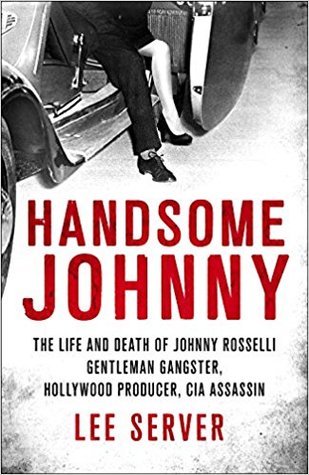
Handsome Johnny, by Lee Server**

I was invited to read and review this biography by Net Galley and St. Martin’s Press; it’s the story of Johnny Rosselli, known as “the gentleman gangster.” Sometimes I enjoy a good gangster story; my great-uncle (whom I didn’t really know) was Sherman Billingsley, the thuggish owner of the New York Stork Club, and so when I read about others, it sparks my imagination. Usually.

I didn’t engage with the book’s beginning when I sat down the with digital review copy, and eventually I got bored and set it aside for something more compelling. But often, the galleys that land on the back burner become more interesting once I can get an audio copy. After avoiding this book till publication, I found an audiobook at Seattle Bibliocommons, and I began listening to it in the evenings when I prepared dinner. In this way I found it more interesting. There’s a fair amount of background provided, because the writer (perhaps wisely) doesn’t assume his audience is proficient in American history, Prohibition and so on. I didn’t hear anything I didn’t know already, but it was okay. Gradually it took on the flavor of a documentary, not riveting but not bad. I listened to the first 25% and thought I would probably finish it this way.

Unfortunately, a deal breaker came up somewhere in the next ten percent. Rosselli has gone to Los Angeles because there was no mob out there yet. He figured he’d pioneer vice and leg-breaking on the West Coast. Fine, fine. He meets Al Capone, who is being harassed by cops and told he can’t stay in L.A., and Rosselli does Capone a favor and thereby comes into the Capone orbit. Okay, fine. But then we get into the women.

Now, I understand that mobsters were about as far as anyone can get from feminism, and of course in the 1940s and 50s, there wasn’t any women’s movement to speak of. The problem is that Server doesn’t differentiate Rosselli’s point of view from his own. I get the distinct impression that the two aren’t very different. There’s only one quality worth reporting in women, and that’s their physical appearance. So Rosselli falls for Jean Harlow, who is perfect. Completely perfect. What makes her perfect? Well, she’s got great legs. They are described. Breasts too; we hear about that. And she is a virgin! Every middle-aged mobster loves to get a virgin in the sack, right? At age seventeen she’s barely legal, but nobody worries about that. Oh, and also she’s very, very white. Porcelain skin. Just wonderful.

By the time Server is done explaining all of Harlow’s best qualities, and the misery that that bastard put her through (though he doesn’t describe it this way; in fact, the reader has a kind of bemused smirk to his voice throughout,) and oh how sad about her suicide at age 27, I am seeing red.

 I’m not chopping bell peppers now. I’m standing stock still in my kitchen, glaring at my tablet. Dinner may be a little late.

I try to continue with the book, but I am pissed.  Finally, I decide life is too short. I’ve tried this book twice, but I don’t finish it. In fact, I consider that second star in the rating to be generous.

This book is recommended to misogynistic assholes. Everyone else should give it a miss.

The Illness Lesson, by Clare Beams***

Caroline lives with her father, Samuel, a writer and educator whose career and reputation have been sullied by a younger man that Samuel mentored many years ago. But Samuel is determined to revive his career by starting a school for girls. Girls can think. Girls can learn. They needn’t be limited to the traditional lessons that make young ladies into gracious hostesses. They can rise in this world, as long as he is there to guide them.

I read this book free and early thanks to Doubleday and Net Galley. It’s for sale now.

As the story opens, just a few ladies are signed up for the boarding school that will be run by Samuel and Caroline from their home. A former protegee, David, comes to join them also, and will teach the sciences. Running errands in town, however, Caroline and David run into Eliza, the daughter of the man that ruined Samuel’s career. Her father is now deceased; Eliza wants to attend the school. In a moment of mischievous rebellion that she will come to regret, Caroline accepts her.

At the outset, The Illness Lesson seems to be feminist fiction, and as school begins and I see Samuel mansplaining to his female charges about the things that women can and cannot do, should learn to do, should want to do, I lean in, ready for a rapier-sharp tale in which—I hope—the father and teacher that believes himself to be an educational gift to womankind will learn a powerful lesson.

Alas, not so much.

Before the halfway mark is reached, the story has wandered in various directions and has lost its cohesion and focus. I check my notes and change the genre for it over and over again; feminist fiction becomes historical fiction becomes romance becomes magical realism becomes horror and what the heck is this author trying to achieve? If the plan is to keep the reader guessing, I can honestly say that I am genuinely surprised (in the second half) by what Caroline finds in the woods. However, I am not a fan of surprise elements that fragment the plot. It almost feels as if it was written by a half dozen writers drunkenly passing a story around late at night. “Okay, now YOU write a chapter! Surprise me.”

I might not have been so disappointed if I hadn’t expected such great things. The premise is a wonderful one. Beams could have done so much with it, and I can’t figure out why she didn’t.

Perhaps if you read it, you’ll come away with a more charitable viewpoint. My advice, however, is to get it free or cheap, or else give it a miss entirely.

To Wake the Giant, by Jeff Shaara*****

“It’s the admirals, sir, playing with us like this is their own big-assed bathtub and we’re just toys.”

Jeff Shaara has written some of the best war stories ever published, and he’s done so for almost 25 years. I have read every last one of them. When I was invited to read and review his new novel about the Japanese attack on Pearl Harbor by Random House Ballantine and Net Galley, I was delighted, but also slightly apprehensive, because even after all these years, the subject remains an incendiary one; I needn’t have worried. This may be Shaara’s best book, and that’s saying a lot.

I’ll share a brief note about my own biases going in. My father was among the last men called to serve during World War II; he never left the U.S., however, where he was tasked with training new recruits to the still-new U.S. Air Force. But I grew up hearing about Japanese atrocities, and many of the bizarre stereotypes and misconceptions based on pseudoscience were told to me as fact. When as an adult I announced that I was about to marry a Japanese citizen, I sounded the waters with my family to see if there was resistance. I was told that my parents “still remember Pearl Harbor.” Meanwhile, my husband’s father also served during World War II—in the Japanese army. The topic was never raised by his parents around me, or at all as far as I know; but I asked my spouse a few questions to help me understand the Japanese perspective about this horrific conflict, and then I understood exactly how erroneous most of what I’d been raised to believe actually was.

So I was primed to read this book, and also a little afraid of what I might find. My internal map of Pearl Harbor was studded with emotional landmines, and at the book’s conclusion, none of them had been tripped.

Shaara tells this story primarily through the eyes of three people: Cordell Hull, U.S. Secretary of State under President Franklin Delano Roosevelt; Admiral Yamamoto, the Japanese architect of the invasion; and Tommy Biggs, a 19-year-old naval recruit from an impoverished Caucasian family in rural Florida.

Shaara faithfully incorporates a character from the rank and file in every story; he does this even if there is nobody on record that he can report on, and so often, he is forced to create a fictional character based on experiences and characteristics from several people. When I saw no such disclaimer in any of his notes, I grew curious and wrote and asked him whether this is the case with Biggs. He replied that this time there is a Tommy Biggs (though the name is not the same), but that he did add the experiences of others in order to flesh him out. So this time, each of the three chief characters is based on an historical figure.

I learned a great deal. Though it’s well known that this attack profoundly crippled the U.S. Navy, sinking or badly damaging most of the fleet, I had never considered it from the Japanese perspective. Looked at in that way, it was not only audacious, it was immaculately planned and wildly successful. I also had never considered what a blunder it was on the part of the U.S. military to leave its equipment, ships, planes, and more so unguarded. In the fallout after the attack, we learn that the Navy considered security to be the job of the U.S. Army and vice-versa. What a colossal bungle.

Japan had emerged victorious from the Russo-Japanese War, and its leadership was suffused with overwhelming confidence. Japanese racial superiority would lead to Japanese dominance throughout the China, Indochina, and across all of Asia, they claimed, because they were meant to dominate their portion of the globe. Japanese leaders were convinced that the U.S. would not seek retribution following an attack on its soil because American isolationist sentiment was so strong. They genuinely hoped that this attack would result in an end of the U.S. embargo that crippled Japan, and which existed in order to halt Japanese expansion and force Japan to withdraw from its alliance with the Axis powers. Americans, the Japanese brass told one another, were too big, too slow, too lazy to retaliate. There were voices of dissent, however:

“For any of you who believe the Americans are not worthy of a fight, that they do not have the stomach for blood, perhaps you are familiar with the American Civil War? In the 1860s, they divided and fought each other in the bloodiest war in their history. They did not require any enemy to inspire them. They fought each other. Are you familiar with football?”

Meanwhile the U.S. military, press and popular culture treated the Japanese as a bad joke. One myth dressed up as science suggested that Japan would never be able to build an air force because of an inherent defect in the inner ear of all Japanese. It was physically impossible for them to become pilots! The condescension was rife, everywhere one turned. Hollywood depicted the Japanese as ridiculous, rodent-like creatures with minds that didn’t function properly. The Chicago Tribune stated that for Japan to attack the U.S. was “a military impossibility.” Japanese were said to be too myopic to be effective against a military target. And it goes on.

There’s all sorts of blame to spread around. Nobody in Washington, D.C. had told the top brass at Pearl Harbor, Admiral Kimmel and Lieutenant General Short, about the project named Magic, which intercepted and broke Japanese code. They had no idea that Japan was rattling its sabers to such a degree.  And these two men appear to have been lazy, bureaucratic fools that ignored what little intelligence came their way. For example, shortly before the attack, the man on watch sees a Japanese sub in the water. Kimmel immediately assumes that the guard has seen a whale, and he goes back to bed.

There are three aspects of this novel that keep the pages turning for me. The first, of course, is my interest in military history. Shaara’s research is meticulous. The book is historical fiction at its best, which is when the contours of the story, even fairly detailed aspects of it, are correct, but the fictional genre is chosen so that dialogue and inner monologue can be added. Second is Shaara’s perceptive nature, and it’s this that permits him to choose the best details to include and cut what is inessential so that pacing never flags. And finally, his capacity to develop a character so that we feel we know him is matchless; in particular I bond to poor Tommy Biggs, a guy that can’t catch a break, until he can.

Nothing I can say will serve as well as what Shaara says himself. Get this book, even if you have to pony up full cover price. This is hands down the best fictional representation of Pearl Harbor on sale today. Believe it.

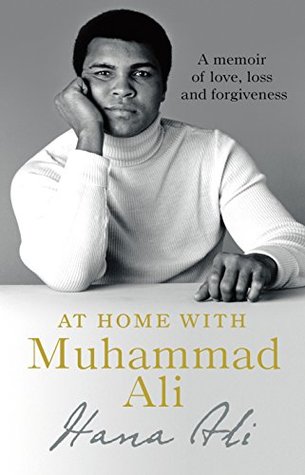
At Home With Muhammad Ali, by Hana Ali*****

Muhammad Ali is the sort of larger-than-life historical figure that nobody forgets. I was offered an opportunity to read and review this biography written by his daughter, Hana, and I jumped at the chance. Her recollections are bolstered by the vast archives that her father intentionally left, cassette tapes of every phone conversation that took place from his home, along with letters, photographs, and journal entries. Ali knew he was making history, and so he consciously left copious documentation behind. This wonderful book strikes the perfect balance, deeply affectionate and intimate, emotionally honest, yet never prurient or mawkish. My thanks go to the author for the beautiful hardcover copy, and for this opportunity.

A note before I continue: usually when I review a book, I refer to the author by his or her last name. In this case, however, the last name is shared by author and subject, and so when I use the name ‘Ali,’ I refer to the boxer, whereas I refer to his daughter and biographer by her first name.

I grew up in the 1960s and 1970s. I didn’t watch boxing, which my mother considered a nasty, violent sport; I was inclined to agree with her, and so when Dad turned on a boxing match on television, she and I beat a hasty retreat. However, it was impossible to miss my father’s agitated shouts at the TV whenever Ali was on it. Ali’s brash confidence, his refusal to humbly look at the floor while talking to white interviewers, his fervent proselytizing on behalf of the Muslim faith frightened a lot of Caucasians, particularly those who, like my family, lived a life that never intersected with people of races different from our own. But my father wasn’t just afraid of Ali; he was angry. How dare he! On television! He called him a clown; he called him an idiot. There was a lot of that going around at the time, as the Civil Rights Movement strove to change the racial contours of American society, not only in the Jim Crow South, but across the nation.

Many years later, when I began studying education in preparation for teaching public school, in particular language arts, American history and civics, one of the most critical parts of my own graduate school curriculum had to do with serving children from underserved racial and ethnic groups, and part of that was in holding up positive role models to foster self-esteem in every child. My classmates raised the name of Muhammad Ali, and I could see that they were right; say that name around any Black child, especially a little boy, and watch his chin raise perceptibly, his spine straighten, and a gleam come to his eyes. This is what interested me about Ali, not his athletic record, but his principled stand in regard to Civil Rights issues, and his assertion that Black men in America should walk tall.

As I began reading Hana’s glowing tribute to her daddy, I began to wonder more about his boxing career. Ali began boxing at age twelve! There’s a practice you won’t see today; but Louisville, Kentucky during the post-war boom was a much different place than anywhere in America today. By the time he was old enough to shave, he was already accomplished at his sport. And the more I read, the more convinced I was that I should not review this biography without watching some boxing. I went to YouTube over and over, and I watched Ali with Sonny Liston, with Joe Frazier, with George Foreman. I learned a lot about the sport, including the fact that it’s not really all that violent, and it involves just as much skill as other team sports. And also: that man was talented, and he was so damn smart.

And this is the side of Ali that the public never really saw. Who knew that he preferred brainy women with independent ideas? In the 1960s, this was a rare thing among men. Who knew that he wouldn’t let anyone, whether family or staff, raise a hand to his children? Nonviolent parenting all the way. There wasn’t much of that around back then, either. Part of his indulgent nature was due to his faith, but part of it was a deep fear that some hateful person would try to hurt him by kidnapping his daughters. Given the way Hana describes her childhood self, it might have become a Ransom of Red Chief situation. Among the mountains of documentation Ali saved is a hefty collection of letters sent home by preschools and schools decrying Hana’s scrappy behavior. Here’s one of my favorite excerpts from the recordings she shares:

“’Hana, say ‘I’m a good girl.’

“’I’m a good girrrrl.’

“’Say ‘I’m a pretty girrrrl.’

“’I’m a pretty girrrrl.’

“Say ‘I won’t bite the boys no more.’

“’I won’t bite the boys no more.’

“’Say ‘I won’t scratch the boys no more.’

“’I won’t scratch the boys no more.’”

Hana recalls him as a gentle father who remained available to his children despite his busy career; each day began with her careening down the stairs to find him in his den, where he might be having a phone conversation with one of many American celebrities as well as world leaders. He spoke with Brezhnev, Ghaddafi (who wanted to contribute to the war chest of a Black American presidential candidate), and Deng Xiao Peng, who wanted Ali to train Chinese boxers. He offered his services to President Jimmy Carter in the 1980s, hoping he might use his religion as a connection to the Iranians holding American citizens hostage.

In another section she recounts the time he happened by a police cordon. A man was out on a ledge of a skyscraper, threatening to jump; Ali persuaded the cops to let him get past the cordon and speak to the man. There are photographs of him holding the would-be jumper in his arms after he was rescued.

Whereas other public figures often bemoan their lack of privacy, Ali loved being famous, and he loved his fans. Sometimes he left home just to go out and find some of them and talk to them. It’s refreshing.

Yet Ali wouldn’t have been an easy man to be married to. Part of this dovetails with his generosity; he often tooled around in his Rolls Royce when he wasn’t training or working, and when he saw homeless people he’d load them into his car, bring them home, and put them in a guest room until he could arrange a lovely hotel suite for each of them. It’s a sweet gesture, but although Hana doesn’t mention how her mother reacted to it, I can tell you right now that for me, that would get old fast, coming home and not knowing how many strangers had taken up residence. And whereas Ali had more respect for the women in his life than most men did back then, his marriages were clearly never intended to be equal relationships.

But his relationship with Hana was an idyllic one, and this shows in the many engaging photographs that punctuate the text, one after another in which she and her father pose using identical body language, some of which are pretty funny. She also speaks with the pain she feels, even today, of her parents’ divorce, which she is convinced was primarily due to a misunderstanding.

There’s a great deal here about Ali’s religion; there’s really no way to tell his story without it, since it motivated nearly everything he did. There are places where I am ready to be done with it; but just when it threatens to slacken the pace of the narrative, Hana wisely segues on to other topics.

To remember Ali is to remember the virulence of the overt racism of twentieth century America. The way that the media played up every violent thing any Black man or boy did; the stereotypes involving the jungle, and the unpredictability of Ali’s personality, all served to underscore the false notion of hidden menace deep within the man. Ali is the first Black man I ever saw on television that didn’t keep his eyes down when talking to reporters, and who didn’t downplay his own strength. He scared a lot of Caucasian people half to death, merely by being successful, strong, and confident.

But Hana doesn’t dwell on any of the negative publicity; instead, she shows us who he really was. Ali loved to write poetry, for example, and he loved to read. He had never gained strong skills in spelling or grammar, so some of what he produced came out looking a little rough, and yet its merit is undeniable. What a voice! Who knew that a fun day out with his daughters often meant a trip to Barnes Noble to load up on good books?

The book’s ending is perhaps the most poignant of all. Hana recalls her father, an old man in his seventies, weakened by Parkinson’s, viewing footage of himself after the Foreman fight:

 “I wrestled with an alligator, and tussled with a whale. I handcuffed lightning and threw thunder in jail. Just last week I murdered a rock, injured a stone, and hospitalized a brick! I’m so mean I make medicine sick!”

Watching himself he muses, “Man, I was something!”

I defy you to finish this book without a lump in your throat or misty vision, as Hana tells us, “Sometimes I still feel like that five-year-old girl roaming the halls of a mansion, waiting for her daddy to come home.”

Highly recommended.

Hidden Valley Road, by Robert Kolker****

Happy anniversary, Doubleday. This is my thirtieth review for you.

Big thanks go to Net Galley and Doubleday for the review copy.

I wanted to read Kolker’s book because so little is written about schizophrenia for the general readership. My best friend’s older brother was schizophrenic, and sometimes she would phone me crying and whispering from the floor of her bedroom closet. The bro—let’s call him Marco–was a large person, over six feet tall with a towering red afro that made him appear even larger. He and my friend were both adopted, and their parents weren’t nearly that big. Marco hated taking his medication, and once he reached his teens, he self-medicated with every street drug he could get his hands on. As a result, he often became violent, breaking out all of the windows of the family home and assaulting his poor sweet mother with a crowbar before the cops arrived to haul him off to the hospital again.

And so I wondered, when I saw this book, whether this was a common experience (yes,) and what inroads had been made in the decades between then and now (very few.)

The Galvin family is an anomaly, a very large family of twelve children, half of whom were stricken and the other half traumatized from growing up with them. The family participated in The Human Genome Project, a compilation of genetic samples and other information aimed at unlocking Mother Nature’s terrible secrets. Of course, researchers were also absorbed in the question of nature versus nurture.

Kolker does an outstanding job of chronicling the Galvin family’s history alternately with passages about what was known about this disease at the time when the eldest sibling began to show symptoms, and what has been learned since. It’s a lot of information to organize and share, and who knows what information he weeded out as unnecessary, because one has to stop somewhere.

When the Galvin children were diagnosed in the mid-twentieth century, professionals in the field leaned heavily toward the idea that there was no hereditary cause for the condition, but instead embraced a “mother-as-monster” theory. Because of this, Mimi Galvin, the mother of all of those children, was inclined to stonewall rather than seek help. But who could blame her? Our society was only slightly removed from the days when the ‘crazy’ family member was locked in the attic. (“That thumping sound? Oh dear heaven, perhaps that old raccoon has snuck back in. Enjoy your pie; we’ll chase him out of there after you’re on your way.”) To make matters more complicated, Don, father of the brood, had a high profile position in the U.S. military, and rumors of family drama could have impacted his career.

Like my friend’s family, the Galvins dealt with the noise, the horror, the disruption by moving to the far edges of town, seeking geographical isolation so that neighborly complaints need not be an added worry.

Here’s the difficult part of writing about schizophrenia: readers want to find a grand discovery at the end; if not a cure, then a new and impressive treatment, or an historic advance in eliminating the problem. But solutions are elusive, and because of the stubborn nature of this disease, what may seem ground breaking to a researcher looks like a big, fat so-what to the average reader.

All told, Kolker has done a fine job describing what has taken place within the family and within the field; I thought he was a little hard on Mimi, who made a lot of errors but was facing a terrible dilemma during a period when our culture was very different from today. That aside, I do recommend this book to you. It will be available April 7, 2020.

Things in Jars, by Jess Kidd*****

Nobody writes better than Jess Kidd.

Bridget Devine—you may call her Bridie—is an investigator for hire. She’s small of stature, with green eyes and a mane of auburn hair. She smokes a pipe, keeps a dagger strapped to her ankle and poison darts in her boot heels, and wears “the ugliest bonnet in Christendom.” The year is 1863; the place is Britain. Bridie has been hired to find a kidnapped child. A dead pugilist named Ruby has volunteered his assistance; he had a soft spot for her while he lived, and now that he’s deceased, his affection for her lives on.

My thanks go to Net Galley and Atria Books for the review copy. This book is for sale now.

The subject of her inquiries is an extraordinary girl named Christabel. Christabel has unusual qualities; it is said that she is a merrow, a mermaid-like being that loves snails and salamanders can tell what others are thinking, has teeth like a pike that she uses freely against those that displease her, and can drown humans on dry land. Bridie is having none of it. “Christabel is a child. She is not a merrow because they are legendary beasts that do not exist in real life, only in fables.” So what if hundreds of snails appear everywhere the child has turned up?

The search for Christabel takes Bridie and her assistants all over Victorian London. Kidd is a champ with regard to time and place, taking us deep into the past. In particular, we visit the charlatans that collect and sometimes experiment with people born with disabilities or distinctions, as a form of sordid entertainment for those with prurient interests. There are some passages here that won’t work well for the squeamish.

The side characters are magnificent. We have Cora Butters, the housemaid that accompanies Bridie. Cora is seven feet tall and has muttonchop whiskers. Her huge hands make her a formidable defender when the going gets rough. There are others, but some of the most entertaining are the critters: a sarcastic parrot and a sage python are among them.

Those that have read Kidd’s first novel, Himself and her second, Mr. Flood’s Last Resort (in UK it was titled The Hoarder) will be delighted once again to find Kidd’s distinctive voice and brilliant word smithery in full flower once more. There are differences as well; there’s more of a story arc, and along with that we see the best figurative language and the wickedest humor after about the sixty percent mark. At the heart of it all is the same disdain for pretense, and the same deep respect for the working class.

My records show that I’ve reviewed over 1,300 titles over the past few years, and of the review copies I’ve received, I’ve chosen to read fewer than 10 of them a second time. This book will be one of them.

Aren’t we done here? Get a copy of this book and read it soon so that you can buy another copy to wrap up for Valentine’s Day. Because Jess Kidd’s books are peerless, and you should only give the very best.