

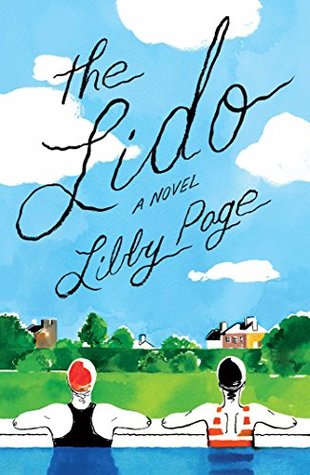
 3.5 stars rounded up. My thanks go to Simon and Schuster and Net Galley for inviting me to read and review this charming debut. This book is for sale now.
Kate is a journalist, painfully shy, anxious, and lonely. Rosemary is an elderly widow. When the Lido—which I learned is an open air swimming pool—in Brixton is slated to close, Rosemary is up in arms. She isn’t usually an activist, but she has swum in this pool her entire life, and many of the most memorable events she has experienced took place there. She loves it still, and she cannot abide the fact that the lido is being sold to private developers who want to put up “swish new high rises.” Rumor has it that it won’t even remain a swimming pool; they may pave it over and put in tennis courts. Rich folks love tennis.
Kate smells a story, and she wants to interview Rosemary. Rosemary makes a counteroffer: she’ll do the interview only after Kate has swum at the Lido.
For Kate, this is traumatic. She isn’t crazy about her own body, and the thought of disrobing in front of others in a locker room nearly undoes her. But she swims, and she gets her interview. Over the course of the fight to save the lido, which Kate joins, she and Rosemary become good friends, and Kate’s own life blossoms. At the same time, there’s a bit of history here as we wander back in time with Rosemary to the war years when she met her husband, George.
The text has a soothing quality that you don’t see much of anymore. It’s not a page turner, and gets a bit slow in places, but sometimes a more sedate pace is what’s needed. I found it good bedtime reading, because it helped me unwind. My feminist heart is cheered by a story in which both main characters are female, and neither of them fits the tiny-but-fierce model that so many writers seem to favor. Kate is awkward. Rosemary is a fat old granny. Oh hell yes. Both are white women; there is a side character named Ahmed, but those looking for a truly diverse bit of fiction will have to look elsewhere.
Some readers are disturbed by blue language and sex scenes. Though the story isn’t entirely devoid of these, there’s very little of it. The text is accessible to anyone with a high school education.
There are moments where the sweetness goes over the top. I gagged when the Brownie troop joined the protest to save the pool, and I wondered how Rosemary could have dozens of sweet memories of George and not even a single resentful or ambiguous one. But these are relatively small concerns.
For those looking for a feel good story, this book is recommended.
 Darl Moody and Calvin Hooper have been best friends forever, and so when Darl has the worst kind of accident, he knows who to turn to. You know what they say real friends will help you bury. The body in question is Carol Brewer; Darl was hunting out of season, and when he glimpsed something moving through the woods he thought it was a wild pig. Turned out he was wrong; turned out to be Carol, poaching ginseng on Coon Coward’s land. But you can’t bring the dead back to life, and you sure can’t call the cops for something like this. Carol is Dwayne’s brother, after all. Dwayne is a huge man, half- crazy and rattlesnake mean. There are no bygones in Dwayne Brewer’s world. There is only revenge.
 Grace is convinced that Carl Feldman killed her sister Rachel. The once celebrated photographer was tried for the murder of a young woman and acquitted; now he is very elderly, and residing in assisted living due to dementia. Grace poses as his daughter, and she wants to take him on a road trip.
 Leo Waterman is one of my favorite fictional detectives. Lucky me, I scored this eleventh in the series free courtesy of Net Galley and Thomas and Mercer in exchange for this honest review.
 Clifford Simak was a prolific writer of short stories, mostly science fiction starting in the 1930s when the genre was new, and initially the stories were sold individually to magazines. They have been curated and released digitally by his friend, David W. Wixon, who provides a forward and brief, interesting notes before each one. My thanks go to Open Road Media and Net Galley for the DRC, which I received in 2016 in exchange for this very tardy but honest review.
 Markley’s thunderous debut is not to be missed. My thanks go to Simon and Schuster and Net Galley for the review copy, which I read free and early, but this is one of the rare times I can say that if I’d paid full hardcover price, it would have been worth it. This is the summer’s best fiction, and it’s available to the public August 21, 2018.
 Ed Scott Junior was one of the first Black catfish growers in the USA, a “Delta titan,” and he was the very first to own a catfish processing plant. My thanks go to Net Galley and the University of Georgia Press for the review copy. It’s inspirational, well written, and well sourced. The book will be available to the public tomorrow, July 10, 2018.
 Huh. Go figure.
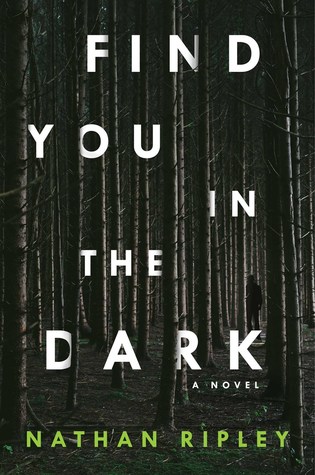 4.5 rounded up. What a way to make a debut! Ripley’s creepy new thriller will have you locking your windows and looking under the bed at night. Thanks go to Atria Books for the review copy, which I received free of charge. I didn’t ask for it, didn’t expect it, but once I flipped it open and began reading, there was no question that I would finish it. You’ll feel the same.
 3.5 stars, rounded upward.
