Unknown's avatar

About seattlebookmama

Greetings! I am Donna Davis, a retired teacher living in my favorite city in the world. I've found that one of the greatest comforts in life is a good book. We can all use a little of that. Welcome, and enjoy! Donna Seattle Book Mama

The Soul of a Woman, by Isabel Allende*****

Isabel Allende has long been a guiding light for women, immigrants, and social justice activists. She is an old woman now, and her wisdom and word smithery have only grown deeper and wider. Thanks go to Net Galley and Random House Ballantine for the review copy. This book is for sale now.

There are four sections to this compact memoir, and overall, it is a memoir of Allende’s feminist philosophy and experiences. She also describes the trajectory of the feminist movement and the gains that have been made.  One of Allende’s most agreeable attributes is her candor, and she discusses her relationships with the men she has married with disarming frankness and humor. Her voice is like nobody else’s.

Generally speaking, I find it annoying when an author uses space in the book they’ve sold us to advertise a product or beg for funds, nonprofit or not; however, this time I wanted to stand up and cheer! Allende’s foundation exists to support women’s reproductive choices, and that includes abortion. Out of all the years I’ve blogged, over one thousand reviews I’ve scribed, and I have never seen abortion rights advocated so forcefully. I bow in admiration.

If I could have something more from this iconic writer, it would be an overall autobiography. She has written numerous memoirs, but all of them focus fairly narrowly on one particular aspect or time period. I would love to have her whole story in her own words.

Highly recommended.

Easy Crafts for the Insane, by Kelly Williams Brown*****

Kelly Williams Brown is an experienced author, but she is new to me. I ran across this odd little book at exactly the time I needed it, and maybe you do, too. My thanks go to Net Galley and Putnam Penguin for the review copy; this book will be available to the public July 6, 2021.

Brown points out that mental illness remains one of the few conditions that are cloaked in secrecy and shame. Nobody afflicted with bipolar disorder chooses it, and although it can be successfully treated, there’s no cure, either. The title of the book reflects her choice to simply own it. “This is the water I swim in…I wanted to talk about how I have come to be content in my own skin.”

In sharing her journey, she tells us how nearly impossible it is to find a psychiatrist within a reasonable commute, who takes your insurance; now try doing it while you are in a precarious state of mental illness. At one point things come to a head, and in a fugue of which she has no memory at all, she rises from bed and attempts suicide, nearly succeeding. Had her boyfriend not found her when he did, she would have died. “’Lots of people, they just take a few aspirin and say they want to die, but you meant it!‘  the very kind ER doctor says with something that sounds a tiny bit like begrudging approval.”

The crafting aspect of this book is partly a device, used to share what kind of mindset caused her to resort to it, and also which crafts are soothing at life’s most difficult times; several of the crafts she discusses are just as mysterious to me after reading her instructions as they were before. Her favorite little origami stars, which grace the book’s cover, are among these. And there are some crafts for which she tells us she has no clear instructions, and recommends YouTube tutorials, so that part’s kind of a wash. However, there are a couple of things that do sound interesting and that I might try. I initially rated this book four stars, thinking that if a person puts crafts in the title, the crafts should be clearly taught, but later I decided that this book really, truly isn’t about crafts.

Brown has money, and at times I am a little alienated by her wealth, that is obvious in her narrative. But she recognizes this, and she uses it to drive home the point:

“I had good insurance, and open schedule, and no internal conflict over therapy—and yet it was still fucking impossible. My privileged ass could barely make it happen. Think about the hurdles that Americans who don’t have these advantages face every day when they’re trying to access help!”

I have deliberately left out the humor here, the places that at times make me laugh out loud. You can find them for yourself. They are well placed, preventing the overall tone from becoming too grim.

 I found this book the day after dropping a close family member off at the psych ward of a local hospital, and it seemed almost like an omen that I should read it. If you are contemplating reading it, whether due to mental health issues of your own, or of those close to you, or simply out of curiosity, I highly recommend you do it. This little gem may become a cult favorite, and it would be a shame to be left out of the loop. And if it inspires you to be more vocal in advocating for mental health awareness and treatment, and of dragging this pervasive problem out of the attic and shining some light on it, then the world will be a better place.

The Kitchen Front, by Jennifer Ryan****

I enjoyed Ryan’s historical novel, The Spies of Shilling Lane, and so I was thrilled when Ballantine Books and Net Galley offered me a review copy for this one. It’s for sale now.

The story is set in rural England during World War II. We have four protagonists, all of them women. Audrey Landon is a widow; her husband died in the war, leaving her with two boys to raise on her own. The old family home, which she inherited from her parents, is falling apart, and she has no means to repair it. In some places, the roof has caved in.

The second is Audrey’s sister, “Lady” Gwendoline. Gwen puts herself first at all times, since nobody else ever has. She married for wealth and convenience, and she lords her affluence over her sister and everyone else. But her husband is a cruel man, and her existence is a lonely one despite its material comfort.

Zelda was a top chef in London, but once her pregnancy became visible, she had to get gone. Her landlord calls her a “trollop,” and she knows she can’t stay there now, so she applies for wartime housing. The volunteer in charge of placing her is Lady Gwendoline, who snickers with amusement as she assigns her to live in Audrey’s house.

Nell is a chef’s assistant at Fenley Hall, the prestigious old pile where Lady Gwendoline and Sir Strickland hold court. The chef, Mrs. Quince, has taught her nearly everything she knows, and it’s a good thing, too; the old lady isn’t getting any younger.

All four women enter a cooking contest held by the Ministry of Food, a “wartime cooking challenge” to showcase recipes that use ordinary ingredients and work around rationing.  The winner will be the new announcer for The Kitchen Front, a wartime radio program—and this program existed in real life.

As in the last story, Ryan develops her four characters in a way I believe; the most benevolent have flaws, and the most unsympathetic, Lady Gwendoline, is complex and capable of change. It is Gwendoline that is most developed at the end, but all four are dynamic characters.

For a brief while, I use the audio version of this book, which I obtain from my local library. Jasmine Blackborow does a fine job as reader in most regards, but there is a side character that turns up in a couple of emotionally charged scenes, an Italian prisoner of war, and when she voices him, he sounds like Dracula, which ruins the magic. For this reason, I recommend sticking to the printed version.

The first half of this story is almost unputdownable, and for a time I nearly forget my other books. But as the climax approaches, things become predictable, almost formulaic, and the ending is a bit too tidy for my tastes. The scenes toward the end with Mrs. Quince are overwrought.  It’s not terrible, but because I am so far in love with the first half, I am disappointed by the denouement. Also, if recipes must be included, as apparently they must, the author should give them character by using the substituted ingredients in the instructions; the more desirable ingredients can be footnoted.

Ultimately I rate The Kitchen Front four stars; five for the first half, three for the second.

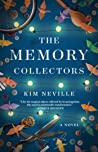
The Memory Collectors, by Kim Neville***

2.5 stars, rounded upward.

I was truly excited to read this book; perhaps too much so. It’s not a bad novel, but not the crowning wonder that I was expecting. My thanks go to Atria Books and Net Galley for the invitation to read and review.

Ev lives in poverty, sorting through trash in hope of finding treasures that she can improve upon and sell. As the story unfolds, we are momentarily off-balance, learning about Ev and the setting primarily through context. We learn early on that Ev has a traumatic past—with the particulars doled out in dribs and drabs to create suspense—and that she has an unusual gift, that of feeling the powerful emotions experienced by the item’s former owner. She wears gloves to prevent herself from becoming overwhelmed, particularly by the negative feelings some objects project.

Harriet is an elderly woman with similar gifts, and she’s in search of an heir. When she and Ev collide over contested objects, she wants to hire Ev. Ev resists at first, but is eventually drawn in after carefully negotiating her terms. An important side character is Ev’s long-lost sister, Noemi, who pops back into Ev’s life unexpectedly. Noemi’s role here is to reveal the past events that have scarred her elder sister, as well as to motivate Ev to be successful and build a better life.

At the outset, I am impressed by the writing, and it looks like the hype is deserved, because I am immediately engaged. But as the story moves forward, it becomes slower, then slooower, then slooooower…and I realize that this is one more fantasy novel in which the one original aspect, the “stains” that reveal the character of an object to people like Ev and Harriet, is just about all the author is going to give us. Everything else, from the revelations about the past, to the relationship between the sisters, to the dynamics between the elder and younger sensitive women, to the problem posed by another gifted but malign person, to uh, everything, is sort of lackluster and tedious. The character development is shallow and barely there. I never become comfortably acquainted with the world in which these women exist. It’s as if the author has trotted out this one device—I’m trying hard not to call it a gimmick—and then figures her job is done.  There isn’t much else that I haven’t seen done much better by other writers. In the end, I tossed it on the DNF pile.

I read this story digitally, but I alternated it with the audio version, and am inclined to recommend the audio version slightly more to those that plan to read it. Initially I don’t like the way that the reader, Emily Woo Zeller, voices Noemi, using a chirpy, almost shrill voice, but after I have listened for a bit over an hour, I become accustomed to it and grow to regard the character with a fondness I don’t find for the other characters. Instead of perceiving her as shrill, I begin to think, “Oh, it’s okay; that’s just the way Noemi is.” Since I don’t fully believe any of the other characters, I have to give Zeller props for her performance.

This book is for sale now; get it free or cheap if you’re interested, but don’t shell out the full jacket price unless your pockets are deep ones.

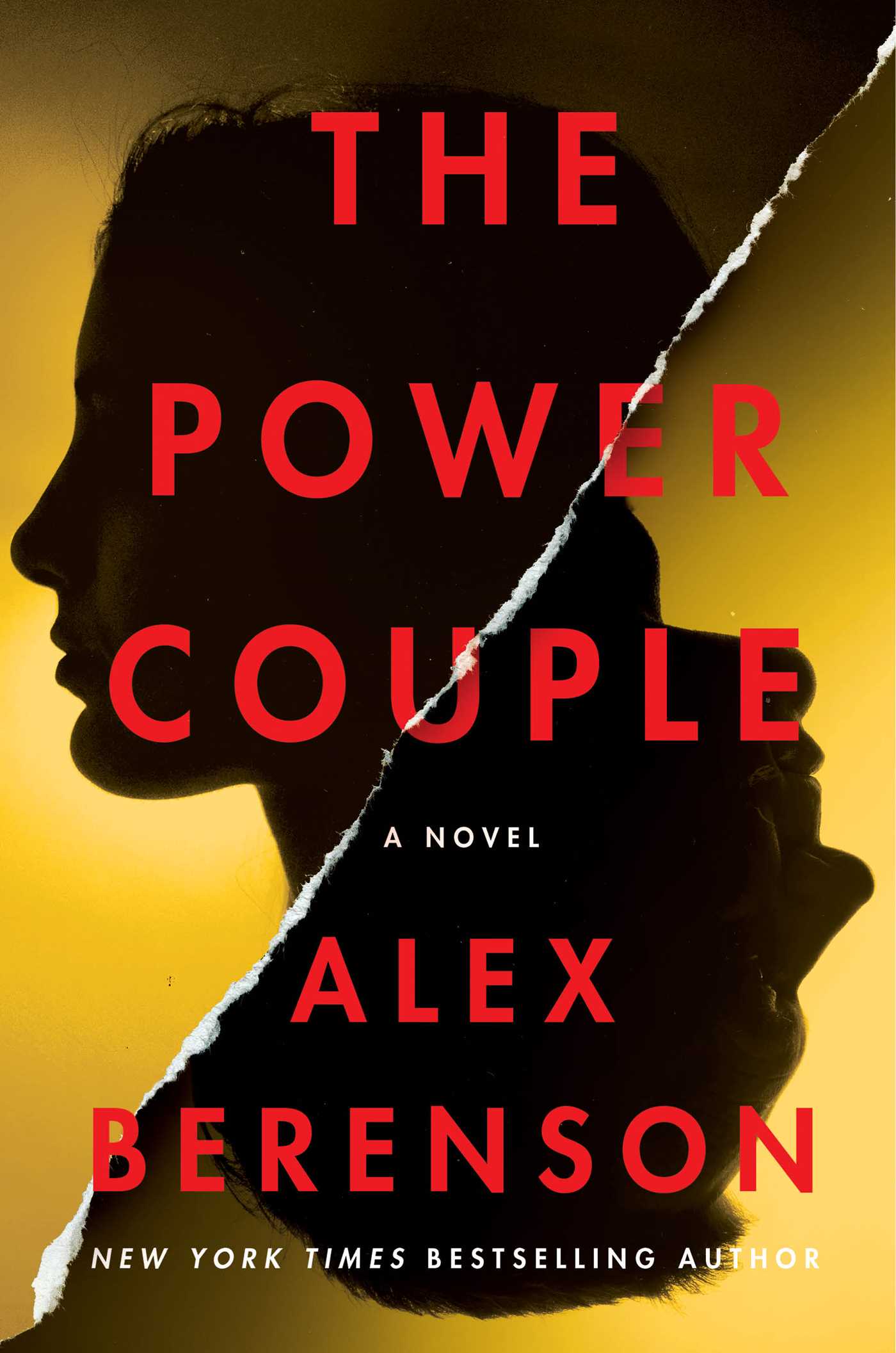
The Power Couple, by Alex Berenson****

Alex Berenson has done it again! I first read his work when I found a galley for The Prisoner, the eleventh in his John Wells series. When I saw that this stand alone thriller was available, I jumped on it. My thanks go to Net Galley and Simon and Schuster for the review copy.  The Power Couple is a fast read and a fun one, and I recommend it to you.

Rebecca (call her Becks) and Brian Unsworth are type A achievers, and both work for the federal government; she is a spy, and he is a hacker. But like so many couples, the similarities that brought them together are getting in their way now. With their children, Kira, who is nineteen, and Tony, who is younger, they take off for Europe to let off steam and spend quality time together. Maybe.

Early in the story, Kira is abducted, and from there forward, the pacing is perfect. Now and then Berenson pulls us back a bit as he shares sketches from their pasts that lead up to this event, but each reminiscence is brief, and the shift between points of view and time periods adds to the suspense. We see their lives through the perspectives of all except Tony, who is a minor character. In the end, Kira is the one we like best. (Trust me.) There’s not a lot of character development, but this isn’t that kind of novel.

I don’t want to give more away, because if I kill any surprises, you won’t enjoy the story as much; what I will say is that even if your own marriage is less than perfect, it is a shining beacon of integrity and affection when contrasted with that of the Unsworths.

This book is for sale now, and just right to take on vacation with you.

The Vanishing Half, by Brit Bennett***-****

This book wasn’t on my radar until it hit the best seller lists. The premise is a provocative one, and so I hopped online and ordered a copy of the audio book from Seattle Bibliocommons. It held my attention all the way through, but when it concluded, I felt a little cheated.

The chief protagonists are two girls, twins, raised in a tiny (fictional) town deep in the American South. The whole town is Black, and everyone—everyone—is light skinned. Sisters Stella and Desiree become restless as they come of age, and they conspire to run away to the big city. They pack a few things, gather what money they can, and head for New Orleans. The time is the mid-1900s. They arrive, find a place to stay, and get jobs. One day Desiree comes home from work, but Stella doesn’t. She’s gone. Enough of her things are missing to suggest that she hasn’t met with foul play, yet Desiree is her twin, and she is undone by Stella’s unexpected departure. Not even a note!

Stella is in the North; Stella is passing for Caucasian. But to do so, she has to cut all family ties. Her new husband has no idea.

The story progresses, and Desiree does the opposite, marrying a man who is very dark. Their daughter is what might be called blue-black. Now neither twin can comfortably return to Mallard, with one too Black, and one not Black at all, as far as anyone can tell.

The story progresses through various life changes, and eventually the focus is on the twins’ daughters, one each. Of course, the reader must wonder whether the sisters will ever be reunited, and if so, what will happen then.

When the book is over, I feel as if I am leaving the table before I’m full. There were so many opportunities here, and the author squandered all of them. The protagonists never develop to the point where I bond with any of them, and I cannot tell what the author’s purpose is here.

This book is for sale, but don’t break the bank to get it. Read it free or cheap, or give it a miss.

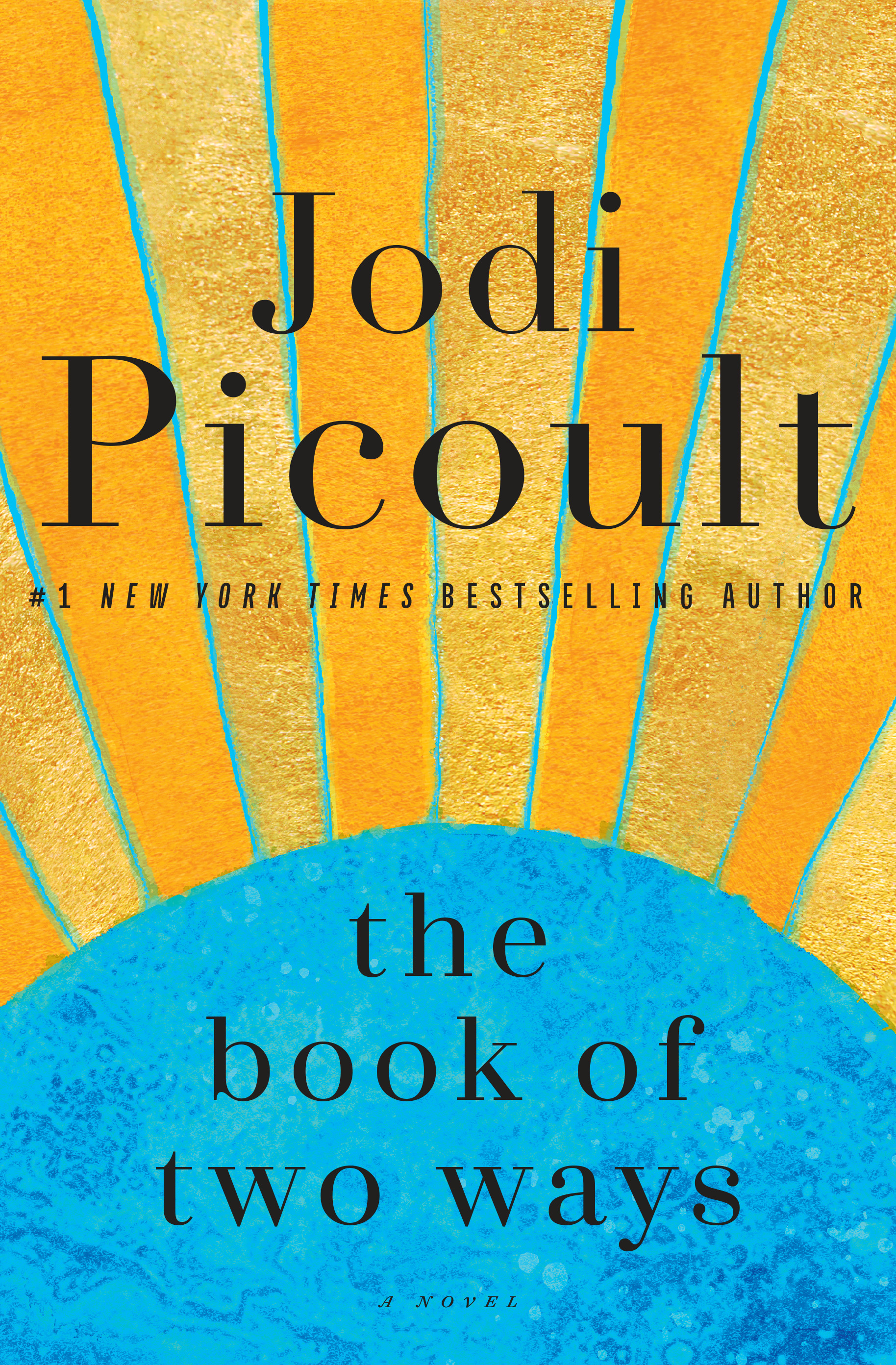
The Book of Two Ways, by Jodi Picoult***

I am generally a fan of Picoult’s writing, but my favorite part of this book is when I got to close it and put it away.  My thanks go, nevertheless, to Net Galley and Ballantine Books for the review copy.

Dawn is the sole survivor of a plane wreck, and as it goes down, she is assaulted by regret about the road not taken.  (My apologies to Frost.) On land once again, she decides to go back to the life she abandoned when she married and had her daughter, to see what might have been; the life she was preparing for was that of an Egyptologist.

There have been times when a novel features some area of history or science that I’ve never studied, and I find it so mesmerizing that it becomes my new favorite area to explore. This was not one of those times. In fact, it took me four tries to get through this thing, and even then, I skimmed much of the story from the fifty to seventy percentiles.  I tried the audio version; no joy there, either. I grew bored and my mind wandered; then I didn’t understand what I was reading, so I had to go back over it to pick up the part I’d daydreamed through.

In my defense, however, I have to say that the organization and frequently shifting points of view and time periods is enough to confuse the best of us, or at least give us whiplash.

Picoult’s strength is creating strong, resonant female protagonists that are easy to bond with, but I didn’t ever warm up to Dawn. Let’s take, for example, the notion of simply walking away, not only from your husband that loves you and with whom, till now, you’ve had a loving and solid relationship; there’s the matter of walking away from a child, or considering doing so. No, no, no. No. NO.

But mostly, this story just bored the living snot out of me.

I have provided three stars, because some readers will enjoy the lessons in Egyptology; if you’ve always wanted to know more within this realm, perhaps this book will work for you. If you go there, though, get it free or cheap; don’t sink full cover price into this turkey.

The Incredible Winston Browne, by Sean Dietrich****-*****

4.5 rounded upward.

The time is the 1950s; the place is Moab, Florida, a tiny town where everyone knows everyone else. Winston Browne is the sheriff; Eleanor Hughes is a frustrated single woman that fears she is headed for spinsterhood; and a small girl, Jessie, is on the lam from a creepy cult that considers her to be “a little abomination.”

I read this book free, courtesy of Net Galley and Thomas Nelson Publishers. It’s for sale now.

The story begins with Winston in his doctor’s office. There’s bad news about his chronic cough. Tests show it’s not only malignant; it’s metastatic. In other words, Winston should put his affairs in order.

Winston is a friendly guy, but he’s also an introvert. He tells no one of his condition. He’s single, and there’s no family to warn, so he goes about his life about the same as before he learned his diagnosis.

Jessie is awakened in the middle of the night by one of the Sisters, who hustles her into a waiting vehicle. She’s being busted out of the Temple compound by softhearted women that know the girl is doomed if she remains. Jessie has an independent spirit, and so when she is dropped off at the train station with instructions of where to go and who to trust, she follows her instincts instead. Her instincts take her to Moab, Florida.

Eleanor—you can call her Ellie—is fed up with Jimmy. They’ve dated for year upon year, and she is so frustrated by his inaction that she can scarcely stand the sight of him. If he is so crazy about her, then why doesn’t he propose? She’ll never have a husband or a family, and it’s all his fault. But then Winston comes along, and the birds sing in the trees.

For the first half of this book, I thought it would be a four star read. It was a good enough tale, but I had my reservations. For starters, where are the Black people in Moab? If we’re meeting the townsfolk—and we surely are—how is it that all of them are Caucasian? A visit from Jackie Robinson is all well and good, but this is Florida, for heaven’s sake. Is Moab a sundowner town?

I run a quick search, knowing that the African-American population during this mid-1900s was much lower than it is now, and I am grudgingly convinced that there might well be a little town in the boondocks with only white residents. Back then, it could have happened, so…okay.

It is during the second half that everything falls together and I am swept away by the characters. No more consulting the Google oracle; the intimacy has become too strong for me to step back.

It’s difficult for me to find a feel-good book without schmaltz. Most books that are billed as heartwarming tend to make me roll my eyes or retch a little. Dietrich works magic, though, and although it takes a minute or two to reel me in, ultimately I am captivated. The droll, understated humor that drops in and out at just the right moments is a key element. The captions that appear regularly make me guffaw more than once; don’t skip over them! They’re terrific. The text is punctuated now and then by contributions from the Moab newsletter, whose minutiae underscores just what a dull place this town usually is.  

However, let me also say a quick word here about the audio version. I began reading this book close to the publication date, and so when I was partway into it, I checked out the audio book from Seattle Bibliocommons. By doing so, I could extend my reading sessions, switching over to the audio when I had to do something else with my eyes and hands. The author reads his own narrative, and he has a wonderful voice, warm with just the right amount of drawl. The best way to enjoy this book is to access both the print version and the audio; if you must choose one or the other, it’s a toss-up, perhaps with a slight edge toward the audio.

Some readers will be pleased to know that there is no off color language or sex involved. If a movie were made based on this book, it would most likely show a General Audiences rating.

Highly recommended to those that love a feel good story, historical fiction, or Southern fiction.

The Recent East, by Thomas Grattan*****

The Recent East introduces novelist Thomas Grattan, and it’s an impressive debut. It follows a family of German-Americans from 1965, when the eldest emigrates from East Germany with her parents, to the present. I initially decide to read it because of the setting; it’s the first fiction I’ve read set in the former Soviet satellite country. However, it is the characters that keep me engaged to the last page.

My thanks go to Net Galley and McMillan for the review copy; this book is for sale now.

The story opens in 1965 as Beate and her parents are defecting:

Everyone talked about the West as if it were a secret. They leaned in to share stories of its grocery stores that carried fresh oranges, its cars with bult-in radios. Covered their mouths to mention a Dusseldorf boulevard that catered to movie stars and dictators, whole Eastern month’s salaries spent on face cream. There were entire, whispered conversations about its large houses and overstuffed stores, its borders crossed with a smile and a flick of one’s passport. Some talked about it as if it were the most boring thing. Others like it was an uppity friend. But everyone talked about it…

The first chapter makes me laugh out loud. Teenage Beate is mocked when she enrolls in school in Cologne, because her clothing is nowhere near as nice as what the kids in West Germany wear. Since her parents cannot afford to upgrade her wardrobe just yet, Beate comes up with the genius idea to alter the clothes she owns to make them look as Soviet as possible, and she “put on her Moscow face, worked on her Leningrad walk.” Sure enough, the kids at school are terrified of her now. She still doesn’t have friends, but she isn’t bullied anymore.

Morph forward in time. Beate is a mother now, living in upstate New York with her two adolescent children and unhappy husband. When the Berlin Wall falls, so does her marriage. Soon afterward, she is notified that her late parents’ house now belongs to her. She packs up her belongings and her children, then buys tickets to Germany.

Adela and Michael have always been close, but the move shakes their relationship. Their usual routines are shattered, and their mother, reeling from the divorce, becomes withdrawn and uncommunicative. What a terrible time to disengage from parenting! Both Michael and Adela roam the city of Kritzhagen at will, at all hours of the night. Michael is just 13 years old and gay; sometimes he doesn’t come home at all at night. I read these passages, written without obvious judgment or commentary, with horror. A new house, new city, new country, new continent, and it’s now that their mother forgets to set boundaries? I want to find this woman and slap her upside the head (though I guess that’s a different sort of boundary violation.) Half the houses in town stand empty, and since they have no furniture of their own and their mother is doing nothing to acquire it, Michael breaks into houses and steals furnishings. Look, Ma, I found us some chairs.

My jaw drops.

Adela goes in the other direction, becoming a conscientious student and social justice advocate. But their mother pays her no attention, either.

For the first half of this story, it seems like a four star novel to me; well written, competent, but nothing to merit great accolades. This changes in the second half, because all three of these characters are dynamic, and the changes in them are absolutely believable and deeply absorbing.

I have friends that do social work, and what they have told me is this: children that are forced to become the adults in the family, taking on responsibilities they’re too young for when a parent abdicates them, often appear to miraculously mature, competent beyond their years. Everything is organized. They may do the jobs as well as any adult, and sometimes better than most. How wonderful!

But because they aren’t developmentally ready for these things yet, what happens is that later, when they are grown, they fall apart and become breathtakingly immature, because they have to go back and live their adolescent years that were stolen from them. (As a teacher, I saw this in action a couple of times.)  And so I am awestruck by how consistently our Grattan’s characters follow this pattern.

As the second half progresses, I make a couple of predictions, one of which is sort of formulaic, but Grattan does other things, and they’re far better than what I’d guessed. We follow these characters for several decades, and at the end, we see the relationship that blooms between Beate and her grandson. When it’s over, I miss them.

Because Michael is gay and is one of our three protagonists, this novel is easily slotted into the LGTB genre, but it is much more than this. Instead, one should regard it as a well-written story in which one character is gay.

But whatever you choose to call this book, you should get it and read it if you love excellent fiction.

The Dead Are Arising, by Les Payne*

I haven’t been this disappointed in a long time. From the moment I saw this book listed on Net Galley, I was eager to read it, given that the promotion promises a lot of new information about this courageous man, a powerful advocate for the rights of people of color. When I didn’t receive a galley, I awaited the book’s release, and I went out and bought it. Less than halfway into it, I was absolutely sickened.

For starters, not all new information is important or necessary information. There’s a lot of minutiae here, as well as a fair amount of Black History 101 material, interesting to those unfamiliar with the Civil Rights Movement, Jim Crow, Northern red-lining practices, and so forth, but a real snore for those of us already steeped in these things. But beyond that—and one could argue that these historical basics are necessary inclusions for a lot of readers—Paine goes to a great deal of trouble to destroy Malcolm’s legacy.

Academics do this sometimes, and surely it’s no coincidence that the top three examples that come to mind are all biographies of African-Americans that fought for their rights, and aren’t alive now to object to what is being said about them. (In addition to Malcolm, recent biographies of Frederick Douglass and Muhammad Ali come to mind, the latter two slandered by two different authors.) Picking through the tiny, often insignificant details of their lives and combing through their speeches and writing, these authors go to great pains to “expose” small details that conflict with one another, or other signs of inconsistency, with the clear implication that the subject was a liar and a fraud.

For shame!  

Let’s talk about that for a minute. I am a grandmother myself, and I can think of important aspects of my life, especially my younger years, for which my own motivations were and are complicated, and if asked about them I am sure I would have given different answers in my twenties, my thirties, and so on. Our own thoughts and motives have a lot of layers. Perhaps we become more insightful later in life, or perhaps our memories are no longer as sharp as we believe them to be. But because we are not famous, or notorious, depending upon points of view, we are unlikely to have some academic interviewing everyone that ever fucking knew us, or combing through every speck of written documentation we leave behind us, searching for all possible details that may bring our integrity and veracity into question.

For me, it matters very little whether Malcolm’s early life was exactly as he told it. It is his ideas, and his courage in expressing them, that made him a legend, and that’s what I look for in his biography. In the 1960s, almost no African-American (or colored, as they preferred to be called during that period,) Civil Rights advocates dared to come right out and say that Black people were not only as good, but in some cases better than Caucasians. And it is Malcolm’s political evolution during the last year of his life, the time when he broke with the Nation of Islam and embraced a working class perspective that included fighters of every race, that galvanizes me. Malcolm raised a powerful voice in opposition to the U.S. war against the Vietnamese people, quipping after President Kennedy’s assassination that it was a case of “chickens coming home to roost.”

This takedown of an iconic Civil Rights warrior is shabby in every sense. For those interested in Malcolm’s political and social evolution, I recommend the book titled Malcolm X: The Last Speeches. Usually, the best way to learn about someone is to see what they themselves had to say. In this case it’s doubly true.

I don’t recommend this book to anyone.