The Trial of Lizzie Borden, by Cara Robertson****

“Oh, Mrs. Churchill, do come over. Someone has killed Father.”

Lizzie Borden is the subject of one of America’s most enduring legends, and Robertson is a towering legal scholar, educated at Harvard and Oxford, and then at Stanford Law. She’s participated in an international tribunal dealing with war crimes, and has been researching the Borden case for twenty years. Here she lays it out for us, separating fact from innuendo, and known from unknown. My thanks go to Simon and Schuster and Net Galley for the review copy. This book is for sale now.

The Borden family lived in the heart of Fall River, and it consisted of Andrew, father of two grown but unmarried daughters Emma and Lizzie, still in residence, and his second wife, Abby. Their mother had died when Lizzie was tiny; Andrew had remarried a woman named Abby, whom Emma never accepted as a parent, but whom Lizzie called her mother until a short time before her grizzly death. Until this time the Borden household was well respected; Andrew was possibly the wealthiest individual in this Massachusetts town, but he was a tightfisted old scoundrel, and his refusal to relocate the family to the fashionable neighborhood on the hill where well-to-do citizens lived made his daughters bitter, as appropriate suitors would not call on them in their current home.  Both had passed the age when respectable young women were expected to have married; they held that their father’s greed had ruined their chance at marriage and families of their own.  Things had come to a head when Borden was persuaded to purchase the home in which Abby’s sister lived in order to prevent her from being cast out on the street. Emma and Lizzie were angry enough that they wouldn’t go downstairs when the parents were there, and poor Bridget, the servant, had to serve dinner twice to accommodate them. Everyone locked their bedroom doors against the others. Andrew had belatedly tried to smooth his stormy home life by purchasing a comparable house for each of his daughters, but the damage was done.

The story of Lizzie Borden is not a new one, but what sets Robertson’s telling apart from the rest—apart from the meticulous research and clarity of sourcing—is her explanation of how the cultural assumptions and expectations of 1893 New England differed from ours today, and how these nuances affected the trial. They lived in a time and place in which it was assumed that women were ruled far more by their hormones and ovulation than by intellect and reason. In fact:

“Experts like the influential Austrian criminal psychologist Hans Gross contended that menstruation lowered women’s resistance to forbidden impulses, opening the floodgates to a range of criminal behaviors…Menstruation may bring women to the most terrible crimes.”

Had Lizzie confessed to the killings, she might very well have been judged not guilty; her monthly cycle would have been said to have made her violent and there was nothing to be done about it, rather like a moose when rutting.

Criminal behavior was believed to be inherent in some people and not in others, and this counted in Lizzie’s favor. The Bordens were seen as a good family, and a girl from a good family doesn’t plot brutal murders. It isn’t in her. This sort of thing, experts said, was more likely to be done by a transient or a member of the working class. The women of Fall River were polarized around this case, and though women from comfortable homes were all certain that poor Lizzie was being railroaded, working class women weren’t as charitable in their assessments.

There was a ton of evidence against her, most of it circumstantial; the most damning aspects of the case against her were ruled inadmissible, and the jury never got to hear them.

Robertson is a fine storyteller, and her narrative lays it out for us so clearly. There is occasional gallows humor, as well as amusing bits of setting not seen in cities of any size today, such as the neighborhood cow that mooed near the courtroom window at inauspicious moments while testimony was being given. However, the first half of the book is more compelling than the second half, because prosecutors and attorneys must repeat things, sometimes many times and in many ways, in order to convince judges and juries, and since this book is about the trial, Robertson must do the same. Still it is fascinating to see how the whole trial shook out.

Those interested in the Borden case, or in true crime stories in general, should read this book. It’s the clearest, most complete recounting and analysis available to the public today, written by a legal scholar that has done the work and cut no corners. `


Lessons from Lucy, by Dave Barry***-****

3.5 rounded up; thanks go to Net Galley and Simon and Schuster for the review copy.

Dave is seventy, and his dog Lucy is up there in years as well. Unlike most of Barry’s essays and books, this one has a reflective aspect and a bit of advice for those nearing or entering their senior years. There’s still a great deal of humor, but there’s a gently philosophical self-help thrust not present in his earlier work. As a 60-year-old retired reader that loves her dog, I represent his target demographic. And I also have to say—his demographic is clearly Caucasian, and this made me a mite uncomfortable. I’ll get back to that in a minute. I have to, since apparently no other reviewer anywhere is going to address it. *

Dave breaks his advice down into seven suggestions, all of which are in some way inspired by Lucy. None of his points are especially new or profound, but because he is so capable in describing and explaining them, he makes old tired advice seem worthy of my attention. A number of his observations left me nodding my head, and he includes liberal humorous anecdotes that in some cases, made me laugh out loud. And here I will put on my teacher hat and tell you that brain studies reveal that learning is easier when there is positive emotion that goes with it.

Dave wants senior citizens to stop merely being content—which is exactly what I am—and take the occasional trip out of our comfort zones. He describes a family trip to a wildlife preserve in Africa to illustrate his point, and his story is so hysterical that it leaves me gasping for air. I can never imagine myself participating, as Dave has, in a parade involving decorated lawnmowers, but I love reading about it. And he reminds senior men to find their friends and tell them how important they are. A great many men have friends that are very important, and that they haven’t talked to in person or even by phone for years. What are you waiting for? At some point, one of you will be dead, and then the survivor will realize his mistake. Barry argues for seizing the moment. (He also makes me glad I am female. My friends hear from me all the damn time, and when I leave the planet, they will know what they meant to me.)

I began reading Barry’s work in the 1980s, and during the ‘90s and ‘00s, I used one of his columns, “How to Play with a Dog,” to teach middle school students expository writing. Step by step, he told us how to do it, and in the most enjoyable way; and that’s what expository writing is. Kids that didn’t like to write sat up and listened to this. It is a genius piece of work, and because of this, and because of the long period during which I loved each and every thing he wrote, this book receives a favorable rating from me. Because there’s also a big problem with it. Keep reading.

I loved the way Barry skewers the whole ‘mindfulness’ shtick even as he also advocates for some of its better aspects. When he digs into the topic of the diversity workshop, I feel a little hitch in my breathing, a twinge of anxiety. I read Dave Barry Does Japan, and the things he said about the Japanese demonstrated that his understanding of other races and cultures needs an upgrade. Here he tells us that his wife is half Cuban, half Jewish, so we know he’s probably not an alt-right white supremacist, but at the same time, some of the jokes he makes are cringe-worthy at best. When he tells us that if he was ever forced to sit through another diversity workshop (as was required by the Miami Herald,) he would join the Klan and the Black staff members would go with him, I slumped. Aw, shit. Dave, statements like this are why diversity training even exists. If there’s a training and you are invited, run there and get you a real good seat. In fact, there’s a chance that other staffers had to go to a workshop that was mostly aimed at you!

I have had a similar experience with 3 or 4 other books I’ve reviewed, and there’s always someone out there that will leave a comment saying it’s ridiculous to fuss over one little sentence in the book. In anticipation, I have an analogy just for those people, and here it is:

imagine you have been invited to a potluck supper. You hand your contribution, maybe a bowl of potato salad to the host to add to the collection of food, and you grab a plate. There are three long tables, and you move down the row selecting from among the crispy fried chicken, the smoky ribs, watermelon, three-alarm chili, coleslaw, nachos, garden salad, pasta salad, fruit salad, a bowl of human excrement, baked squash with cinnamon, homemade cherry pie, key lime pie, shrimp salad, pesto salad, deviled eggs, and of course, your own contribution, the potato salad. But once you sit down, your appetite has fled, hasn’t it? You came in feeling hungry. You skipped a meal before this thing, cause you knew there’d be a lot of good things to eat. And of course, when you passed that bowl of human poo, you didn’t take any of it, and like everyone else, you politely diverted your eyes away from it once you were satisfied that it was exactly what it looked like. What the hell…? After a glance around the room to see whether a joke is about to be sprung, or at least a conversation had about this inappropriate addition, you edge toward the garbage, where you quietly deposit your uneaten meal, and then you edge toward the door…all because of that one thing.

Why would you toss a plateful of delicious food merely because there was one distasteful thing on the table? Because neither you nor your food could be close to that mess for even a minute.

So that’s how I see the Klan reference. It’s hard to chuckle after a bomb like that has been included, and he even includes a snarky remark after it about the fact that some will be offended, which comes off like an extended middle finger to anyone that doesn’t like a Klan-friendly joke.

And maybe that’s how it rolls with him; he has all the money he needs, and he doesn’t care if there are people that don’t like what he wrote. But I cannot for the life of me understand why someone would write a memoir like this, one intended to provide an excellent philosophy for his aging readers, one which will also be a part of his legacy after he’s gone, and then include something that will hurt some of the people that read it. I just don’t get it.

Do I recommend this book to you? From where I sit, if you want it, don’t pay full price for it. I wouldn’t buy it for anyone I like, but now you have my take on it, so the as always, the decision rests with you.

*Sigh!

Who Killed the Fonz? By James Boice***

I was invited to read and review this strange little book by Net Galley and Simon and Schuster, and I thank them. It’s for sale now.

Fonzie is the eternally cool lone-wolf character in the television sitcom “Happy Days,” which was aired during the 1970s and early 1980s, back before the internet and the digital era gave us choices. The show is set in the 1950s, with malt shops, sock hops, and so forth. Richie Cunningham was the main character, an ordinary small town teen who was befriended by the Fonz.  This book morphs forward to the 1980s, which places Richie—er, Richard—in middle age. He’s a Hollywood producer but is called back home by the death of Fonzie.

When I saw this book in my email, I wasn’t sure what to think. How does anyone write this book? Neither Richie nor the Fonz was anything more than a stock character during the series itself. Every problem encountered by any character had to be resolved with humor and warmth within thirty minutes—more like twenty once advertising is figured in. So my first assumption was that this must be some sort of dark satire. But that would be very edgy and risky, and I wasn’t sure Simon would touch something like that. But, it’s an invitation and a quick read, so let’s have a look.

Satire it isn’t. It’s promoted as noir, and it isn’t that either.  I can go sit in the garage. I can say I am a car. I can get my children to all say I am a car. I still won’t be a car, or for that matter a motorcycle. And so I’m telling you right now that this is, in spite of its quirky title and book cover, a cozy mystery, period. It is what it is.

Now, that’s not a bad thing. There are a lot of readers that enjoy a good cozy, and it seems likely that a lot of those readers will fall into the demographic to which this story appeals, namely the Boomer generation, the readers that watched Happy Days when they were young and (hopefully) happy.

So here we are, back in Milwaukee, Wisconsin. Potsie and Ralph Malph distrust Richard because he has become some sort of Hollywood big shot. His career is on the rocks, but they don’t know that; all they know is that he’s come back to the Midwest wearing designer clothes, and when he calls himself “Richard,” they snicker. But ultimately they all work together to unsnarl issues of local corruption as well as the mystery about Fonzie, and Richard realizes he is really still Richie.

So we have corn; we have cheese; and we have cheese corn. But it’s an accessible story that will provide a pleasant level of distraction that doesn’t require a tremendous amount of concentration or analysis. If your gram is undergoing chemo, she can take this into treatment and it will help keep her warm.

I recommend this book to those that primarily read cozy mysteries and are familiar with the series.

Such Good Work, by Johannes Lichtman****

I was invited to read this debut novel by Net Galley and Simon and Schuster, but when I first saw it in my inbox, I recoiled. Another addiction memoir! Another chance to live through someone else’s excruciating nightmare! But then I read a few early reviews—they didn’t bear the numbed courtesy of an obligatory write-up.  And then my own sense of courtesy tipped me over the edge. I was, after all, invited. Did I not want to be invited anymore? Of course I should read it.

The story is Lichtman’s own written as autofiction, and his unusual writing style drew me in. I was surprised to see how quickly I went through it. At the outset, he is teaching creative writing and is crestfallen to find that a student he has championed has plagiarized her work for him, and not only is his anecdote written with great humor, it is immediately familiar to me, and most likely will be to all English teachers.  We want to believe; we want to be supportive. And once in awhile, someone younger than ourselves comes along and manipulates the hell out of us. It is a humbling experience.

Jonas is half American, half Swede, and he finds that to get off of opiates and opiods, he needs to be in Sweden, where street drugs are much harder to procure.  He is enrolled in a graduate program in Malmo, but finds his time is primarily consumed by the refugee crisis as he volunteers to teach in a language school. Young men from the Middle East come by the thousands, and he is proud that Sweden doesn’t close its border, doesn’t set a cap to the number of immigrants it will welcome. At the same time, the Swedish government has some double standards where race is concerned; the Roma people that set up an encampment are quickly swept away. Then the nightclub bombing in Paris provides officials with an excuse to shut it all down; it’s a tremendous blow to the refugees and to those that want to help them.

At times I fear for this writer, because he seems to have no filters with which to protect his own heart as he hurls himself into his volunteer work; he wants to make a difference so desperately.  Many years ago I saw a short film that showed a Bambi-like deer grazing in a forest, and then the massive foot of Godzilla smashes it like a bug, and in his ragged, hungry quest for social justice, the author reminds me of that deer. Social justice work requires sacrifice to be sure, but a little care toward one’s own mental health is also essential. Lichtman’s master’s thesis focuses on a Swedish writer that ultimately succumbs to despair, turning on the car and closing the garage door, and I found myself urging this author to have a care, lest the same happen to him, a danger he refers to himself in the narrative. (From the acknowledgements at the end, I see that he appears to have emerged in one piece, at least so far.)

The stories of the refugee boys are searing ones. A young man told of walking through Iran, followed by Turkey, Greece, Macedonia, Serbia, Hungary, Austria, Germany, and Denmark on his way to Sweden. The whole journey was done on foot. So many families were dead that the boys’ tutors learned it was sometimes better not to inquire too deeply about those left behind. At one point, Jonas decides to become a mentor to one person, but things go amiss and he ruefully recalls his own role as that of “clumsy Samaritan.”

Lichtman’s prose is gently philosophical in a style that is slightly reminiscent of Zen and the Art of Motorcycle Maintenance, though in no way derivative. His perceptive commentary regarding the events that unfold around him, along with the lessons he learns about himself, is witty and absorbing. Along the way I picked up a little knowledge about Swedish culture and society that I didn’t have before.

The title has sharp edges.

Recommended to those interested in Swedish culture, the refugee crisis, and addiction issues, as well as to anyone that just enjoys a good memoir.

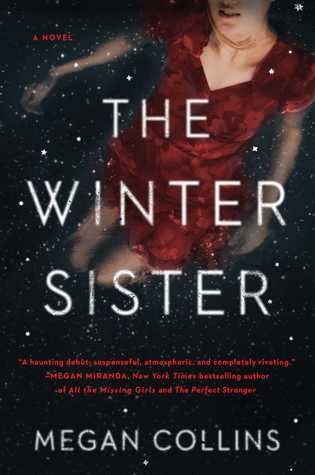
The Winter Sister, by Megan Collins****

Sylvie doesn’t want to go home. Sixteen years ago her sister Persephone was murdered, and her mother, a single parent, was undone by it. Sylvie’s built a new life for herself and would prefer not to revisit the old one, but her aunt calls and summons her. Sylvie’s mother is gravely ill and Aunt Jill says it is Sylvie’s turn to take care of her. Reluctantly, Sylvie packs and heads home to face her demons.

I was invited to read and review this compelling debut novel courtesy of Net Galley and Simon and Schuster. It will be available to the public tomorrow, February 5, 2019.

Persephone went on a date the night she was killed; she wasn’t permitted to date and so she had to sneak out. And right away my antennae twitch, because who doesn’t let their seventeen-year-old daughter date? The heck? She was a senior in high school, yet was reduced to climbing in and out of the bedroom window to avoid her mother’s anger. At fourteen, Sylvie was her confederate, leaving the window just a finger’s width ajar so that Persephone could return home undetected. But Sylvie had become increasingly ambivalent; Persephone came home with bruises with increasing frequency, asking her little sis to paint temporary tattoos to cover them up for her. Should Persephone be seeing Ben, the boy responsible for the bruises?  One night she decides not to leave the window open. That way it will be out in the open. Persephone will have to come in through the front door. She’ll be busted, but then the problem of the abusive boyfriend will be where it belongs, right on their mother’s plate.  Let the adult do the adult job, she figured. But that night, unable to sneak back in, Persephone instead returned to her boyfriend’s car, hopped in, and never came home.

Her body wasn’t found for three days.

The guilt of the thing followed Sylvie everywhere she went. She told no one. Their mother took to drink and locked herself away, refusing to respond to her daughter’s pleas on the other side of the door. Aunt Jill took Sylvie home with her when it became obvious that her mother had ceased to mother.

But now, Sylvie has to go back. And she carries so much anger with her; how is it even possible that Ben, the boyfriend, was never arrested or charged? How is it possible that he is working—of all places—in the clinic where her mother goes to receive her chemo?

Collins’s narrative is deeply absorbing, with a component of the psychological thriller in that at times, I wonder whether she is reliable. Things are certainly not what they seem. The resolution is surprising, yet fair to the reader. It’s a clever plot with layered characters, and I look forward to seeing what Collins writes in the future.

Recommended to those that love the genre.

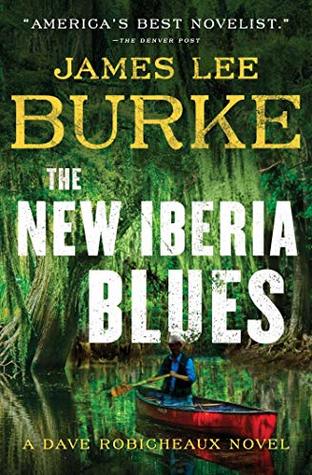
New Iberia Blues, by James Lee Burke*****

New Iberia Blues is the twenty-second addition to the Dave Robicheaux series, which I will love till the day I die. The Denver Post has called Burke “America’s best novelist,” and the Mystery Writers of America made him a Grand Master. Big thanks go to Net Galley and Simon and Schuster for the review copy. This book will be for sale January 8, 2019. 

The qualities that have made Burke’s writing famous include his lyrical prose, particularly with regard to setting, and a host of memorable characters, often with quirky names. His bad guys are wealthy and often come from Hollywood to the Gulf Coast of Louisiana, where the series is set, but he often also features a character or two that works for the wrong side, but is complicated and has redeeming qualities. All of these things hold true for this novel, which is one of Burke’s best. 

Dave Robicheaux is a cop in New Iberia, Louisiana, a senior citizen, thrice widowed and lonesome when our novel begins. Then an old acquaintance comes home after making it big:

Desmond Courmier’s success story was an improbable one, even among the many self-congratulatory rags-to-riches tales we tell ourselves in the ongoing saga of our green republic, one that is forever changing yet forever the same, a saga that also includes the grades of Shiloh and cinders from aboriginal villages. That is not meant to be a cynical statement. Desmond’s story was a piece of Americana, assuring us that wealth and a magical kingdom are available to the least of us, provided we do not awaken our own penchant for breaking our heroes on a medieval wheel and revising them later, safely downwind from history.
Desmond was not only born to privation, in the sleeper of a semi in which his mother tied off the umbilical cord and said goodbye forever; he was nurtured by his impoverished grandparents on the Chitimacha Indian Reservation in the back room of a general store that was hardly more than an airless shack. It stood on a dirt road amid treeless farmland where shade and a cold soda pop on the store gallery were considered luxuries, before the casino operators from Jersey arrived and, with the help of the state of Louisiana, convinced large numbers of people that vice is a virtue.

Desmond returns to the bayou in glory after hitting it big in the motion picture industry; he brings with him an unsavory character named Antoine Butterworth. While Dave is welcoming Desmond home, a terrible surprise looms into view: a boat on which a dead woman hangs on a wooden cross. It is plainly visible from Courmier’s deck, and yet he and Butterworth both deny seeing it. And with that, the story commences. 

A complicating factor is that screenwriter Alafair, Dave’s daughter, has begun dating Lou Wexler, a man involved in the film Desmond is making. She is an adult woman, and her father has absolutely no authority in any of her affairs, and yet he feels as if he should. He doesn’t like Wexler, and this creates friction between himself and his daughter.

But at the same time, Dave has plenty of issues of his own. The bottle still calls to him, and sometimes he experiences a ‘dry drunk,’ in which he consumes no alcohol but exhibits many of the same poor impulses as if he had done so. Alafair tells him in exasperation, “Dave, you use a nail gun on the people who love you most.”

One aspect of this book bothers me, and I briefly considered removing a star from the rating but I couldn’t bring myself to do it. Nevertheless, the female characters in this novel, and in this entire series, need to be discussed. The very moment a young, nubile newcomer joins the force and is made Dave’s cop partner, I made a note. “Oh Christ, here we go. There’s no way she can exist and not be a romantic partner. Will she walk on the tops of his feet like his first three wives did? [yes.] Will his ears pop when they have sex? [yes.] And will he marry her and make her wife #4?” (Not telling.)

Burke has difficulty creating a female character who is not Dave’s relative and whose sexuality is not prominent or at least discussed. (His boss, Helen, is allowed to be an exception, but in every book we are told that she is a lesbian, as if business couldn’t proceed without this news.) Can we have an important female character whose sex life isn’t an issue, and can we see her developed in other respects? Of course, Burke is hardly alone in this regard, but the rest of what he writes is so outstanding that this one obvious flaw stands out like a ketchup stain on the Mona Lisa. 

Having said that, I can get back to the novel’s more congenial aspects, one of which is Dave’s closest friend, Clete Purcel. Clete can’t be a cop anymore because he doesn’t honor boundaries; however, this quality, combined with his loyalty to Dave, is what makes him so engaging and entertaining. Moreover, it is he who is most effective at pulling Dave away from the bars and the bottle. I cannot think of any literary sidekick that has been better developed across any series ever than Clete. I have a mental movie that runs when I read this series, and in my mind, Dave looks like a younger version of the author, and Clete—I only just realized the other day—shows up in my head as a sunburned Rodney Dangerfield. 

One other regard in which Burke consistently shines is his ability to create tragicomic side characters, and Smiley Wimple is unforgettable. Smiley is not all there, until he is. In fact, he may surface from beneath your bed. Smiley works as an assassin, but he also has standards. He needs to believe he is taking out a bad guy, or he won’t take the job. Smiley is fond of children, and he likes ice cream. Who knows? He might want to be your friend. And while I am on the subject—there’s some graphic material here, as is true for all of the books in this series; don’t count on this as meal time or bedtime reading. In fact, you may want a few extra lights turned on when you pick this one up. 

Lastly, this book can be read as a stand-alone. I entered the series halfway in when I was given a free paperback copy of The Tin Roof Blowdown; you can enter the series anywhere you prefer. However, if you love a complex, literary mystery and can tolerate a fair amount of violence, you will probably like it well enough to go find the rest and read them too. 

Masterfully written, and highly recommended. 

Best Literary Fiction of 2018

We’re continuing the countdown! This is a competitive category this year, and the award goes to a debut author as well:

Ohio

Inspector Oldfield and the Black Hand Society, by William Oldfield and Victoria Bruce***

InspectorOldfieldandtheBI received a review copy free and early, thanks to Net Galley and Simon and Schuster/Touchtone. This book is for sale now.

Who knew that the U.S. Postmaster has the authority to commander an entire ship or airline in pursuit of justice? Needless to say, it doesn’t happen often; think of the press if that were to happen today! But Inspector Frank Oldfield was a man on a mission.

Once the introduction is over, I find an uneven quality to the narrative. The aspect that describes the gangsters and the formation of the Black Hand is fascinating; after the buildup, however, I find the inspector himself less riveting and the writing not as tight as I’d prefer. The research is a little spotty and the sources are not well integrated.

However, if true crime is your wheelhouse, you may want to get a copy of this one-of-a-kind biography.

The Caregiver, by Samuel Park*****

TheCaregiverThe Caregiver is one of the year’s best surprises. I read this book free and early, thanks to Net Galley and Simon and Schuster. Our protagonist is Mara Alencar, and our setting is split between present day Los Angeles, and Rio de Janeiro, Brazil in the 1980s. I am drawn to the story initially because of the setting, which I don’t see often; but it is Mara that keeps me turning the pages. Those that treasure excellent, character-based literary fiction should get this book and read it.
Mara is just a kid, and all she really wants is food, shelter, and the comfort and companionship of her mother, Ana. Ana is a young single mother that works as a voice-over actress, repeating the lines of English-language programs in Portuguese. The pay is low, and Ana’s self-discipline is negligible. Life is a constant struggle.

One evening Ana is visited by a group of students that claim they plan to rob a bank in order to fund a revolution. Ana’s job is to distract Chief Lima so that a comrade can be liberated from prison. The comrade will play an important part in the revolution; as for Ana, she will be paid handsomely, and then she will be free to go if she likes. Mara doesn’t like these rough people and their threatening demeanor, but Ana hears the amount they will pay, and once she receives an advance, she’s in.

Everything is seen through Mara’s eyes, both in childhood as these events unfold, and later, looking back during her years working as a caregiver to a manipulative older woman that shares some of Ana’s characteristics. As a child, Mara is often afraid or confused, or both. Her mother reminds her often that she is all that matters, and that the two of them will always be together; in the next moment, she will do something so blindingly selfish, so completely inappropriate that I want to yank the woman into the kitchen and remind her that she has a child and responsibilities. She will tell Mara, not for the first time, that she could never stand to lie to her because they are so close, and she loves her so much; but we turn the page and sure enough, she lies to her child, or she is gone for days on end with no warning or explanation. There are occasions when she seems to lie unnecessarily, and I want to throw my tablet at the wall, I am so frustrated.

The ending is a complete surprise, and it makes perfect sense within the chaotic context of the time and place.

The most admirable aspect of this story is the consistency of the narrator. A writer that can tell a story from a child’s point of view without mixing up the developmental level that affects a child’s perceptions, vocabulary level, and capacity to analyze what she sees is hard to find. A male writer that can do this, and that can also consistently write a woman’s story in the first person without giving himself away is a unicorn. Samuel Park convinces me that I am listening to a woman tell her story, and repeatedly I am pulled under, only to be reminded when I go to make notes at the end of my writing session that this is a male novelist. This doesn’t happen. I am gob-smacked at his level of perception and originality.

I never met Park, but I grieve for him anyway as a reader. Please come back, Mr. Park. One book is not enough; forty-one is too young.

Highly recommended.

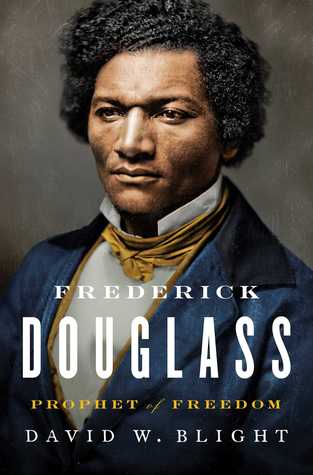
Frederick Douglass: Prophet of Freedom, by David W. Blight**-***

frederickdouglassprophetThanks go to Net Galley and Simon and Schuster for the DRC, which I received free in exchange for this honest review.

Douglass is a key figure in American history, and Blight has made his career largely through his expertise on Douglass’s life. I expected to be impressed here, and indeed, the endnotes are meticulous and I would be amazed if there was a single error anywhere in this work. But aspects of the biography rub me the wrong way, and ultimately, I realized that the best way around this is to go back and read Douglass’s own autobiographies again.

Whether we read what Douglass tells us, or what Blight (or any credible biographer) has to say, there are two impediments that stop me short, and because I have never been required to start at the beginning and end at the end to complete a scholastic or professional assignment, I tend to read the beginning; recoil; abandon; and then return in an undisciplined, skipping-around manner that is uncharacteristic of my usual methods.

First we have the Christian aspect. Douglass was tremendously devout, and during his time it was much more common to discuss religion publicly and even in daily conversations, sometimes at length. It repels me. So that’s my first problem. It’s not Blight’s problem, but it’s one I have to deal with.

The second problem—again, not Blight’s, and it’s inherent in reading about Douglass—is that slavery was horrible. Douglass actually had a slightly better life than most of his peers, gaining an education and living in the master’s house, but it was nevertheless traumatic. It is unavoidable to see what he endured and not reflect on exactly how hellish life was for the four million that endured life in this dehumanizing, degrading system. After I read a certain amount of it, I feel as if I need to take a long shower to wash away the stain.

As for Blight’s book, there are some good moments here, and I learned some things. Who helped Douglass on his road to freedom? Free Black people did. Who knew that there were vastly more free Black folks in Maryland than there were slaves? The textbooks and other materials used to teach adolescents about slavery and the American Civil War overemphasize, to a degree amounting to deception, the participation of kindly white people, largely Quakers, and provide only a fleeting glimpse of the occasional African-American.

But I find that the eloquent passages that I highlight as I read this are not Blight’s words, but quotations from Douglass himself.

Meanwhile, the obstacles to appreciating this book are consistent and irritating. Blight makes much of inconsistencies in Douglass’s three autobiographies, and when he refers to the differences there is a superior, smirking quality to his prose that doesn’t sit well. I wouldn’t like it coming from any writer, but when the writer is a Caucasian, it adds an extra layer of insult. No matter how long Blight publishes, no matter his standing in the Ivy League, he will never be fit to polish Douglass’s boots. If he once knew it, I suspect he has forgotten it. So that’s a problem, and it’s hard to read around it.

The other issue, a more common one, is the tendency to guess at what is not known. This makes me crazy. The narrative will flow along in a readable, linear fashion, and then I start seeing the speculation, which is barely visible. Might have. Must have. Likely. It makes me want to scream. If you don’t know, Professor Blight, either don’t put it in, or address the unknown in a separate paragraph explicitly addressing the possibilities. Weed out the unimportant guesses and deal with the more critical ones head on. When these inferences are salted randomly into the text, we come away with tangled notions. Apart from the key events in his life, which of the finer details were fact, and which were surmise?

Excuse me. I need to find a nice brick wall so I can slam my forehead against it.

So there it is. For all I know, Blight may gain half a dozen prestigious awards from this work; it wouldn’t be the first time a book I’ve complained about went on to garner fame and glory. But I call them like I see them, and what I see is that it’s a better plan to read what Douglass says about himself, even though Blight appears to consider himself a more reliable resource than his subject.

If you want this thing, you can have it October 2, 2018.