
 Thanks go to Net Galley and Simon and Schuster for the DRC, which I received free in exchange for this honest review.
Douglass is a key figure in American history, and Blight has made his career largely through his expertise on Douglass’s life. I expected to be impressed here, and indeed, the endnotes are meticulous and I would be amazed if there was a single error anywhere in this work. But aspects of the biography rub me the wrong way, and ultimately, I realized that the best way around this is to go back and read Douglass’s own autobiographies again.
Whether we read what Douglass tells us, or what Blight (or any credible biographer) has to say, there are two impediments that stop me short, and because I have never been required to start at the beginning and end at the end to complete a scholastic or professional assignment, I tend to read the beginning; recoil; abandon; and then return in an undisciplined, skipping-around manner that is uncharacteristic of my usual methods.
First we have the Christian aspect. Douglass was tremendously devout, and during his time it was much more common to discuss religion publicly and even in daily conversations, sometimes at length. It repels me. So that’s my first problem. It’s not Blight’s problem, but it’s one I have to deal with.
The second problem—again, not Blight’s, and it’s inherent in reading about Douglass—is that slavery was horrible. Douglass actually had a slightly better life than most of his peers, gaining an education and living in the master’s house, but it was nevertheless traumatic. It is unavoidable to see what he endured and not reflect on exactly how hellish life was for the four million that endured life in this dehumanizing, degrading system. After I read a certain amount of it, I feel as if I need to take a long shower to wash away the stain.
As for Blight’s book, there are some good moments here, and I learned some things. Who helped Douglass on his road to freedom? Free Black people did. Who knew that there were vastly more free Black folks in Maryland than there were slaves? The textbooks and other materials used to teach adolescents about slavery and the American Civil War overemphasize, to a degree amounting to deception, the participation of kindly white people, largely Quakers, and provide only a fleeting glimpse of the occasional African-American.
But I find that the eloquent passages that I highlight as I read this are not Blight’s words, but quotations from Douglass himself.
Meanwhile, the obstacles to appreciating this book are consistent and irritating. Blight makes much of inconsistencies in Douglass’s three autobiographies, and when he refers to the differences there is a superior, smirking quality to his prose that doesn’t sit well. I wouldn’t like it coming from any writer, but when the writer is a Caucasian, it adds an extra layer of insult. No matter how long Blight publishes, no matter his standing in the Ivy League, he will never be fit to polish Douglass’s boots. If he once knew it, I suspect he has forgotten it. So that’s a problem, and it’s hard to read around it.
The other issue, a more common one, is the tendency to guess at what is not known. This makes me crazy. The narrative will flow along in a readable, linear fashion, and then I start seeing the speculation, which is barely visible. Might have. Must have. Likely. It makes me want to scream. If you don’t know, Professor Blight, either don’t put it in, or address the unknown in a separate paragraph explicitly addressing the possibilities. Weed out the unimportant guesses and deal with the more critical ones head on. When these inferences are salted randomly into the text, we come away with tangled notions. Apart from the key events in his life, which of the finer details were fact, and which were surmise?
Excuse me. I need to find a nice brick wall so I can slam my forehead against it.
So there it is. For all I know, Blight may gain half a dozen prestigious awards from this work; it wouldn’t be the first time a book I’ve complained about went on to garner fame and glory. But I call them like I see them, and what I see is that it’s a better plan to read what Douglass says about himself, even though Blight appears to consider himself a more reliable resource than his subject.
If you want this thing, you can have it October 2, 2018.
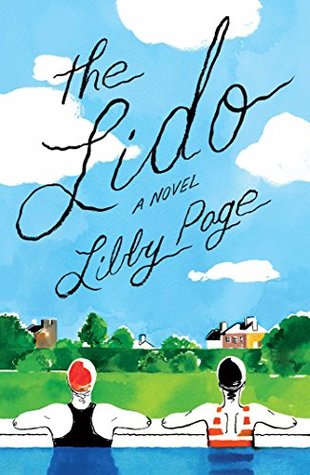 3.5 stars rounded up. My thanks go to Simon and Schuster and Net Galley for inviting me to read and review this charming debut. This book is for sale now.
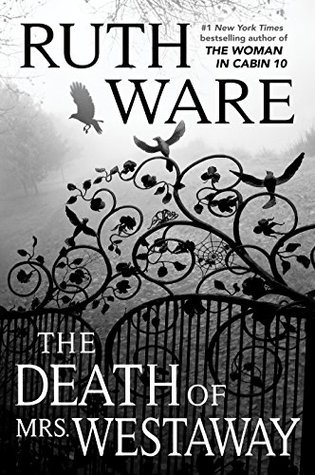
 Markley’s thunderous debut is not to be missed. My thanks go to Simon and Schuster and Net Galley for the review copy, which I read free and early, but this is one of the rare times I can say that if I’d paid full hardcover price, it would have been worth it. This is the summer’s best fiction, and it’s available to the public August 21, 2018.
 “How could one family, one person, have so much?”
 “You ever hear of the Bobbsey Twins from homicide?”
 Retired FBI agent Jan Fedarcyk makes her debut with this intense spy novel, and it is bound to keep the reader guessing and turning pages deep into the night. Thanks go to Simon and Schuster and Net Galley for the DRC, which I received for review purposes. I rate this story with 3.5 stars and round it upward.
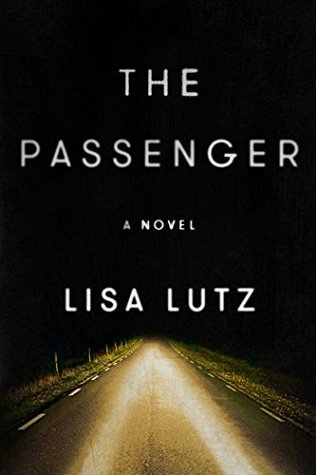 Lisa Lutz is best known for her series, The Spellman Files, which I confess I have not read or watched on television. I came to this stand-alone story brand new, and can tell you that it’s fresh and original, a real kick in the pants. Thank you Simon and Schuster, and thank you too, Net Galley, for the DRC. I picked this thing up and then hardly put it down, but my review had to wait awhile in order to be within the courtesy-window of no more than three months from publication. And it gave me some time to think.
