Funny Farm, by Laurie Zaleski*****

“You never know what you are capable of until the day comes wen you have to go places you hadn’t planned on going.”
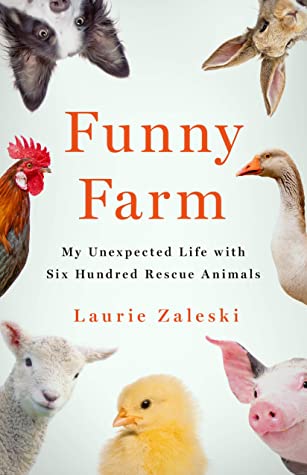
Laurie Zaleski knows how to make a debut. Funny Farm: My Unexpected Life With 600 Rescue Animals has created a tremendous buzz, and all of it is deserved. My thanks go to Net Galley and St. Martin’s Press for the review copy. This book will be available to the public Tuesday, February 22, 2022.

Laurie’s early childhood was in many ways an enviable one; her mother stayed home to raise Laurie, her brother, and her sister, and her father made enough money to hire household help and buy a couple of vacation homes, too. There was nothing they lacked for, other than physical safety. Because while her father could be warm, and loving, and generous, and funny, he could also be a monster. His reign of terror was worsened by alcohol consumption. As the beatings became uglier and more frequent, Annie, their mother, chose poverty for the children and herself over the constant terror and danger of living with their dad.

“’I almost became a nun,’ Mom would joke years later. ‘Then I met the devil…’ Annie McNulty and Richard Zaleski fell in love like tripping into an open manhole: one wrong move followed by a long dark plunge.”

There’s one searing episode Zaleski recounts, toward the end of their life with Dad, in which they are all hidden in a bedroom with the door blocked shut, and their father is sneaking up on them, commando crawling up the hallway toward them so they won’t see his shadow approaching, and he has a large knife between his teeth. It sounds like something from a Stephen King novel, doesn’t it?

And so, when Annie’s efforts to build a modest nest egg to finance their flight is uncovered, she has no other option but to leave without the money. She finds a dumpy cabin in the woods, half fallen down and in no way legally rentable, and strikes a bargain with the owner. To say that their standard of living decreases is the understatement of the year, but they make it work.

Once she has made her escape, apart from the creepy forays from an unseen enemy that occur from time to time, Annie can’t turn away anyone else, human or otherwise, that is in a dark and vulnerable place. The woods surrounding their little shack begin sprouting makeshift outbuildings; there’s a little lean-to here, and a sort-of paddock there. And it keeps growing.

Zaleski is a gifted storyteller, and she alternates her narrative from the present to the past, breaking up the nightmarish episodes of her childhood with hilarious stories, most of which are about the critters. Her writing is so nimble that I find myself repeatedly checking to see what else she’s published, because there’s just no way this can be her debut. But then, that’s what they said about Harper Lee, right?

Perhaps the most glorious aspect of this book is seeing how Annie McNulty’s can-do attitude, sterling work ethic, and positivity transformed her life and lit a path for her children. She provided them with an outstanding role model, and in return, they did everything possible for her when cancer forced her to slow down.

This book will inevitably be compared to Educated and The Glass Castle because it is a memoir of someone that has overcome horrifying challenges in childhood and emerged triumphant. But make no mistake, Zaleski’s story is in no way derivative, and likely will be held up as an example for future writers. It makes my feminist heart sing!

Highly recommended.
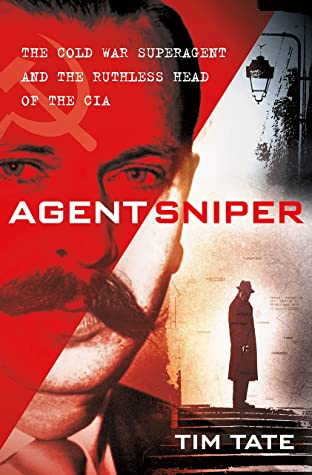
Agent Sniper, by Tim Tate***

I was invited to read and review this book by Net Galley and St. Martin’s Press. I accepted because I do love a good spy story, and there aren’t many of them being published at this time. Tim Tate has had a long, illustrious career as a documentary filmmaker and as an author, but is new to me.

So, when I began reading and found my attention wandering, I thought it was a personal problem. Too many distractions. I tried again, and when that didn’t go well, I procured the audio version and listened to it while I prepared dinners during the week. Eventually, I threw in the towel and admitted that this is simply not an engaging book. The topic sounds fascinating, but just as a gifted, dedicated author can spin dull material to gold, so can an indifferent one tell an electrifying spy story in a way that leaves the reader checking the page numbers and the clock—is this thing over yet?

It’s not all bad news: the research here is top drawer. For the researcher, this book has use, although I would caution the uninitiated into reading carefully, because history is always politically charged. Every fact that is included, and every fact that is not; the interpretation; the language used, all give a biased account, even when a researcher and writer is endeavoring to be as balanced as possible. I don’t care for this writer’s interpretation, which makes him sound like a hardened right winger, but I have no doubt that the facts that he uses are accurate ones.

Then we come to the audio, and I must wonder why, if we’re primarily dealing with the CIA and its agents, we have a narrator with a clipped English accent (and a few pronunciations that sounded very odd to me,) telling the story. I found it disorienting, but if this had been a more engaging story, I would have overlooked it.

Ultimately it comes down to wordsmithery, and I didn’t find much of it. Those interested in dabbling in this genre would do better to read Ben McIntyre and Tim Weiner.

This book is for sale now.

Happy Release Day!

I reviewed this outstanding collection earlier, but today it is available to the public. Hill won awards for the first collection, and this is, if anything, even better.

https://wordpress.com/view/seattlebookmamablog.org

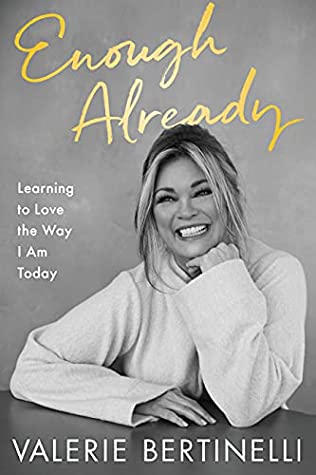
Enough Already! by Valerie Bertinelli***-****

3.5 stars, rounded up. Valerie Bertinelli rose to fame as a child actor, and as a child I watched her show, “One Day at a Time,” together with my parents. I admired and envied her, and when my mother enthused how darling, how pretty, how adorable she was, I also resented her just a teeny bit, the way we tended to resent the homecoming queen or student body president. When I saw, recently, that she’d written a memoir, I was all in. My thanks go to Net Galley and Harper Collins for the review copy. This book will be available to the public Tuesday, January 18, 2022.

For me, this is more of a three star read, but I choose to bump the rating up to four stars because there were several barn-sized hints that I should have noticed before I began reading, yet blew obliviously past. First, I didn’t get the memo that Bertinelli has written diet books and cookbooks, and has won Emmy Awards for a cooking show on the Food Network. All of these things should have given me pause, because although I do like Bertinelli’s earlier work, I never watch food programs on television. If I want to learn more about food, I’ll buy a cookbook or a diet book, but I don’t need it on my TV or any other streaming devices, and I also (giant clue number two) hate mixing recipes and cooking tips into a novel or memoir.

Yikes!

So, whereas I believed I would be reading a memoir suffused with feminist mojo that makes the author ready to turn the page on body shaming and chronic dieting, instead, I got a recipe, right up front. Pffft.  And as a woman who’s lived in plus-sized fashions for decades, I find it hard to get excited about Bertinelli’s brave decision to stop losing the same ten pounds, over and over. Ten pounds? Oh please. I guess maybe actors and models go into crisis over ten extra pounds, and feel tremendously brave about deciding to own them, but where I live, ten pounds is nothing.

When I was in third grade, my teacher said that those of us that roll our eyes stand in danger of having them get stuck up there. Since there’s no way not to do that while reading this thing, we’ll call mine a case study. If they get stuck, I’ll report back. In Braille.

As the memoir continues, I find that more than anything, this is Bertinelli’s grief book. She and her ex-husband, Eddie Van Halen, have remained unusually close in the years since their divorce, and this book is almost more about him and their son Wolfie than it is about her. I never enjoyed Van Halen’s music, which I found to contain more heavy metal than I am geared for; since I have this memoir, I figure I should take myself to cyberspace and find out whether growing older has changed my tastes. As it turns out, nope, it hasn’t. Still not a Van Halen fan.

And lastly, the narrative comes with all sorts of red flags when she talks about the warm relationship she and Eddie have continued to share—because, you know, they are both (full grown) Wolfie’s parents. When it becomes clear that he will lose his fight with cancer, she and he nip out of whatever family party they are attending to go sit in someone’s car and confess their love to one another—despite the fact that they have both remarried. (Imagine I’ve written that last bit in 24 point font, bolded, red.) The hell? I know that Hollywood types sometimes do things a bit differently, but…? And so, once more I travel through cyberspace to track down Bertinelli’s current husband, who is scarcely even mentioned in this emo memoir. I find an image; oh, so that’s him! And yup, at just about the same time the book was in the publication pipeline, the marriage crashed to a halt, with Bertinelli fuming about how she refuses to be “shamed” for how she grieves. Uh, okay. Her grief is her grief, but if I was that fellow, I’d feel as if my marriage was a party to which I hadn’t been invited. And if it was hard to play second fiddle to the famed guitarist when he was alive, I can’t even imagine how anybody can compete with him now that he’s dead. So. For those diehard fans of hers, of Van Halen’s, or of the food programming to which her career has been directed in recent years, this might be a great read for you. As for me, I came away feeling awkward and uncomfortable. If, knowing all these things, you are still interested, then go for it; but if you’re not so sure, either give it a miss, or read it cheap or free.

Breath Better Spent, by DaMaris B. Hill*****

At the start of this, her second published poetry collection, Hill mentions the lessons we have learned from Audre Lord and others. I like Lord’s poetry, too, but it’s time for Lord to move over and make some space. Hill is a powerhouse. Her recent collection about imprisoned women, A Bound Woman is a Dangerous Thing, is phenomenal, and it’s won her awards and many accolades, but this new book, an ode to Black girlhood, is better still. Her perception, intimacy, vulnerability and fearlessness all come through in what is most likely the best poetry collection we’ll see in 2022. My thanks go to Net Galley and Bloomsbury for the invitation to read and review; it becomes available to the public January 25, 2022.

In the preface, Dr. Hill discusses her influences, as well as the way she has divided this collection into sections. She starts by discussing the murder of Breonna Taylor, right there in her home state of Kentucky, and she goes on to point to the increasing incidents of disciplinary measures against Black girls in school, along with a disturbing rise in their incarcerations. Society is failing Black girls, and we need to do better.

In reading this collection, I find I process the poems best if I only read one or two each night. As I go, I highlight the titles of my favorites. There’s not a bad one in the bunch, but I am most taken with the first, “Jarena Lee: A Platypus in A Petticoat;” “How the Tongue Holds,” which is completely horrifying, and and so well done; “What You Talking ‘Bout;” “Hotter Than July;” and one dedicated to a family member that served in the military, “Those Sunless Summer Mornings.” At the end is a series themed around missing Black girls, here and in Africa. Again, I am drawn to a segment dedicated “to my niece and her bullies.” And breaking up the intensity are occasional moments of surprising humor that make me laugh out loud.

The thing that comes through, strong and long, is Hill’s affinity for, and understanding of Black girls. I have written scathing reviews several times, one quite recently, when authors include children prominently in their books without having taken the time to learn the developmental stages of their characters. Here, it’s the opposite. Hill knows girls, and she knows them well and deeply. She mentions that some parts of this collection are “semi-autobiographical,” but her knowledge runs much, much deeper than one gets simply by having been a girl. And so, though this collection will be useful to those teaching or studying courses in Black Studies, Women’s Studies, and of course, poetry, the people that absolutely need to read this collection are teachers in training. This should be mandatory reading for anyone planning to go into education. For that matter, it would also be excellent material for teacher in-services.

Several of Hill’s poems are contextual, dealing with the current political climate, and it’s now, with voting rights in question, cop violence rampant, and racism becoming increasingly overt, that we need books like this to counter the reactionary elements. It’s brave and powerful writing, and if you don’t order a copy, you risk missing out. Highly recommended.

Beautiful Country, by Qian Julie Wang*****

“Secrets. They have so much power, don’t they?”

Qian Julie Wang is born in China to a professional couple living under the shadow of governmental disfavor. Her father’s elder brother has written critically about Mao Zedong, naively signing his own name to the article, and as a result, the entire family lives under a cloud and the threat of violence, courtesy of Chinese Stalinism. When her father finds a way to relocate himself and his family to New York, it is under a tourist visa, and so they cannot legally remain in the USA, or get any sort of legitimate employment. Wang’s memoir tells of the deprivation and terror, combined with occasional lifesaving windfalls and ingenuity, of growing up as an “illegal,” and of how, against all odds, she ultimately finds success and citizenship.

My thanks go to Net Galley and Doubleday for the invitation to read and review, along with my apologies for being inexcusably late.

Wang comes to the USA, which in Chinese translates to “Beautiful Country,” as a small child. From the moment her feet touch American soil, her parents drill the story into her: “I was born here. I’ve lived here all my life.” Because they are in the US illegally, they must find work to do under the table, and so they are exploited by the most malevolent sweatshop owners. At first, Wang is also employed, toddling off to do piecework with her mother, but eventually she is enrolled in school, where she proves to be highly capable once she overcomes the barriers of language and culture.

More than anything, her life and that of her parents is dominated by fear and secrecy. Opportunities that would otherwise be helpful must often be bypassed because of the documentation required. Her parents’ emotional stability, their marriage, and her mother’s health are broken.

If this story seems unbearably grim—and I confess, this is why I delayed reading it, moving other, pleasanter stories to the top of my queue—it is ultimately a story of resilience and of triumph. Wang is a gifted writer, and she breaks up the horror by recounting small victories and pleasures that punctuate her youth. But the most important aspect of how the memoir is presented, is that everything is told through the lens of childhood, and so we see everything as a seven-year-old Chinese girl, a nine-year-old, etc. would see it.

Because I had fallen behind, I checked out the audio version of this memoir from Seattle Bibliocommons, and Wang does her own narration, which is my favorite way to hear a book, because there’s no danger that the reader will add emphasis or interpretation that conflicts with the author’s intentions. The climax arrived as I was wrapping Christmas gifts, which made me all the more aware of my level of privilege.

Wang tells us:

“Most of all, I put these stories to paper for this country’s forgotten children, past and present, who grow up cloaked in fear, desolation, and the belief that their very existence is wrong, their very being illegal. I have been unfathomably lucky. But I dream of a day when being recognized as human requires no luck—when it is right, not a privilege. And I dream of a day when each and every one of us will have no reason to fear stepping out of the shadows.”

Highly recommended.

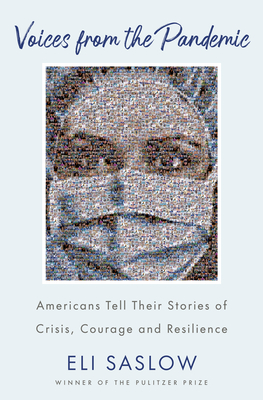
Voices from the Pandemic, by Eli Saslow****

Eli Saslow is the journalist that wrote Rising Out of Hatred, the story of former White Supremacist Derek Black, in 2018. When I was offered the chance to read and review his new book, Voices from the Pandemic, I jumped on it, because I like this author a lot. Once I had it, I avoided it like the plague (pardon the reference) for a couple months, wondering just what I had been thinking, to sign on for something like this. In the end, I am glad to have read it.

My thanks go to Doubleday and Net Galley for the review copy.

Saslow tells us in the introduction that he expected to become depressed, perhaps numbed, by all of these interviews, but ultimately was galvanized by “their empathy, their insight, their candor and emotional courage.” Fair enough, but an awful lot of these stories are gut-wrenching. For whatever reason, he chooses to start with some of the most horrific ones, but as we work our way into the book, there are several that are not about the excruciating, grim death of a loved one, but are interesting for different reasons. There are stories of essential workers, of coroners, and medical professionals. One that has stayed with me is that of a middle aged man, ex-military, who is finally compelled, when everyone in the household loses their livelihoods, to visit a food bank. He gets there two hours before it opens to be on the safe side, and discovers that there’s already a huge, hours-long line.

My favorite story is that of Bruce MacGillis, a wily old man that barricades himself in his room in his nursing home, lets nobody in, throws open his windows in subfreezing weather, and stuffs towels underneath the doorway to keep out other people’s germs. He ends up being one of two residents that are spared, out of eighty-nine residents. (My notes say, “Hell yeah!”) On December 28, he lets a nurse come in to administer his vaccine. I hope that man lives to be a hundred.

There are some stories by vaccine deniers, mask avoiders, included here, but if you are among them, you probably won’t enjoy this book. It leans heavily toward science, and away from conspiracy theories.

After I’d procrastinated reading this thing, I checked out the audio version at Seattle Bibliocommons to give myself a leg up. I thought it might be easier to hear these stories while I was also engaged in some other task, so I fired it up while I was slicing bell peppers and marinating meat. If anything, it was worse that way. Well—to be fair—worse, and also better. There’s a separate reader for each story, and the hard ones are read with such searing emotion that it makes them all the worse. The saving grace is that each person’s story is concisely told, so there was only one time that I hit the stop button and fast-forwarded to the next one. At the outset, I only listened for a few minutes at a go, and then turned to listen to another book, something light and fictional, to restore my mood. By the second half, I no longer needed to do that.

The book only covers the 2020 portion of the pandemic, but I’m not sure it would sound much different had he waited to include the whole horrible thing. (It will be over someday…won’t it?) Recommended, for those that can do this.

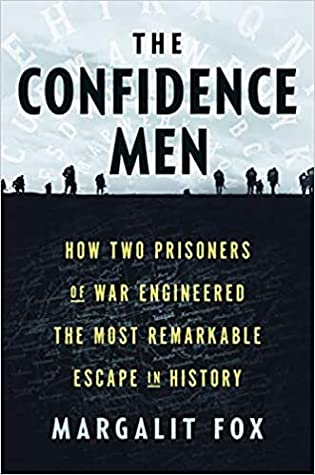
The Confidence Men, by Margalit Fox****

This stranger-than-fiction story of two World War I captives, one an English officer, the other Australian, that trick their way out of a Turkish prison camp via a long, elaborate con centered on a Ouija board is compelling and at times, funny as hell. My thanks go to Net Galley and Random House for the invitation to read and review. This book is for sale now.

The beginning is grim; grim enough that I abandon this story twice before ordering the audio version from Seattle Bibliocommons to help me get over the hump. There’s torture, deprivation, and every ugly thing that the notion of an enemy prison brings to mind. I am especially horrified because I thought this book was going to be funny! Reader, it is, but you have to get past the grim and at times, dull beginning to get to the amusing bits. Somewhere between the fifteenth and twentieth percentiles, the shift occurs, and that’s when you can expect to enjoy yourself. You may want to skim a bit through this part; I do, and it works out well.

Harry Jones was an attorney before the Great War commenced; Cedric Hill was an Aussie auto mechanic. Once captured, the two have no chance at all making a conventional escape; the camp is too isolated for either of them to get anywhere, even if they were able to leave. Instead, what they have is nothing but time, and ultimately, that and their excellent imaginations and problem-solving skills, aided by some genuinely stupid captors, is what saves them.

The most impressive aspect of their scheme is that it takes place over a very long period of time. Not many con artists would be able to keep their story straight for so long. Jones and Hill have a great deal of self-discipline and organizational skill. Also, they’re afraid, and fear can improve one’s consistency and attention to detail. Once the meat of the story begins, it is absolutely riveting!

I flipped back and forth between my digital galley and the audio version. Both are equally good, but I would give a slight edge to the audio version, assuming the reader is primarily seeking entertainment. For a researcher, the print version is better for keeping details and sources straight.

Recommended to those that enjoy history and intelligent humor.

Let’s Do Dinner, by Antoni Porowski

I’ve got a soft spot for cookbooks. Some are useful, and some are less practical, but fun to read anyway. Fans of Antoni’s television programs can hardly go wrong with Let’s Do Dinner, but his work is new to me. My thanks go to Net Galley and Mariner Books for the review copy. This book is for sale now.

The promotional blurb for this cookbook tells us that some of these recipes will be decadent, whereas others are designed for weekday dining. Apart from a couple of nice egg dishes (omelet, scramble,) I don’t see anything here that I would make. Some involve great loads of dishes, and others involve unusual flavor combinations, and I am a coward. That being said, I am plainly not his target audience. I suspect that his cooking tips are geared toward the young and childless; I, on the other hand, am a Grammy. For me, this cookbook is more of a three star read—the sort of thing I’d browse through, but wouldn’t spend money on. However, for twenty-and-thirty-somethings, I suspect the appeal will be greater, perhaps a four star read, and for his loyal fans, five stars.

I recommend this cookbook to Antoni’s fans, and to the young and adventurous cook that wants to try new things.

Bare Minimum Dinners, by Jenna Helwig****

What a good idea! Helwig’s approachable, practical guide is one of the most useful cookbooks I’ve seen in recent years. My thanks go to Net Galley and Mariner Books for the review copy. This book is for sale today.

One of the drawbacks to growing up with easily available readymade meals, as most Americans have done, is that nobody has to learn to cook anymore. It’s optional, the way that baking elaborate meals and desserts used to be. But it’s always more expensive to order take-out food than to make it yourself; it has to be, since you are essentially paying them for not just ingredients, but also the labor costs, utility and rent, and other expenses associated with producing it. The meal that you pull out of your freezer is a bit cheaper, and so is the ubiquitous ramen, but neither is useful nutritionally. A lot of people have become born-again cooks over the course of the pandemic, and after all we have been through, it’s nice that at least some of us have benefited in small ways.

Most cookbooks—and I love the things, even the useless ones—aren’t especially helpful. They call for elaborate preparation; tools you probably don’t own; unusual ingredients that have to be hunted down; and then in some cases, produce far more food than a single person or couple can make use of. Helwig’s is different. Her recipes call for ordinary, inexpensive ingredients, and most of them require only basic kitchen equipment. Right up front she explains what pans, machinery, cutlery and other tools she recommends we buy, and although this chapter looks like the one that a lot of people will skip on their way to find a recipe for tonight’s dinner, I recommend you read it when you purchase the book. This reviewer is a Boomer, and I was thirty before I had a microwave oven. I know how to cook and am fairly good at it. Nevertheless, reading this chapter persuaded me to add one more item to my collection. Her practicality is undeniable.

The recipes that look the most tempting to me also require the largest number of dishes to be washed. That’s the way it goes, right? Chilaquiles; Apple Dutch Baby; Mushroom and Gruyere Quesadillas; yum! But she also has an entire chapter titled “Bare Minimum Cleanup” which faithfully adheres to a rule of one pot or pan, period. Because some nights we don’t care to be creative. We just want to grab the food, fix it, and get dinner out of the way so we can move forward with our evening. Helwig gets that.

The sole complaint that prevents my fifth star for jumping on board is that there are certain ingredients and flavors that appear too frequently. Not everybody loves cabbage, for example. Helwig rhapsodizes about its taste, low price, and versatility, and whereas the latter two claims are obviously true, the first is subject to the cook’s preferences. As for me, I do like cabbage once in awhile, but I don’t want it all the time. There are also a few other places where I would have preferred some more versatility.

Nevertheless, this book is a gem, and every recipe in this cookbook has more appeal than that freezer-burnt burrito you bought last March. If you are a newbie with a limited income and not much kitchen experience, you should get this book now. If you are more seasoned, you might want it anyway. And as a bonus feature, I notice that although almost every cookbook is frustrating to read digitally, this one is better than most. If you can get it in print, I still advise doing so, but if your budget only runs to digital versions, that shouldn’t stop you. Someday you’ll wonder how you got by without it.