
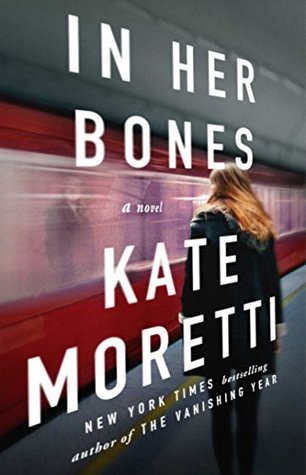
 Moretti’s mysteries are addictive, and when I found this galley in my email, I jumped it to the front of the queue. Big thanks go to Net Galley and Atria for letting me read it free and early. You can buy it now.
Edie is an outcast, spurned by her friends when her mother Lilith is arrested as a serial killer. Since it is so rare for a serial murderer to be female, the press is everywhere; meanwhile, all Edie has left is her brother Dylan and later, his young family. Otherwise, the people to whom she feels most closely bonded don’t know Edie, don’t realize that she is watching them, obsessing over them in person and in cyberspace; they are the bereaved family members of Lilith’s victims. It gives me chills.
One day Edie takes her voyeuristic tendencies to the next level; when the man she’s been stalking is found dead, police immediately suspect Edie of being his killer. And as we read Edie’s narrative, which tells us some things but not everything, we wonder too: is Edie a lonely, isolated young woman searching for connection to another human being; or is she a chip off the old block, a stone cold killer just like her mama?
The first person narrative alternates with a third person study of Lilith, and so the voice switches from Edie’s very personal story to a clinical, dry report regarding her aberrant mother. (Let me tell you, whatever issues you may have with your own mother—she’s going to seem like the mother of the year once you’ve read this.)
I’ve read a few unhappy reviews by online friends. but I like this book. It helps if you approach it as a mystery rather than a thriller; those in search of a grab-you-by-the-hair page-turner may not get what you’re looking for, but I wanted an interesting story with an original premise and a credible ending, and this is that. In addition, the third person case notes written by social workers and their ilk ring true to me. In fact, I made a wry note to myself, wondering whether Edie or Dylan might have been in one of my classes; I have never taught the children of a serial killer to my knowledge, yet the wanton neglect and lack of nurturance, even a simple effort to provide the basics eludes Lilith in a way that seems familiar. You think I am exaggerating? Not so much. There are terrific parents; there are indifferent parents; and there are, I am sad to say, more than a few Lilith Wades out there in the parent pool.
This is my third galley by this writer. Whereas I liked The Blackbird Season a little more than this one, mostly because of its amazing word smithery, I find this story more original and memorable than The Vanishing Year, which has the sort of denouement that makes me roll my eyes. Here Moretti pulls the ending together in a way that keeps me thinking about the characters rather than the author, and I sigh with appreciation when it’s done.
All told, it’s a solid mystery with a satisfying conclusion. Recommended to all that enjoy the genre.
 Aaron Elkin has been writing mysteries for a long time, but he is new to me. When I saw this title listed on Net Galley, I went to Goodreads and found that his work is well regarded by some of my friends; add to this his residence in my own Pacific Northwest, and I am ready to give his work a try. Thanks go to Net Galley and Thomas and Mercer for the DRC, which I received free of charge in exchange for this honest review.
 Kya Clark lives with her family in a shack deep in a North Carolina marsh. The year is 1969. They are miserably poor, but Kya’s mother tells her it will be alright, as long as the women of the family stick together. But then one day, she leaves. Older brother Jodie tells Kya that Ma will be back, because it isn’t in a mother to leave her children, but Kya isn’t so sure. Ma is wearing her alligator heels, and she doesn’t turn midway and wave like she always has. And one by one, everyone in her family leaves, and they don’t return. Kya is not even old enough to enter first grade, and she is alone.
 I received a review copy of this book from Net Galley and Three Hills Publishing, which is affiliated with Cornell University, free of charge. This book is now for sale.
 “Even as a federal agent, I have been on surveillance or supporting an operation and have had an officer approach me and say that the neighbors called about a “suspicious” vehicle, which meant it was a black guy driving a car. I’ve been the man in that suspicious vehicle.”
 “’All I know is I never had any advantages,’ Barry said. ‘I wasn’t even lucky enough to be born to immigrant parents.’”
 Darl Moody and Calvin Hooper have been best friends forever, and so when Darl has the worst kind of accident, he knows who to turn to. You know what they say real friends will help you bury. The body in question is Carol Brewer; Darl was hunting out of season, and when he glimpsed something moving through the woods he thought it was a wild pig. Turned out he was wrong; turned out to be Carol, poaching ginseng on Coon Coward’s land. But you can’t bring the dead back to life, and you sure can’t call the cops for something like this. Carol is Dwayne’s brother, after all. Dwayne is a huge man, half- crazy and rattlesnake mean. There are no bygones in Dwayne Brewer’s world. There is only revenge.
 Grace is convinced that Carl Feldman killed her sister Rachel. The once celebrated photographer was tried for the murder of a young woman and acquitted; now he is very elderly, and residing in assisted living due to dementia. Grace poses as his daughter, and she wants to take him on a road trip.
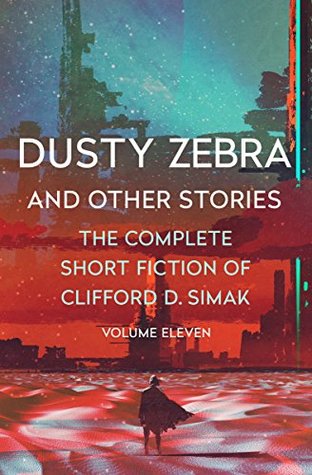 Clifford Simak was a prolific writer of short stories, mostly science fiction starting in the 1930s when the genre was new, and initially the stories were sold individually to magazines. They have been curated and released digitally by his friend, David W. Wixon, who provides a forward and brief, interesting notes before each one. My thanks go to Open Road Media and Net Galley for the DRC, which I received in 2016 in exchange for this very tardy but honest review.
 Markley’s thunderous debut is not to be missed. My thanks go to Simon and Schuster and Net Galley for the review copy, which I read free and early, but this is one of the rare times I can say that if I’d paid full hardcover price, it would have been worth it. This is the summer’s best fiction, and it’s available to the public August 21, 2018.
