Catfish Dream, by Julian Rankin****

CatfishDreamEd Scott Junior was one of the first Black catfish growers in the USA, a “Delta titan,” and he was the very first to own a catfish processing plant.  My thanks go to Net Galley and the University of Georgia Press for the review copy. It’s inspirational, well written, and well sourced. The book will be available to the public tomorrow, July 10, 2018.

To say that this story is out of my usual wheelhouse is an understatement. I’m a city woman, Caucasian, living in the Pacific Northwest. The two slender ties that drew me to this biography are my interest in civil rights, and my love of a good plate of catfish; yet I enjoyed it a lot, and I think you will too.

Scott was the son of a successful Black farmer, a former sharecropper that bought land incrementally until he owned hundreds of acres in the Mississippi Delta. The first third of the book explains how he did that, and the experiences that Scott Senior and Junior had with the Civil Rights Movement and the local power elite. It’s a little slow at the outset, but the narrative wakes up in a big way around the 35% mark.

As Scott’s farm grows, he encounters one obstacle after another, and the racism is naked and blatant. Local white agribusiness runs him out of the rice growing business—and he has the nerve to drive a better truck than some of the white farmers in the area, which is an affront they can’t let pass. Left with hundreds of acres and no seeds to plant, Scott decides to dig ponds. Rankin is clear: by ponds, he means bodies of water the size of 15 football fields. Big damn ponds.

Caucasian farmers are able to get subsidies and FMHA bank loans, but Scott is declined, not on the basis of his credit score, but because he is African-American. Bank officers and local government officials are so certain of their positions of power that they put their refusals on the basis of race in writing, and up the road, that is what Scott will use to bring them down.

Prior to the 1980s, catfish was not sold in supermarkets. It was considered a lowly bottom-dwelling fish by many, and so its consumption was limited to the families of sport fishermen and poor Southerners . When it made its debut and was purchased by “Midwestern homemakers”, this reviewer was among them, puttering in the back of a Kroger in Toledo, Ohio. “Huh,” I said, “Catfish. Now we’ve never tried that.”  I missed the cheap, readily available salmon I’d grown up with in the Pacific Northwest, and was jonesing hard for fish. I had no clue that an immense power struggle lay behind the little foam tray of fish in my shopping cart, but once I’d dipped it in a cornmeal mixture and fried it up, there was no turning back. Yummers.

I read multiple books at a time now that I’m retired, and some of the thrillers I favor make poor companions at bedtime.  This biography was perfect then. It’s linear for the most part, focused, and although I was angered by the way Scott was treated, I could tell he was going to emerge victorious, so it didn’t keep me awake after the light was out.

Rankin wants to be clear that there’s a whole lot that needs to change before we will be able to say that every race is treated equally in the Delta, or elsewhere the US. One might hope this would be obvious. But everyone needs to read victory stories to boost their morale and remind them of what is possible. If you need a story where the good guys win, then you should get this book and read it.

So Close to Being the Sh*t Y’all Don’t Even Know, by Retta**

SoClosetobeingtheshHuh. Go figure.

Although I don’t watch Parks and Recreation, the television show for which this comedic actor has become famous, I thought I would enjoy her memoir. For one thing, she’s a big woman, and I love it when well-padded women have the courage to go on stage for a purpose other than disparaging themselves. At least one reviewer on Goodreads hadn’t watched her program, yet loved this book. Thanks go to Net Galley and St. Martin’s Press for the DRC; I want to like this book too, but I don’t.

Retta is the child of Liberian immigrants who sacrificed a great deal so that she could receive a stellar education. They had no clue that life would lead her to show business instead of medical school. She began her career by doing stand-up routines, and so I went to YouTube and watched a clip from Comedy Central, and I thought it was pretty good. But much of the humor she uses is in the delivery. Without the pauses, without the facial expressions and other body language, things that cannot be conveyed in writing, that routine comes out flat. I watched her perform her signature line, and whereas I didn’t feel the magic, I suspect context would improve it.

If the memoir were simply a little dull, I could likely go with a third star here, but there are aspects that I found abrasive. I don’t need to know all about the many thousands of dollars apiece that go into her handbag collection, and I wonder why anyone would find that kind of self-indulgence amusing. How many good causes could use that money? I don’t need all the details of what she does on the toilet; ew. And why insert a chapter complaining about the gifts she has received from others? Was she raised to be so ungracious? So much of the collection includes her great love for booze that I found myself wanting to hire a skywriter to fly over Southern California to say, GET HELP.

On the other hand, I’m a member of the Boomer generation. I suspect that a lot of Retta’s fan base is younger than I am. So if you already a big fan, you may like this book, but unless your pockets are deep—not deep enough for fifteen thousand dollar purses, but deep—I suggest waiting until you can get It free or cheap. Others may want to read something else. 

Going to the Mountain, by Ndaba Mandela*****

GoingtotheMountainNelson Mandela’s hundredth birthday approaches. His grandson Ndaba, whom Mandela raised following his release from prison, talks about growing up with the titan that led the movement against Apartheid in South Africa. He reflects on Xhosa culture and the role that it played in the struggle and in his own development, and it is within this framework that he talks about his grandfather, and about the future of his people.
My thanks go to Net Galley and Hachette Books for the review copy, which I received free and early.

Ndaba spent his early years moving between his parents’ households. His mother struggled with alcoholism and other disorders; his father was ill, and would later die from AIDS. He tells of the surreal juxtaposition of the slum that had been his entire experience with his grandfather’s house, where he had his own room, food that was healthy and prepared for him, clothing, and even a video game system; it was just about everything a child could ask for, but it came at the price of separation from his mother, and he rebelled and acted out in response. As a man with a wider view of the past, he recognizes that this was by far the best outcome, but for many years he resisted, yet was safe because of his grandfather’s stable influence and wisdom.

He speaks of having come to Disney World as a youngster, where he was engaged in conversation with a friendly American, who asked him, as they stood in line for a ride, how big the lions are in Africa. Ndaba, of course, grew up in an urban environment and had no more seen a lion wandering around than the questioner had. He came to realize that these are the stereotypes that the Western world has for Africa: lions in rural areas, and crime in the cities. Dangerous animals; dangerous people.  He suggests that the U.S.A.  improve its own police forces before presuming to talk to South Africans about theirs.

He has a point.

The entire memoir is told using Xhosa folk tales as allegory, and the result is glorious and deeply moving. Although I seldom become teary while reading, a good hard lump formed in my throat when he spoke of taking his grandfather on his final journey to Capetown.

Highly recommended to everyone, whether you know the history of the South African Revolution or are new to it.

The Woman in the Woods, by John Connolly****

thewomaninthewoodsConnolly is one of a handful of writers whose names I search when I go to Net Galley. He’s consistently brilliant, and so I am grateful to Atria Books and Net Galley for the review copy. This book is for sale now.

This is number sixteen in the popular Charlie Parker series, which began as detective fiction with mystic overtones reminiscent of James Lee Burke, and in the last volume moved into the horror genre outright. Either way it’s a compelling series. One of my favorite aspects of this series is the author’s incorporation of social justice themes. Here we find a sadistic butcher hot on the trail of the shelter volunteers that assisted Karis Lamb in escaping the father of her child, and a magical book she took with her.  Karis died in childbirth and is buried in the woods, and there are nightmarish individuals—human and not—trying to find her child so they can get the book. His adoptive mother and grandfather are determined to protect Daniel at all costs.

“Tell me the special story,” Daniel said. “The story of the woman in the woods.” 

Karis’s body is dead, but her spirit is not at rest. She is looking for her boy, and a particularly chilling detail is the repeated use of Daniel’s toy phone to call him from beyond the grave. 

At the same time, Angel, one of Parker’s two assistants who is also his close friend, is lying in a hospital bed following cancer treatment, and his partner, Louis, whose impulse control is never tiptop and is now strained to the breaking point, becomes enraged when he sees a vehicle bearing a Confederate flag parked near the hospital, and so he blows up the truck. As events unfold, our supernatural villains and the Backers—sinister characters whose lives hold no joy, and whose fate is eternal damnation—are joined in their pursuit of the Atlas, the child, and now also Parker by some local white supremacists seeking vengeance on behalf of the van’s owner.

As always, Connolly juggles a large number of characters and a complex plot without ever permitting the pace to flag, and he keeps the chapters short and the details distinct so that the reader isn’t lost in the shuffle.

This will be a five star read for most of Connolly’s readers.  Rating horror stories is immensely subjective, because some readers may find this book too horrible to be fun, whereas others will appreciate the way Connolly continues to turn up the creepiness and the gore. As for me, I had a rough time getting through the first half. I didn’t want it in my head at bedtime, and the graphic torture scenes prevented me from reading while I was eating. The result is that I had to read much more slowly than I usually would do; there were too many times I just couldn’t face it, and there were other times when I could read a short amount, then had to put it down for awhile. I suspect I am a more sensitive horror reader than most, but there will be some besides me that began reading when this was a detective series, and that may find it too grisly now.

None of this will prevent me from jumping forward when the next in the series comes around.

Highly recommended to those that love excellent fiction, and that can withstand a lot of horror and a lot of gore.

The Melody, by Jim Crace****

“We are the animals that dream.”

TheMelodyJim Crace is an award-winning author with an established readership, but he is new to me. Thanks go to Net Galley and Doubleday for the review copy. This book will be available to the public Tuesday, June 19, 2018. Those that love literary fiction should take note.

Alfred Busi is a singer, and he was famous during his prime, but now he’s old, living alone in his villa with just his piano to keep him company. At the story’s outset he hears a noise below late at night and goes down to run the animals or the whoever out of his garbage bins, but instead he is attacked. Something or someone flies out and bites him a good one; he thinks it was a boy, a half-feral child:

“Busi could not say what it was, something fierce and dangerous, for sure…before the creature’s teeth sank into right side of his hand, and, flesh on flesh, the grip of something wet and warm began its pressure on his throat, Busi knew enough to be quite sure that this creature was a child. A snarling, vicious one, which wanted only to disable him and then escape.”

The problem—beyond the injury itself—is that Busi is elderly, forgetful, and occasionally confused. His wife is dead, and he’s grieving hard. The only people remaining in his life are his sister-in-law and her son, his nephew, and they aren’t sure he isn’t delusional. Medical staff question his reliability as well; soon, a truly nasty journalist writes a smear piece making fun of him, and it comes out just as he is scheduled to perform for the last time at a concert where he’s to receive a prestigious award. It’s all downhill from there.

Concurrently there’s discussion among the locals about the homeless people living in the Mendicant Gardens—a place entirely devoid of foliage, where makeshift shacks are erected from cardboard, scrap lumber and whatever else is on hand—as well as the fate of the bosc. I find myself searching Google here because I am confused. I have never heard of a bosc, which turns out to be a wooded area of sorts, and my disorientation is compounded by not knowing where in the world this whole thing is unfolding. If our protagonist lives in a villa, and if we’re not in Mexico, then are we in Southern Europe somewhere? I am following language cues; the names of things and places sound like they could be Italian, or maybe French. Or in Spain. The heck? I go to the author bio, but that’s no help, since Crace lives in the U.S. I try to brush this off and live with the ambiguity, but I continue wishing that I could orient myself. It’s distracting. There’s a social justice angle here involving society’s obligation to its poorest members, but I am busy enough trying to establish setting that the effect is diluted.

Nevertheless, the prose here is sumptuous and inviting. Adding to the appeal is the clever second person narrative; we don’t know who is talking to us about Mr. Busi, and we don’t know whether the narrator is speaking to a readership or to someone specific. For long stretches we are caught up in the plight of our protagonist and forget about the narrator, and then he pops back in later to remind us and pique our curiosity.

I am surprised to see this title receive such negative reviews on Goodreads. To be sure, GR reviewers are a tough lot, but there are some angry-sounding readers out there. What they seem to share in common is that they are Crace’s faithful fans, and if this title is a letdown for them, I can only imagine what his best work looks like; after a brief search I added one of his most successful titles to my to-read list, because I want to see what this author could do in his prime.

And there it is. Many people won’t want to read this, because we don’t like thinking about old age and death. Busi’s whole story is about the slow spiral that occurs for most people that live long enough to be truly old. It’s depressing. Those of us that are of retirement age don’t want to think about it because it’s too near; those that are far from it are likely to wrinkle their noses and move on to merrier things. It’s a hard sell, reading about aging, physical decay, and dementia. And there are specific passages that talk about Busi’s injuries and physical maladies that caused me to close the book and read something else when I was eating. It’s not a good mealtime companion.

Crace is known as a word smith, and rightly so. If you seek a page-turner, this is not your book, but for those that admire well-turned phrases and descriptions as art, this book is recommended.

Us Against You, by Fredrik Backman****

“The first time Peter realized that the tiny person was sleeping soundly in his arms. What are we prepared to do for our children at that moment? What aren’t we prepared to do?”

UsAgainstYouUs Against You is the second in book in the Beartown trilogy. My thanks go to Net Galley and Atria for the invitation to read and review. This book will be available to the public tomorrow.
Beartown is in crisis. The hockey team has been undone by the arrest of their star player for rape, and Maya, his victim, has been harassed endlessly as if she were the perpetrator. Resentments simmer. There are anonymous callers. A new coach is hired, not only a woman—but a lesbian. Chins wag. New owners roll into town, friendly and treacherous, generous and oily. Violence hums beneath the surface as the town polarizes between the hometown hockey team and that in the neighboring town, to which some Beartown citizens have decamped.

Fredrik Backman, who is possibly the finest male feminist novelist in the world, is on a roll here. It’s interesting to note that although the hockey players in this story are men and boys, the best developed, most complex characters are the women. I like reading about Peter, Leo, Amat, Benji, and Teemu, but the characters that keep me coming back are Kira and Maya, Ana and Ramona. More than anything I want Kira to pack her bags and seize the opportunities presented to her, with or without Peter. Just go, woman, go. But it’s always easy to suggest that someone else should leave a troubled marriage behind, and the way that she deals with this problem—and the role that her daughter plays in the decision—is thought-provoking.

Meanwhile there are about a dozen other small threads here, and again, Backman is among the best writers when it comes to developing a large cast of town members without dropping anyone’s story or letting the pace flag. His use of repetition as figurative language is brilliant, and he is unquestionably the king of the literary head fake. If I taught creative writing to adults, I would assign my students to read his work.

I have some relatively minor quibbles here, although I know so little of Swedish culture that they may or may not be valid within that framework. I would dial the sentimentality and drama down twenty to twenty-five percent; clearly most readers love this aspect of these novels, but I would argue for a smidge more subtlety. There are occasional exaggerations that remind me that the characters are fictional. When the entire town is economically depressed, and yet everyone shows support for something by showing up in matching jackets, and when a preposterous amount of spare change goes begging in the kitty at the local bar, I wince. But then I am quickly drawn back in by the complex, compelling characterizations.

If you’re a fan of Backman’s, you won’t be disappointed. If you have never read his work before, don’t start here. Read one of his excellent stand-alone novels, or begin with Beartown, the first in this series. Recommended to those that love fiction that features excellent, complex characters, particularly female characters.

The Death of Mrs. Westaway, by Ruth Ware****

thedeathofmrsw“How could one family, one person, have so much?”
Hal’s mother dies, leaving her nothing but a cheap rented apartment, a deck of tarot cards, and endless sorrow. She is perplexed but slightly hopeful then, when she receives a note from an attorney indicating she has inherited money; it’s got to be a mistake, but she sure can use it. Why not see where it leads?

My thanks go to Net Galley and Simon and Schuster for the DRC, which I received free and early in exchange for this honest review.

Ware writes in a classic style that’s been compared to Agatha Christie. The traditional elements are there: a menacing old house with a creepy housekeeper; a fortune, complete with competing would-be heirs; an ambiguous old photograph; sinister strangers; a nasty winter storm that prevents escape. In less capable hands it might feel generic, but Ware provides some clever twists that update the old-school model, making for an absorbing read.

My practical side inserts itself, and I find myself wondering—if she feels intimidated by the family, can’t she find an attorney to handle this mess for her at a distance, given what’s waiting at the back end of the transaction? And when she returns to the spooky old house with nothing resolved yet, her stomach in her boots, quivering, I want to say—in all that great manse, surely she can find a different bedroom, one without bars on the windows and locks on the outside of the door. Why be bullied by an 80-year-old housekeeper? Find a different room and claim it, for heaven’s sake. Clean it and put the sheets on yourself if it comes down to it.

But if Hal followed my advice, the story would be no fun at all, so it’s just as well she cannot hear me.

Ruth Ware writes like nobody else, and those that have read her work before know how addictive it is. The more pages I turned, the more I wanted to turn. Mystery lovers and Ware’s fans will want this book right away; turn on all the lights and lock the doors and windows before you dive in. Trust me!

This book is for sale now.

The Island Dwellers, by Jen Silverman*****

TheIslandDwellersJen Silverman is a playwright with a list of awards as long as your arm. With this impressive collection of short stories, she steps into the world of prose with guns a-blazing. Thanks go to Net Galley and Random House for the DRC, which I received free and early in exchange for this honest review. This book is now for sale.
Silverman’s contemporary fiction is themed, as the title suggests, around people that live on islands in various parts of the world. Everything here is edgy and a little bit dark. Her characters are melancholy, naïve, neurotic, bent, and at times laugh-out-loud funny; she doesn’t leave her endings—or her readers—hanging, and I didn’t successfully predict the way any of her stories would turn out. We have destructive relationships; relationships that are hellishly unequal; artists that aren’t really; strange, strange animals—oh, hell, that Japanese pit viper! But the thing that ties these tales together, apart from the theme, is deft, tight writing.

Anyone planning a vacation should pack this title, whether in paper or digitally. Short stories are terrific for bed time and when traveling, because the end of each story gives the reader a reasonable place to pause even when the prose is masterfully rendered, as it is here. This volume was released May 1, 2018 and is highly recommended.

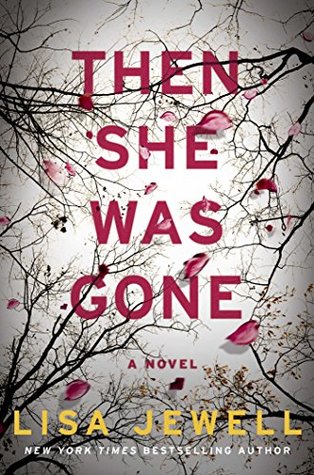
Then She Was Gone, by Lisa Jewell****

ThenSheWasGone3.5 rounded up. Thanks to Net Galley and Atria for the DRC. This book is now for sale.

This is my third title by this author, and she is consistently strong. Our protagonist is Laurel, who is struggling. Her daughter Ellie–her favorite child—is missing. She’s been missing for years, and it hasn’t really gotten any easier.  Her marriage is over because Paul could move on, while Laurel could not; she is no longer close to their other two children, because all her thoughts and feelings went to the child that was missing.

Then one day she meets Floyd. He is warm and delightful, and his daughter Poppy, who seems too good to be true, calls to her.

I have read other reviews that suggest that the mystery here is easily solved. That’s true. But it hardly matters, because I wasn’t in this thing for the mystery. I was in it for the character. There are so many observations, small tidbits of mom-philosophy, some of which I didn’t know anybody shared with me. I have notes in my reader, where I usually ask questions or point to technical aspects of a story, that simply say, “I know, right?”

All of the characters in this story are Caucasian, and so I suspect that the main target audience is white mothers in their forties and beyond. I recommend this story to everyone in that demographic that enjoys women’s fiction.

The Comedown, by Rebekah Frumkin***

thecomedownThanks go to Net Galley and Henry Holt for the review copy.  This debut tells me that Frumkin is an author to watch. This book is now available to the public.

The story begins with Leland, an addict with a suitcase, and Reggie, the dealer that hates him. There’s Melinda, the unhappy ex-wife, and a host of other characters, including Melinda’s daughter-in-law Jocelyn. The suitcase is the hook; everyone wants it, and so of course the reader must wonder what is in it and who has it now.

This novel grabbed me at the get-go, darkly funny and brutally frank. It struck me as angry fiction, and the energy behind it was fascinating. But ultimately, there are too many characters and too many social issues wrapped into this one story, and rather than making it complex and tight, it wanders in too many directions. There’s an overly lengthy narrative toward the end, and it’s followed by some regrettable dialogue. And there are too many characters named Leland.  The story is an ambitious one, but this should probably have been more than one story, or perhaps a series. The result is a lack of focus.

I would love to see the author write something else using Melinda as the central character, and fewer guys named Leland.