
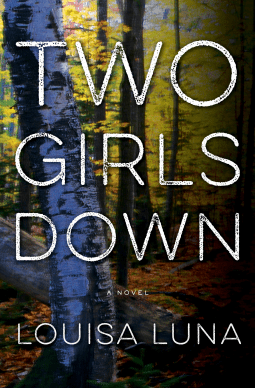
Two Girls Down, by Louisa Luna*****

TwoGirlsDownThis is a quick read and a fun one. I received my copy free and early in exchange for this honest review courtesy of Net Galley and Doubleday. It becomes available to the public tomorrow, January 9, 2018.

A frazzled mother in a small Pennsylvania town pops into a big-box store one afternoon, leaving her two elementary-aged girls in the car. They’re old enough not to wander off with some weirdo, and she’s just going to be a minute. When she comes back, they’re gone.

Our protagonists in equal measure are Cap, a former cop who’s left the force in disgrace, and Vega, an out-of-state PI brought in by the girls’ relatives. Vega seeks Cap out after the local cop shop refuses to work with her; sparks fly.

If you take the story apart and look at its elements, it is all old material and should be stale. We have the missing children; a single grieving female detective, a vigilante type with little to lose; a slightly-older, single-dad, lonely older male detective, all of which leads to romance, because heaven forbid we should ever have a competent female private eye without a sizzling chemical frisson to keep readers from feeling threatened by her competence. We have the single dad’s (also-competent) teenage daughter left alone for long periods of time, vulnerable to the forces of evil. And of course our female detective has to be diminutive, a tiny-firecracker type.  Even Vega’s love of firearms isn’t new; consider Kinsey Millhone and Stephanie Plum. And our female detective has to be a very light eater. God forbid she should chow down at dinner time; no, she pushes her food around and away.

The pieces of this thing have been done to death. And yet.

And yet, the whole of the story is so much more than the sum of its parts. A strong writer can take overdone elements and make them gleam, and that’s what Luna has done here.

The thing that makes it work is the element of surprise. When I am looking ahead, I can often see, in a broad sense, where we are going, but when I try to predict how we’ll get there, I see three possibilities, and Luna always comes up with a fourth at the most unexpected of times.  Vega’s “roofless rage” gives her a no-holds-barred, Dirty-Harry-Lite kind of approach; she’s never killed anyone, but if she’s always as off the wall as she is here, it’s a miracle. But the other miracle? The fact that I am wondering what she is like at other times demonstrates how well Luna has developed her characters. Cap is a well of timeworn chivalrous decency, but Vega wants to take the kind of people that would deliberately hurt a child and “put them in the fucking earth.”

Luna uses lots of crackling dialogue and a spare prose style that makes this book accessible to anyone that finished the eighth grade, and possibly some that didn’t. Although there’s no indication that this will become a series, one has to wonder if such a thing might happen.  My own preference would be to see Vega act independently of romantic entanglements, because she has the potential to be a feminist hero, and we need one of those right now.

One way or another, this is a read you won’t want to miss. Highly recommended.


Brass, by Xhenet Aliu*****

“I swear to Allah, you are the most beautiful girl I have ever seen.”

Brass Waterbury, Connecticut is the place to go for immigrants, the Brass Manufacturing Capital of the World; that’s true, anyway, until the plant closes. Elsie Kuzavinas waits tables at a Greek restaurant while her mother slaves over the assembly line at the Peter Paul Almond Joy Mounds factory nearby.
Elsie tells us that “My mother had warned me when I took the job to watch out for the Albanians that worked at the Ross, because she heard they treated their women like sacks and that their tempers ran hotter than the deep fryers in the kitchen.”  Nevertheless, she falls for the line cook, Bashkim hard and fast.  When he offers to take her home one night and then deliberately points his Pontiac Fiero the wrong way, she falls silently complicit, because even if he turns out to be a serial killer, she would be “happier to have died Bashkim’s victim than his nothing-at-all.”  Elsie knows that Bashkim had left a wife behind, but they don’t talk about it.

That’s just one of Bashkim’s rules. Nobody is allowed to talk about Bashkim’s wife.

In fact, Bashkim is a humdinger, and seeing Elsie’s slow transition from battered mistress to—not a crusader by any means, but a woman that has a bottom line involving basic safety and minimal security—is bound to make readers sit up straight and pay attention. And when an apologetic relative tells a bruised Elsie that Bashkim didn’t mean to hurt her, I want to cheer when Elsie says, “Of course he did. That’s what fists do.”

Elsie’s story is told alternately with that of the daughter she begets with Bashkim. Lulu is her mother’s daughter, a reckless girl who’s got little to lose. Their stories are presented in a bold, original second person narrative that is unforgettable.

By now I am supposed to have told you that I read this book free thanks to Net Galley and Random House in exchange for this honest review. But when a debut like this one comes along, the superlatives come first, the disclaimers second.  Aliu has positioned herself on the literary map, and I dare anyone to try to knock her aside.

Lulu didn’t get the college scholarship she had worked toward; all her hopes and dreams were riding on it. She needs more than an education, she needs to get out of the house. In desperation, Lulu sets out to meet her daddy, convinced that if he can actually see her, he will make everything right for her. Ahmet, a fickle, sweet boy that adores her, agrees to drive her to Texas. Lulu’s journeys, both outward and inward, kept me from thumbing off my reader when midnight came. The inward journey joining Lulu and Elsie is hypnotic.

This story is available to the public January 23, 2018. It’s badass working class fiction. Every feminist, every mother, every daughter, and everyone that loves excellent fiction should get a copy of this book and read it.

Because for all of us, it is better to be Aliu’s readers than her nothing-at-all.

Best of the Year: 2017

Gallery

This gallery contains 3 photos.

2017 has been a stellar year for literature, and when I sat down to rate my top ten, I found myself stymied. Working up to it by offering the best of each genre seems more approachable, although still daunting. Most … Continue reading

Gods in Alabama, by Joshilyn Jackson*****

godsinalabamaThis book was just what the doctor ordered. Whenever I find myself steeped in too much important-yet-grim literature, I have a handful of go-to authors that are guaranteed to leave me feeling better about the world. Jackson is one of them. I bought my copy of this book used via Powell’s City of Books, online using the gift certificate they bestow on reviewers from time to time. I recently won another one and have ordered some more books by this writer to brighten the winter to come.
Arlene had vowed never to return to her family in Alabama. Dark things have been done there, and she did some of them herself. Let’s examine, for instance, the murder of Jim Beverly. Arlene promised God that if he let her get out of the state after it occurred, she would never return, and despite her family’s hurt inquiries, she never has. Now things are different, though. A visitor from her hometown has come to her apartment asking about Jim. In addition, Arlene’s boyfriend Burr, who is African-American, has told her that if she won’t introduce him to her people, regardless of what they are like or how they will treat him, he will leave her. And so Arlene is forced to break her vow with the Almighty and head south.

Arlene’s family is unforgettable; Aunt Flo, who raised Arlene after her mother’s breakdown, is one of the finest strong female characters of all time. I have read several books since I read this one, and yet Arlene and Flo are still riding around in my head. That’s what excellent literature does.

As to Jim Beverly and Arlene’s vow, there’s more to all of it than meets the eye, and the ending is so surprising yet so completely believable that I can only roll my eyes in admiration. Highly recommended to those that love excellent fiction.

Protocol, by Kathleen Valenti****

Protocol“It was all so clear. She’d been so stupid…Cue the flying monkeys.”
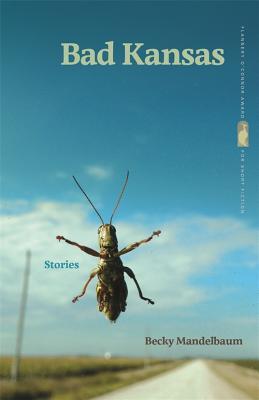
The Maggie O’Malley series has taken wing. Thanks go to Henery Press and Net Galley for the DRC, which I was invited to read free in exchange for this honest review. In a crowded field, Valenti stands apart. Her snappy wit and precise pacing combine to create a psychological thriller that’s funny as hell. I didn’t know it could be done until I saw it here.

Maggie’s career is off to a promising start when she is recruited to work as a researcher for a major pharmaceutical firm. It’s a perfect chance to make the world a better place, and the beefy salary lets her take care of herself and send desperately needed funds to save her ailing father’s restaurant. It seems too good to be true, and we know what that means.

She’s barely through the door when she receives a mysterious meeting reminder on her refurbished new-to-her cell phone. Who is this person, and why would she meet her? And then, quick as can be, she sees the woman she is supposedly about to meet, die. Since the meeting reminder vanishes from her phone once it’s played, and since the reminder itself isn’t sinister, the police brush her off…until it happens again. Eventually, of course, she herself becomes a suspect.

This is a page turner, and we look over Maggie’s shoulder all the way through, wondering whether this friend or that one is to be trusted. Which date is a godsend, and which one is a snake in the grass?

The most notable difference between this story and others is the way Valenti sets up what looks like an error either on the part of the author or stupidity on the part of the protagonist, and then on the back beat, we see exactly why that was there, and that she anticipated our reaction all along. She does it over and over, and it’s hilarious. I feel as if the author is speaking to me as I read, howling, “Gotcha again!” It’s zesty, brainy writing. Valenti is the new mystery writer to watch.

This book is for sale now, and I recommend it to those that love funny female sleuths.

Bad Kansas, by Becky Mandelbaum*****

“It’s either school, a job, or a girl,” she said. “Or death. Those are the only reasons for coming to Kansas. Unless you’re born here, of course. Then it’s a matter of escaping.’

BadKansasThis collection won the Flannery O’Connor Award for Short Fiction, and it may very well win more awards as well. Thanks go to Net Galley and University of Georgia Press for providing me with a free advance review copy in exchange for this honest review. The collection is now available to the public.
We have eleven stories here, all of them set in Kansas, and all of them excellent. Every story is built around a dysfunctional romantic entanglement. There are manipulative relationships, stalkers, couples held together by money alone, and there are pathetically lonely types that want to cling to a dying romance at all costs. Somehow, Mandelbaum takes a wide range of pathological partners and makes them hilarious. In addition, the character development surprises me, going beyond what one might anticipate in short stories. My personal favorite is “A Million and One Marthas”, which is darkly funny and skewers the wealthy and entitled, but it’s a hard call, because the quality is uniformly strong, with not a bad one in the bunch.

Nobody needs to know anything about Kansas to enjoy this collection, and by the time the last rapier thrust has been extended, you’ll feel better about not having been there.

Mandelbaum is on a tear. She’s witty, irreverent, and clearly a force to be reckoned with. Look for her in the future, and if you see her coming, step aside, because nobody, but nobody can stop her now.  Highly recommended to those that love edgy humor.

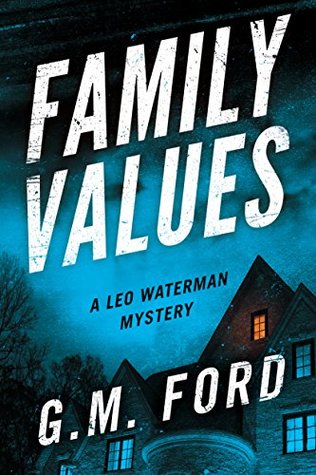
Family Values, by GM Ford*****

“They were standing inside the door when I came out of the bathroom. Two of them. Matching gray suits, milling around like the owned the joint. Something about carrying a gun in one pocket and the power of the state in the other changes the way a person relates to the universe. For as long as I could remember, that particular sense of privilege has always pissed me off.”

FamilyValues

Leo Waterman is a solid citizen now, no longer the scruffy Seattle PI that he was when our series began. But now that he has a lovely home and a good woman—well, sometimes anyway—he also has more to defend, and is less fettered by economic constraints. Those that have loved this series from the get-go should go go go to their nearest book seller or favorite website and get get get this book. New readers can jump right in, but likely as not, you’ll want to go back and get the rest of the series once you’ve seen this one. Lucky me, I read it free thanks to Net Galley and Thomas and Mercer, but it’s worth the full jacket price. It is for sale now.


Leo returns from vacation to find Rebecca Duvall, the love of his life, on the bathroom floor with a needle in her arm. Her reputation has been damaged by a suggestion of corruption, but Leo knows this is no suicide attempt. Her job as medical examiner is on the line now, and so Leo enlists the help of his boisterous investigative squad to untangle the mystery of who wants Rebecca not only fired, but dead. Ford tells the story with the gut-busting edgy humor for which he is known. He takes a playful jab or two at gender fluidity; at times this part feels a little excessive, but that’s not where the story lingers. There are a million twists and turns as our impulsive PI goes where everyone tells him he should not:

“’ I went out to see Patricia Harrington today.’

“’Don’t fuck with those people, Leo.’”

There are some arrhythmia-worthy attack scenes, and the plot wholly original and free of formulaic gimmicks. The streets and alleys of Seattle and the hinterlands beyond are all rendered immediate and palpable. 

Ultimately the heart of the tale is revealed by Leo’s regard for Seattle’s homeless men and women, some of whom were once friends of his late father. It is them he turns to for extra eyes in a difficult situation:


They were great for stakeouts, as long as it was somewhere downtown. They could hang around all day and nobody paid them any mind because society has trained itself not to see the poor and the destitute. That way, we don’t have to think about how the richest society on earth allows so many of its citizens to live in the streets like stray dogs.


The snappy banter between Waterman and Seattle cops is always delightful.  It’s even better once we add a pair of fake UPS guys, some thugs known as the Delaney brothers, local ruling scions, and poor Rebecca as the straight character representing all that is sane and normal: “Oh Jesus…what now? Locusts?”  The narrative is fresh, funny, and entirely original, avoiding all of the formulaic foolishness that makes old lady schoolteachers like this reviewer peevish.

The ending will make you want to sing.

Altogether, this novel is an unmissable treat.

The Unquiet Grave, by Sharyn McCrumb*****

theunquietgraveVoice, voice, voice; nobody writes like Sharyn McCrumb. Here her dry, dark humor combines with her expertise in Appalachian culture and above all, her deep respect for the working poor, and the result is a masterpiece of an historical mystery. Thanks to Net galley for the DRC, and to Atria for sending a hard copy galley and a finished copy of this excellent novel. However, had I paid full freight, I’d have come away happy. This book will be available to the public September 12, 2017.
Based upon the legend of the Greenbrier Ghost, our story is set in West Virginia in 1897. Zola Heaster is swept away by the handsome young blacksmith that comes to her tiny Appalachian farming community. Her story is told to us primarily in a first person narrative by her mother, Mary Jane. Magnetic physical attraction overwhelms any common sense Zona may possess—which isn’t much—so when the handsome stranger comes along, Zona tumbles:

“Zona was well nigh smirking at him—cat-in-the-cream-jug smug, she was. Well, Mr. Shue—the name fits the trade, I see—I am Miss Zona Heaster, a visitor to my cousin’s house, here. How do…Well before Edward ‘Call me Trout’ Shue came ambling along, with his possum grin and his storybook profile, we’d had trouble with Zona.”

Before we can draw breath, Zona is pregnant. It isn’t the first time, either, though the first was kept quiet, settled out of the area. As her mother wonders whether Trout will want to marry her, Zona brags,

“’He’d be lucky to have me.’ 
“’Well, Zona, it seems that he already has.’”

Mary Jane doesn’t like her daughter’s suitor, and a number of small but troubling things make her reluctant to see this wedding take place, even given the shotgun-wedding circumstances. We are disquieted, not by huge monstrous overt acts by Shue, but by the small hints that provide a deeper suspicion, a sense of foreboding. Part of McCrumb’s genius is in knowing when less is more.

Ultimately, Zona marries and moves away, and is little heard from. Too little. And here is the mother’s dilemma that most of us will recognize: how much should a mother pry? Will it make things better to follow our nose to the source of trouble; can we help? Or will our efforts only antagonize one or both of the newlyweds? And I love Zona’s father, the laconic Jacob who tells his wife that Zona has made the choice to marry, and she’s made the choice to stay there, so “Let her go, Mary Jane.”

But it’s a terrible mistake.

A secondary thread alternates with this one. The year is 1930; attorney James P.D. Gardner is consigned to a segregated insane asylum following a suicide attempt. His doctor is the young James Boozer, who has decided to try the new technique that involves talking to one’s patients. This device works wonderfully here because it provides Gardner the opportunity to discuss a particularly interesting case he tried many years prior, one that involved defending a white man accused of murdering his wife. The conversation flows organically, rather than as a monologue shoehorned into the prose. I am surprised at first to see McCrumb write dialogue for African-American men; I don’t think she has done this before, although I can’t swear to this.( I have been reading her work since the 90s and may have forgotten a few things along the way.) The dialogue between Gardner and Boozer is dignified and natural, and this is a relief; those that have read my reviews know that there have been others that failed in this regard. And just as the discussion starts to drone—intentional, since one of the two men yawns just at the moment I do—everything wakes up, and we learn about the trial of Trout Shue from a different vantage point.

Every aspect of this novel is done with the authority and mastery of Appalachian fiction for which McCrumb is legendary. The dialect is so resonant that I find myself using it in writing, speech, and even thought—just tiny snippets here and there—and then laughing at myself. And I cannot help wondering how much of it stewed its way into McCrumb’s own conversations while she was writing. You may find it in yours.

The result here is spellbinding, and the use of Appalachian legend, herbal medicine, and folklore makes it all the more mesmerizing. Again, skill and experience tell here. How many novels have I read in which an author’s research is shoehorned in to such a degree that it hijacks the plot? Not so here. The cultural tidbits are an integral part of Mary Jane’s personality, and there’s no teasing them apart. Instead of distracting as it might in less capable hands, the folklore develops character and setting, and ultimately contributes to the plot, when Zona’s ghost returns to let Mary Jane know that she has been murdered.

This is no-can-miss fiction, strongly recommended to those with a solid command of the English language and a love of great literature.

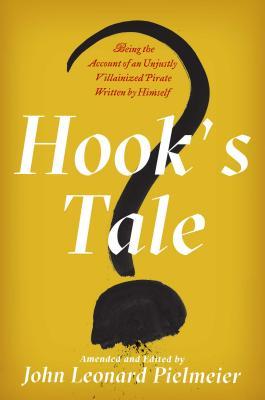
Hook’s Tale, by John Leonard Pielmeier***

HooksTalePielmeier’s debut novel gives poor, maligned Captain Hook an opportunity to share his side of the story. The teaser promises a “rollicking” story, and at first it seems to be exactly that, but it runs out of steam early on. Nevertheless, thank you, Net Galley and Scribner, for the opportunity to read and review.

At the outset, Captain James Cook (his name isn’t Hook!), named for the famous sea explorer, describes himself as looking nothing like the “unbearably pompous actor”, a clear reference to the hilarious Cyril Ritchard, who played Hook in the twentieth century complete with high heeled boots and a beauty mark; however, our pirate assures us, those periwinkle blue eyes do fit the bill. There is an assumption that the reader is well steeped in both the stage and cinematic depictions of the character, and it seems like a fair one. I love reading Hook’s fond and hugely original description of Smee, and our introduction to Hook’s pet crocodile.

“I named it Daisy, after my mother.”

Unfortunately, somewhere between the ten percent and twenty percent mark, the narrative founders, and the most frustrating part for this reviewer is that it’s hard to pinpoint exactly what goes wrong. The concept is strong, the voice clear, and yet my interest is gone before the quarter-mark is reached, and at that point I am reading for duty rather than pleasure. I came away with two considerations.

The first is the linear quality of the prose. The formal, old-school language is fun at the outset, but it might be more powerful if alternated with a present day narrative. Hook could have a grandson or other present-day relative that contributes; since Hook marries Tiger Lily, that might be a way to get there. Readers of the digital era may not have the patience to read the rather Victorian-sounding dialect all the way through. An alternating narrative would probably pick up the pace and make for a more compelling arc.

The second consideration is audience. There are two characteristics here that suggest completely different types of reader, and they don’t overlap very well, which may make for a small readership. We have the Boomers and those that came right after them, folks that may have seen the Cyril Ritchard version of Captain Hook on television. It was a childhood favorite of this reviewer, and you can watch the entire thing here:

https://www.youtube.com/watch?v=r6K2M…

The assumed knowledge and detailed descriptions jibe with this audience. But then there is the other sort of detail, the gore and guts that are more suited to a young reader, perhaps one in his early teens. Older readers may wince at the graphic gore here, decapitations and intestines and fountains of blood—I certainly did—but younger readers that are more likely to love it are unlikely to tolerate the formal prose style adopted. It’s hard to tell whether the writer had a particular audience in mind, but if so he shot wide of the mark.

Another possibility is that the story really is better as a visual medium. Reading about people flying is not as enjoyable as seeing them do it, and I say this as a person that prefers the printed word over film almost always. J.M. Barrie’s work itself is difficult to plow through, and also racist as hell; the story took wing on stage and screen. In addition, the stage version was the first time an actor had been hooked to cables and “flew” in front of a live audience; what seems like corny, ancient technology now, was new and exciting then.

All of this notwithstanding, you may love this book. It was released July 18, and is for sale now.

What I’m Reading

I’ve been experimenting with ways to share what is coming up next. Usually I put this on a different page, but then it also tends not to get seen, likely due to the absence of share buttons. Let me know what you think. Is it better to post it separately, or do you like it here?


Here are books I’ve finished reading, and as soon as a sane moment presents itself in my uncharacteristically busy domicile, you will see them reviewed here:

 This is what I am reading now; all are good, but some are outstanding. [Imaginary drum roll goes here.]