This is a super fun read. An entire small town is undone by a prison break that leaves so many townsfolk dead that those that remain mostly just move away. The chief of police is a woman that lost her family and her boyfriend, and she decides to take herself on a black op to find the guys that did the killing and remove them from the map. The town council quietly backs her by steering a Federal grant aimed toward law enforcement toward her project.
I got the audio version from Seattle Bibliocommons, and Christina Delaine does a sensational job as narrator. Cops that act outside the law are a sore spot right now, especially within the US, but Perry and Delaine drop me right into a make-believe time and place. It helps that the bad guys are Caucasian. I also like having the protagonist be a tall woman, bucking the trend toward tiny-firecracker female cops and detectives. The things she does on her mission seem more plausible for a tall woman, and Perry doesn’t knock himself out to make her seem adorable. In addition, there’s never a slow spot from start to finish, and never a moment when the mood is ruined by a detail done wrong. It’s about as perfect a thriller as you can get. Highly recommended, particularly in audio.
I had intended to read this author’s work for some time now, and collected a couple of his paperbacks that have sat unread for years. I’ve been so busy reading galleys, with the goal of being done by their dates of publication, that I read very few of the books I’ve bought for myself. When this galley came available, I figured my problem was solved; and in a way, it has been. My thanks go to Net Galley and Grove Atlantic for the review copy. This book is for sale now.
Like some other reviewers, I assumed that these short stories would be from the detective fiction genre that has made Mosely famous. As it happens, they aren’t. I could live with that; they aren’t especially compelling, but they’re not badly written. If not for one problem, I would go with three stars, or perhaps even three-and-a-half and consider bumping it up. However.
Mosely seems to have a problem regarding women. It isn’t that he hasn’t gotten the memo that women would like to be regarded as human beings; his writing gives one the impression that he simply disagrees. The first story of the collection is the title story, and it’s one of a physically large but socially clumsy African-American man that takes a liking to a receptionist where he works. His duties take him to her desk now and then, and he begins finding extra reasons to drop by. He chats with her a bit, but her response is unenthusiastic, and she doesn’t make eye contact. Believing that his intentions aren’t plain, he commences leaving a gift at her work station each day, beginning with a simple token and culminating, at the end of the week, with a Bonsai tree that costs him hundreds of dollars. She never thanks him for any of these, which confuses him. When he approaches her, she deals quickly with his work business, and then asks if there’s anything else she can do for him. His every overture is politely turned aside. Eventually, he is called into the boss’s office; he is accused of sexual harassment. The young woman he’s been trying to woo is scared to death of him, and only then does he realize that she actually can’t leave her station when he approaches her. It’s her job to be there. But he is distraught at having his reputation at work sullied, his position nearly terminated. He’s pretty sure it’s because he’s large and Black.
Huh. Well, perhaps the thing to do here, would be to not hit on women he works with. Maybe that’s the best plan for any man in any work setting, unless someone is clearly, plainly interested in him, has, for example, offered him a phone number. But I remind myself not to dismiss an author, especially one so well regarded for so many years, on the basis of a single story. So I read the others.
Indeed, the other stories don’t overtly demonstrate the same dismissiveness toward sexual harassment in the workplace, but the stereotypes never stop with this guy. Women that appear in his stories do so exclusively in relation to men. Even when they show up as mothers, their worth is in relation to their families; sons, grandsons, nephews, and of course, husbands. Women can be vixens, scheming and deceiving for their own evil ends; they can be victims. What women never are in Mosely’s stories are respected professionals, or community members, or anything else that suggests that they make a valuable social contribution that stands alone, that doesn’t bear directly on the life of whatever male character the story is really all about. It’s almost as though the last fifty years of the women’s movement and its achievements never. Fucking. Happened.
So, who wants my paperback copy of Devil in a Blue Dress? Cause now I know I won’t be reading it.
Recommended to those that love short stories and have no respect for women.
This one was worth the wait! John Hart’s new historical mystery, The Unwilling, is simply magnificent. My thanks go to Net Galley and St. Martin’s Press for the galleys; this book will be available to the public February 2, 2021. Those that love excellent fiction should get it and read it.
The French family is troubled. The father is a cop in their small hometown in North Carolina; the mother, Gabrielle, has some sort of emotional disability. Bipolar? Anxiety disorder? Who can say. All we know is that her nerves are shot, and she loses it quickly and easily. The couple have three sons; the first two are twins, but Robert, the golden one, is dead, killed in Vietnam. Jason went to ‘nam too, and rumors say that he killed 29 people there in his first year. He is rumored to be bad news and has already done a stretch in prison. That leaves the youngest, Gibson, known as Gibby. Both parents are possessive of him. As adolescence sets in, it begins to chafe, the way he is overprotected, and now that he’s a high school senior, he’d like a little more room.
And then Jason is released, and he comes home. He isn’t welcome at the family manse, so he stays elsewhere, but he wants to spend some time with Gibby before he blows town.
The title is a chewy one. Initially, I associate it with the daredevil stunt that some high school seniors—mostly boys—consider a rite of passage. It involves jumping into the quarry from a very high bluff; make the jump wrong, and you’ll be dead when you land. Gibby doesn’t jump. Jason does.
The basic framework of the story has to do with crimes Jason has done time for, and others that are committed while he’s in town. A girl he’s spent time with is viciously tortured and murdered, and many in the community make assumptions. But in reality—and we know this early on—he is being framed by a man known as “X” in prison. Truth be told, X is actually the weakest element of the story, and he’s mostly superfluous, but since this is supposed to be a thriller, the thread involving him adds suspense, particularly at the end. The climax is something else again.
But the most interesting aspect of the narrative has to do with the family, and by extension, one could say, all families. Over the course of time, a family’s story is told, and eventually labels develop. The small town setting in a pre-internet era makes this especially true, since most people’s interactions are limited to those that live in the same vicinity. And so, Robert French is the tragic hero, cut down in his prime while fighting for his country; Gibby is the baby of the family, a good kid, a good student; and then there’s Jason. Not long after the murder, Detective French speaks with the medical examiner about Tyra’s murder, and he asks the ME what would make someone do this; not just murder, but torture and mutilate. And the ME tells him that although it’s not the accepted clinical expression, “People like that are born wrong.” And though French is reluctant to say such a thing about his own son, he wonders if he should accept this as true. His wife, mother of all three sons, tells him, “Gibby is all that matters.”
But as the story progresses, we see that there’s more to this story; a lot more. Jason has simply given up trying to defend himself. Refusing to do so is why he spent time in prison. When the world gives up on you, why try? To be sure, he’s no innocent, sad-eyed puppy. He’s seen things, and he’s done things. But people are complicated, and when we try to drop them into neatly labeled boxes, we shut ourselves off from learning details that don’t fit the picture we’ve painted.
For me, this story was less about solving a crime, and more about the characters. I was thrilled that the main story wasn’t about Robert. I’ve read too many novels lately that focus on the dead sibling, and it’s becoming trite. But Hart is a seasoned author, and he doesn’t drop into that well-worn channel. Instead, we see why various well-crafted, complex characters think and act as they do. Reading it, I find myself thinking about my sisters, and the small ways in which we developed labels as children and young adults; happily, none of us was labeled the bad seed, but if we’d been boys…? And I think also of my own children. For a brief, terrible time, I saw my eldest as that person, the one dragging his sister into trouble. Later, much later, I learned it was actually the opposite, but he figured it was better if one of them was still in good standing, and so he took blame that wasn’t entirely his. It’s not a great feeling, but at the same time, my own experience made this story more interesting, and I’m willing to bet there are a great many other readers that will read this book and think about their own families as well.
There are appealing side characters here, and the most compelling is Gibby’s best friend, a kid from the wrong side of the tracks who wants to make good.
So who is the unwilling one? Is it Gibby, for not jumping off the bluff? Is it Gabrielle, for not entertaining the possibility that her son, Jason, deserves more than she is willing to give him? Is it Detective French, for not being willing to completely give up on him? You can take this title in a lot of different directions.
Hart’s literary prowess shines here. It’s not always an easy read; during the more violent patches, I took it in small bites. I received both the print and audio galleys, and I moved back and forth between them, leaning more toward the audio, whose reader, Kevin Stillwell, does an outstanding job; but at times I forgot something, or wanted to check a detail or highlight a quote, and then I dove into my digital review copy. You can go either way without fear of disappointment.
What a way to start off the new year! Chris Harding Thornton has written one of those debut novels, the sort that makes an author reluctant to publish a second book, lest it fail to live up to the first. Lucky me, I read it free; thanks go to Net Galley and Farrar, Strauss and Giroux. It’s for sale tomorrow, and those that love excellent working class fiction should get a copy right away.
The setting is rural Nebraska, for a single week in 1978. It’s one of those tiny towns where not only does everyone know everyone else, but also just about every single thing that has happened in the lives of everyone else. Or at least they think they do; gossip takes on a life of its own. We have three protagonists, and their points of view alternate, always in the third person omniscient. Harley Jensen, the deputy sheriff, opens the story; then we meet Pam Reddick, a miserable, trapped, 24 year old housewife living in a singlewide trailer with her baby and a husband who’s always working; and Rick, the man Pam is married to, who works for his father, buying and renovating old mobile homes. Now there’s a job for you.
Both of the men, Harley and Rick, are leading lives of avoidance. As a child, Harley found his mother on the kitchen floor after she blew her own face away with a shotgun. The table was set, and the gravy was just beginning to form a skin on top. Gravy boat; bare, dirty feet facing the door after she fell over; cane bottom chair, shotgun, and…yeah. So now Harley is middle aged, single, childless; he maintains a careful distance emotionally from everyone. He does his job, but he’s no Joe Friday. He maintains a stoic, lowkey demeanor most of the time, putting one foot in front of the other, so that people won’t look at him with pity, which is intolerable:
People evidently needed that. They needed to know that you could overcome a thing like what happened here and keep going. That or you were just broken—more broken than they’d ever be. That worked fine, too. The one thing they couldn’t abide was that you just lived with it. You drank and slept and did laundry with it. You waited at the DMV and clocked in and out with it.
The opening scene in which we meet Harley finds him driving his usual patrol, eager to pass the last homestead he routinely checks for prowlers, vandals, or partiers. It is his parents’ home, now derelict and unsaleable. He prefers to zip past it, but he can’t today because there’s a truck down there. Turns out to be Paul Reddick, the wily, sociopathic brother of Rick, whom we’ve yet to meet. This scene is as tense and still as the air right before the tornado hits. It’s suffused with dread, and we don’t fully understand why yet. It sets the tone for the rest of the story.
Pam Reddick is too young to be so bitter, but it isn’t stopping her. She doesn’t love her husband, and if she ever did, we don’t see evidence of it. They are married because of Anna, their now-three-year-old daughter. This fact gives me pause, since Roe v. Wade came down in 1973; abortion is legal. But then I realize, first, that the Supreme Court made a ruling, but it didn’t furnish clinics, and an out-of-the-way place like Pickard County may never have had access. Pam and Rick have so little money that a trip to the nearest clinic and the payment for the procedure was about as likely as an all expense paid trip to Europe. No, she’d have that baby all right. And she has. But she has no enthusiasm for parenting or her daughter, who looks just like her daddy. Pam goes through the barest motions of motherhood, and only that much because her mother and her mother’s friends always seem to be watching.
Rick, on the other hand, is a guy you can’t help but feel sorry for. The entire Reddick family is a mess. Their father, who is a shyster, has more or less abandoned their mother, who has mental health problems, the severity of which depends on who is talking. The whole town knows about the night when, following the murder of her eldest son, she was seen in the backyard, stark naked, burning clothing in a barrel. His younger brother, Paul, whom we met earlier with Harley, uses street drugs and steals his mother’s prescriptions; he’s been in and out of trouble most of his life. Worse still, perhaps, is the fact—and it isn’t spelled out for us, but as the narrative unfolds, it becomes evident—that Paul is smarter than Rick. Nobody tells us Rick is stupid; rather, his inner monologue fixates on the mundane and tends to turn in circles. And here, we can see also that poor Rick loves Pam and Anna deeply, and considers them the very best part of his young life; he counsels Paul to settle down, find someone like Pam so that he can have a good life, too. And while Rick knows that Pam is unhappy, he tells himself that she’s mad about nothing, that she’ll settle down. He’s working hard, and we can see that; the guy is a slob, but he’s industrious, on his back in the dirt ripping fiberglass out of an old trailer, stripping wallpaper, replacing pipes. And when he goes home, exhausted and reeking, his feet are sore and itching, and the thing he finds most soothing, and which makes Pam crazy, is rubbing his feet on the radiator until pieces of dead skin come off in strips, which he of course doesn’t clean up.
At this point, I’m ready to get my purse out and give Pam some get-away cash. I couldn’t live that way, either. The worst of it is that Rick is already doing his very best.
The plot unfolds like a burning tumbleweed descending a dry hillside, and it is masterfully written. Much of its brilliance lies in what is not said. There are probably half a dozen themes that bear study, for those so inclined. The violence and poverty are obvious, but more insidious is the way this county chews up the women that live there.
Another admirable aspect of the narrative is the restraint with which cultural artifacts are placed. We aren’t barraged with the headlines of 1978, or its music or movie actors. Thornton doesn’t take cheap shortcuts. Yet there are occasional subtle reminders: the television’s rabbit ears that have to be adjusted to get a decent picture; the Corelle casserole dish.
So, is this book worth your hard-earned money? If you haven’t figured that out by now, you’re no brighter than poor Rick. Go get this book now. Your own troubles will all look smaller when you’re done.
It’s the best of books, but it’s the worst of books. K-Ming Chang has made her mark on modern literature, and her debut novel, Bestiary, has already made a number of prestigious lists. My thanks go to Net Galley and Random House for the invitation to read and review; sadly, its twisted edginess is too intense for me.
This much-buzzed-about book is for sale now.
How many triggers are packed into this one little book? All of them. Every trigger you can possibly think of, plus she may have made a few more up on the spot. There is violence a-plenty here, and the graphic child abuse and elder abuse provide such visceral imagery that I may never get it out of my head. I abandoned this book faster than just about any I can recall, and although I was certain it was the right thing to do for myself, I nevertheless experienced a twinge of regret along with it, because it is obvious from the first page that this author can write.
My gut hunch is that younger adult readers with cast-iron stomachs and level dispositions will be the most appreciative demographic for this one, but wimps like me will need to give it a pass. It is to the former that this book is recommended.
I was bewildered at first why my fellow reviewers are so stingy with their ratings for this novel, which I fucking LOVE, but then I realized, it’s because of expectations. Those that are looking for a seat-of-your-pants thriller or heavy, heart-thudding suspense won’t find a lot of it here. However, if you love strong contemporary fiction and/or literary fiction, here it is.
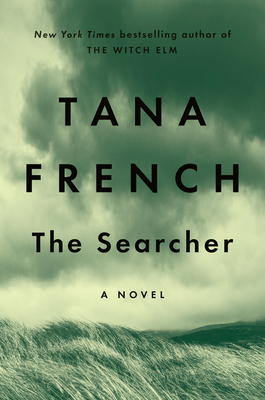
I was turned down for the galley, and so I checked out the audio version from Seattle Bibliocommons as soon as it became available. (Serious wait list; no surprise there.) I finished it this evening, and although I have other books on board, this is the one I keep thinking about. I’m particularly taken with the character named Trey, who is at least as important here as the protagonist.
That said, once again, this is not from the Dublin Street series, which I also love; it’s a stand alone novel, and an excellent one at that. I don’t want to give spoilers, but I will say this: thank you, Ms. French, for not hurting the beagles.
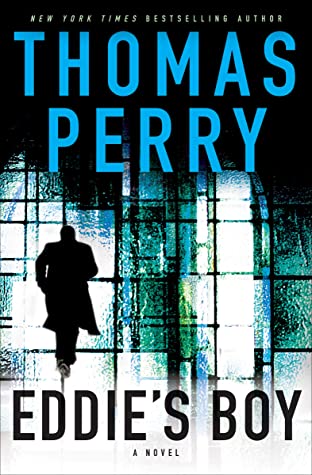
Can we talk for a minute? It’s just…well, don’t you hate it when you have to kill four assassins that were gunning for you, but then they won’t all fit in your trunk? It’s the worst; but when Thomas Perry writes about it, it’s the very best. My thanks go to Edelweiss and Mysterious Press for the review copy of Eddie’s Boy. This book is available to the public today.
This mystery is the fourth installment of Perry’s hugely successful Butcher’s Boy series. For those that aren’t in the loop, Michael Shaeffer (as he currently calls himself) was orphaned as a small child and taken in by the neighborhood butcher, who raised him as his only son. But the butcher didn’t merely cut and sell meat for the dinner trade; he had a side line that involved cutting, and otherwise killing, people that other people wanted dead. Both trades were passed on to his adopted son Michael. Now, however, the butcher has been gone a long time; Michael is an older man, retired from all of everything, and happily married to a minor member of the British nobility, living in a splendid home in the UK. They grow lovely rosebushes together.
But then in the wee hours one day, Michael is awakened by a tiny but unmistakable sound that tells him someone is entering his home. Sadly, it is not a mere burglar, but hired muscle sent by a vengeful someone that has figured out who he is and where he lives. Now Michael and his wife cannot rest until he finds out who is pursuing him and disposes of them.
This book is the caliber of the early work that made Perry famous. The suspense and pacing starts out at ten and it stays there till the thing is over. There’s a particularly heart-stopping scene on a train early on that I don’t think I’ll ever forget. And the details make it even more chilling. Returning to the four corpses that can’t all fit in the trunk; after Schaeffer moves one dead killer to the passenger seat and belts him in, he tosses a tarp over the three men in the trunk, and then he drops his flight bag on top of them, because he means to jettison the men en route to the airport.
Can you read this thriller even if you haven’t read the first three in the series? Sure you can. In fact, the third in the series was still on my wish list when the chance to read and review this one appeared, and obviously I navigated it just fine. But I want the one that I missed extra hard now, and I guarantee that once you have read this one, you’ll want to read the rest also.
Highly recommended to those that love a good thriller.
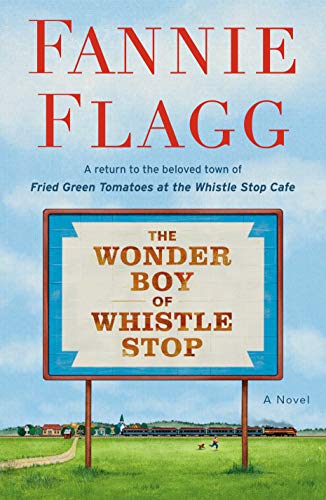
They say that old writers never die, and I hope that’s true. With her last novel, The Whole Town’s Talking, Flagg announced that she was done. It was her final novel. I was sad to hear it, but grateful to have been able to read every wonderful thing she’s ever written. She has given us so much! And then, imagine my joy when I opened my email to find an invitation from Random House and Net Galley to read and review this sequel to Fried Green Tomatoes at the Whistle Stop Café, which is possibly my favorite novel of all time. Over the moon, friends. And it’s for sale now.
The tricky part of a sequel to such an iconic story is in trying to live up to what’s come before. In this case, I don’t think anyone can. That said, this is nevertheless a delightful book, and I recommend it to you, although you won’t get the full advantage from it without reading the first magnificent book first.
The format mirrors that of the first novel, (and from here forward, I will refer to it by initials: FGTWSC,) with time periods and points of view that come from a variety of settings and individuals. Whistle Stop, Alabama is no more; the freeway passed the town by, and the rest of modern transportation and technology did the same. When we return there, it’s difficult to find; boarded up buildings, tall weeds, trash, and kudzu. In fact, the start of this book is depressing as hell, and for a short, dreadful time, I wondered if the author might be slipping; but no.
The protagonist is ostensibly—from the title—Buddy Threadgoode, son of the late Ruth Jamison. Again, I find myself scratching my head, because Flagg’s protagonists are women, girls, and women. And actually, that’s true here also. Buddy is an old man, and he’s been sent to live a Briarwood, a retirement home for the elite. His daughter Ruthie married the son of the local bourgeoisie, and consequently he’s been mothballed in the nicest possible place; but he hates it, of course. He doesn’t make a scene, but who wants to be warehoused if they can help it?
However, most of the action centers on his daughter Ruthie, and then later, our old friend, Evelyn Couch. (Friends have told me I resemble this character, and I’m good with that comparison.) Evelyn gained confidence in the first novel, much of it courtesy of Ninny Threadgoode, and now she’s done nicely for herself. Husband Ed has gone to that man cave in the sky, but she has recovered from the shock and then some. And it’s roughly halfway into the story that Evelyn enters the story in a big way, and with the groundwork well established, the story takes wing.
As with the original FGTWSC, the key to keeping up with the ever-changing settings and narrators is in the chapter headings. If you skip them, you will be lost. (This fact has been established by trial and error in teaching the book to honor students in literature class.)
Flagg is a feminist, and her work reflects her subtle but unmistakable passion for social justice. Again, with the first half of this book I feared she had lost her edge; once more, I see in the second half that I am mistaken. She was just warming up. Unlike so many of the novels I’ve read recently, this story gets better and better as it progresses. At 45%, it seems like a pleasant, harmless story, and a bit of a disappointment. At 56%, I’m sitting up straighter and noticing things. At 75% I’m laughing out loud. And from there to the finish, I don’t want it to end.
I’ve seen some lukewarm reviews for this book, and it’s understandable, in a sad way, because those reviewers are weighing this book against its predecessor. And no, this one isn’t quite as brilliant as the first, but if I deny the fifth star on that basis, then I need to go back and weed out at least 96% of the other five star reviews I have written, because FGTWSC is a matchless novel. If instead I weigh this story against those others, it stands up proudly.
When push comes to shove, I think all of us need a feel-good story like this one—which it is, despite the sorrowful beginning—all of the time, but now more than ever. Civic engagement is important, but stepping away and restoring oneself is every bit as crucial. Do yourself a favor. Switch off your news feed for a couple hours and snuggle down with this book. You’ll be more effective later for having given yourself time to recharge now.
Allende has long been one of the writers I admire most, one of the few novelists to gain permanent space on my bookshelves. Her stories are distinguished by her devotion to social justice issues, particularly in Latin America, and to feminism. She’s known in particular for her use of magical realism, which I confess makes me a little crazy when she imbeds it in her nonfiction titles, and also her wry, sometimes subtle humor. Much of what she writes is historical fiction, as it is here, and she is a stickler for accuracy. Her research is flawless. She has prestigious awards from all over the world. Literature teachers love her.
My thanks go to Net Galley and Random House Ballantine for the review copy. This book is for sale now.
In A Long Petal of the Sea, she takes on a particularly ambitious task, creating a fictional family and charting its course from Spain following the failure of the Spanish Revolution, to Chile, to other points in Latin America, and then back to Spain once more. There are a lot of characters to keep track of, with different threads for each that separate, then braid together again and so on. There are at least three generations here, but primarily the story is Roser’s.
It’s a well written story, though it is also the sort of literary fiction that takes a fair amount of stamina. If you’re in search of a beach read, this isn’t it. I confess I didn’t enjoy it as much as I often enjoy Allende’s work, but I also believe it’s unfair to judge an author solely by what they have already written. If this was the first book by this author that I had ever read, I would give it five stars, and so that is what I’ve done.
My one disappointment is that we don’t learn more about the Spanish Revolution and the Spanish Civil War. This is an event that’s very difficult to find in quality historical fiction and literary fiction, at least in English, and I was excited when I saw this book was based on it. Then by the 25% mark, we’re out of Spain and it leaves me sad, because I wanted to know more about that period and place. I also missed the usual Allende humor, which she uses in other books to break up tense passages and shoot down sexist behavior in her characters; her last book, In the Midst of Winter, made me laugh out loud more than once. That humor is in short supply here. The feminist moxie, however, is in splendid form, and the class and internationalist perspectives that I treasure are alive and well.
A book should be judged on its own merits, and I’ve done that, but I want to add a shout out to an iconic writer who’s still publishing brilliant, ambitious books at the age of 78. My own goals for that age, should I be fortunate enough to see it: I’d like to be breathing; to be able to see and hear most of what’s around me; and I’d like to not be completely crazy. Publishing great literature? Perhaps not. I am delighted that Allende can do this, and I hope she has more stories in the works.
A note on the audio version: I supplemented my review copy with an audiobook I found at Seattle Bibliocommons. It’s an approachable way to get through a complex, multifaceted story, but I don’t like the way the reader voices the elderly male character. The harsh, guttural-sounding tones are too near to a stereotype. Happily, the story is mostly Roser’s, but the unfortunate noise pops in fairly regularly all the way through, and it makes for a less enjoyable listen. For those with the time and inclination for the print version, it may be your better choice.
For those that love epic historical fiction, I recommend this book to you, although if you haven’t read Allende, also consider some of her early work.
When I requested the galley for this book, I was taking a chance. I do love good historical fiction, but I seldom enjoy a cozy mystery, and this story is but a whisker away from being one. I was afraid the story might be cutesy instead of quirky, cloying instead of life affirming. And how delightful it is to be wrong! I received my copy free and early, thanks to Net Galley and Harper Collins. It’s for sale now.
The premise is that Tilda has returned to the town where she and her mother lived after her parents separated. She was an only child, and her mother is dead, and so it falls to Tilda to tie up the loose ends of her mother’s small estate. And at this point, my snark is already peeking its beady eyes out, saying Oh geez, another story that starts with an only child cleaning up the estate. Lots of those lately! And a mean mother? That’s got to be my number one eye-roller right now! And I tell you these things, reader, because it underscores what a job Hogan had ahead of her in order to break down my resistance; and yet, she did.
The narrative is divided into two points of view which alternate. The first is young Tilly, the little girl that doesn’t understand what is happening between her parents, and is devastated when her father moves out. The second is the adult Tilda, whose capacity for trust in other people is limited.
The first part of the book is a hard read in places, because Tilly is in so much pain, and it feels drawn out, although one could argue that time passes more slowly when we are young. Tilly’s parents are always quarreling; then her daddy moves out, and Tilly, who was a daddy’s girl, takes out all of her hurt and rage on her mother. Her mother is brittle and not very stable, and she’s at wit’s end. First they move from the house where the family had lived to the hotel in the title; then, against her wishes, Tilly is sent off to boarding school. Tilly had loved living at the hotel and didn’t understand why she was exiled.
Tilda learns what her mother was thinking when she finds and reads the journals that her mother had left for her, and again, it’s not exactly an original device on the author’s part, but it’s done so well that it doesn’t matter. Tilda also finds one of her mother’s old friends, and she learns some things that way as well. There are some genuine surprises that are also believable and fit the characters and setting. It’s artfully done.
As to the quirky bits, they are what makes the story unique and successful. For starters, Tilly (and Tilda) see ghosts, not just now and then, but in some cases regularly. Let’s take, for example, the little dog named Eli. Not everyone can see Eli; Tilly can, and some others can as well, but most cannot. And our suspicion that Eli is not a corporeal critter is affirmed by the fact that decades later, this woman still has exactly the same dog, and he is as spry as ever.
Then—and I have saved the best for last—there’s the child’s narrative. Tilly explains things to us in the language, and with the frame of reference, of a small child of six or seven years. She is a bright girl, but she’s a child, and so her explanations for things are often a bit twisted, and her conclusions are often far-fetched ones that are based on the limited amount that the girl understands. My favorite bits are the mondegreens, and there are many. (A mondegreen is the word or phrase that results from someone that hears words that aren’t in her vocabulary, and thus replaces them with words she does know; one well known example is the American Pledge of Allegiance, starting with “I led the pigeons to the flag.”) My favorite of Tilly’s mondegreens is when she attends church and sings “The Old Rubber Cross.” And the thing I love most about Tilly’s mondegreens is that Hogan doesn’t explain them or beat them to death; she drops them in and then moves on as if nothing unusual has occurred.
I started reading this book using the review copy provided me, but because I was running behind, I checked out the audio version at Seattle Bibliocommons when I was a short way in, and I alternated versions. I especially want to give a shout out to Jane Collingwood, who reads the audio version. I can think of no more challenging narration than that of a child. Collingwood had to sound like a little girl half the time, but nobody wants to hear an actor’s version of baby talk at all, and surely not for half of a novel, so she has to walk a very fine line, not sounding like an adult, but also not sounding inane. On top of that, she must also voice the adult version, sounding like the same child, except grown up. It’s a tricky assignment and she carries it off perfectly; I tip my hat to her.
The ending is optimistic, yet credible. Those in need of a feel-good story—and there are an awful lot of us that do, right now—could do a whole lot worse. Recommended to those that enjoy quirky novels and historical fiction.





 Seattle Book Mama