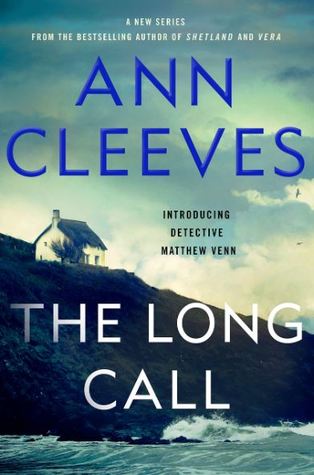
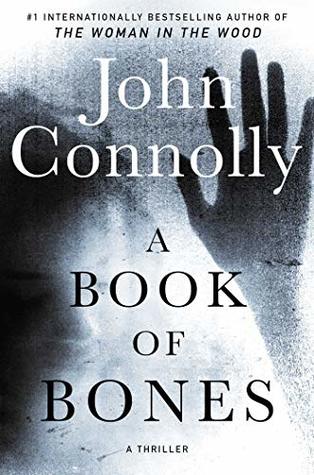
It’s a rare book that I find abrasive right out of the gate, especially since there are no controversial social messages here, just a mystery that I didn’t like and didn’t finish. Thanks go to Crown Publishing and Net Galley for the review copy, which I received free and early in 2017. I should have written a review long ago, of course, but I found it hard to reconcile my antipathy for this story—a debut, no less—with the nearly unanimous adulation expressed by other reviewers. I am still a bit bewildered, but there it is.
This is a book that tries too hard. There are too many cutesy nicknames, and the structure of the plot feels gimmicky and formulaic, as well as mighty unlikely. Of course, most mysteries have aspects that are unlikely because most real-life murders and other mysterious doings have logical, obvious, dull explanations. We agree to pretend the murder mystery is plausible in exchange for being entertained. The problem is that I wasn’t, and so I couldn’t.
Two other factors that contributed to my grumpiness were the overwhelmingly male list of characters, and the cultural collision between British fiction and my brain. I’ve read and enjoyed some British fiction; if not, I wouldn’t have requested this galley. But here the culture and jargon are thick on the ground, and the inner narrative feels endless.
I no longer have to be concerned that I will crush this author’s hopes and dreams; Tudor’s debut is a huge success both in terms of sales and the corresponding enthusiasm of its readership. This author has gone on to publish more books, and I have had the good sense not to request those this time. Ultimately this came down to taste more than anything else, but I have to call ‘em as I see them, and I found nothing to love, apart from a compelling jacket and an attention-getting title.
Cassie Chambers was born and raised in Owsley County, Kentucky, the poorest county in the United States. With the determination handed down to her by her mother and grandmother, she attended Ivy League schools and became a practicing attorney. This memoir is her story as well as a defense of the women from her homeland, a manifesto opposing stereotypes and misconceptions. I read it free and early thanks to Net Galley and Random House Ballantine. It will be available to the public January 7, 2020.
Eastern Kentucky is in the heart of Appalachian Mountains, and its residents are stereotypically called hillbillies by outsiders. As a scholar whose childhood was rooted there, Chambers is in a unique position to share the culture’s nuances and strengths. She was raised by parents that had to save up to buy her a set of Old Maid cards from Walmart; going out to dinner, which happened Sundays, meant a single Happy Meal at McDonald’s shared three ways. But her mother’s determination to graduate college drove home the value of an education, and when Cassie had the opportunity to spend the last two years of high school at a boarding school for high achieving students, she leapt and her family supported her.
Chambers’ narrative is intimate and deeply absorbing. She weaves her own story into the larger story of Appalachian women: their culture, their history, their strengths and the challenges they face. She discusses the difficulty of receiving public services in an area that is spread out among hills and hollers, devoid of transit and low on personal transportation, and that has no government buildings to speak of; she also describes the pride that sometimes prevents its residents from accepting help for which they are qualified. She has a bottomless well of riveting anecdotes that illustrate the sense of community and willingness to lend assistance to neighbors in need even when those offering help have nothing extra to give; the Justice system often fails those that need protection from domestic abuse, as well as those addicted to drugs and alcohol. And she discusses remedies, including Jeanette’s Law, which reverses Kentucky’s absurd legal requirement that victims of domestic abuse must provide the spouses that they are divorcing with an attorney at their own expense. This was one of Chambers’ most important projects. Another is having expungement fees waived for low income residents, an especially urgent matter since in Kentucky, felons aren’t allowed to vote. Democracy is sidelined when class and race become obstacles to participation in civic life.
But the most memorable tidbits are the more personal stories, for example that of her Aunt Ruth, who married late in life. Before they were wed, Aunt Ruth had a conversation with Sonny, her husband-to-be, in which she explained to him carefully that if he ever hit her, she would be forced to kill him, in his sleep if necessary, using a large claw hammer, and so if this was likely to be a problem then the wedding should be canceled. (It wasn’t.)
The best memoirs combine a social issue or political problem with a personal story told by a top-drawer storyteller, and Hill Women succeeds richly in both regards. I recommend this book to women everywhere, and to those that love them.
By now, nearly everyone that loves reading has heard of this debut novel by one of the century’s most celebrated writers. Not every strong journalist can also write fiction, but Coates can. I read it free and early thanks to Net Galley and Random House. It’s for sale now.
The concept is a strong one. Why have we seen so little historical fiction set during the period just before the American Civil War and from the point of view of a slave? In an earlier essay Coates has pointed out that African-Americans need to reclaim this time period, that shrinking back from studying it is in a way a concession that shouldn’t be given. That’s the perspective on which this novel is built. It isn’t an easy read by any means; readers need strong literacy skills and a cast iron gut. The level of pain and violence—especially at the outset—is wrenching, and it should be. I took a long time to read this book because I could only swallow it in small portions. You may not want it for mealtime or bedtime reading.
Our protagonist is Hiram Walker, and he is the progeny of an enslaved mother and the plantation’s owner. Hiram is strong, capable, and attractive. When his father pulls him from the “tasked” and brings him home, other slaves warn him to be on his guard; he will never be considered a full member of this family, and he’ll never be considered an equal with Maynard, his Caucasian half-brother whose work ethic, talent, and intelligence could fit together in a thimble with room to spare. Hiram is assigned to prevent Maynard from going off the rails; however, since the authority runs in the opposite direction, Hiram is ultimately unable to save Maynard, who drowns after overindulging.
Hiram has an unusual gift, a supernatural talent that lends interest to the story without becoming its central focus.
Ultimately our protagonist is going to have to run for his freedom. During the years just before the Civil War, owners of large plantations in Virginia and the Carolinas find themselves in desperate straits. The land has been badly over farmed, and both cotton and tobacco are demanding crops. The soil is used up; farmland that once produced bountifully is no longer productive. The solution that most of the large owners seize is to expand their holdings westward. Vast numbers of slaves are either sold and sent to the deep South “Natchez Way” or moved there to work for the same owner on different land. Those that go are treated severely, and their families are fragmented without a moment’s hesitation. While some slaves were able to negotiate for their own manumission in earlier years, this option is no longer on the table. Coates does a stellar job keeping this aspect of his story consistent with historical fact.
Hiram’s escape is ultimately successful after a number of nightmarish experiences, but he is persuaded to return and to assist in the Underground Railroad, and he does so partly with the goal of freeing those that mean the most to him. Along the way he meets Harriet Tubman, and the way Coates depicts her is credible and fascinating. But the thing I love most, apart from the story’s basis and the eloquent word-smithery that shines here and there, is the way Coates condemns the hypocrisy, the culture of the slaveowner that makes the most horrible men able to look at themselves in the mirror and like what they see:
For it is not simply that you are captured by slavery, but by a kind of fraud, which paints its executors as guardians at the gate, staving off African savagery, when it is they themselves who are savages, who are Mordred, who are the Dragon, in Camelot’s clothes. And at that moment of revelation, of understanding, running is not a thought, not even as a dream, but a need, no different than the need to flee a burning house.
My one concern is with the dialogue. This historical tale will spin along beautifully, but then one person will tell another, “Trust me on that,” or “Sounds like a piece of work to me,” and the effect this has on me as a reader is that the spell is broken, and I am no longer transported to the time and place of the story. And to be sure, everyone that writes historical fiction has to decide how much language of the period to use, and when to use current grammar and sentence composition so that the modern reader can follow it. But this is something that jumps out at me at the beginning, in the middle, and even at the end. I tell myself to forget about it and I immerse myself in the story once more, but then there it is again. No other reviewers seem to have noted this, but a part of me thinks that the braver course would have been for Coates to write this story under a pseudonym, because I suspect that without the famous name attached to it, more genuine criticism about this single, pervasive glitch would have been forthcoming.
Be that as it may, this is one hell of a fine story, and it’s told just when readers need to see it most. I recommend it to you without reservation.
The quality that distinguishes Cha from other top-tier mystery writers is her absolute fearlessness in using fiction to address ticklish political issues. Your House Will Pay is impressive. I read it free and early thanks to Net Galley and Harper Collins. I am a little sick at heart that I’m so late with my review, but this book is rightfully getting a lot of conversations started without me. It’s for sale now, and you should get it and read it.
Our two protagonists are Grace Park and Shawn Matthews. They don’t know each other, but their families intersected one critical day many years ago. The Parks are Korean immigrants, the owners of a small pharmacy. The Matthews family is African-American, and they have never stopped grieving the loss of sixteen-year-old Ava, who was shot and killed one evening by Grace’s mother in a moment of rage and panic. The other thing shared by Grace and Shawn is that both were quite young when it happened. Shawn was with his older sister when she was killed and has memories of what happened; Grace has been shielded from the event and knows nothing about it until the past opens itself up in a way that is shocking and very public.
The story alternates between the initial event, which happened in the 1990s, and today; it also alternates between the Park family and the Matthews’. The development of the characters—primarily Grace and Shawn, but also Shawn’s brother, Ray and a handful of other side characters—is stellar. Throughout the story I watch for the moment when the narrative will bend, when we will see which of these two scarred, bitter families is more in the right, or has the more valid grievance. It never happens. Cha plays it straight down the middle. Both families have been through hell; both have made serious mistakes, crimes against one another. And ultimately they share one more terrible attribute: both families have been callously under-served by the cops and local government, for which relatively poor, powerless, nonwhite families are the dead last priority.
Cha bases her story on a real event, and she explains this in the author’s notes at the end of the book.
As a reviewer, I am closer to this than many will be: my family is a blend of Caucasians, Asian immigrants, and African-Americans. I read multiple galleys at a time, shifting from one to another throughout the reading parts of my day, but it is this story that I thought about when I wasn’t reading anything.
The first book that I read by this author was from her detective series. When I saw that she had a galley up for review, I was initially disappointed that this wasn’t a Juniper Song mystery, but now that I have seen what Cha is doing and where she is going with it, I see that this had to be a stand-alone novel. There isn’t one thing about it that I would change.Highly recommended to those that love the genre and that cherish civil rights in the U.S.; a must-read.
I had never read this author’s work before, but went looking for it after reading raves about it from online friends. Thanks go to Net Galley and Scribner for the review copy, and to Seattle Bibliocommons for the audiobook that helped catch me up when I found I’d fallen behind. This book is for sale.
Evie Cormac–whose real name is unknown–is a patient in a children’s psych ward. She was found emaciated and filthy at the scene of a violent crime; it’s believed she was kept hostage, though she won’t deny it or confirm, or talk to anyone about it. Cyrus Haven, a psychologist that looks to become a recurring series protagonist, has his own tragic past. When Evie applies for emancipation, Cyrus offers to bring her home as a foster child until she can live alone. Everyone tells him it’s a crazy thing to do.
Meanwhile, a very different girl has been murdered. Jodie Sheehan had a golden future; a championship figure skater, she was locally famous and appeared destined for great things. Instead she was found murdered not far from home. Who the heck would do such a thing? Jodie had no enemies. Police are baffled.
Throughout this tautly written novel I found myself waiting for big reveals. What connection can there be between Evie and Jodie? Who is Evie really?
The thing I admire about this story is the restraint Robotham shows. A more formulaic writer would twist things around and then hit us with all sorts of deep though wildly unlikely ties between the two cases. He doesn’t do that. I expected the big dramatic scene in which Evie spills everything; he doesn’t write that scene. I’ve probably read a few too many novels of mystery and suspense lately, and I was in the mood to roll my eyes. That eye-roll had to wait for a different book and author, because I believed most of this story, and Robotham had shown excellent taste in keeping the reveals minimal.
Here’s the one thing that makes my eyebrows twitch; it’s the same issue I sometimes have with Jonathan Kellerman’s Alex Delaware books, which I like a lot. Psychologists don’t race around conducting independent investigations, confronting possible perpetrators, and interviewing people t hat don’t want to talk to them. And sure as hell, psychologists don’t wear bulletproof vests.
But those of us that like these stories agree to suspend disbelief given half an excuse, because a psychologist’s ordinary job—interviewing truculent teens in an office, perhaps, or making hospital rounds—is not nearly as much fun to read about as is a psychologist-as-detective protagonist. There were a couple of times toward the end where I made little frowny notes in my copy, but for the most part I was on board. Robotham takes us deep inside Cyrus’s head, and the more I felt I knew the character, the more I was able to believe the narrative.
Should you read this book? Sure, why not? It held my attention quite nicely, including during my loathsome hours on my exercise bike. I would happily read this author’s work again. Recommended to those that enjoy the genre.