
 Amy Engel makes her debut as a writer of adult fiction with this title, having begun her career writing fiction for young adults. The Roanoke Girls is smoking hot, a barn burner of a book, diving into some of society’s deepest taboos and yanking them from the shadows into the bright rays of Kansas sunshine, where the story is set, for us to have a look at them. It’s not available to the public until March 7, 2017, and frankly I don’t know how you are going to wait that long. I received a DRC for this title from Net Galley and Crown Publishing for the purpose of a review.
Lane grows up in New York City, raised by a mother that shows no sign of warmth or affection, a woman that seems to either cry or sleepwalk through most hours of most days. When she hangs herself, Lane bitterly wonders what took her so long. But then a surprise comes with the social worker assigned to her case. It seems there are grandparents in Kansas, who not only are willing to have Lane, but that actually want her.
Soon Lane finds herself being driven up the private drive to Roanoke, the family manse, a rambling, welcoming hodgepodge of a house, complete with a same-age cousin waving with manic joy from the front porch. Allegra is spoiled, and now Lane will have all the same luxuries. The ostensible farm on which they live is more of a gentleman’s farm, as it happens; the real money comes from oil. And so Lane, who has scraped for every scrap of clothing and food alongside her struggling mother for 16 years, suddenly has the whole world at her beck and call. Allegra takes her to their grandfather’s study and shows her where all the credit cards are kept, and she assures her this is not something they are sneaking or stealing; it is assumed that if they want something, they can buy it.
It seems almost too good to be true…and it is.
There is so much simmering just below the surface, unspoken but thick and almost tangible. Take, for example, the portraits of the Roanoke girls that have gone before them, whose photographs line a main hallway. The collection begins with Grandfather’s sisters, continues with their daughters, the mothers and aunts of Lane and Allegra. What has become of all of them? Allegra explains:
“Roanoke girls never last long around here…In the end, we either run or we die.”
Lane’s picture isn’t included among those in the hallway, and she isn’t sure she wants it there. And as time goes by and the contours of the family’s pathology become clearer, Lane decides it’s time to save herself, and she hits the road, covering her tracks to the best of her ability. She stays away until ten years later, when her phone rings. Her grandfather tells her that Allegra has vanished; they need Lane to “come home” to help the family search for her.
Lane’s interaction with her grandfather is mesmerizing. When he calls her with the news of Allegra’s disappearance, the first thing she asks is how he got her number. Yet once she is back in the Roanoke house, she recognizes that
“…behind the secrets and the horrible truth, under the shame and anger that beat like a heart, there still lives a terrible kind of love.”
The fascinating, intimate narrative Engel weaves is a thing that can’t be taught. There’s no degree, no series of workshops that gives a voice such clear authority. She plays out the story’s thread in careful increments, and the bone-c hilling tone is heightened rather than lessened by the fact that we have a very good idea of exactly what happened to Allegra. I know whodunit halfway through the book, but it doesn’t matter. The author binds me to Lane’s story in a way that is completely undeniable, and I have to see this thing through with her. Toward the end of the book, instead of commenting to myself about aspects of the book or particularly compelling passages to quote, I’m engaging with the text itself. More than once my notebook simply says, “No.”
The reader should know that there are triggers all over the place. Those that are in a sensitive place may want to have someone else read the book first and tell you whether they recommend it to you. But for those that want a chiller of a mystery, and for those that care about women and the ways that society turns people into products for consumption, this is a must read. Or you could just read it because it’s brilliant, and no one else is writing anything like it.
 I rate this 4.5 stars and round it upward. Thanks go to Kensington Publishing and Net Galley for the DRC, which I received in exchange for this honest review. This courageous novel, one that takes place in the past but couldn’t be more timely, is going to create a lot of buzz. Get your marshmallows ready, because I think I smell hot tar and burning wood…or is it paper?
 Fannie Flagg is legendary, and rightly so. In fact, at one point in my reading of this DRC, I reflected that someone with her power to move people has power indeed; how fortunate that she uses her gift to benefit the rest of us. I don’t know about you, but I am ready to read something that provides a level of reassurance that all has not gone sour in this world, and that everything passes, sooner or later. I was fortunate to read this free and in advance thanks to Random House and Net Galley, but it’s one of the very few books for which I’d have paid full freight if it came down to it. It hits the shelves November 29 and is available for pre-order right now.
 “Hot flashes are rolls of unreasonable, unseasonable heat that create a rush—a flush that floods the face from neck to hairline. A hot flash is itchy, prickly and provocative—like a sudden spike of fever that produces a mean and cranky irritability.”
 If I were to review the subject of this memoir rather than the book itself, it would be a slam-dunk five star rating. As it is, I can still recommend Carmon’s brief but potent biography as the best that has been published about this fascinating, passionate justice of the Supreme Court of the United States. I have no doubt many more will follow, and it’s possible I will read every one of them. As it stands, this is a rare instance in which I turned my back on my pile of free galleys long enough to ferret this gem out at the Seattle Public Library, because I just had to read it. You should too.
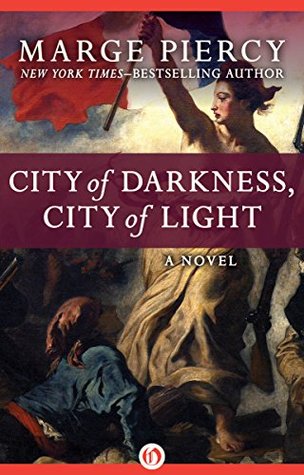 Piercy is a legend among feminists, and her writing was pivotal in my own development during the late 1970s and early 1980s as a newly-hatched adult. When this title, a novel based on the French Revolution, came out in 1996, I put it on my Christmas list and read it hungrily once I received it. When I noticed that it was released digitally this spring, I scored a digital copy from Open Road Integrated Media and Net Galley in exchange for this honest review. It’s a novel that is definitely worth reading twice.
 Fearless women change history.
 Flo Kennedy was a force to be reckoned with, dismissed by a portion of mainstream Caucasian America as a kook, yet far too clever, too cagey, and too damn smart to be wished away by those that wanted to defend the racist, sexist status quo. When I saw that a memoir of her life was up for grabs at Net Galley I requested a copy immediately, and then took a long time to finish reading it. Part of my tardiness is a stubborn dislike for the PDF format, and so I apologize to University of North Carolina Press and my readers for being so slow; yet a small part of it was the surprisingly dry quality of the memoir. Given the subject, I had expected this biography to set my hair on fire.
 Oh hey, today is Seattle Book Mama’s second birthday! Break open a bottle of sparkling water and toast my humble blog. I’ve done a lot of reading, and so much more is to come.
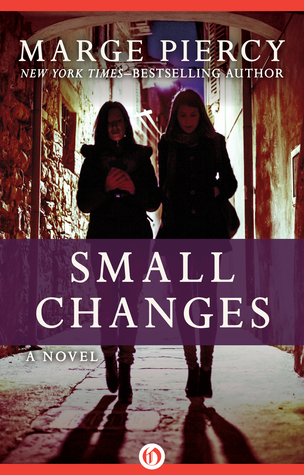 This title was originally published in 1973 during the second wave of feminism that followed the US Civil Rights movement, and then the anti-war movement against the US invasion of Vietnam. Marge Piercy is a prominent veteran writer who spoke to women’s issues during that time and in years to follow. She doesn’t need my review, and neither does Open Road Integrated Media, I suspect, but my thanks go to them and Net Galley for letting me reread this wonderful novel digitally. I received this copy free in exchange for an honest review, but the reader should also know that I came to this galley with a strong, strong affinity for Piercy’s work already, and my bookshelves are lined with paperbacks and hard cover copies of her books. But they are thick and sometimes heavy to the arthritic hand, and it’s a joy to be able to read them on a slender electronic reader. It was released digitally April 12, 2016 and is available for purchase now.
