
 Tara Westover’s memoir has created a lot of buzz, and all of it is justified. It’s the story of one woman’s journey from a fundamentally loving yet untenable home life, to the civilized world she has been raised to fear. Each chapter focuses on one meaningful event in the author’s life, and it’s told with sensitivity, grace, and yes, also a sprinkling of rage, because how can she not? But all told, Westover permits the balm of time and distance to balance her perspective. This book is for sale now, and it’s going to be read for a very long time.
I received my copy of Educated free and early, thanks to Random House and Net Galley. That said, if you have to pay full jacket price for this book, your money will be well spent.
Westover grows up in a large family that is nominally Mormon (Latter Day Saints, or LDS), but she and her siblings are denied the tight-knit communal bond that most members of that faith experience. Their father is deeply suspicious of the outside world including other church members, and as his pathology grows, they are increasingly isolated. Basic social expectations such as personal hygiene and clean clothing; inoculations against deadly diseases; a birth certificate; and an understanding of how to navigate within the greater society are denied her, as Dad’s survivalist views kick into gear. She is told the story of Ruby Ridge from the time she is tiny, but grows up believing this is an event that has happened to her own family, and that Federal agents might break into her own home at any time.
Veteran teachers like me are fascinated by the differences in how students process traumatic events, and Westover is a strong case in point. Some students experience the death of a beloved grandparent or divorcing parents, and they come undone and aren’t able to function normally for several years. Then there are remarkable young people like Westover that experience horror after horror exponentially and yet somehow, with little external assistance, they are able to claw themselves free of the rubble and become high achievers.
As Westover leaves home against the strident objections of her father, she struggles to reconcile the wider world with everything that she has been taught from the cradle, and she also struggles to win her family’s forgiveness and acceptance. As she is battered, sometimes physically, by one cruel rejection after another, a friend asks her, “Have you ever thought maybe you should just let them go?” And yet, for Tara, this is unthinkable.
There’s a lot of gritty material here, along with a number of experiences that are just weird, such as Tara’s brain-damaged mother becoming a local folk hero with her own brand of witch-doctor medicine. There are also moments of dark humor that break up the misery and terror, along with an occasional kind or enlightening act on the part of a family member or member of the public that is able to wink through for a brief time in Tara’s life. But ultimately the thing that makes it possible to wade through the nightmare that constitutes much of Tara’s childhood is our knowledge, set within the book’s title and author description, that she will emerge triumphant.
Westover tells us that the bizarre system of beliefs and taboos practiced by her family are not typical of Mormon families, and in fact a bishop that counsels her once she arrives at Brigham Young University tries to help her separate herself, to some degree, from the madness that awaits her at home during school breaks. This reviewer grew up alongside a number of Mormon classmates, and I have to agree that none of the things Westover’s parents brought down on her and her siblings is attributable to that church. That’s not how they work.
I highlighted dozens of passages that range from the wry, to the stupefying, to the outrageous, but when all is said and done, each is better when read within context. Go out and get this book. You won’t be sorry, and at the end of it, you’re almost guaranteed to look at your own family in a gentler light.
Interview with Westover: https://www.cbsnews.com/video/tara-westovers-journey-from-off-the-grid-childhood-to-cambridge/
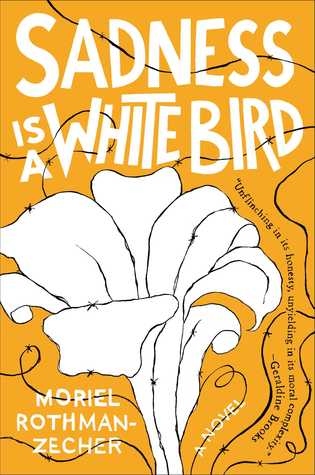 Jonathan grew up in the United States, but now his family is in Israel, the land of his mother’s birth. He’s visited Auschwitz where much of his family died, and he can’t wait to turn eighteen so that he can train to be an Israeli paratrooper. Enough with being ‘people of word’, he figures; he wants to be a Jewish warrior, the ‘people of the sword,’ and exact some payback. A friendship with two Palestinian teenagers complicates his life in ways he didn’t expect. I received an advance review copy of this exquisitely rendered story free, courtesy of Net Galley and Atria Books in exchange for this honest review.
 I wanted to see what all of the buzz was about, and now I know. Kristin Hannah has a fresh, authentic voice that transports her readers to a completely different time and place. The Great Alone, set in Alaska in 1974, made a believer of me. Thanks go to Net Galley and St. Martin’s Press for the ARC, which I received in exchange for this honest review.
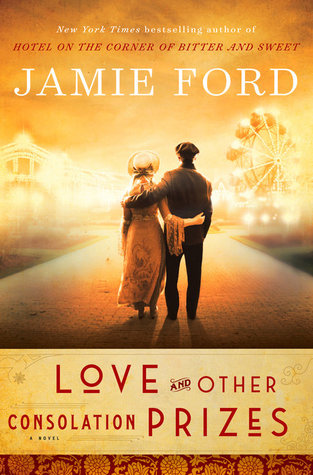


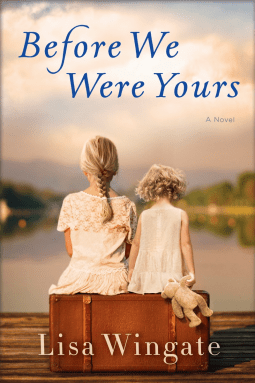 Lisa Wingate is an established author, but she is new to me. I received this DRC free and early, thanks to Net Galley and Random House Ballantine; it is available to the public Tuesday, June 6, 2017. And although I would love to tell you to run out and buy it right now, in all honesty I have never felt quite so ambivalent about a novel, at least not in recent years. There’s so much that’s good here, but there’s also some terrible material—albeit brief—that any sensible editor would have to question, and that every reviewer that’s paying attention has to notice.
 Here is a story for our time. It’s fresh, moving, fall-down-laughing funny in places, and has the best character development I’ve seen lately. I was growing cranky from having to pan other people’s bad books, and I requested this DRC from Net Galley and Sparkpress almost as an afterthought; then it nearly knocked me off my feet with its voice and sheer creative power. It was published last week, and you should get it, read it, and then make other people do the same thing. It’s that strong.
 Seattle Book Mama