The Love Elixir of Augusta Stern*****

Augusta Stern is about to turn eighty, and she’s being forced into retirement, darn it. Her beloved niece persuades her to leave New York and spend what remain of her golden years in a Florida seniors’ community. From there, a wave of surprising events unfolds, changing Augusta’s life.
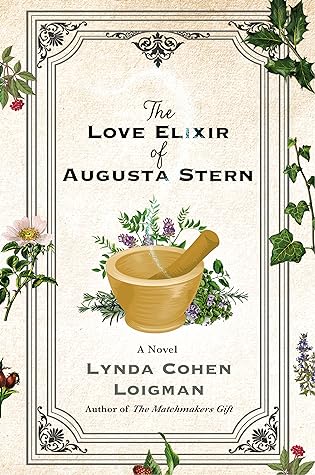
My thanks go to NetGalley and St. Martin’s Press for the invitation to read and review. This book is for sale now.

Loigman’s debut novel came in 2016, and as of now, she’s published three more. Every single one is golden. This author writes with warmth and intentionality, and although the first was wonderful, each subsequent one has been better than the last. And so, although I have gone on to read other novels by other authors since I finished this one, this is the one I’m still thinking about.

You see, in 1922, Augusta’s mother became gravely ill. Try though they might, neither the doctors nor her pharmacist father were able to help her, and she died. Augusta, her sister, and her father were all plunged into a dark and terrible place without her.  Great Aunt Esther showed up to run the household, and she brought with her a case full of herbs and tinctures; Esther was an apothecary. Her methods, which were sometimes unconventional, put her at odds with her nephew, but they got results, sometimes where conventional medicine had failed. Soon Augusta was spending her hours after school helping her father in the pharmacy, and sneaking out of bed in the middle of the night to observe Esther devising natural concoctions of her own. Esther declared Augusta to be her heir; she had a loving heart and a healer’s instincts.

Her social life was very limited, absorbed as she was with the family business, but the brightest spot in her day was when Irving Ripken, her father’s delivery boy, came to work. Often, they would talk as they worked; in time, they fell in love. Imagine her horror, then, when he abruptly married someone else and moved to Chicago! Augusta never recovered from the blow, and so she has never married.

Now, imagine her astonishment when sixty years later in Rallentando Springs, Irving shows up at the pool!

Much of what follows is what a reader might expect, but the details and character development take the story to a higher plane, and as we follow it, we also see the events of 1922, and these enable us to understand these characters and what drives them. There’s an unusually clever twist at the end, and it’s one that I absolutely do not see coming.

Ordinarily I would include ways in which the novel fell short or could be improved, but that’s impossible in this case. Loigman has spun magic for us from start to finish, and all I can do is bow in appreciation, and recommend this novel to you.
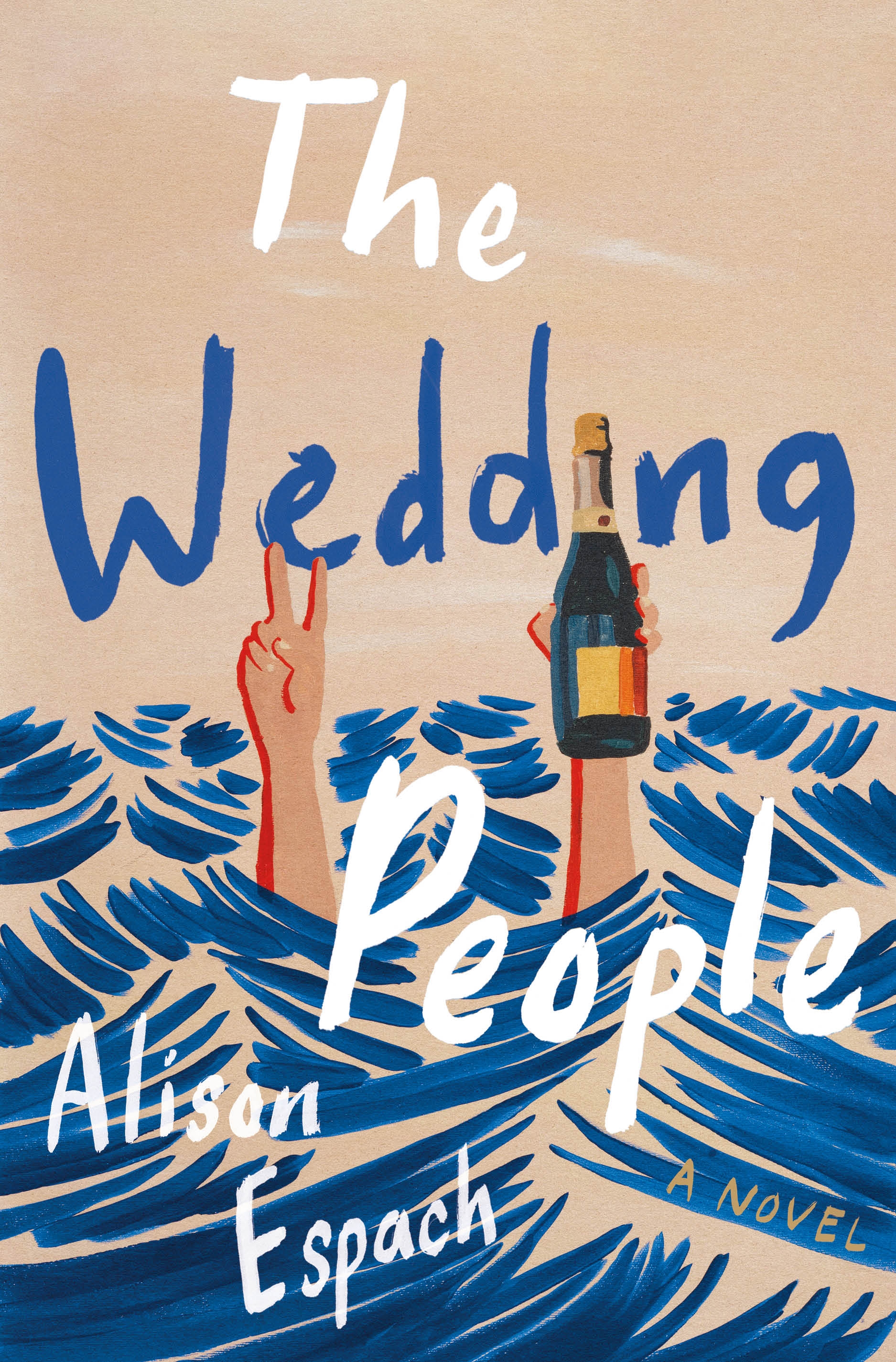
The Wedding People, by Alison Espach*****

It’s a good sign when I finish reading a book, and I’m smiling. Alison Espach’s new novel, The Wedding People, not only left me smiling at the end; it made me laugh out loud almost from the get-go, and it will do the same for you.

My thanks go to NetGalley, Henry Holt, and Macmillan Audio for the review copies. This book is for sale now.

I’m not usually fond of romances, but a friend mentioned the premise of this one, and I couldn’t resist. In a nutshell:  Phoebe, the protagonist, worn down by the pandemic and devastated when her husband leaves her, heads off to the posh hotel where they’d intended to spend their vacation. She takes no luggage or even her phone, because she plans to kill herself once she’s inside that lovely place.

Upon arrival, it’s clear that a mistake has been made. The entire hotel has been reserved for a wedding. But Phoebe’s room hasn’t been double booked, and so she is allowed, with apologies, to proceed to her room. However, the bride—wealthy, entitled, Bridezilla—learns of Phoebe’s presence, goes to her room, and orders her to leave. As they argue, Phoebe discloses her reason for coming, and assures her that she’ll be gone—so to speak—by the time the wedding takes place. But Lila, our bride, is having none of it. How dare Phoebe spoil her wedding! Absolutely not. She isn’t going to have guests gathering just as a corpse is being wheeled out to the morgue, right through the lobby! Phoebe must change her plans.

I won’t share any further developments, but I will tell you this: Espach can write.

Long ago, I decided that five star reviews should not be reserved for the rare gem bound to become a timeless classic. I give five stars to any novel that makes me unusually happy, and that represents the best being published within its genre. This book is one of those.

Helen Laser is the voice actor narrating the audio version, and she makes it even funnier. If you are strictly a visual reader, that’s fine, but if you like both formats, go with the audio this time, or use the audio and print versions together, which is what I did.

Highly recommended to those that enjoy a good romance, a good laugh, or both.

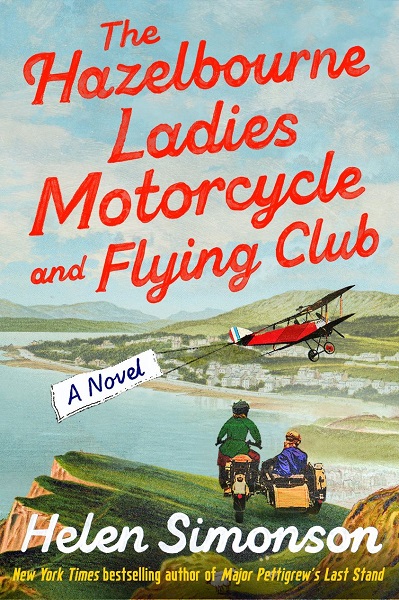
The Hazelbourne Ladies Motorcycle and Flying Club, by Helen Simonson*****

Helen Simonson is the author of the bestselling novel, Major Pettigrew’s Last Stand. With her new release, The Hazelbourne Ladies Motorcycle and Flying Club, she is once more in her element, creating believable characters and using them to skewer the pervasive racism and class snobbery of Britain, and also, in a smaller way, that of the U.S.  With outstanding word smithery and an unflagging pace, this historical novel should be number one on your summer reading list.

My thanks go to NetGalley and Random House for the review copy. This book is for sale now.

The year is 1919; the place is England. Constance Haverhill has been ousted from her job running an estate; the Great War has ended, and now the women that have been gainfully employed and done a fine job are unceremoniously ejected so that their jobs may go to the men that have returned from the conflict. For the time being, she has a position as a traveling companion to a family friend who’s recuperating at the seashore; once this situation ends, she has no idea where she’ll go or what she’ll do.

Out of nowhere comes Poppy, a daring young woman from a wealthy family. Poppy wears trousers and drives a motorcycle; she befriends Constance and sweeps her into her motorcycle club. Things become even more interesting when Poppy purchases a used biplane to bring home to her brother Harris, a handsome but severely depressed young man who’s lost a leg in the war. At one point he laments, “They look at me as if my brain has gone missing along with the leg. Or rather they refuse to look at me at all.”

Poppy is utterly fearless, challenging local authority and promoting women’s rights. She doesn’t care about the opinions of others; her eye is set on the horizon. And she can do that, because she has a soft nest in which to land. At the same time, Constance is always aware of the stark class division that prevents her from behaving as Poppy does.

“Respectability was the currency in which Constance knew she just trade for the foreseeable future. She…did not have Poppy’s wealth and position from which to defend herself against notoriety.”

There are a number of amusing side characters whose less progressive attitudes contrast with Poppy’s. The two women—also very wealthy—on the adjoining estate sniff at her exploits and declare them to be unladylike. The class division is also highlighted when Constance is offered a position with the hotel where she and Mrs. Fox, the family friend she accompanies, are staying. However, she is told that once she accepts the offer, she can no longer be a guest at the hotel, nor may she use the restaurant, which is a frequent gathering place of Constance’s new friends. No hobnobbing with the clientele will be tolerated; she must use the back door. Constance reflects to herself that wherever she goes, her friend Poppy will use the front door.

Britain’s racist attitudes toward people of color is also featured here, but in a way that does not hijack the plot. There’s an Indian guest of the hotel that is snubbed left and right; at one point, an American visitor attempts to have him excluded from the social events to which he’s been invited. This is resolved in a deeply satisfying manner, as is the issue of taboo friendships formed by Mrs. Fox.

If I could change one thing, it would be to add a bit more nuance. The bad characters are oh so bad; and while the good characters make the occasional mistake, we never doubt their complete goodness. However, this is a minor bone to pick, and overall this is a delightful book.

Highly recommended.

Bright Lights, Big Christmas, by Mary Kay Andrews****

I tend to avoid heartwarming holiday stories and romances because so many of them are infused with saccharine and require the reader to put their I.Q. in a box until the book is over. But two years ago, I was happily impressed with Mary Kay Andrews’ The Santa Suit, and so when I was invited to read and review Bright Lights, Big Christmas, I happily agreed. My thanks go to Net Galley, St. Martin’s Press, and Macmillan Audio for the review copies. This book is for sale now.

The Tolliver Christmas tree farm is an institution, not only at home in North Carolina but as far north as New York City. As a child, Kerry sometimes accompanied her family to New York to set up a tree stand and sell the trees, but as an adult, she’s had other priorities. This year, though, she finds herself unexpectedly jobless, while at the same time, her father’s health prevents him from executing the task. Kerry must take his place, traveling to the Big Apple with her brother, Murphy. They set up the stand, and they sleep in the ancient pink trailer nicknamed “Spammy” because of its resemblance to a canned ham. Adventure awaits.

Kerry’s love interest pops up before we’re even ten percent into the story, but it appears that the author planned for us to know that, and it doesn’t hurt anything. Over the weeks they are in New York, various small (and large) crises present themselves and are worked out with team work, ingenuity, and the occasional well-placed bribe. They have Murphy’s dog Queenie with them, but she is primarily left in the background where she belongs.

What I appreciate most about this novel is how well grounded the plot is, and the author’s restraint in not permitting any elements to go over the top. There are a host of stereotypes possible, but every time I see one coming, Andrews chooses a different path, and it keeps the story fresh and original. Small details that might be overlooked by someone less detail oriented are seen to, and it keeps the narrative credible. Examples are the need for a shower or bath, given the length of their stay in a trailer without working plumbing; the cost of living in New York; the hazards of theft and vandalism, especially active at Christmas. None of these sidetracks the plot or slows the pace, but the questions a reader might have are tidied away, and this makes for greater enjoyment.

One small criticism involves a situation where theft and vandalism occur at a time when Murphy has to be away, and immediately, other men folk clamor over the need to have someone—someone with a Y chromosome, folks—to do lookout duty, protecting the fair damsel, her trees, and so on.

Apart from that, this is a delightful story. However, for awhile I wasn’t sure I liked it, because I was listening to the audio version, which is poorly done. The male characters are voiced in a way that is choppy, wooden, and unconvincing; but worse is Kerry’s voice, which is performed in a high-pitched, girly-girl voice so off-putting that it took me awhile to realize that the problem wasn’t the author’s, but rather the voice actor’s. The children’s voices are much better, and I actually howled with laughter when the baby in a stroller wailed!

As the story reaches its climax, Kerry has to make some serious choices, and I admire the way this part is resolved. The side character Heinz, an elderly man that lives in the neighborhood and often stops by the tree stand, is terrific.

When all is said and done, I rate the printed version of this novel 4+ stars, and the audio version 3+ stars, with an overall score of 4. I recommend the print version of this book, but not the audio.

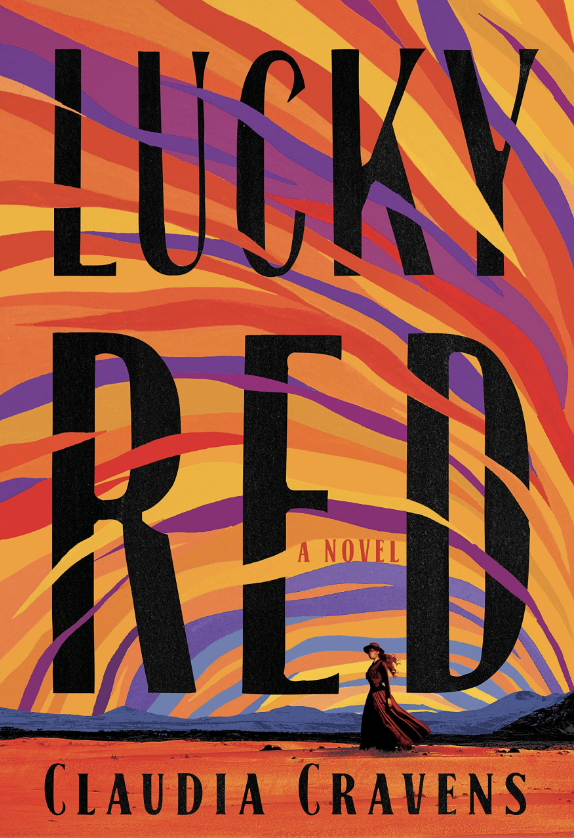
Lucky Red, by Claudia Cravens*****

Larry McMurtry, eat your heart out. There’s a fine new word-slinger come to town, and her name is Claudia Cravens.

My thanks go to Random House and Net Galley for the invitation to read and review Lucky Red. This book is for sale now, and you should get it and read it.

Bridget lives a life of hardscrabble deprivation; her mother died in childbirth, and all she has is her pa. He loves her, but he’s worthless; when he finally gets a bit of money, he invariably drinks and gambles till it’s nearly gone. During one such episode, he gambles away their little house, and then buys a homestead, sight unseen and many miles away. What they find instead is a tar paper shack; there are no crops or tilled acreage, no tools or even a decent place to live. They crawl into the miserable hovel to get out of the elements, at least, and get some sleep; a rattler has the same notion, but when pa thrashes in his sleep, the rattler bites him in the neck, and then there is only teenage Bridget.

Bridget makes her way to Dodge City, and in no time, she is stone cold broke. She’s recruited to work in a brothel, the only one in town owned and run by women. She doesn’t mind the work and makes friends among the other “sporting women,” and is curiously removed from the process for which she is paid; slide prong A into slot V; moan a little, gush, and collect your pay. But later, she finds herself obsessed with a new sex worker; a lovely blonde woman named Sallie. Everyone around her understands the significance of this fascination, but Bridget herself doesn’t get it. She’s young, and she’s naïve. But when Spartan Lee, a female bounty hunter, comes to town and asks to hire Bridget, the sun shines and the angels sing.

This story is epic, and in many ways reminds me of Little Big Man, but with a female protagonist. And in many ways, what makes it so successful is its restraint. At the book’s outset, there’s a slimy man that wants to buy Bridget’s hand in marriage, which would give her father a nice chunk of change, but she hates the man, and her father doesn’t push it. A less capable writer would have done it the other way, but here, and in every instance where I predict what will happen because it’s so obvious, Cravens does something else. And the lesbian sex is brief and almost free of physical details—a sad thing for anyone looking for soft porn, but it serves to keep the story moving forward—with the emotion behind it carrying the internal narrative.

Although Bridget has no complaint about the work she does, and the management is more benign than in houses owned and run by men, Cravens keeps it real. One night, Sallie is attacked by a client, and Bridget bursts in to rescue her. It doesn’t go well. Sallie berates her for her naivete:

“You don’t see the first thing about this, though, do you. They all have a knife, Bridget. They all have a gun, and they were all born with two fists on the ends of their arms. You think you’ve got this all figured out, but any single one of ‘em could take a swipe at you some night and you’d be dead before you hit the ground.”

To tell you more would be to spoil it for you, so I’ll leave you with this: Lucky Red is the best debut novel of 2023, and one of the best books I’ve seen this year, period. Don’t miss it.

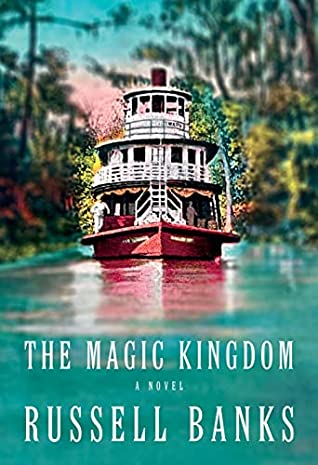
The Magic Kingdom, by Russell Banks*****

Some writers may fade as their bodies begin to fail them, publishing books that aren’t quite up to their usual standards; Russell Banks, on the other hand, seems to have saved one of his best for last. The Magic Kingdom tells the epic tale of Harley Mann, a boy that spends most of his boyhood on a Shaker plantation in Florida, and then becomes a real estate mogul later in life. My thanks go to Net Galley and Knopf Doubleday for the review copy. This book is for sale now.

Harley’s father dies when he is young, and his mother is forced to take him and his many siblings elsewhere. At first, they land in a religious cult on a plantation that works them like slaves; then Elder John, the head of a Shaker Colony in Florida, rescues them. Harley’s mother and most of his siblings become Shakers and remain with the colony until its eventual demise, but Harley has his doubts.

Nobody can craft character the way that Banks has, and he has melded a fascinating setting, one which begins over a hundred years in the past and follows Mann into his dotage in 1971, and which also incorporates a fair amount of Florida geography and history. Most of the story centers around Harley’s deep and abiding love with Sadie Pratt, a young woman being treated for tuberculosis in a nearby sanitarium. Sadie is not a Shaker, but is friend to them, and visits often when her health permits; Harley, just coming of age, falls for her hard. There’s a good deal of tension between Harley and Elder John, who despite all of his adherence to Shaker beliefs and practices on the surface, is also privately building himself a personal stake that only Harley knows about. By the time the book is over, I find myself wondering whether Harley’s character represents a real historical figure. No indeed; this is just the kind of magic that one finds in Banks’s novels, his capacity to build characters so real that they are nearly corporal.

The little shots off the bow that are fired at the Disney Corporation—by Harley, of course, and his representative after his demise, not by Banks—add a tinge of edgy amusement.

Because I had fallen a bit behind, I procured the audio version of this book from Seattle Bibliocommons, and so I can tell you that the narrator does a fine job, and it’s as easy to get lost in this story listening to it as it is reading it from the text; I did some of each.

This novel is brilliant, and all that love excellent literary fiction or historical fiction should get it and read it.

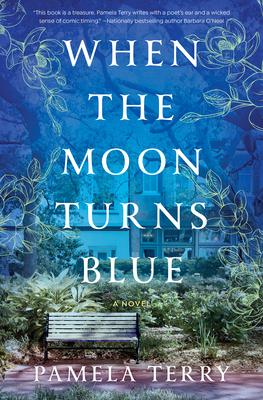
When the Moon Turns Blue, by Pamela Terry*****

Once in a while the odd thing happens,

Once in a while the dream comes true,

And the whole pattern of life is altered,

Once in a while the moon turns blue.

The tiny Georgia hamlet of Wesleyan is preparing to bury one of its own, and Mother Nature is preparing to cover the entire town in ice. But nobody—well, almost nobody—knows that a source of local tension is about to go nuclear, as someone is planning to topple and destroy the statue of a Confederate general in the park inside the boundaries of Old Man Griffin’s land. “The fight was just getting going good, and now somebody’s declawed the cat.”

This riveting, curiously charming and sometimes hilarious novel is the second by Pamela Terry, whose outstanding debut novel was The Sweet Taste of Muscadines. This one may be even better. My thanks go to Net Galley and Random House Ballantine for the invitation to read and review. This book is for sale now.

With the death of Harry Cline, we find ourselves at his funeral, a massively attended affair. But his wife, Marietta, develops a disabling, blinding migraine, and although they have been on the outs for years, Butter, her (former) best friend, comes to the rescue. By the time they’ve snuck out the side door of the church, we already know at least a little about both women, and now we want to know everything.

With just two novels published, Terry has already proven herself to be among the best authors when it comes to character development. Soon we’ll meet others—Marietta’s obnoxious brother, Macon and his beleaguered wife Glinda, who will have a large part in this story and is one of my favorite characters, as well as a host of others, who have smaller roles but are each so unmistakably established that it’s no work at all to keep track of them. But perhaps her finest achievement here is in creating a masterpiece that is ultimately a feel good book, despite the use of a red hot real world controversy within its pages.

I generally read several books at a time, and this one is the one that I saved for bedtime, because I wanted to be able to read it uninterrupted, and it is the one I wanted in my head when dreams came. It didn’t let me down.

This inspirational work of Southern fiction stands shoulder to shoulder with the finest classics, To Kill a Mockingbird and Fried Green Tomatoes. I wholeheartedly recommend it to you.

The Fortunes of Jaded Women*****

The Fortunes of Jaded Women by Carolyn Huynh, is hilarious and oddly touching. It’s the best debut novel of 2022, and it isn’t as if there was no competition. My thanks go to Atria Books and Net Galley for the review copy; this book is for sale now.

Mrs. Mai Nguyen was born in Vietnam, but has lived most of her life as a Californian. When we meet her, however, she has flown to Kauai, the home of a renowned Vietnamese psychic. The psychic tells her that the year ahead will be a pivotal one, the one in which she must repair her relationships with her sisters and her daughters. There will be one wedding; one funeral; and one pregnancy.

Well, now.

Nobody likes to be estranged from a family member, and yet it happens. But all of them? Both sisters, and her daughters, too? (No brothers, and no sons, either.) But surely, it isn’t her fault; after all, there’s the curse.

Chapter four is when everything kicks up a gear, and I have seldom laughed so hard. Mrs. Minh Pham is the first to arrive, and she has my attention from the get-go when she slips the waitstaff some money and explains there could potentially be a “small, tiny, little shouting match, with a propensity for small, tiny, little objects to be thrown through the air.” Mrs. Pham is the middle daughter, and is accustomed to being the mediator in any dispute. She takes all the precautions she feels are wise; she parks near the door for a fast getaway if necessary. She removes the sharp utensils as well as the chopsticks from the table, and requests paper plates and plastic cutlery. “Mai had a reputation for throwing things.”

As the women arrive at the dim sum restaurant, they flash their fake Louis Vuitton handbags and immediately set about trying to one-up one another with regard to social status and affluence, and especially—oh yes, especially—that of their respective daughters. Within three minutes, a donnybrook ensues, and the other diners, who are also Vietnamese and well acquainted with the curse of the Duong sisters, begin placing wagers on the winner. The sixty-something sisters commence throwing things at each other and are gently escorted out of the restaurant. They head for a bakery, and they get kicked out of there, too. Finally, the three of them end up on a park bench, their hair and clothing in dishabille, and yet none of them makes any move to leap up and go home.

These are not spoilers; this all takes place within the first 17 percent.

The chapters change points of view, moving between the sisters, their elderly mother, and their daughters, all in the third person omniscient. The fascinating thing is, these crazy behaviors, and the ways that they mold and shape their daughters and their relationships, all fit perfectly.

Although the setting changes, from Orange County, California to Hawaii to Vietnam to Seattle and beyond, this story is character based, and that’s my favorite type of novel. The skeezy men they date—mostly white boyfriends with Asian fetishes—make it even funnier.

The ending is perfect.

This is one of those rare galleys that I may actually read a second time for pleasure. One thing I know for sure is that Huynh is on my radar now. I can’t wait to see what her next book looks like!

Elvis and Me, by Priscilla Presley****

Priscilla Presley is the ex-wife of the king of Rock and Roll. I was a teenager when he died, and neither I nor most of my peers were fans; in the event his name did come up, we’d invariably ask, “Wait. Do you mean young hot Elvis, or old pudgy Elvis?” But I do love a good memoir, and those written by or about musicians are high on my list. My thanks go to Net Galley and Macmillan Audio for the review copy. This audio version of the author’s 1985 memoir is for sale now.

The relationship between Priscilla and Elvis took place in a completely different time, with completely different sexual mores and assumptions. That said, this was still a truly messed up pairing. Today, Elvis would probably be considered a predator, but within the context of the American South in the 1950s and early 1960s, he was regarded as a romantic, and women threw themselves at his feet. A quick online peek at old film and television clippings says it all.

Priscilla grew up in a strict but loving household. Her stepfather, the only father she knew, since her own died when she was an infant, was a military man, and so the family moved often. It was while they were stationed in Germany that one of Elvis’s employees saw Priscilla and invited her to meet with Elvis, who was doing his own tour of duty.

I have to feel for the bind her parents were in. On the one hand, she was just fourteen years old, and Presley was twenty-four, a grown man. On the other hand, if they refused to let her go, she would never have forgiven them; this was an invitation that literally millions of girls yearned for. Seeking a happy medium, her stepdad set boundaries: they were to be chaperoned, never alone together, and he wanted her home at a certain time. He groused about the fact that someone other than Elvis would be transporting her, but the reason was a legitimate one: Elvis could not drive himself anywhere without the car being mobbed. It was genuinely unsafe.

Rather than being the single event that the family anticipated, Elvis made their visits regular ones; when her parents balked, Elvis spoke to them personally, turning all of his charismatic charm on them, and telling them everything they wanted to hear. Most of it was untrue, of course, but the one thing he adhered to was not having sexual intercourse. During this time period, the Madonna-Whore dichotomy was alive and well, and any girl or woman known to have sex outside of marriage was likely to be ostracized by former friends and in some cases, family. It’s hard to imagine now, but at that time, no birth control pill had been invented, and a pregnancy outside of marriage was likely to ruin a young woman’s entire life.

Priscilla reads this memoir to us herself, and that makes it much more fun to hear. As we age our faces and our bodies change a lot, but our speaking voices change very little. Remembering some of the silly moments from that time, the author lets out a brief, girlish giggle, and it’s almost impossible to believe that she is now a grandmother.

Priscilla acknowledges that this was a monstrously unequal relationship. Elvis dictated whom she could talk to, what she wore, and sometimes even what room in the house she was supposed to be in. At one point, when he is going to be touring for months on end and she will be left at home with his grandmother, she goes out and gets a job. She’s so proud of herself. He makes her quit immediately. When he phones from the road, she had by God better be there. Priscilla compares this to Pygmalion. He has all the power, and she is in his thrall before she has even had a chance to grow up.

I have read two other Elvis biographies, and as dreadful as all of this sounds, the other authors were less gentle. In fact, this is part of Priscilla’s stated reason for deciding to tell her own story.

There are advantages to reading this particular biography. The official version of events is often what is published, but Priscilla is positioned to know the real story, more often than not. For example: when Elvis is drafted, the official story is that, although stars of his caliber are often offered soft assignments that involve singing to the troops, or making inspirational training films, Elvis insisted on doing the same job as every other American man.  On the other hand, Priscilla states that this is all his manager’s doing, because it will make Elvis appear noble. Enough new songs were taped in advance for there to be regular new releases on the radio throughout his tour of duty; toward the end, Elvis feigns illness because he’d prefer to be in the hospital being swarmed by nurses than marching around and getting dirty.

Her memory of Elvis, despite everything he put her through, is mostly a tender one. The spiral that led to his death, his issues with mental health, back before much was known, coupled with the immense number of strong prescription drugs he used to wake up in the morning and go to sleep at night—or to NOT go to sleep at all, and just stay up, night after night—set him up for relationships with unscrupulous characters, and nobody could rein him in, because he was the King.

Recommended to those that like vintage rock music or well-written memoirs of famous musicians.

The Wedding Dress Sewing Circle, by Jennifer Ryan***

Jennifer Ryan has created a niche for herself as a novelist that writes stories for and about women during World War II, set in England. In this one, a group of villagers form a club for the purpose of recycling and reusing wedding gowns, which are otherwise impossible to procure due to war rationing. We have three main characters and a manageable number of side characters. My thanks go to Net Galley and Random House Ballantine for the invitation to read and review. This book is for sale now.

I experienced an odd mix of reactions to this novel, at various points. At the outset, it’s an information dump tied together by story components. That’s okay; I’ve seen it before. We get it over with so that we can go forward knowing the relevant facts.

Our main characters are Cressida Wescott, a London fashion designer driven back to the manse of her birth when both her home and business are struck by Nazi bombs; Grace Carlisle, an underconfident vicar’s daughter who’s about to enter a marriage of convenience to a much older man of the cloth; and Violet Wescott, niece of Cressida, who is desperately in search of an appropriate Royal peer to marry, because she deserves nothing less. Through circumstances, the three become close friends. Using Cressida’s professional experience and the generous donations of women in the village, and eventually beyond it, they are able to create lovely dresses for themselves and others, with the understanding that each dress must be passed on to another bride once the first user’s nuptials are over.

By the 40% mark, my notes say that although this story is becoming a bit predictable, I am so in love with these three women that I don’t mind at all. There are some bumps along the way, to be sure. For example, Violet is aghast when she is called up by the British government to serve her time doing war work. On the one hand, I had never known that (many) British women were drafted during this conflict to serve in noncombatant roles, so this is interesting; on the other hand, it takes about ten pages for Violet to transition from the world’s most obnoxious snob, to a positively egalitarian one-of-the-girls. There’s no process, no development; it’s as if Houdini has appeared suddenly, drawn his cape over her, whisked it away, and presto, she’s a different person. At this stage, however, I make a note to myself and then resolve to enjoy the rest of the story.

At the same time, I am becoming uncomfortably aware, having read three of Ryan’s four novels, that these books follow the same formula: different women are thrown together during the war in order to solve a problem of some sort; we have a character from the lower income bracket; another character is a wealthy woman; and there’s a complete brat that will nevertheless be transformed and redeemed by the story’s end. Group hug.

There’s another concern here, too; Violet is assigned to drive a brash American officer around London. Every time she does so, the guy hits on her, and not subtly, either. He stalks her, he harasses her, and so she falls for him. Better make her a dress.

Have we not progressed beyond this hazardous trope?

The story has a hurried quality to it. At first, as I note that every time someone is happy, they grin—never smiling, smirking, chuckling, guffawing, or giggling, they grin, grin, and grin some more—I chastise myself for picking at a perfectly lovely story and I move on. But it gets worse, and by the end, I run a quick search, thanks to my digital galley and my reading app’s features—and discover the word has been used 51 times.

Editor?

By the time we reach the conclusion, everything seems so obvious that I wonder if someone’s AI did most of the work here. And yes, of course that is hyperbole, but it’s also a disappointment.

Those that haven’t read anything by this author and that love historical romances may enjoy this book, but by the merciful end, I confess that I no longer did.