Best Books of 2016: General Fiction

It’s not even a contest.

smallgreatthings

Enter a caption

Small Great Things, by Jodi Picoult*****

Best of 2016: Nonfiction

I didn’t have to think twice about this one. This category includes any nonfiction published for the first time this year except for biographies and memoirs, which have their own category on this site. If you haven’t read this one, you should. It’s not only important, but oddly fascinating.

Gone to Soldiers, by Marge Piercy*****

gonetosoldiersBrevity isn’t possible here. Settle in and get comfy. Here we go.

The word “epic” gets overused in the world of advertising, and so as a reviewer, I have learned to take the promise with a grain of salt. However, Piercy is renowned, an iconic presence for feminists and for anyone that approaches life from a class perspective. I read this book when it first came out in the 1980’s for no discount whatsoever, and I loved it. Books come and go at my house, since space on the bookshelf is itself a commodity, but Piercy has a permanent shelf all her own; when I saw that Open Road Media had released this book digitally, I jumped on it, even though the release date had passed and even though I already had the book, because I wanted to help promote it, and I was happy to read it again. I rate it 4.75 stars and of course, round it upward.

There are two myths that get told, are believed by others, and then they are retold about World War II. The most recent one is that told by Holocaust deniers, who say that the whole death camp thing was just a huge exaggeration. Yes, there were prisons; yes, guards were mean sometimes; yes, people died, because nobody was getting enough food in Poland and other non-German parts of Europe anyway. This is a lie, but as eyewitnesses grow old and die, it takes a certain vigilance to keep this damnable untruth from gaining a toehold. Piercy tells the truth, and she does it really well. More on that in a moment, but let’s deal with the other lie first.

The second myth, one that’s understandably popular as patriotism grasps the human heart and we wish that our rulers, past and present, were truly noble, is that the USA joined its allies in a quest to preserve democracy and save those poor Jews and other unfortunates tucked away in those hellish camps. Piercy approaches this palace of straw from many different angles and razes it to the ground.  Jews that wanted out faced tremendous obstacles, from nations—the USA included—that were extremely choosy about how many Jews they would take. The US and UK governments were more obstructive than helpful, and countless men, women, and children died because of these exclusions.

Piercy is a brilliant storyteller, and in her hands, the period and its people are so believable, nearly corporal, that I carry them with me still.

This story is told through the eyes of ten characters whose narratives are staggered. There are French characters, British, and Americans; men and women; straight, gay, lesbian, and bisexual.  They hail from a variety of socio-economic circumstances and are affected by the war in different ways. It’s miraculous to see a writer develop even one of these characters as fully and thoroughly as Piercy does; how is it that she does so with a wide range of characters, yet has never been nominated for a prestigious award?

Those of us that are old and perhaps cynical may consider that the very political perspective that makes her prose so rich may be what kept her from landing on a short list. I guess we’ll never know for sure.

Piercy is a scholar and she approaches this historical period with sources in hand. She doesn’t interpret loosely, and her note to the reader tells us in what instance she has taken liberties, for example not wanting to have a whole string of people that have the same first name. Always she is aware of the subtext, the stereotypes that women aviators faced, for example.

My most beloved characters were Jacqueline, a hero of the French resistance, along with her lover, Jeff, and her little sister Naomi, one of the fortunate few who’s sent to live with American relatives before it’s too late. I liked Louise’s moxie, and I loved what happened to Duvey. I also really enjoyed the unusual perspective that Daniel and his fellow code-breakers shared, becoming so familiar with the Japanese point of view that they bonded with the men whose communications they were deciphering.

As we discuss the Japanese, we come to the .25 that I deducted. I did this as a token objection to the use of the racist vernacular that I know was commonplace during the time. This reviewer grew up with a father that served during this war, and reminiscences among the guests he and my mother entertained were so frequent that I, in youthful ignorance, rolled my eyes and decided they were impossibly dull. And my mother taught me that the terms he and they used to speak of Germans, of Jews, of Japanese were never, ever to be used in my own conversations with anyone at any time. And so yes, racist references and ethnic slurs were common to this era.

But I note that whereas our author has had the good taste and the good sense not to repeat the ugly terms by which Jewish people were called, and seldom repeats the anti-German slurs, the “J” word is used dozens of times, usually by the character that fights in the Pacific. And I have to say, it really stings.

There were fewer Asian Americans during the period when Piercy wrote this than there are today, particularly in the author’s own New England home. For anyone writing this today, and for anyone less venerable and also less influential for me personally during my formative years, I would lop off at least a couple of stars from my rating. It’s ugly to repeat these epithets, and it’s particularly painful to me to read them. This is my husband we’re talking about; it’s my daughter, too. It’s my in-laws, one of whom fought, as good Japanese citizens were expected to, for the Japanese Imperial Army. So I would not care to see her go back and insert the horrible terms hurled at Jews and Germans for the sake of consistency; I’d just rather see the “J” word used less often. She could mention it in her introduction if she feels the reader needs to know that she’s made an adjustment.  That’s my viewpoint, and I’m sticking to it.

But it’s also true that when I was young and confused, Piercy was one of the bright feminist lights in literature to whom I looked for guidance. So I am moved not only by the excellence of this work, but also by the shining legacy she has provided for women during an uncertain time.

One further note: though I have a degree in history and have taught it, I have seldom seen much written—at least in English—about the French Resistance. This part is arguably the most deeply resonant part of this novel, and though I had read the book before, it’s amazing what one can forget over the course of twenty or thirty years. I don’t read many books twice because there are so many I haven’t read at all yet; and still this is one that I may read a third time, as I feel my recollection of the fine details already slipping away.

For those that treasure excellent literary fiction; that have the stamina for a novel of this length; that love outstanding historical fiction; that enjoy stories that are told from a feminist viewpoint and that recognize social classes and the way they affect us; this story is unparalleled. Get it and read it.

The Legacy, by Gary Gusick***

thelegacy Gusick’s hero, Detective Darla Cavanaugh, became an instant favorite of mine when I read the screamingly funny Officer Elvis, and so when I saw that Random House Alibi was about to publish this third book in the series, I scrambled quickly over to Net Galley to snatch up a DRC. Though Gusick is a tremendously courageous writer, one that seeks to stand uncompromisingly on the side of the angels, this time he’s stepped over a line in the sand that was better left uncrossed. I look forward to the next book in the series, but am not sure I can recommend this one.

The book will be available to the public December 6, 2016.

Darla has been planning a leave of absence. She and her husband, a doctor that runs the only remaining abortion clinic in Mississippi, have been unable to have a child of their own, and there’s a baby waiting for them in China. But she has to go quickly, or the adoption won’t go through. It is then that she receives a special request to investigate a murder. She says no; this is one time her family comes first. But the summons is from the governor. His daughter is dead, and he wants Darla to find out who did it.

This reviewer actually has an elderly relative that was tapped to investigate the murder of a governor’s aide in the 1980’s, and he didn’t want to do it either. There was a question of organized crime being involved, and it was dangerous. But as he pointed out at the time, there are some things you can’t say no to. It’s like being invited to tea with the queen; you have to go. And so it is with Darla.

By far the most endearing character here is Darla’s partner, Rita Gibbons:

“Rednecked Rita was…half a licorice stick short in the manners department, a deplorable character flaw in the state of Mississippi.”

When a witness that’s being interviewed coolly inquires as to whether Rita is a “Natchez Gibbons”, Rita tells her that she is actually a “Red Hills Trailer Park Gibbons”, from outside of Louisville.  And oh, how I wanted to engage, because this character is enormously entertaining, but there’s a problem, and it is at the core of the story’s premise.

You see, at the beginning of the story, we learn that Caitlin Barnett, the governor’s adopted daughter, who is African-American, was found hanging from a tree on the campus of Ole Miss. And once we have a lynching—whether it’s racially motivated and a real lynching, or whether there’s an ulterior motive and perhaps the body was posed there to deceive us—we can’t have any fun.

Here’s my litmus test to see if I am overreacting: I imagine giving this novel to one of my African-American family members to read, and I imagine what their reaction to it would be. Would they give Gusick props for pointing out that racism is still alive and flourishing in American society? Would they be glad that he has raised the issue of the Confederate flag? Or would they be slightly queasy, as I was? And immediately I knew that I would never, ever ask any of them to read this book, and if I did, they would probably take my husband aside sometime soon and inquire as to whether I was on any strange new medications.

In other words…no. Once there’s a lynching, or the appearance of one in a story, there can be no giggles, and we can’t rock and roll. It’s a hot stove top kind of issue; it’s not something we can touch, whatever our fine ultimate intentions might be, if we’re going to be partying anytime soon.

I still admire Gusick. Who else would have the rare courage to open oh, so many cans, and release oh, so many worms? But if one has the heart of a lion, one also needs some judgment, and this is where his story comes undone.

Although I cannot recommend this book to you, I look forward to reading this author’s work in the future. He’s done great work before, and he’ll do it again.

Small Great Things, by Jodi Picoult*****

smallgreatthings“Is it worth being able to say what you need to say, if it means you land in prison?”

Small Great Things is a courageous novel, one that will excite a fair amount of controversy, and it’s one that needed to be written; it’s the most important novel released this year. Thanks go to Net Galley and Random House Ballantine for the DRC, which I received free of charge in exchange for my honest review. This book will be available to the public October 11, and you should read it.

Picoult’s readers will recognize the familiar format presented here, the alternating points of view of the novel’s main characters. Foremost is Ruth Jefferson, a middle aged labor and delivery nurse at Mercy Hospital in New Haven, Connecticut. Ruth is African-American. She’s making the rounds, doing a fairly perfunctory newborn check when Turk, the father of little Davis Bauer orders her out of the room. He wants to see her supervisor; he wants a note on his son’s chart that no Black person may touch his child. Turk is a white supremacist; he has the Confederate flag tattooed on his arm. The chart is flagged to indicate that no Black medical personnel—which in this hospital and on this ward means Ruth, since she’s the only African-American there—may touch or care for Davis Bauer.

She is told it’s for her own protection too.

But an emergency unfolds, and just as in real life, the hospital is understaffed. There are a limited number of nurses that can take care of emergencies, and when the rotation is full, the only person to keep an eye on Davis following his circumcision is Ruth. The nurse that had been attending him swears she’ll be back in just a few minutes. After all, what could go wrong?

What could go wrong does go wrong, as bad as it gets: Davis dies, and Ruth is blamed. She is suspended not only from the hospital but from nursing, and ultimately, when the hospital hears from the Bauers’ attorney, the administration decides to toss Ruth under the bus. She is arrested and charged with murder.

I have to say here that those that have big ugly reactions to triggers may not be able to read this thing. The language is harsh. There are dead babies in multiple places; if you or someone close to you has lost a baby, decide whether you can go here. There are lots of vicious racist and sexist terms tossed about, not carelessly or as a shortcut to establishing that someone is a bad guy, but because there’s no authentic way to voice a white supremacist character without using them. And I am frankly uncomfortable hearing Turk’s voice, and even more so with the amount of care Picoult uses to develop this character. It makes the book much more powerful, and those that wonder just what in hell makes someone turn out this way can watch it unfold. Is her depiction realistic? I have no clue. However, I can say I believe she has done due diligence with research, and it can’t have been easy.

Until now we have heard alternating voices, those of Ruth and Turk.Once Ruth is in trouble, we add a third character, that of Kennedy McQuarrie, the clueless attorney who sits down with Ruth and explains to her that she doesn’t see race. And ultimately the struggle isn’t about getting Ruth out of jeopardy and back to her job; it’s about how to do that.

Because Ruth, who has been more than tolerant around well intentioned Caucasian people that say offensive things without any idea how terrible they sound, has had enough. She went through Cornell University, but first she had to endure the hallway whispers that she only got in because she was Black. She speaks Standard English, and is fed up to here with being told she is too White. And she was paying close attention when Trayvon’s murderer walked away free; she doesn’t want her son to be the next young man in a hoody sweatshirt shot by cops terrified not of weapons or behavior, but of skin color.

So Ruth wants to go to court and she wants to talk about race. But Kennedy tells her that this is a losing strategy; only by sticking closely to the procedural aspects of the case will Ruth be able to reclaim her life. And Ruth is having none of it.

The people that really need to read this book are those that really think “all lives matter” is an encompassing slogan. I fear many of them will be too afraid of this story to go there. Likely those of us that understand that this slogan is a veiled way to say that only White lives matter are the ones that will be drawn into this story.

The ending felt contrived to me, but the rest of this novel is so well done that I’m not going to split hairs here.

I was somewhat taken aback by the author’s note suggesting that Caucasian readers should take the message back to “other White people”, in our “own” communities. And I do understand that much of the USA is still segregated, but I have been the only Caucasian in my house for a lot of years, and I wasn’t sure quite what to do with her assumption, particularly given that the theme of this story could very well be that nobody has the right to assume things about a person based on that person’s race or ethnicity. But I can live with it, because the story itself is much more powerful than the notes at the end, and I understand that her ultimate message to White folks is that we must not try to be “white knights” that rush in and take over the struggle, but rather allies that follow and support.

I wish it could be required reading for everyone…especially for those that say they don’t see race.

The Tea Planter’s Wife, by Dinah Jeffries****

theteaplanterswifeGwendolyn is 19 years old when she marries Laurence Hooper, the owner of a tea plantation in Ceylon, an island nation south of India now named Sri Lanka. Jeffries provides a compelling, sometimes painful glimpse of the mores and assumptions of the heirs of the UK Empire at the outset of the peasants’ rebellion led by Ghandi. Though a few small glitches occasionally distract, this is a strong piece of fiction that fulfilled the writer’s mission admirably. Thank you to Net Galley and Random House-Crown Publishing for the DRC, which I received free in return for an honest review. The book is on sale today.
The protagonist is not a sympathetic one, and those that need a main character they can love should stop even considering this book right now. But some of literature’s most interesting characters are flawed ones, and the development of this one within the constraints of what Caucasians in the UK expected their lives to resemble at this time, and within the even greater constraints of material self-interest, is fascinating. I found myself wanting to haul this character out to the cheese room and tell her that all other women are not her enemies. She has almost nothing required of her by the easy life into which she has married, and as a local gossip points out, Gwen has “never had to fight for anything”.

Gwen has a passel of problems, however, some real, some imagined. She sees her sister-in-law as a rival not only for her husband’s affections and loyalty, but also for his fortune. She sees his wealthy former girlfriend and business associate, Christina, trying to pull him back into a relationship. What about MacGregor, the surly foreman of the laborers? What about Savi Ravasinghe? By the time the book was halfway done, I found myself alternately scolding her for making enemies everywhere and then, a heartbeat later, screeching at her to beware.

Ultimately I didn’t think I was impressed by this story until I looked back on my notes. I had highlighted nearly every warning bell and red herring and made little notations like, “Noooo!” Obviously this story engaged me all the way through. At times I was frustrated, but that was the author’s intention. At no time was I bored. And given the level of suspense and a certain amount of mystery, I realized that one genre tag had gone missing. I added this title to my “mystery” shelf, because there is so much unknown information that will keep the reader up late as well as any whodunit.

The author makes a few missteps that break the spell of time and place momentarily. At one point there is an argument between two of the characters about Ravasinghe, and one accuses the other of race prejudice, while the other responds that it “has nothing to do with the color of his skin!” This is either ignorance or revisionism. In the 1920s and 1930s racism was at a fever pitch. Colonialists based their system of rule partially on paternalism, which overtly declared that the “lesser” races needed the great white fathers to look after them, employ them, house and feed them. In the USA, Jim Crow and the Klan were at their all time most powerful; African-Americans were afraid to walk on the same sidewalks in the South, and in the North they nevertheless kept to their own neighborhoods to the greatest degree possible. Biracial marriage was an invitation to ostracism or even death, and less than one percent of the Caucasian population in any English speaking nation would even pretend that such ostracism wasn’t about race.

In fact, US President William Howard Taft declared that the day would dawn when the United States flag would fly at “equidistant points” that would include North America, South America, and Central America in fact rather than merely economically, and he told the American people that God had willed this due to the moral and racial superiority of Americans—by which he meant Caucasian Americans. In the East, look what the peasantry went through just to get the vote!  No, no white folks in the British Empire or USA were going to defend themselves against charges of racism; racism was assumed to be the will of God.

There’s another “oopsie” moment when the roof of a large building catches fire and the fire is put out with a garden hose and pots of water. No.

But all of this is mitigated by the expert manner in which the author describes the setting, having had a family member that lived on such a plantation, or a similar one. Part of the reason I wanted to read this DRC is the fact that it was set in Ceylon, and here Jeffries does not disappoint.  I was afraid the ending would either be saccharine or unspeakably brutal, but she deftly avoids both extremes and comes up with a surprising and believable alternative.

So in the end, I recommend this book to you. It’s not always easy for some of us to look in the mirror, or at the mirror of one’s ancestors, but everyone comes from somewhere, and the playing field still isn’t level. Nobody can fix what’s wrong today without knowing where the trouble came from. The Tea Planter’s Wife is a historical treasure in this regard; Jeffries is to be congratulated.

Darktown, by Thomas Mullen*****

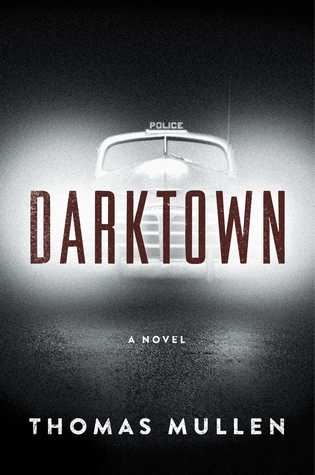
darktown I was originally turned down for a DRC of this novel when I requested it last spring, and I took the unusual step of following up with Atria, more or less begging for it. I’ve been reviewing titles for Net Galley for two years and have received nearly 300 DRCs, so it is a sign of my interest level that I went to this extreme to read this one in advance in exchange for an honest review, and it’s a sign of decency and responsiveness that a representative from Atria Books invited me to review it after all. Although I am grateful , this five star review is not about gratitude, but a measure of the importance I attach to the issues it addresses and the skill with which the story is told.

The story centers on the first African-American cops hired in Atlanta; the year is 1948. This is considered an experiment, and to say the least, it’s awkward. The basic plan is that a small number of Negro—which is the polite term at this time in history—officers will report to a Caucasian supervisor, and they are responsible for patrolling the Black section of Atlanta. There are just eight men in this force.  They have no authority to make an arrest, so if someone has to go to jail, they must call for Caucasian police who are considered real police by higher-ups within the city administration.

To say the very least, it’s hard to take.

Mullen’s protagonists here are African-American officers Boggs and Smith, and the problem arises when they witness a crime, the assault of a woman by a Caucasian man in a car. The woman disappears, and no Caucasian cops are interested in hearing what these officers saw that night. The white cops that come in response to the report of a crime demean the Black officers, calling them “boy” and a variety of other horrible slurs.  As the white cops leave the scene, “Boggs was still standing in the street. If his rage had been a physical thing, it would have split the car in two.”

Eventually one of the white cops, a man named Dunlow, goes too far in the eyes of his rookie partner, Rakestraw, and the latter finds himself in a tenuous, secret alliance with Boggs.

Light banter breaks up tension in places, but no mistake, this is a brutal story. If it wasn’t harsh, it wouldn’t be the truth. This is one of the rare instances when the frequent use of the N word and other racist, vulgar language is actually historically necessary; you’ve been forewarned. Though Darktown is a useful history lesson, its greater value comes from causing readers to think more deeply about the role police play in western society.

A question I found myself considering, and not for the first time, is how much good Black cops can do even today to combat racism and other ugly biases by the department that employs them. Clearly cop violence toward people of color remains ever present.  If this book had been published ten years ago, I would have been concerned that in focusing on past racism, the story might have left us with the impression that racism was a problem only in the past, as if all that mess is over now.

But in 2016, we all know otherwise.

I hope you’ll read this painful but well crafted novel, and reflect some about how the dynamics of power have developed and why. Will a more diverse police presence be the key to equity for those that are so frequently crushed beneath the boot heel of what passes for a justice system in the United States, or is meaningful police reform impossible as long as cops are employed primarily to protect the property of the rich?  Would ordinary people be better off if we can, in the words of the old folk song, “…raze the prisons to the ground”?

This book becomes available to the public September 6, 2016. Highly recommended.

The Last Road Home, by Danny Johnson****

thelastroadhomeThe Last Road Home, bold and impressive new fiction by Pushcart Prize nominee Danny Johnson, came to me free thanks to Net Galley and Kensington Books in exchange for an honest review. It tells the story of Raeford “Junebug” Hurley and his friendship with neighboring twins, Fancy and Lightning Stroud. Junebug is Caucasian; the twins are African-American, politely referred to during that time as ‘colored’ or ‘Negro’. The story is set during the Civil Rights movement of the early 1960’s, but in rural North Carolina, the Klan stands tall and strong and absolutely nothing has changed in terms of race relations. Junebug finds himself riding on the fence rail from hell. This fascinating tale will be available to the public in late July. Those that love good historical fiction should read it.

The book begins with one horrible loss after another. At age 8, Junebug’s parents are both killed in a car wreck, and he goes to live with his grandparents.  His life is pleasant and stable, helping his grandpa run the farm, but then his grandpa dies too. And by the time his grandmother dies, I have decided that the theme of this story must be grief and loss, or given the number of religious references, perhaps there is some sort of Christian redemption theme here. And on both counts, I find I am mistaken. Johnson is a masterful storyteller, and there is nothing simplistic in how this novel unfurls.

For while Junebug has plenty of questions about the religious fervor that pervades small towns of the South during this era, by the time he buries his grandma, he has had it with religion. “The preacher said a prayer, asking the Lord to be with me in this time of grief. I’d had all of God’s shit I could take and didn’t need His sympathy. If he said it was ‘God’s Will’, I might choke him.”

I wanted to stand up and cheer.

At age 15, orphaned and the sole remaining member of his family, he is on his own. “Fifteen was considered adult in farm years.” Lightning leaves home suddenly, unhappy with the limitations placed on Black men in his part of the world. Fancy is left behind, and she is the only friend Junebug has within walking distance of home. As friendship turns to passion, both find themselves occupying a dangerous place in their community. Given that they are cold shouldered simply for appearing in town together to run an errand, the thought of letting their feelings for one another be known is terrifying.  He recalls his grandma’s admonition:

“’Junebug, you need to understand that cruelty and memory have been married together a long time in the South.’”

Johnson does an outstanding job of depicting white neighbors’ responses to the notion that our protagonist is linked romantically with Fancy. At first they are able to maintain the age-old fiction that she is his housekeeper, but she goes home at night, then sneaks back in darkest night to lay beside him. The muted references, little hints given by Caucasian elders nearby to guide the young white farmer away from a liaison that doesn’t fit local expectations, are rendered skillfully. There are a number of really vicious racial epithets tossed casually around by the local landowners, not always even in anger, sometimes in ugly jokes, as this writer knows from childhood experience is the way racists behave when a white supremacist perspective is not something being fought for as an outlier, but rather the dominant, even comfortable, norm. As the book continues, not only anti-Black pejoratives, but also nasty terms regarding Jews and Asians are tossed into the vernacular. None are gratuitous; they are an undeniable part of the setting, which would be revisionist without them.

Fancy and Junebug seem doomed. He tells her, “It feels like my life’s sprung a lot of leaks, and I’m running out of fingers.” She points out that she only has ten fingers too.

I was watching for the pat ending, the comfortable happy fiction that novelists are often drawn toward. Every time I thought I knew where the story was headed, it went somewhere else. Johnson is brilliant at breaking apart stereotypes, making setting real and immediate, and his character development is strong apart from some minor inconsistencies toward the end. And his framework is materialist by and large, showing that our surroundings and role in life shape us in ways we sometimes don’t expect.

Those interested in this period of history or that love excellent fiction should order this book. It will be available to the public July 26, 2016; strongly recommended.

The Butler’s Child: An Autobiography, by Lewis M. Steel****

thebutlerschildLewis M. Steel has a long, noteworthy career as a civil rights attorney.  He was an observer during the Attica Prison riots; worked for the NAACP during the Civil Rights movement, and later defended boxer Hurricane Carter against a frame-up charge of murder. And I was permitted to read this story free and in advance, thanks to Net Galley and St. Martin’s Press in exchange for this honest review. I rate it 3.5 stars and round upwards; it is now available to the public.

When I first approached this title I expected to see what the life of a butler’s son was like. In fact, Steel’s social class is at the other end of the spectrum. An heir to the Warner Brothers fortune, he spent much of his time in the company of the family butler, and he was deeply affected by the emotional distance that this family servant, whom he had innocently regarded as a father figure, began to demonstrate as Steel grew older. Later, as an adult, he realized that this faithful retainer, an African-American man, surely had a family and life of his own that he went to visit on his two half-days off work, and he began to wonder what he might do to tear down the wall between the worlds of Caucasian families and Black folk. Ultimately he decided to become a civil rights attorney, and he credits the man that helped raise him as a key reason.

The NAACP of the Civil Rights era—the National Association for the Advancement of Colored People– was deeply immersed in litigation as a means to end segregation. Again and again, racist judges sat in court, north and south alike, and they told the NAACP to go to hell even when their evidence and research was baldly, plainly in the plaintiff’s favor. The NAACP continued to push litigation over mass action because of a strong conviction that if they could get a case heard by the Supreme Court, relatively liberal in many regards and headed by Chief Justice Warren, then surely justice would be done.

It didn’t shake out that way. Outraged over the way the nation’s highest court failed to provide equal protection to its Black citizens, Steel wrote an article for Time Magazine titled “Nine Men in Black Who Think White”, and was summarily fired from the NAACP, who still wanted to curry favor with that court. Many of his colleagues walked out of the NAACP offices in protest.

A common question among Caucasians that want to fight for the rights of people of color in the USA is what can we do?  How can one use this white privilege that exists whether it should or not, to change US laws and society for the better? And this question is raised exponentially when one is an heir, a ruling class scion that can do a tremendous amount for the cause in which he believes.

This reviewer has a friend that found himself in this situation. The distant but only heir of a corset magnate’s fortune, he decided that the best way to seek justice was to walk his talk. Reserving a small percentage of the fortune for himself—which is still a tasty enough chunk to own a middle class home in Seattle, take a vacation abroad annually, and eat in restaurants instead of his own kitchen—he donated the vast majority of his personal wealth to the organization he thought best. He doesn’t live in an all white neighborhood; doesn’t have a household staff; and he does blue collar work on the railroad so that he can talk politics with other working people. Because to help people the most, one needs to be among them and facing similar circumstances to those they face. So he gets up at crazy o’clock in the morning, goes out and gets greasy and banged up with everybody else, and then he goes home and cleans his own house and mows his own grass. He gets that more people listen when you put your life where your mouth is, and he believes the future of the world lies with the working class.

So when Steel commences his hand wringing over how wealthy, how privileged he is and how bad he feels about it, I want to say, Cry me a river. Steel freely admits that he enjoys his lovely home that looks down on Central Park and allows him a lovely view of the Macy’s Parade every Thanksgiving. He enjoys the servants, and his neighborhood is all white. He sent his children to all white private schools even as he fought to integrate the public schools that he wouldn’t let his own children attend in any case.

At one point, Steel mentions that his therapist told him to stop whining, and I wanted that doctor here in the room so I could offer him a high five.

Now that I have addressed the elephant in the room, I have to say that Steel’s memoir, despite the wealthy liberal whining, is worth a read for those interested in Civil Rights history and in particular the part of it that has played out in the courtrooms. You don’t have to like the author to benefit from the treasure trove of information in the pages of this memoir. Steel has been involved in some landmark cases, and he is at his best when he talks about the cases he has taken and how they shook out.

Black lives DO matter, and those of  us that think so need all the information available to fight that fight, and there are many worthwhile lessons that still apply right here, this book is worth your time and money regardless of whose memoir it is.

This book was released earlier this month, and is available for sale now.

Florence “Flo” Kennedy: the Life of a Black Feminist Radical, by Sherie M. Randolph***

Florynce Flo KennedyFlo Kennedy was a force to be reckoned with, dismissed by a portion of mainstream Caucasian America as a kook, yet far too clever, too cagey, and too damn smart to be wished away by those that wanted to defend the racist, sexist status quo. When I saw that a memoir of her life was up for grabs at Net Galley I requested a copy immediately, and then took a long time to finish reading it. Part of my tardiness is a stubborn dislike for the PDF format, and so I apologize to University of North Carolina Press and my readers for being so slow; yet a small part of it was the surprisingly dry quality of the memoir. Given the subject, I had expected this biography to set my hair on fire.

Though she was new to Randolph, according to the introduction, Kennedy was no stranger to those of us in the Boomer generation. Her audacity, her wit, and her raw courage that at times bordered on recklessness made for great theater and fascinating press coverage. Raised by parents that taught her not “to take any shit” long before the Black Power movement or even the end of Jim Crow, Kennedy pushed the margins. She studied, worked, and fought her way into Columbia Law; she defended famous individuals like Billie Holliday and Stokely Carmichael, and she did it with style.

By far the most significant part of her legacy was the leadership she demonstrated in bringing together the women’s movement of the late 1960’s and 1970’s with the Black Power movement. As a young woman sending out my own tendrils into the larger world apart from high school and my parents’ home, some of the most influential feminist speeches given were by Kennedy and Gloria Steinem, and sometimes they appeared together. I never got to see them in person, but it didn’t matter that much, because I knew what they had written and what they had said, and soon I was attending meetings of NOW, the National Organization for Women, which was the leading women’s rights organization in the US before their split over women in the military later in the 20th century. Because of women like Kennedy and Steinem, I fundraised my fare to national marches on the Capitol for women’s right to choose whether to reproduce, and to fight for the Equal Rights Amendment.

So I owe Kennedy a great deal.

Kennedy’s confidence and controlled rage positively crackled; she made headlines and was often seen on the evening news. Once when I told a classmate that I wanted to support a female candidate for president of the US, he told me that if I was going to vote for a protest candidate, I should shoot for the moon and vote for Flo Kennedy.

He had a point.

I don’t agree with everything Kennedy said or did, particularly her suggestion that rather than expending great effort to end the US war against the Vietnamese people, Americans should focus their energy toward supporting Black owned businesses. Say what? But nearly everything else she did was so vastly ahead of her time that it made me gasp in awe.

I understand that a memoir produced by a university press is generally going to be scholarly in nature, and that’s one reason I request works like this that are associated with such reputable sources. But a scholarly treatment doesn’t have to drone. By arranging a few of Kennedy’s livelier quotes up front and at chapter beginnings and endings, she might receive the treatment she deserves, instead of being consigned to the dustbin of history a mere decade, give or take a year, after she wore a tee shirt reading “I had an abortion” during her most senior years.

So although I know Randolph is new to Kennedy and probably also has some academic parameters within which she has to work, I still feel that Flo’s memoir should reflect her verve and character to a greater degree.

Nevertheless reader, if you care about women’s rights and the rights of African-Americans, if women’s history and African-American history hold meaning and importance for you, I think you should read this memoir anyway, because as of this writing, it’s really the only memoir of Kennedy that’s available. You can find some of her speeches in feminist collections, but no one else has tackled this woman’s life, and so until and unless something better comes along, you should get this and read it. Because a dry, somewhat conservative treatment of Kennedy is better than nothing.