
 Gwendolyn is 19 years old when she marries Laurence Hooper, the owner of a tea plantation in Ceylon, an island nation south of India now named Sri Lanka. Jeffries provides a compelling, sometimes painful glimpse of the mores and assumptions of the heirs of the UK Empire at the outset of the peasants’ rebellion led by Ghandi. Though a few small glitches occasionally distract, this is a strong piece of fiction that fulfilled the writer’s mission admirably. Thank you to Net Galley and Random House-Crown Publishing for the DRC, which I received free in return for an honest review. The book is on sale today.
The protagonist is not a sympathetic one, and those that need a main character they can love should stop even considering this book right now. But some of literature’s most interesting characters are flawed ones, and the development of this one within the constraints of what Caucasians in the UK expected their lives to resemble at this time, and within the even greater constraints of material self-interest, is fascinating. I found myself wanting to haul this character out to the cheese room and tell her that all other women are not her enemies. She has almost nothing required of her by the easy life into which she has married, and as a local gossip points out, Gwen has “never had to fight for anything”.
Gwen has a passel of problems, however, some real, some imagined. She sees her sister-in-law as a rival not only for her husband’s affections and loyalty, but also for his fortune. She sees his wealthy former girlfriend and business associate, Christina, trying to pull him back into a relationship. What about MacGregor, the surly foreman of the laborers? What about Savi Ravasinghe? By the time the book was halfway done, I found myself alternately scolding her for making enemies everywhere and then, a heartbeat later, screeching at her to beware.
Ultimately I didn’t think I was impressed by this story until I looked back on my notes. I had highlighted nearly every warning bell and red herring and made little notations like, “Noooo!” Obviously this story engaged me all the way through. At times I was frustrated, but that was the author’s intention. At no time was I bored. And given the level of suspense and a certain amount of mystery, I realized that one genre tag had gone missing. I added this title to my “mystery” shelf, because there is so much unknown information that will keep the reader up late as well as any whodunit.
The author makes a few missteps that break the spell of time and place momentarily. At one point there is an argument between two of the characters about Ravasinghe, and one accuses the other of race prejudice, while the other responds that it “has nothing to do with the color of his skin!” This is either ignorance or revisionism. In the 1920s and 1930s racism was at a fever pitch. Colonialists based their system of rule partially on paternalism, which overtly declared that the “lesser” races needed the great white fathers to look after them, employ them, house and feed them. In the USA, Jim Crow and the Klan were at their all time most powerful; African-Americans were afraid to walk on the same sidewalks in the South, and in the North they nevertheless kept to their own neighborhoods to the greatest degree possible. Biracial marriage was an invitation to ostracism or even death, and less than one percent of the Caucasian population in any English speaking nation would even pretend that such ostracism wasn’t about race.
In fact, US President William Howard Taft declared that the day would dawn when the United States flag would fly at “equidistant points” that would include North America, South America, and Central America in fact rather than merely economically, and he told the American people that God had willed this due to the moral and racial superiority of Americans—by which he meant Caucasian Americans. In the East, look what the peasantry went through just to get the vote! No, no white folks in the British Empire or USA were going to defend themselves against charges of racism; racism was assumed to be the will of God.
There’s another “oopsie” moment when the roof of a large building catches fire and the fire is put out with a garden hose and pots of water. No.
But all of this is mitigated by the expert manner in which the author describes the setting, having had a family member that lived on such a plantation, or a similar one. Part of the reason I wanted to read this DRC is the fact that it was set in Ceylon, and here Jeffries does not disappoint. I was afraid the ending would either be saccharine or unspeakably brutal, but she deftly avoids both extremes and comes up with a surprising and believable alternative.
So in the end, I recommend this book to you. It’s not always easy for some of us to look in the mirror, or at the mirror of one’s ancestors, but everyone comes from somewhere, and the playing field still isn’t level. Nobody can fix what’s wrong today without knowing where the trouble came from. The Tea Planter’s Wife is a historical treasure in this regard; Jeffries is to be congratulated.
 I was originally turned down for a DRC of this novel when I requested it last spring, and I took the unusual step of following up with Atria, more or less begging for it. I’ve been reviewing titles for Net Galley for two years and have received nearly 300 DRCs, so it is a sign of my interest level that I went to this extreme to read this one in advance in exchange for an honest review, and it’s a sign of decency and responsiveness that a representative from Atria Books invited me to review it after all. Although I am grateful , this five star review is not about gratitude, but a measure of the importance I attach to the issues it addresses and the skill with which the story is told.
 The Last Road Home, bold and impressive new fiction by Pushcart Prize nominee Danny Johnson, came to me free thanks to Net Galley and Kensington Books in exchange for an honest review. It tells the story of Raeford “Junebug” Hurley and his friendship with neighboring twins, Fancy and Lightning Stroud. Junebug is Caucasian; the twins are African-American, politely referred to during that time as ‘colored’ or ‘Negro’. The story is set during the Civil Rights movement of the early 1960’s, but in rural North Carolina, the Klan stands tall and strong and absolutely nothing has changed in terms of race relations. Junebug finds himself riding on the fence rail from hell. This fascinating tale will be available to the public in late July. Those that love good historical fiction should read it.
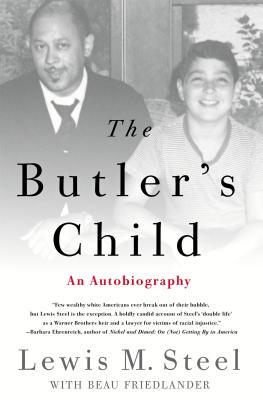 Lewis M. Steel has a long, noteworthy career as a civil rights attorney. He was an observer during the Attica Prison riots; worked for the NAACP during the Civil Rights movement, and later defended boxer Hurricane Carter against a frame-up charge of murder. And I was permitted to read this story free and in advance, thanks to Net Galley and St. Martin’s Press in exchange for this honest review. I rate it 3.5 stars and round upwards; it is now available to the public.
 Flo Kennedy was a force to be reckoned with, dismissed by a portion of mainstream Caucasian America as a kook, yet far too clever, too cagey, and too damn smart to be wished away by those that wanted to defend the racist, sexist status quo. When I saw that a memoir of her life was up for grabs at Net Galley I requested a copy immediately, and then took a long time to finish reading it. Part of my tardiness is a stubborn dislike for the PDF format, and so I apologize to University of North Carolina Press and my readers for being so slow; yet a small part of it was the surprisingly dry quality of the memoir. Given the subject, I had expected this biography to set my hair on fire.
 Second Daughter is historical fiction based on the true story of an enslaved woman that went to court and won her freedom in New England around the time of the American Revolution. I received this DRC free from Net Galley and Open Road Integrated Media in exchange for an honest review. And it’s just as well, because if I had paid any money at all for this brief but troubled book, I would be deeply unhappy.
 I read this memoir, one of the most important of our era, before I was writing reviews. I bought it in the hard cover edition, because I knew I would want it to last a long time and be available to my children and their children. It was worth every nickel. It’s lengthy and requires strong literacy skills and stamina, but if you care about social justice and are going to pull out all the stops for just one hefty volume in your lifetime, make it this one.
 Sometimes people say they “ran across” a book, and that is close to how I came to read James Lee Burke for the first time. I had been tidying up for company, and my daughter had selected this book from the “free” pile at school, then decided she didn’t want it. She is a teenager, so instead of finding our charity box and putting it there, she dropped it on the upstairs banister. I scooped it up in irritation..then looked at it again. Flipped it over…read the blurb about the writer. This man is a rare winner of TWO Edgars. Really? I examined the title again; I hadn’t read any novels based on Hurricane Katrina, so why not give it a shot?
 Had this story not received such wide acclaim and been made into a movie (which I’ve yet to see, but I watched the Oscars), I would probably never have gone near it. I like working class protagonists, and I don’t read many romances, because often as not, they are corny, soft porn, or both. But I saw it at the library and decided to give it a try, and I quickly remembered, upon reading it, that some rules are made to be broken. So even if you usually don’t read romances, and even if a retired British pensioner is not your idea of an interesting protagonist, this should be the exception to the rule.
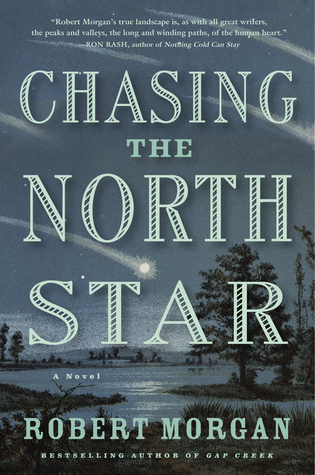 Chasing the North Star is a compelling narrative of two teenagers escaped from slavery on their flight toward the North. Thank you to Net Galley and Algonquin Books for the DRC, which I received in exchange for an honest review. This book becomes available to the public April 5, 2016.
