
“They were standing inside the door when I came out of the bathroom. Two of them. Matching gray suits, milling around like the owned the joint. Something about carrying a gun in one pocket and the power of the state in the other changes the way a person relates to the universe. For as long as I could remember, that particular sense of privilege has always pissed me off.”
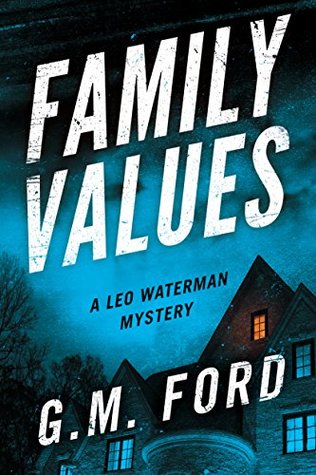
Leo Waterman is a solid citizen now, no longer the scruffy Seattle PI that he was when our series began. But now that he has a lovely home and a good woman—well, sometimes anyway—he also has more to defend, and is less fettered by economic constraints. Those that have loved this series from the get-go should go go go to their nearest book seller or favorite website and get get get this book. New readers can jump right in, but likely as not, you’ll want to go back and get the rest of the series once you’ve seen this one. Lucky me, I read it free thanks to Net Galley and Thomas and Mercer, but it’s worth the full jacket price. It is for sale now.
Leo returns from vacation to find Rebecca Duvall, the love of his life, on the bathroom floor with a needle in her arm. Her reputation has been damaged by a suggestion of corruption, but Leo knows this is no suicide attempt. Her job as medical examiner is on the line now, and so Leo enlists the help of his boisterous investigative squad to untangle the mystery of who wants Rebecca not only fired, but dead. Ford tells the story with the gut-busting edgy humor for which he is known. He takes a playful jab or two at gender fluidity; at times this part feels a little excessive, but that’s not where the story lingers. There are a million twists and turns as our impulsive PI goes where everyone tells him he should not:
“’ I went out to see Patricia Harrington today.’
“’Don’t fuck with those people, Leo.’”
There are some arrhythmia-worthy attack scenes, and the plot wholly original and free of formulaic gimmicks. The streets and alleys of Seattle and the hinterlands beyond are all rendered immediate and palpable.
Ultimately the heart of the tale is revealed by Leo’s regard for Seattle’s homeless men and women, some of whom were once friends of his late father. It is them he turns to for extra eyes in a difficult situation:
They were great for stakeouts, as long as it was somewhere downtown. They could hang around all day and nobody paid them any mind because society has trained itself not to see the poor and the destitute. That way, we don’t have to think about how the richest society on earth allows so many of its citizens to live in the streets like stray dogs.
The snappy banter between Waterman and Seattle cops is always delightful. It’s even better once we add a pair of fake UPS guys, some thugs known as the Delaney brothers, local ruling scions, and poor Rebecca as the straight character representing all that is sane and normal: “Oh Jesus…what now? Locusts?” The narrative is fresh, funny, and entirely original, avoiding all of the formulaic foolishness that makes old lady schoolteachers like this reviewer peevish.
The ending will make you want to sing.
Altogether, this novel is an unmissable treat.


 I was invited to read and review this title in advance by Net Galley and Atria Books; it is written by a rape survivor, who tells us bravely of her own experience in the introduction. I wanted to love this book and to scream it across the internet and from the top of the Space Needle, that everyone should get it and read it, but instead, I came away feeling ambivalent. The rape passage is resonant and horrifying, and it’s written in a courageous way, and I’ll go into that in a minute. The rest of the book, however, is flat, and so in some ways this proves to be an opportunity squandered. There are spoilers, so don’t proceed if you don’t want to know how the book ends. It is available for purchase today.
 The Mercy of the Tide is Keith Rosson’s debut novel, and it’s a strong one. Set in a tiny, depressed town on the Oregon Coast during the Reagan Administration, things start out dark, and they’re about to get a whole lot darker. Thank you, Net Galley and Meerkat Press for the DRC, which I received free of charge for this honest review. This book will be for sale February 21, 2017, and those that love good fiction with a working class perspective will want a copy.
 Always, Sarah Jio’s much anticipated new release, takes on the homelessness epidemic using the powerful medium of fiction. I received my copy in advance in exchange for an honest review; thank you Net Galley and Random House Ballantine for the DRC. This title is available to the public today, and if you have enjoyed Jio’s other novels, I am confident you’ll like this one too.
 Fans of Emerson’s Thomas Black mysteries will be as pleased as I was to see this, the 14th in the series. Black took a very long nap and seemed to have all but disappeared for awhile, but then he was back with Monica’s Sister, followed by this title. There was no DRC for this one, so I picked it up free using my Amazon Prime digital credits. It was a good way to spend them. The book was released in 2015, so of course you can get it also.
 Doctors tell us that laughter improves our health. Now and then, I go in search of laughter in my favorite medium, between the covers of a good book. Thank you to Net Galley and Doubleday Publishers for this DRC. Not only is The Grand Tour achingly funny, it’s also strong fiction. It is available to the public August 9, 2016, and you ought to read it.
 Ford is the rightful heir to the late great Donald Westlake, a writer of monstrously amusing mysteries full of quirky sidekicks and kick-ass, zesty dialogue. There’s nobody like him in Seattle or anywhere else. I gobbled up the DRC when it became available via Net Galley and publishers Thomas and Mercer, so I read this free in exchange for an honest review. But I’ll tell you a secret: if I’d had to, I’d have paid for this one had it been necessary. And so should you. It’s for sale today, and you can get it digitally at a bargain rate.
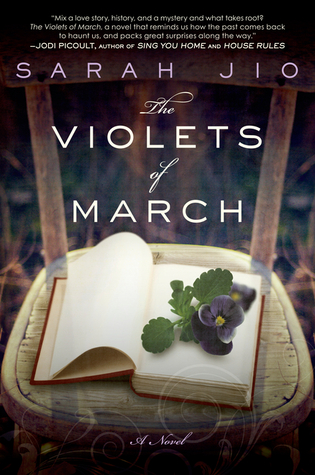 The Violets of March is a crossover title, part cozy mystery, and partly—maybe mostly—romance. I purchased it for myself years ago, back when I was teaching, not advance-reading, and buying all my own reading material. It’s not a bad book, but given that I had paid full jacket price for the trade paperback version after reading some rave reviews, I felt let down. It’s a pleasant read, but it didn’t live up to its hype.
 Seattle Book Mama