
 Bryan was a journalist and author during the mid-twentieth century, and Friendly Fire, which originally began as a story for the New Yorker and grew into something more, tells the story of the Mullen family and their response to the death of Michael, a clean-cut young man that answered his draft notice, dutifully served and was killed by friendly fire not long after he was sent to Vietnam. Thanks goes to Open Road Integrated Media and to Net Galley for the invitation to read and review. This is right up my alley and I found it compelling. It was published digitally May 10, 2016 and is now available for purchase.
Michael Mullen was the favorite son of Iowan farmers Gene and Peg Mullen, working farmers steeped in traditional values and respect for authority, who had never questioned the US involvement in Vietnam. If the government said that US forces were fighting there to contain the spread of communism and keep Americans safe, then it must be so. Michael was the kind of young man that called people “ma’am” and “sir”. When his effects were delivered to his family following his death, there were no fewer than three rosaries he’d carried on his person. He had expected to return from service, as his father had done from an earlier war, and inherit the family farm. His family was part of the Silent Majority to which governmental authorities referred when defending the role of the USA in Indochina.
In short, they were the last people anyone would have expected to see become anti-war activists.
Michael’s death rocked parents Peg and Gene, and their grief eventually alienated them from the three children left to them. The part of their story that galvanized me was in reading their intelligent, sharp responses during the initial period following their bereavement. For many of us facing the loss of any loved one—and the death of a child is the worst loss of all—ferreting out information about that person’s days, weeks, even months is our last link to them. But Peg and Gene took it to another level when they realized that some of the information they had received was untrue. Peg became an organizational whirlwind, searching for the names and stories of other Iowa boys that had died in that conflict and she realized that the casualties that were being reported to and in the media were incorrect. The responses she received from everyone from US officials to the parish priest were so insensitive, so baldly insulting that she and husband Gene made the war and those near their son when he died into an immense research project, reaching out to newspapers and television news widely. This reviewer grew up during this period and when I read that Peg was on the phone with national newscaster Chet Huntley’s secretary in New York, my jaw dropped! In this era before satellites gave us phones in our pockets and information available at the touch of a keyboard, they typed letters, made long-distance phone calls, and in time even traveled to Washington D.C. in order to know how and why their son had been killed and who was to blame.
The fifth star here is denied because the beginning of the story, which goes into overmuch detail about the family’s genealogical beginnings and its long history in Iowa soil, is deadly dull. When the book was first published, the video game had not yet been invented and readers had longer attention spans. Today if a book does not hook a reader from the start, chances are excellent it will be immediately and forever abandoned. Although the point that the Mullen farm had stood for five generations is surely relevant to the story, the author drags this portion of the story out sufficiently to glaze even the eyes of this history teacher, and together with an awkward introduction that appears to substitute for a bibliography or end notes, a lot of readers won’t get to the interesting part, and that’s a crying shame.
Ultimately the Mullens’ cause alienated them from their community, probably because they were so free in dispensing blame to everyone that drew breath. Everyone that had not actively opposed the war was called out at some point. The heat of their rage and grief lacked focus. In many ways they undid a lot of the good they had done by cursing old friends and neighbors simply because they had never done anything about the war.
The story will interest those that research conspiracies. The Mullens believed more deception was in play than actually was, yet when a person knows he has been lied to about one thing, it is the intelligent thing to do to wonder how much more one was told is also untrue. And so as they relentlessly sought to find one particular officer that might be to blame for the friendly fire that killed their son, I wanted to bang my head on the wall, because it was so much more than that; the conspiracy, we know now, was seated in the Oval Office, jotting more names, possibly their own, onto his enemies’ list. Targeting this soldier or that minor officer was just wrong-headed, but when people are hurt, they lash out, and the Mullens did so exponentially.
The end of the book deals with the author’s own motivation in following the Mullens and their search for the truth so diligently; nevertheless, it seemed strange to find a host of author photos at the end of the book rather than of the Mullen family.
Had the editing of this digital edition been given to me along with permission to do anything I wished, I would have tightened up the beginning, put the author’s notes at the end of the book rather than the start, and deleted the photo section entirely.
Nevertheless, those with an interest in the struggle to end the US war in Vietnam will find this story well worth reading, and to them I recommend this memoir.
 I loved this memoir. I read it in 2014 through the Goodreads First Reads program when I first began writing reviews, a few months before I began my blog. This is a memoir intended for general audiences, disarmingly funny and engaging. I recommend it to everyone.
 I read this memoir, one of the most important of our era, before I was writing reviews. I bought it in the hard cover edition, because I knew I would want it to last a long time and be available to my children and their children. It was worth every nickel. It’s lengthy and requires strong literacy skills and stamina, but if you care about social justice and are going to pull out all the stops for just one hefty volume in your lifetime, make it this one.
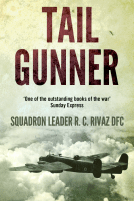 Tail Gunner is the memoir of a member of the Royal Air Force during World War II. I was fortunate to receive a copy free in advance from Net Galley and Endeavor Press in exchange for an honest review. It’s both compelling and informative.
 Elie Metchnikoff is credited with several medical discoveries, some of which were found before Mother Russia was entirely ready to receive them. This interesting though technically challenging text is the story of his life, and especially of his scientific career and achievements. Thank you Net Galley and Chicago Review Press for the DRC, which I received in exchange for an honest review. This title will be available to the public April 1, 2016.
 Huge thanks go to Net Galley and University of California Press, who provided me with a DRC in exchange for an honest review. It has taken me some time to read and rate it because once I had the DRC for Volume 3, I decided I should hunt down volumes 1 and 2 and read those first. Now I am finally finished, and it was well worth the effort.
 What, another one? Yes friends, every time I find a noteworthy biography of Grant, it leads me to another. This is not a recent release; I found it on an annual pilgrimage to Powell’s City of Books in my old hometown, Portland, Oregon. I always swing through the American Civil War shelves of their history section, and I make a pass through the military history area as well. I found this treasure, originally published in 2001 when I was too busy to read much of anything. It was a finalist for the Pulitzer; A New York Times and American Library Association Notable Book; and Publishers Weekly Book of the Year. But in choosing a thick, meaty biography such as this one—it weighs in at 781 pages, of which 628 are text, and the rest end-notes and index—I always skip to the back of the book and skim the sources. If a writer quotes other secondary texts at length, I know I can skip the book in my hand and search instead for those the writer has quoted. But Smith quotes primary documents, dusty letters, memos, and military records for which I would have to load my wide self into the car and drive around the country to various libraries in out of the way places. Source material like Smith’s is promising, so I bought a gently used copy for my own collection and brought it on home. And unlike the DRC’s I so frequently read at a feverish pace in order to review them by a particular date, I took my time with this one, knowing that if I only read a few pages each day and then reflected on them before moving on, I would retain more.
 I had promised myself not to read any more Holocaust memoirs. What is to be gained? But when I saw this title available as a review copy on Net Galley, I thought that there is actually something to cheer the spirit in recounting how some of these monsters were tracked down and brought to justice. To date this is the most comprehensive telling of that achievement that I have read. Thanks go to Simon and Schuster and also to Net Galley for the DRC. This book is available for purchase May 17.
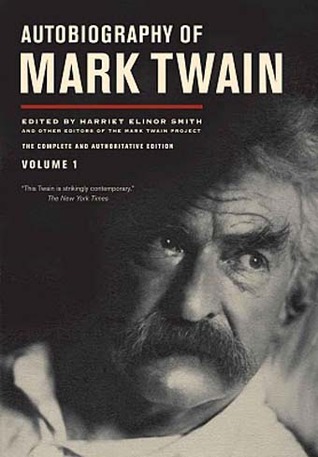 Initially I was surprised not to have seen the autobiography of such a famous individual before. Twain, I learned at the outset, composed his memoir with the stipulation that it not be published until 100 years following his death, because he wanted to be entirely frank about some situations and persons without incurring the displeasure of them, their children, or their grandchildren. Twain died in 1910, and his memoir had been finished just four months. For those of us living now, it was worth the wait. Although I was fortunate enough to snare the DRC for volume 3, I had to go out and hunt down volumes 1 and 2. It’s well worth obtaining and reading for those with the attention span and literacy skills it requires.
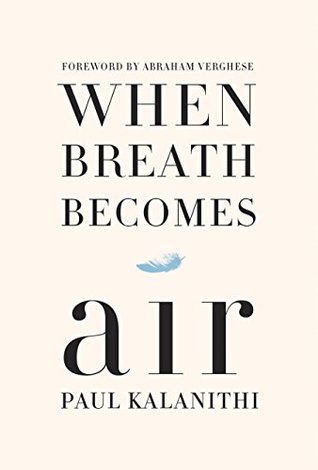 Paul Kalanithi was a promising young physician who had nearly finished completing ten years of training as a neurosurgeon when he was diagnosed with Stage IV lung cancer. His twin ambitions had been to become a neurosurgeon and to write. When he realized how little time was left of his too-brief life, he decided to spend his remaining time writing this book. Thank you, Net Galley and Random House Publishing House for the DRC. Dr. Kalanithi died in March 2015, but he left this luminous memoir behind as part of his legacy. It is available to the public January 19, 2016.
