 I received this book as a birthday gift from a gracious house guest. I think he chose it for me because he knew of my strong interest in civil rights issues. Although this is actually out of my wheelhouse, I decided to read it, and I was surprised how much of it I enjoyed. Of particular interest was the beginning of the book, where a surprising amount of the narrative was devoted to African-American history, especially in Chicago. I hadn’t expected it and found it both interesting and useful.
I don’t generally follow the lives and careers of mainstream American politicians or their spouses, so I didn’t know much of anything about Michelle Obama, other than that she had made it plain, upon taking up that famous residence, that her family would be her main focus and if the public didn’t like it they could lump it. After all, nobody was paying her a salary, so she had some choices.
Reading of how her parents struggled in order to get Michelle and her brother excellent educations, and of the tenacity with which Michelle approached school, social justice issues, and her career, I found myself feeling strangely sorry for her. Before her husband decided to pursue politics, her career outshone his. She was in demand and had a lot of choices. When she headed to the Ivy League, her classmates and professors were almost all white people, and the pressure was on her not only to succeed, but to be the one African-American that would be the example, the cultural education for a whole lot of privileged white people. That kind of hot spotlight would undo some people, make them decide to go on home and enroll at a school closer to home, but Obama—then Robinson—did it and did it well, and then she went back to her hometown, Chicago, to find ways to use her education to serve her community.
As the first Black first lady (FLOTUS), she’s had to make some difficult choices, and there would be a certain level of criticism no matter what she chose to undertake. Her career had been ascending like a rocket, and she took what will likely be a permanent leave of absence in order to keep her family well tended. She hadn’t wanted her spouse to go into politics, because she was convinced, as I am, that being a politician doesn’t end up making a difference. She urged Barack to become an inspirational instructor, or a school administrator, or go to work for a strong nonprofit, but that wasn’t what he wanted to do. He wrote a book; it didn’t sell. (Occupying the Oval Office would change that.) But when two parents put their careers on a fast track simultaneously, often the ones that pay the price are the kids, and she wouldn’t have that for their girls. If it came down to her career versus their development, she was determined to be there for them. And who am I to say that wasn’t the right thing to do?
Slavin is not an official biographer; in fact, after leaving the White House, Michelle plans to publish memoirs of her own. However, this writer was given interviews with people very close to the First Family with Michelle’s blessing, and maybe that is why some noteworthy items are glossed over.
Because whereas this memoir is about her more than him, a fair amount of the president works its way into the text. Their lives are joined, after all. And it does seem a little myopic not to have addressed the elephant in the room: the first Black president can’t prevent cops all over the country from shooting Black men—and sometimes women—all the damn time and for no good reason. After all the protests that took place all over the nation, with chants and signs of “Hands Up, Don’t Shoot!” and “I Can’t Breathe!”, you’d think it would merit at least a paragraph.
It’s like it never happened.
So if you are an admirer of the Obamas, this is not a bad book certainly. And it’s tempting to jump into their court, so to speak, based solely on the amazingly stupid things about birth certificates and loyalty that the ultra-right has come out with, questions that a white presidential family would never have to confront.
But when push comes to shove, this book won’t make a big difference, and sad to say, neither will the Obamas’ eight years in the White House. It’s good to know that American society has moved forward enough to elect a Black president, but like all the presidents before him, his authority is limited and to some degree, illusory.
I recommend this memoir to those with an interest in Michelle Obama. Those eternally present polls that reflect the public’s perception of those in the White House show that a much greater number of Americans admire her than approve of the president. But of course, one doesn’t have to be American to want to read this; one only needs to be interested in the life of this historically first, First Lady.

 Nagy does a more than serviceable job in documenting Washington’s intelligence methods. Thank you for the DRC, which I received free in exchange for an honest review from Net Galley and St. Martin’s Press. This title is for sale today.
 The American dream has become harder for ordinary people to attain, but Carlson is living proof that it can happen; yet some of us may need to go somewhere else to find it. In his upbeat, congenial memoir, “the pancake guy” chronicles his journey, from the kid of a wretchedly dysfunctional home—and I don’t use the term lightly—to the owner of Breakfast in America, his own restaurant franchise in France. This title was a bright spot in my reading lineup last month, and it can be a bright spot in yours too. Thank you to Sourcebooks and Net Galley for the DRC, which I received free in exchange for an honest review.
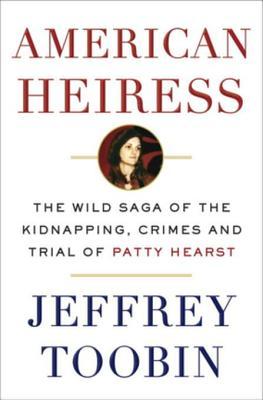 Sometimes the truth is stranger than fiction, and the Patty Hearst fiasco was definitely a case in point. This reviewer is old enough to remember the news coverage at the time; here Toobin presents us with what is likely the most objective and well researched account of the kidnapping and subsequent crime spree in which Hearst was a participant. Thanks go to Net Galley and Doubleday for the DRC, which I received in exchange for an honest review. This book was released digitally earlier this month and is available to the public now.
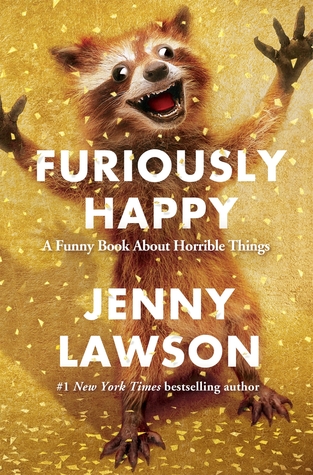 Jenny Lawson is well known as The Blogess (the blogger that came up with Beyonce, the metal chicken). She won awards for her previous memoir, Let’s Pretend This Never Happened. The only DRC I saw for this title was for readers in UK and Australia, so I waited till I could scoop it cheaply and bought it digitally. Those that read my reviews often know I almost never do this. For the $3 it cost on an Amazon Prime daily deal, it was worth it to me.
 If I were to review the subject of this memoir rather than the book itself, it would be a slam-dunk five star rating. As it is, I can still recommend Carmon’s brief but potent biography as the best that has been published about this fascinating, passionate justice of the Supreme Court of the United States. I have no doubt many more will follow, and it’s possible I will read every one of them. As it stands, this is a rare instance in which I turned my back on my pile of free galleys long enough to ferret this gem out at the Seattle Public Library, because I just had to read it. You should too.
 This particular book is not in my wheelhouse, but I was offered a free copy in exchange for a fair and honest review, and the person doing the offering is a friend of the author’s and of mine. Thus, I found myself spiraling down the rabbit hole, reading about everything from Watergate to the connection between the Freemasons and the Mormons. This book is available to the public right now.
 Plum Johnson is gathered, together with her siblings and other family members, at the family manse following the death of her mother. This memoir focuses on the things she’s learned and the insights she gains over the course of the year it takes to empty and sell the property. Thank you to Net Galley and Putnam Penguin for the DRC, which I received free in exchange for this honest review.
 Isabella Leitner was a Holocaust survivor, and she scribed her memoir using brief entries similar to a diary in format. The length is just 120 pages, about the size of a novella. I was asked to read and review this memoir free of charge before it was released digitally. Thanks go to Net Galley and Open Road Integrated Media for the invitation. This title was just released, so it is available now for purchase.
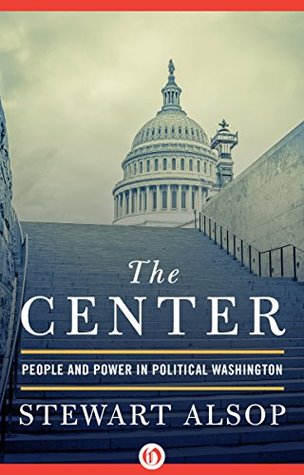 Alsop’s book is a collection of essays describing Washington, DC as it was in the 1960’s. Everything here was written then, so it’s a chance to jump back in time and see what the media—and this reporter in particular– thought was appropriate for mainstream Americans reading the news of the day. I was invited to read and review this book thanks to Open Road Integrated Media and Net Galley in exchange for this honest review. I always hate to pan a book when I’ve been invited; it sounds as if I am insulting the host after eating at his table. However, the truth is the truth, and I see this title as fitting a narrow niche audience, but not so much the general public.
