
Blind Ambition, by John Dean*****

blindambitionJohn Dean was counsel to the president during the Nixon administration, and was the first to testify against all of the Watergate conspirators, including Nixon and including himself, a bold but necessary decision that led to Nixon’s resignation—done to avoid imminent impeachment—and Dean’s imprisonment. Dean’s story is a real page turner, and Nixon-Watergate buffs as well as those that are curious about this time period should read this book. I read the hard copy version, for which I paid full jacket price, shortly after its release, and when I saw that my friends at Open Road Media and Net Galley were re-releasing it digitally, I climbed on board right away. This title is available for sale today, December 20, 2016.

Dean was a young lawyer whose career rose rapidly. When Nixon found out that men employed by the Committee to Re-Elect the President had been arrested for the burglary of the Democratic Party National Headquarters, which was housed in the Watergate Hotel, he quickly became enmeshed in a plan to bury the whole thing. Once he realized (belatedly) that he and his closest advisors had made themselves vulnerable to criminal charges, he had Haldeman, his right hand man, reach into the White House legal staff to find an attorney that could serve as an intermediary so that none of them would need to have illegal conversations with each other. Dean was sometimes called upon as a problem solver, but more often he was essentially the messenger between the president and his closest advisors. Nixon’s thinking here was that everything that passed through Dean would be covered by client-attorney privilege. When this turned out to have no legal basis and heads were going to roll, Dean learned that his own head would be among those served up on a platter by the administration in its effort to save itself. He chose to strike first by testifying against everyone involved in the conspiracy to obstruct justice, and eventually this included President Richard Nixon.


Those old enough to recall having watched Dean testify on television will be interested in the back story here. Dean has a phalanx of his own attorneys, but he decides to appear at the microphone without them; they are among the faces in the back on the TV footage. He also chose to speak in a dead monotone, because the information he was transmitting was itself very dramatic, and he had already been represented as a squealer in some media sources. Instead, he chose to portray himself as a small man, slightly balding, with his horn rimmed glasses and his notes, sitting alone in front of a microphone in order to bravely announce the truth to the Senate and the world.  And it’s effective. See what you think:


When I first read this book I was not long out of high school, and I met the text with snarky disapproval, based more on the very idea that a man as young as Dean could choose to affiliate himself with the Republican Party during the time the Vietnam War raged than on the skill with which the book was written. This time I come to it as an adult with a lot more experience related to writing, and my reaction is completely different.  Dean writes his story like a legal thriller. It’s fascinating and enormously compelling.  I find that what I think of Dean morally and politically is irrelevant when I rate this text; the writing is first rate. Most interesting of all is the way he is able to inject wry humor into the series of events that ended his legal career and sent him to jail. His sentence is not long, though, and much of it is spent in a relatively gentle confinement. He becomes a college professor and writer later in life, which he still is today.


Those that have real depth of interest will also be interested in a later book, The Nixon Defense, written once all the Nixon tapes were released to the public:


The Nixon Defense: What He Knew and When He Knew It, by John Dean *****


Both are riveting, and highly recommended.

Best of 2016: Memoirs

IT’S THAT TIME OF YEAR, AND THIS YEAR SEATTLE BOOK MAMA WILL OFFER UP THE YEAR’S BEST, ONE GENRE PER DAY, CONCLUDING WITH THE OVERALL BEST OF THE YEAR. TODAY WE’RE LOOKING AT BEST MEMOIRS. THE YEAR’S BEST:

Best Memoir of 2016

Sometimes ordinary people write the most extraordinary memoirs; Hazzard’s is a case in point. If you haven’t read it, you’re missing a great read, and at times, very funny as well.

A Thousand Naked Strangers: A Paramedic’s Wild Ride to the Edge and Back by Kevin Hazzard *****

Honorable Mention:

Those that enjoy watching Carol Burnett will love this memoir, and those that don’t know who she is need to climb on YouTube and find out. Or click the video included in this review:

suchgoodcompany

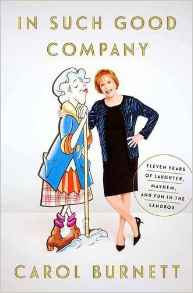
In Such Good Company: Eleven Years of Laughter, Mayhem, and Fun in the Sandbox, by Carol Burnett****

Al Capone: His Life, Legacy, and Legend, by Dierdre Bair***

caponeWhat is it about mobsters that draws our attention?  National Book Award winner Deirdre Bair takes on America’s most famous mobster, Al Capone, and examines the myths and legends that have sprung up in the time since his death. I thank Net Galley and Doubleday for permitting me the use of a DRC, which I received free in exchange for this honest review. The book is available to purchase now.
Alphonse Capone was the first child in his large family to be born on American soil. His family was terribly poor. To steer him toward employment after he had left school, his father purchased a shoeshine kit for him so that he could begin his pursuit of the American dream; Al had other ideas, and his first racket was begun at age 16, shaking down other shoeshine boys as part of his very own protection racket. He was mentored by a man named Torrio, a mobster of the old school. Later Torrio would move his business to Chicago, and once New York became uncongenial, Al’s family sent him out there to join him.

The biography is intended to examine Capone’s life primarily from the vantage point of those near and dear to him; some of his grandchildren are still alive, and I gained the impression that the book was initiated by them. It is obvious from the start that the brutal killings—at the apex, Chicago saw a murder every day—and other vicious acts of retribution over what were sometimes small or even imaginary slights, are soft pedaled and his family life is emphasized.

I guess it’s all a matter of what you’re looking for.

Capone had an organizational genius, and since his entire empire was an unofficial one, he became the embodiment of capitalism unfettered. Bair tells us that the Harvard School of Business uses his business plan, or aspects of it, as part of the curriculum. And had the US Supreme Court not ruled in 1927 that income derived from illegal sources is still taxable income, chances are outstanding that Capone would never have gone to prison. He surely would not have found himself on Alcatraz Island without access to quality medical care; one wonders, however, whether having him live longer would truly have been desirable.

In fact, relatively speaking, I almost feel moved to thank the Bloods and the Crips for their restraint. Well, almost.

Capone was once called “The most shot at man in America,” and Bair examines the stories that are told or that have been written about him. For the diehard aficionado of all things Capone, hers is a must-read. For those with a more general interest looking to read just one book about him, I suspect that one of the many other biographers Bair quotes may be a better bet; it’s hard to say, though, because as Bair points out, after Capone’s death from pneumonia related to syphilis, his wife Mae burned all of his letters and other papers left behind, knowing that private business can quickly become public when one is sufficiently famous. And though Capone loved the limelight and even courted it, wearing flashy clothing and ostentatiously bestowing large gifts on total strangers at times, Mae was a private person. So there aren’t many primary sources to tap, when it comes down to it.

Nevertheless, I found myself highlighting in blue (which is the color I use when I see problems with a galley) the many times I saw the literary version of a flow chart drag down the pace:  “…according to rumors”, “…what may have happened”, and similar catch phrases, along with the menu of choices of what may have happened here, there, everywhere. I think that as a reader just looking for one definitive biography, I would have been happier to see the actual facts that are known. Many of them are riveting! For example, when it became clear that rivals sought to kill him, Capone had his home remodeled to accommodate a machine gun turret. His dining chair had a bullet proof back, as did the windows of his car. There are a lot of fascinating little details that are unquestioned in their veracity, and these are the places where my interest is piqued.

Second to Capone, by far the most interesting character is his wife Mae. Mae was lace curtain Irish, and intermarriage between the two still very distinct cultures was unusual. As I read of the things she has done to keep her family together and herself sane, particularly during Frank’s decline after his final illness began to affect his thinking and motor skills, I am truly impressed. The fact that ultimately it is she, and not a male family member or associate to whom Capone’s men come for business decisions once Frank can’t do it speaks volumes about her intelligence and talent.  I might like to read more about Mae Capone.

For those with an interest similar to mine, my recommendation would be to read this book if you can get it at your library or access it inexpensively, but barring deep pockets or strong interest, I wouldn’t pay full jacket price.

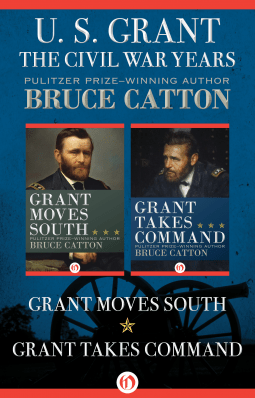
US Grant: the Civil War Years: Grant Moves South and Grant Takes Command*****

usgrantthecivilwaryI was fortunate to receive a DRC of this two volume biography of America’s greatest general, US Grant. Thanks go to Open Road Media and Net Galley for providing it in exchange for this honest review. This is the sixth Grant biography I’ve read, and aside possibly from Grant’s own memoirs, which are valuable in a different way than this set, I have to say this is hands-down the best I have seen. Catton won the Pulitzer for one of his civil war trilogies, and this outstanding biography is in the same league. Those with a serious interest in the American Civil War or military history in general should get it. It’s available for purchase now.

When I had read a couple of US Grant biographies, I told myself that enough was enough, and that I should push away from this one subject in favor of others. I am glad I ignored my own advice, because I have come away from this prodigious, in-depth study with a deeper understanding than anything else has provided.  It’s over 1100 pages long, and over 800 pages once one discounts the end notes and index, but it is as great a pleasure to read at the end as at the start, if not more so.

Is this a good choice for someone new to the American Civil War? Generally speaking (if you’ll pardon the pun) I’d say no, but for someone otherwise well versed in military history or with a tremendous interest level, time, and stamina, it could be. Because Catton is known as an expert in this field, I especially enjoy not having to review his citations. I know his sources will be strong, and one brief overview convinces me this is true.

The first volume starts with his less than glorious entry into the war. As many know, he had been a member of the regular US army during the conflict with Mexico, and had fallen apart and had to go home. Now he is back, but only after a string or two has been pulled by a family friend, and even then, his task is a daunting one. Volunteer soldiers don’t take orders or submit to discipline as a West Point soldiers do, and when he arrives, it seems the lunatics are running the asylum. One of the things that I am impressed with anew every time I read about Grant is his unerring judgment, the social radar that is an indisputable part of his talent. By knowing where to go easy on his men and how to bring them into conformity where it’s most important, he creates a solid force to move South with.

The battles of Belmont, Fort Henry, Fort Donelson, and the tragic but technically successful battle of Shiloh open up the Mississippi River for the Union and divide the South. Catton uses a number of anecdotes that are new to me, and his congenial tone, occasionally caustic wit, and spot-on analysis leave me both energized and contented at the same time.

The second volume, however, is where I learn the most. Until I read this biography, I haven’t understood exactly how great a risk Lincoln takes when he orders that the US military forces should be given the ballot, an unprecedented move, as he himself runs once more for the highest office. His opponent, McClellan, is a former Union general that at the war’s outset, was at the top of the chain of command.  He didn’t go home a happy man, and now he is running as a Copperhead, the moniker given those in the North that want to end the war and let the South leave the Union, slaves and all. And though I know it is often the case that soldiers and sailors choose to support their Commander in Chief at the ballot box, I haven’t fully recognized how badly this may go for Lincoln. Doesn’t every soldier want to go home? This is the Democratic ticket’s promise; end it now and send them home.

On top of all that, Lincoln and Grant, who think a lot alike, clamp their teeth together and endure the white knuckled ride that they know they’ll be facing when they decide against further prisoner exchanges with the South. There are two strong reasons for this decision: first, the South refuses to recognize Black men in uniform as soldiers, and won’t exchange them, assuming that all of them must be escaped slaves, including those with Northern accents. Grant declares that no prisoners will be swapped until the South is willing to parole every Northern soldier, and he means it.

In addition, both Lincoln and Grant realize that the South is running low on manpower. There are thousands of their soldiers sitting in military prisons; to trade them out and risk seeing them back in uniform is to turn a military contest into a war of annihilation. With prisoner exchanges, the war will last longer, and there will be more death. In a peculiar way, refusing to exchange prisoners is the more humane policy.

In an election year, this is a tough sell. There are families up North that have been notified that their son, brother, father, is a prisoner of the enemy, and word has by now been spread as to what kind of conditions those poor men face. How much harder is it to vote for Lincoln and the fight for the reunification of the republic when to do so is to prolong the time their loved one sits behind bars, slowly starving? Lincoln and Grant could temporarily resume prisoner exchanges until after the election, but they stand on principle, and it pays off.

Another thing that I don’t really grasp until I read the second volume is Grant’s relationship with the Army of the Potomac, a collection of men that to some extent have been poisoned with McClellanism. It’s a real tightrope walk, and he is deft in his dealing with it. I can’t tell you everything he does here; that’s the point of the book, after all. But I came away with a renewed respect for General Sheridan, and an interest in reading biographies of that general also.

How much of Sherman’s march through Georgia and then to the sea is Grant’s idea, and how much of it is Sherman’s? I come away understanding this better than before as well, although I have read both Grant’s and Sherman’s memoirs. Catton has a way of crystallizing events without oversimplifying them.

And I nod with solemn satisfaction at the cold fury Grant experiences when he learns of the assassination of President Lincoln and the attempts on the lives of others, including himself.

I still shiver with pleasure when I reread the denouement, in which Grant sends General Weitzel and his troops, some of whom are Black, into Richmond when the Confederate capitol falls. I want to cheer as the throngs form for the military review in Washington DC after the war has been won; all those thousands of soldiers, all those citizens and international visitors in the stands and on the sidewalks, singing “John Brown’s Body”. Think of it!

I promised myself to be brief, and I haven’t really done that, but this is the least I can bring myself to say about this excellent biography. If my review is too long to hold your attention, then this two book series—even while allowing for the fact that Catton is a far better writer than I—will also be more of a meal than you are prepared for.

But for those with a sufficiently great interest level and stamina, I cannot imagine a better memoir of Grant for you to buy and enjoy. Enthusiastically recommended!

Mission: Jimmy Stewart and the Fight for Europe, by Robert Matzen****

missionjimmystewartIn Mission: Jimmy Stewart and the Fight for Europe, Robert Matzen provides an engaging, compelling memoir that focuses primarily on Stewart’s time as an aviator during World War II. Thanks go to Net Galley and to Goodknight Books for the DRC, which I read free in exchange for this honest review.
The book begins with Stewart’s childhood in a small Pennsylvania town. His is a close knit family with a strong military tradition. An outstanding student, he is educated at Princeton and falls in love with theater one summer. He hits the road for Hollywood to fulfill his dream.

Because of the title, I am taken aback at the amount of celebrity gossip that is included in the first portion of the biography. Matzen wants us to know that Stewart used his skinny-awkward-young-man routine as a sort of foreplay to work his way between the sheets with one well known actress after another; he lists many of them. I could have lived without this part, but maybe you’ll enjoy it. If like me you are really only interested in the military aspect of it, skip the Hollywood part at the start and pick it back up when he enlists. Eventually this is what I did.

Once there, the story is fascinating. Stewart resolutely straight-armed studio efforts to keep him in the USA or use him to entertain troops, as some actors that are drafted chose to do. He angers a studio head who actually tells him, “You’ll never work in this town again”. He decides he is going to do his part like any other man, apart from the fact that he had always wanted to fly and now has the money for a private plane and flying lessons. Once he is actually in uniform, he is able to become the aviator he has dreamed of being as a youngster.

As Martzen unspools Stewart’s story, which had to be difficult to research given Stewart’s resolute refusal to discuss that period, I am instantly engaged. I had known at one time that the planes were not heated back then, but hadn’t fully appreciated the dangers and challenges posed by the cold alone once in the air. A man could suffocate if he didn’t regularly break the ice off of his mask. Men could and did lose body parts to frostbite.

The stories of the men that would eventually serve under him as he rises in rank, not due to strings pulled by authorities but as he has wished, by merit and leadership capability, are also both interesting and poignant. Reading the way the pilots name and decorate their planes, how individual aircraft with idiosyncrasies that make them handle differently so that the pilots strongly prefer to fly their own ships, is interesting, and  reading the personal details and in some cases, the deaths of these men is wrenching in some places, poignant in others.

When Stewart has completed his military service, he looks at least ten years older than he is. He’s seen a lot. If he returns to Hollywood, there’s no chance he will play the same roles he used to do. He stalwartly refuses to exploit his time in the service by making World War II films, which are enormously popular, and for a long time, his phone doesn’t ring. He’s sleeping at his parents’ house in his old childhood bedroom, wondering what will happen. But in time he hears from Frank Capra, who has an idea for a picture “based on a story titled ‘The Greatest Gift,’ about a man from a small town who wishes he had never been born. Jim was the only actor in Hollywood whom Capra considered for the role.”

Despite the sense of alienation he experiences with his return to the other-worldly, glitzy city after his gritty, intense experience in the war, Stewart is glad to be back, and he plays what will become an iconic role, that of George Bailey in “It’s a Wonderful Life”. He credits Capra with saving his career, and is overjoyed to be back:

“He was engaged in something magical again, something to interest people in the art of living, rather than the art of dying.”

The book also discusses Stewart’s lifelong friendship with Henry Fonda, and his marriage. We get a brief overview of the peacetime lives of the surviving members of Stewart’s first crew.

If it were up to me, I would remove all of the somewhat jarring photos at the end of the book that show Stewart alongside one actress after another, and I’d replace them with photos and maybe diagrams of the planes we hear so much about. A map here and there wouldn’t hurt, since we follow his flight paths and it’s sometimes hard to visualize where these places are. I used Google, but would like to see these included as part of the published memoir, perhaps in the center, where they’re most relevant.

I recommend this biography to fans of Stewart’s, and I recommend most of this book to those with an interest in military history.  The book is available to the public today, October 24, 2016.

In Such Good Company: Eleven Years of Laughter, Mayhem, and Fun in the Sandbox, by Carol Burnett****

suchgoodcompany  When I saw that Burnett had published a memoir of her years as America’s favorite comedic performer on The Carol Burnett Show, which ran from 1967 through 1978, my first thought was, what, another memoir? She’s already published at least three others, one of which I have read and reviewed. But the fact is, she hadn’t used up all her juice yet. Each of her memoirs focuses on some particular aspect of her life, and so this book is new, it’s original, and it’s probably the stuff you were hoping she’d talk about in her other memoirs. Lucky me, I read it free thanks to Net Galley and Crown Archetype. It was published September 13 and I am sorry to be on the late side, but I scored my own copy just prior to publication; I had no idea it was available till Crown put a promotion up on Facebook and it showed up on my home page.  I genuinely held my breath as I logged onto Net Galley to see if I was too late, and happily, the Literature Fairy smiled on me.

As the memoir begins, I am at first a trifle disappointed, because it appears as if she is just going to list every single person that’s ever appeared on her show and gush about how nice they were.  But she’s just warming up, and it gets more interesting. She describes how she made her way into show business, and though she skims over the early years, knowing that the reader wants to get to the show, it sounds very much as if she was the overnight success that aspiring actors only dream of becoming.  She was on a show that I wasn’t around yet to watch called “The Garry Moore Show”, and she must have made not only a tremendous impression, but also a lot of friends, because she was offered her own variety show—think of it!—and then was able to bring a head writer, a choreographer, a bunch of dancers and some other people west with her from New York to Los Angeles.

This show was a fixture in my childhood and adolescence. One of Burnett’s regular satirical sketches lampooned soap operas, and it was called “As the Stomach Turns”. It was one of the few things that made my parents and me laugh out loud at the same time. My friends and I spent ridiculous, late night hours creating our own satire of a satire, which we dubbed “As the Stomach Churns”, and which featured imaginary illicit relationships among our own teachers along with the administration, janitorial staff, and especially our librarian, a book hoarder that chased away all potential clientele from her sacred gates.  So when I saw that Burnett was writing about the show, I had to see what she’d written, because she had been an intrinsic part of my own development.

All comers that want to read this should do it near an internet source if at all possible, because the comedic sketches can be viewed on television and now also on YouTube. This is fairly new: I tried to view them a couple of years ago and they weren’t there yet, so this is exciting all by itself.

And if you have never seen any of her work and wonder what I am carrying on about, check it:


and with Robin Williams:


The life that she led sounds like something most actors could only dream of. She got up, got her kids off to school, started work on the show mid-morning Monday-Friday, with a single run-through on Thursday followed by a live show before a studio audience Friday, and then they were done at three o’clock and she was done by the time her kids were out of school. It came down to disciplined behavior on the part of the cast and crew, and to the unusually respectful atmosphere in which the show was done. Once a guest misbehaved and when he threatened to storm off the set, she let him go and said good riddance; they did the show without him.  (She won’t give us a name, but he was short. I have been speculating ever since.)


She does tell the many spoofs that were done on movies of the past, and which actors called to say they just loved what the show had done with their film, and which either called up and were angry or sent indirect messages that they were not amused. And she  offers a retrospective look at the way women in show business were expected to behave back then; she was sometimes a doormat, and exultantly recounts how Edie Gourmet, on a guest visit, gave some of it back to those that bullied Carol.


Some of the funniest bits of writing are included, and some of the regular cast’s best onstage moments are recounted, along with those of favorite guest stars. A complete list of every show and which guests were featured is at the back of the book for those that want to look up particular entertainers, or  peruse it for fun.


But the bottom line is that this is pure gold for those that love Burnett and the show, and that can follow along some of the high performance points online. If you aren’t interested in her work, then the memoir won’t mean much to you.


Recommended to Burnett’s many fans.


Michelle Obama: A Life, by Peter Slavin****

michelleobama I received this book as a birthday gift from a gracious house guest. I think he chose it for me because he knew of my strong interest in civil rights issues. Although this is actually out of my wheelhouse, I decided to read it, and I was surprised how much of it I enjoyed. Of particular interest was the beginning of the book, where a surprising amount of the narrative was devoted to African-American history, especially in Chicago. I hadn’t expected it and found it both interesting and useful.

I don’t generally follow the lives and careers of mainstream American politicians or their spouses, so  I didn’t know much of anything about Michelle Obama, other than that she had made it plain, upon taking up that famous residence, that her family would be her main focus and if the public didn’t like it they could lump it. After all, nobody was paying her a salary, so she had some choices.

Reading of how her parents struggled in order to get Michelle and her brother excellent educations, and of the tenacity with which Michelle approached school, social justice issues, and her career, I found myself feeling strangely sorry for her. Before her husband decided to pursue politics, her career outshone his. She was in demand and had a lot of choices. When she headed to the Ivy League, her classmates and professors were almost all white people, and the pressure was on her not only to succeed, but to be the one African-American that would be the example, the cultural education for a whole lot of privileged white people. That kind of hot spotlight would undo some people, make them decide to go on home and enroll at a school closer to home, but Obama—then Robinson—did it and did it well, and then she went back to her hometown, Chicago, to find ways to use her education to serve her community.

As the first Black first lady (FLOTUS), she’s had to make some difficult choices, and there would be a certain level of criticism no matter what she chose to undertake. Her career had been ascending like a rocket, and she took what will likely be a permanent leave of absence in order to keep her family well tended. She hadn’t wanted her spouse to go into politics, because she was convinced, as I am, that being a politician doesn’t end up making a difference. She urged Barack to become an inspirational instructor, or a school administrator, or go to work for a strong nonprofit, but that wasn’t what he wanted to do. He wrote a book; it didn’t sell. (Occupying the Oval Office would change that.) But when two parents put their careers on a fast track simultaneously, often the ones that pay the price are the kids, and she wouldn’t have that for their girls. If it came down to her career versus their development, she was determined to be there for them. And who am I to say that wasn’t the right thing to do?

Slavin is not an official biographer; in fact, after leaving the White House, Michelle plans to publish memoirs of her own. However, this writer was given interviews with people very close to the First Family with Michelle’s blessing, and maybe that is why some noteworthy items are glossed over.

Because whereas this memoir is about her more than him, a fair amount of the president works its way into the text. Their lives are joined, after all. And it does seem a little myopic not to have addressed the elephant in the room: the first Black president can’t prevent cops all over the country from shooting Black men—and sometimes women—all the damn time and for no good reason. After all the protests that took place all over the nation, with chants and signs of “Hands Up, Don’t Shoot!” and “I Can’t Breathe!”, you’d think it would merit at least a paragraph.

It’s like it never happened.

So if you are an admirer of the Obamas, this is not a bad book certainly. And it’s tempting to jump into their court, so to speak, based solely on the amazingly stupid things about birth certificates and loyalty that the ultra-right has come out with, questions that a white presidential family would never have to confront.

But when push comes to shove, this book won’t make a big difference, and sad to say, neither will the Obamas’ eight years in the White House. It’s good to know that American society has moved forward enough to elect a Black president, but like all the presidents before him, his authority is limited and to some degree, illusory.

I recommend this memoir to those with an interest in Michelle Obama. Those eternally present polls that reflect the public’s perception of those in the White House show that a much greater number of Americans admire her than approve of the president. But of course, one doesn’t have to be American to want to read this; one only needs to be interested in the life of this historically first, First Lady.

Pancakes in Paris, by Craig Carlson****

pancakesinparisThe American dream has become harder for ordinary people to attain, but Carlson is living proof that it can happen; yet some of us may need to go somewhere else to find it. In his upbeat, congenial memoir, “the pancake guy” chronicles his journey, from the kid of a wretchedly dysfunctional home—and I don’t use the term lightly—to the owner of Breakfast in America, his own restaurant franchise in France. This title was a bright spot in my reading lineup last month, and it can be a bright spot in yours too. Thank you to Sourcebooks and Net Galley for the DRC, which I received free in exchange for an honest review.
Is this a thing that any kid in America could have done? Not so much. Carlson has a rare blend of  intelligence, organization, and social skills; above and beyond all else, he possesses unstoppable determination, clear focus, and a work ethic that never flags for one tiny minute until he discovers he is close to working himself to death. Those lacking talent and determination may never reach the end of the rainbow as this author has done; that much is clear. But oh, what fun to share the ride with him!

Given his family’s expectations for him, or lack thereof, it’s amazing he finished high school, and his acquisition of a college education is more remarkable still. But it is his junior year at a state college in Connecticut that plants the seed that will sprout and grow into a way of life; he is invited to spend his school year in Paris. Once he’s there, the tumblers click, and he knows that he has found his people.

As Carlson’s story unspools, he debunks stereotypes believed by many Americans, and a few of them are ones I believed too until I read this memoir. Carlson delivers setting in a way much more immediate than any number of Google searches can provide, but it’s his insights regarding French culture, law, and society that make his memoir so captivating. The prose is lean and occasionally hilarious. He plucks choice, juicy vignettes from his journey all along the way, and this makes us feel as if we are riding quietly on his shoulder taking it all in as he goes.

If you’ve never been to France and don’t intend to, you can still enjoy this book. If you don’t like pancakes or any aspect of the traditional American breakfast, it doesn’t matter. Carlson is enormously entertaining, and so his story stands on its own merits. I am furthermore delighted to see that the only recipe that is inserted into his narrative is actually a joke. A small collection of actual recipes is inserted at the end, and although I never, ever, ever do this, I intend to try one of them out tonight! But even if you skip the recipe section entirely, you should read this memoir. It’s too much fun to miss. The best news of all is that it’s available for purchase right now.

Get it, and read it!

War and Turpentine, by Stefan Hertmans***

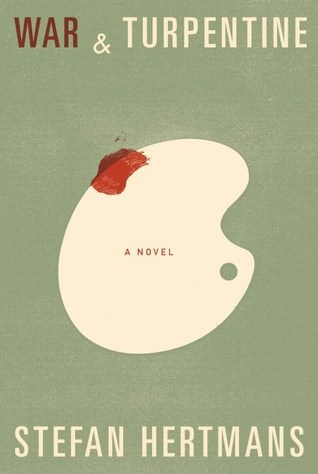
warandturpentineI received a DRC of this memoir from Random House through its First to Read program. I read the book free in exchange for an honest review. Though it wasn’t a good fit for me, I think there are niche readers out there that might enjoy it.
This memoir chronicles the life of the author’s grandfather, Urbain Martien, a Dutch worker that fought in World War I. The son of a brilliant artist, Martien worked whatever jobs were available until the war broke out. He had hoped to become an artist like his father before him, but instead wound up painting buildings just to earn a living.

Apart from its historic aspect, this title is one that I knew would be outside my comfort zone. Since retirement I’ve pushed myself outside my usual well-worn paths and taken a few risks, and though it doesn’t always work out for me, a few unlikely choices have affected me so favorably and so deeply that I have continued to push my own walls outward. I don’t know a thing about art, but I thought it might not matter. I pushed myself to read The Goldfinch, which was about a stolen museum painting but also much more, and once I did I couldn’t believe I had let the DRC pass me by. So I had this in my mind; War and Turpentine might be one more opportunity that I shouldn’t miss.

The basis for the memoir is a series of notebooks that the author’s grandfather gave him, a journal of sorts, and the memoir itself is done not in the usual linear fashion, but as a series of snapshots. I confess I prefer my memoirs to start at the beginning and end at the end, if not the end of life, then at the end of the period being discussed. But an artist would perhaps not have thought that way; I can see the reason for selecting a different format, but because there was no discernible story arc, I found myself floundering and eventually avoiding the book altogether.

The prospective reader should know that along with some really strong imagery and other word smithery, the memoir contains some very graphic violence.

I suspect the ideal reader for War and Turpentine would be one that loves art, art history, and European history.  It is for this niche audience that I recommend this book.

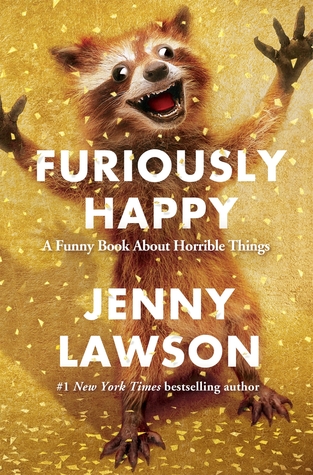
Furiously Happy: A Funny Book About Horrible Things, by Jenny Lawson****

furiouslyhappyJenny Lawson is well known as The Blogess (the blogger that came up with Beyonce, the metal chicken). She won awards for her previous memoir, Let’s Pretend This Never Happened.  The only DRC I saw for this title was for readers in UK and Australia, so I waited till I could scoop it cheaply and bought it digitally. Those that read my reviews often know I almost never do this. For the $3 it cost on an Amazon Prime daily deal, it was worth it to me.

Lawson is one of a handful of authors that talks candidly and often very humorously about her own struggle with mental illness and autoimmune disorders. Her capacity to create imaginary scenarios totally out of left field is her greatest strength, second only to the ability—sometimes—to find a way to laugh at the nest of spiders that occasionally takes over her brain. And sometimes she is painfully candid. Try this one on:


“Sometimes being crazy is a demon. And sometimes the demon is me…And some of us just carry around our tiny demon as he wreaks havoc in our mind, tearing open old dusty trunks of bad memories and leaving the remnants spread everywhere. Wearing the skins of people we’ve hurt. Wearing the skins of people we’ve loved. And sometimes, when it’s worst, wearing our own skins.”


She rants about the well intentioned but ignorant advice she’s received from clueless amateurs. At various times she’s been told to shake it off, to stop eating gluten, and to let Jesus into her heart in order to experience a full and immediate cure.

Sure.

Her musings about flying, which her fame requires her to do a great deal of, though she is afraid both of flying and of leaving home, are brilliant. This reviewer crowed out loud from glee at Lawson’s suggestion that flight attendants be permitted “to whack one person per flight with a piñata stick for being the stupidest damn person on the plane.”

My favorite section is the one in which she details the horrors of remodeling in a way that makes me howl. And goodness knows we all need to do that.

Lawson inserts women’s reproductive anatomy into almost any sort of discussion, and whereas I applaud the feminist spirit that demands the word “vagina” no longer be treated like a dirty word, I confess it was a bit much for me. But then, I am probably older than you are; this may be a generational thing. And there may also be plenty of women from the Boomer generation that think her use of the word is great.

Now and then there’s an odd moment in which I stop reading and stare at the text. What? Did she proof read this, and did her editors? There are occasional remarks that strike me as racially insensitive. She spins a thread about the wild things in the out of doors, and cautions us that since bears don’t play, we should shoot one first and ask questions later. Assuming said bear is in one’s back yard or trying to fit through a window of one’s home, I can see the point, but it came out of left field and made me wonder. Really? Just shoot bears? And the thread further spins itself into a bison-and-Native-Americans discussion in which she assures us that it’s not great to have bison in one’s yard, but it would be awesome to keep a lot of Native Americans out there. My e-reader says, “?!?”

But then she drops and is off onto another stream-of-consciousness spiel before I can fully digest what’s been said. She does it a couple of other times also. And it occurs to me that she has perhaps the ultimate excuse, having said up front that she has known for most of her life that she is “not right” in the head, but I still wonder that her editors didn’t look at that and say, “Umm…Jenny? This part right here…?” There are no overt racial slams or this review would have a lot of empty stars, but there are small moments where I wonder if she understands how others may read what she’s said.

Many of her entries if not all of them are drawn from her blog, and it’s possible that if you’ve read her blog faithfully, you won’t want to pay for this book. As for me, I found it worth the three bucks to be able to get everything at once in a well organized format—known as a book—that I could read comfortably. I confess I would not have paid full jacket price for it now that I get most books free and also have less money to spend on them than when I was working, but for others it may well be worth it.

On the whole, this is a courageous and often eloquent, fall-down-funny memoir, and with the small reservations mentioned above, I recommend it to you.