The Morningside, by Tea Obreht****

In 2019, Tea Obreht blew me away with Inland, a work of historical fiction—alternative history actually—so creative that I haven’t stopped thinking about it to this day. Her new book The Morningside is a dystopian novel that, while not as remarkable as the previous effort, is both intriguing and memorable.

My thanks go to NetGalley and Random House for the invitation to read and review. This book is for sale now.
Our protagonist is Silvia, and she and her mother are refugees from a homeland made dangerous by violent political turmoil. They were invited to live in The Morningside, a once grand old building fallen into disrepair by the flooding that comes with climate change. Silvia’s aunt, who arrives first, and her mother are to be caretakers and participate in the resettlement program.

At eleven, Silvia is full of questions. Her mother never talks about her father or about the past. Her aunt has photographs and stories; her mother is like the librarian that just wants everyone to stop talking. She is consumed by her fears. We readers have to wonder which of them is more realistic. Should the aunt stop blabbing, or should Sil’s mother get a grip? Silvia clearly prefers her aunt’s approach, but then, Sil is just a kid.

There’s a considerable wait list to get into school, so in the meanwhile, Silvia is bored, and bored kids have a tendency to get into trouble. Silvia becomes obsessed with the reclusive artist that lives in the penthouse. Nobody talks to her, because nobody is supposed to bother her. The one obvious thing about this neighbor is that she leaves home at the same time each day with her three dogs.

Silvia becomes convinced that the woman is a sorcerer whose dogs transform into humans—her three sons—for a portion of each day. My initial reaction is the same as her mother’s: don’t be ridiculous, Sil. Leave that poor woman alone. But then it dawns on me that this is fiction, after all, and this is Obreht, so…could the woman have supernatural powers?

Silvia is assisted twice in her spying mission, first by a neighbor that goes by Lam, and that is willing to exchange a pass key to enter the artist’s home for mail that was sent to him after he moved out.  I wonder about this; an eleven year old is approached by an adult man for secret purposes. What could possibly go wrong?

Her other confederate is a girl her own age whose family moves into The Morningside.  How starved Silvia has been for a peer!  Yet this girl is even gutsier than Silvia, and she leads her into dangerous waters more than once.

That’s all I’m going to tell you, except that the story is fresh and original, and although I tend to be skeptical when it comes to this genre, there is never a moment when I find myself stepping back and saying, no way.

With a young protagonist, one might be tempted to say this is for young adults, and that’s possible; yet the vocabulary is advanced enough that the younger reader had better have extraordinary skills in reading and comprehension, not to mention stamina.

I recommend this novel to those that love the genre.

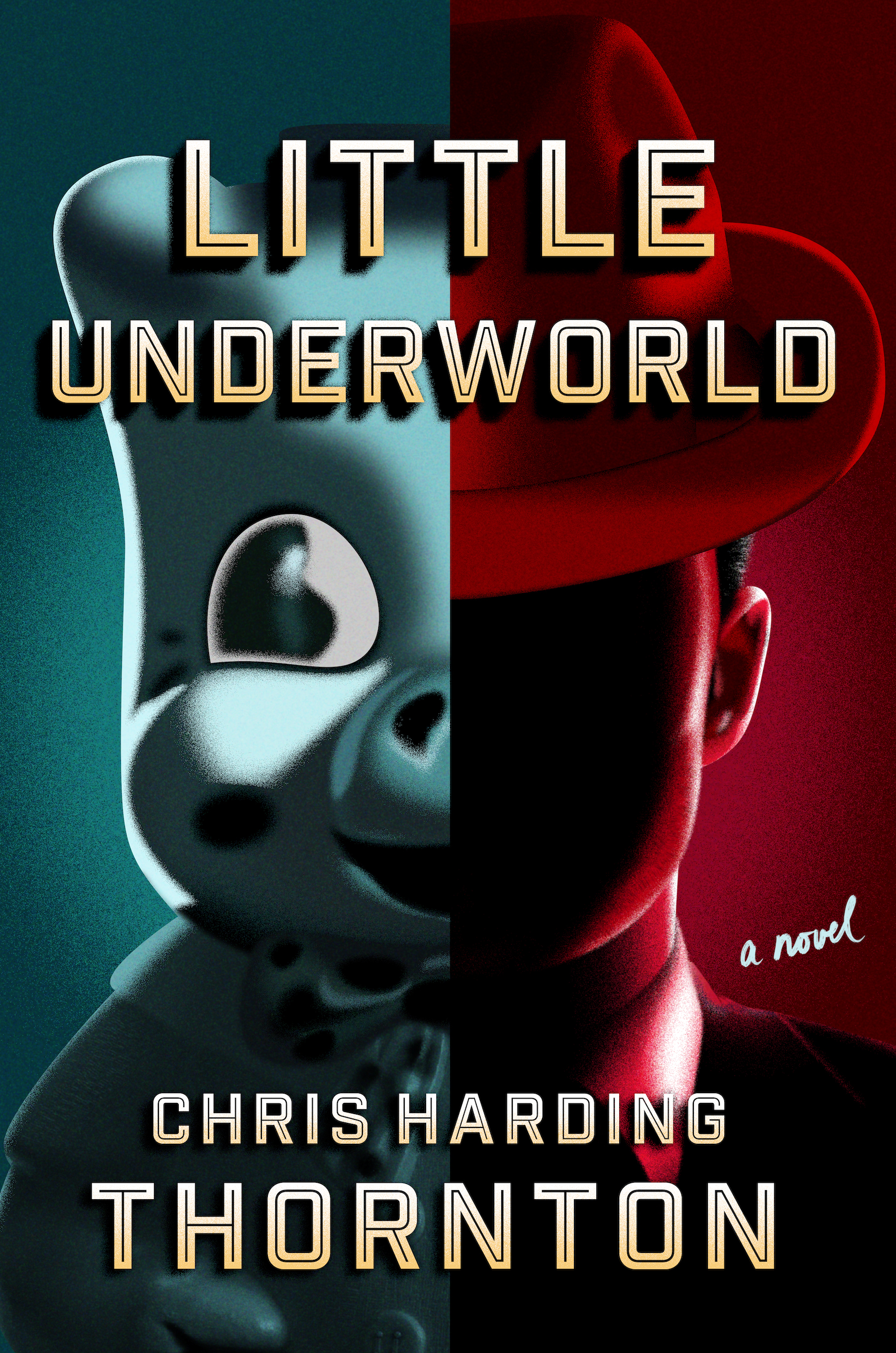
Little Underworld, by Chris Harding Thornton***

Chris Harding Thornton debuted in 2021 with Pickard County Atlas, a book I loved so much that I’ve had a finger in the wind ever since, hoping to score a galley of her next book. This is it. Sadly, I don’t love it the way that I did her first endeavor; perhaps I just loved the first one too much.

My thanks go to Net Galley and Farrar, Strauss and Girard for the review copy. This book is for sale now.

Our protagonist is Big Jim, a former cop now working as a P.I. He and his friend Frank, who is still a cop, take a man named Vern out to the river to beat the crap out of him for molesting Jim’s child. The plan is to smack him around and run him out of town, but at the last minute, Jim has a change of heart and snuffs him; Frank covers for him.  This is how the book opens.

My problem is that a great deal of information gets dumped at the outset, primarily characters, and by the thirty percent mark, I am still trying to keep them straight. It took me a ridiculous amount of time just to remember that Jim is the main character. I can’t recall the last time something like this has happened. There is rampant corruption in Omaha, Nebraska during the era of Prohibition, and there are a lot of local politicians whose names get thrown into the melee early. All of them are male and Caucasian, and while I believe that’s historically accurate for the time and place, it doesn’t help me keep them straight. By the halfway mark I have a better sense of who’s who, but I have reached a state where I have to force myself to read the book so I can write the review.

I would have liked to see at least one female character developed in here somewhere.

The pluses here—and there certainly are pluses—have to do with the author’s abundant skill as a wordsmith. This is grit lit, to be sure, and those with sensitive dispositions might want to steer clear. For me, though, when a character is described as “a guy whose canned meat had half the city’s fingers in it,” I love it. There are a few other moments of very dark humor that run along the same rails. What’s clear is that life is cheap, and Prohibition Omaha is a violent, vicious place to be. At one point, Jim wonders if there’s a single building in town that doesn’t have eight or ten corpses concealed in the concrete; in another, he reflects that “there wasn’t much risk of finding anyone innocent in Omaha.”

The second half of the story is better than the first half.

So there you have it. My advice is that if you want to read this book, get it free or cheap, but don’t pay full cover price for it. Meanwhile, I still have mad respect for this author; I look forward to seeing what she produces next.

Charlie Chaplin vs. America, by Scott Eyman*****

Charlie Chaplin rose to fame over 100 years ago, but his fame hasn’t faded over the years. One of the most visionary movie makers in modern history, he rose from desperate poverty and homelessness during his childhood to become one of the wealthiest and most respected men in his chosen profession. And yet, for some odd reason, the U.S. government relentlessly pursued him as if he were an enemy agent, eventually forcing him to retire abroad. It’s a bizarre episode in U.S. history, and a fascinating one.

When I saw that Scott Eyman, an author whose biographies of actors I have previously enjoyed—John Wayne, Jimmy Stewart, Henry Fonda—had written about this case, I had to read it. My thanks go to NetGalley and Simon and Schuster for the invitation to read and review. This book is for sale now.

Charlie was born in 1889 in London. His mother Hannah was an actress, a loving mother whose health was dreadful. In addition to more conventional illnesses, she was sent repeatedly, and for longer stretches each time, to mental hospitals; it has been speculated that she suffered from syphilis, which eventually had devastating effects on her brain. Charlie’s father was a businessman who left the family and refused to pay a single shilling of child support because one of Charlie’s brothers was conceived with another man. And as an aside, if there is an afterlife, I sincerely hope that Charles Chaplin, Senior is roasting eternally in the flames of hell.

For a while, Hannah’s relatives cared for Charlie and his older brother, Syd, but eventually the boys found themselves in a workhouse, beaten, abused, sickened, and barely fed. It was his brother Syd who first discovered that acting could keep him out of the workhouse and put food on the table, and once he was so employed, Syd took his pale, sickly little brother to the theater and persuaded his boss to use Charlie, too. Thus was a star born.

His tremendous suffering during his childhood gave Charlie a lifelong sympathy with the working class, the impoverished, and the down and out. Early in his career, a director gave Charlie a costume and told him to come up with a character, and this was when he invented The Little Tramp.

I’ve known for most of my life about Charlie’s expulsion from the U.S., but I’ve never been sure whether he was a Communist. I’ve known people brought up in Communist households in America, and for many years, they existed strictly underground, so I wondered, did Chaplin deny his affiliation because he wasn’t a Communist, or because he was? Eyman’s meticulous research demonstrates once and for all that Charlie was not political. He told the truth about himself: “I am not a Communist. I am a peace monger.”

Nevertheless, once he gained prominence in the American movie industry, he had a target on his back. It’s difficult to understand why politicians and bureaucrats in California and in Washington, D.C. hated him so fiercely.

“A month after the revocation of [Chaplin’s] reentry permit, the FBI issued a massive internal report documenting more than thirty years of investigations focused on Chaplin, a copy of which was dispatched to the attorney general. The report revealed that, besides the FBI, Army and Navy Intelligence, the Internal Revenue Service, the Central Intelligence Agency, the Department of State, and the U.S. Postal Service had all been surveilling Chaplin at one time or another. In short, the entire security apparatus of the United States had descended upon a motion picture comedian.”

Eyman has done a wonderful job here. Because I had fallen behind, I checked out the audio version of this book from Seattle Bibliocommons, and I alternately listened to it and read the digital review copy. Of course, anyone reading this book for the purpose of academic research should get a physical copy, but those reading for pleasure may enjoy the audio, which is well done; this is a through, and a lengthy biography, and the audio makes it go by more quickly.

I confess I haven’t read any other Chaplin biographies, so I cannot say for certain whether this one is the best, but it’s hard to imagine a better one. For those sufficiently interested to take on a full length biography, this book is highly recommended.

The Great Divide, by Cristina Henriquez*****

I found The Great Divide, by Cristina Henriquez, on a short list of most anticipated novels of 2024. I don’t like to get shut out when a book gets this much buzz; then there’s the added draw of an unusual setting. The U.S. doesn’t see a lot of fiction published that’s set primarily in Panama during the early 1900s, and so that sealed it. My thanks go to NetGalley and Harper Collins for the review copies, both audio and digital. This story lives up to the hype, and I recommend it to you.

I am not so sure about it at the outset. There is a robust quantity of characters that are important to the story, and each of them is given a brief chapter all to themselves. I wonder whether they will ever intersect, or if this will turn out to be a collection of short stories, but before much longer, characters are meeting other characters. They don’t all end up together in the end, but we can see the ties that have formed. There are a lot of people to keep track of, and for me, having both the print version and the audio is tremendously helpful. Robin Miles narrates in a way that is natural and fluid, and I don’t notice much of what is around me when I listen to her. But once in awhile a character is mentioned and I draw a blank; here is where the Kindle version is essential, because I highlight the names of each of the characters, and this enables me to instantly flip back to where they were introduced to us without having to stop listening. Eventually, of course, I no longer need to do so, but knowing that I can makes for stress-free reading.

I am engaged with these characters, each of whom feels real to me, and I groan when I see them get into trouble, and sigh with relief once they are in the clear again. The ones that I care about most are a father and son that are estranged from each other, neither wanting to stay that way, yet both of them incorrectly interpreting the silence of the other. As we reach the climax, I can tell there are three ways for this situation to resolve: they can reconcile; one of them can die; or the son can decide to follow another character back to the U.S.A. without reconnecting with his dad.  It only now occurs to me that there was a fourth possibility, which was to leave them still estranged at the end; but by this time, Henriquez had shown herself to be a better writer than that, and while I won’t tell you how they wound up, I will say that she didn’t leave her readers dangling.

Because this is an intricately woven tale with a lot of equally important characters, I’m not including any quotes, but I will say that Henriquez is a talented writer, and anyone that loves good historical fiction should get this book and read it. This applies even more so to those interested in Latin American history and the building of the canal. I hadn’t read her work before, but she’s on my radar now, and I look forward to seeing what she writes next.

The Hunter, by Tana French*****

In 2020, Tana French gave us The Searcher, the first in the Cal Hooper detective series. By that time I was already an established fan, but I loved that book particularly well, for reasons I’ll revisit in a moment. Now we have the second in the series, The Hunter, and if anything can reduce this crusty old English teacher to a blushing fan girl, this is it. Two books in, this is already on my short list of favorite series. My thanks go to NetGalley and the Penguin Group for the review copy. This book will be available to the public Tuesday, March 5, 2024.

The series debut introduced the characters, with the protagonist being a retired Chicago cop that found this tiny Irish village on vacation and, needing a new home far from his ex-wife, yet affordable, discovered a bargain fixer of a home and decided to stay. The story’s main problem revolved around a nearly feral tween that kept popping up at Cal’s place. The scrappy little stinker that was relieving Cal of food, occasionally, and doing other unsettling things turned out to be a girl; her name is Teresa, but she’s known as Trey. Her family was in dire straights following the departure of Trey’s father; her brother had left, intending to return, but never had. The mystery was where Trey’s brother had gone, what had become of him, and why. In the interim, she became greatly attached to Cal, who enjoyed her company and taught her some woodworking skills, but also kept a careful distance, lest rumors start and grow.

Now Trey is a bit older, and she is more civilized. She is close to both Cal and Lena, the local woman that Cal has been seeing. But as life settles into a civilized hum, one that would be comfortable had climate change not created a drought that has local farmers at the near end of their wits and their bank accounts, the unexpected happens once again: Johnny Reddy, Trey’s no-account father, has returned. Cal is prepared to step back, if need be, in case Trey wishes to bond with her actual dad rather than himself. Meanwhile, Johnny vows to visit Cal with some local moonshine, and “make a night of it.”

“Trey says nothing. If he does that, she’ll get Cal’s rifle and blow his fucking foot off, and see can he make his way down the mountain to Cal’s after that.”

Johnny never succeeds in bonding with Cal, who doesn’t like the look of him. “Johnny gives him the urge to pat him down and ask him where he’s headed. There are guys like that, who flunk the sniff test just going to the store; it’s a good cop’s job to work out whether they’re actually doing something hinky, or whether it’s just that they will be sooner or later, probably sooner.”

The village is a tiny one, and outsiders are few. Everyone in the vicinity knows that Johnny’s back; everyone wonders what he’s up to. They haven’t long to wait; he’s brought a man with him, one whose family once lived here, or so he says; and the man is interested in seeing if there’s gold on some of the local properties. “He has a rich man’s smile, easy and understated, the smile of a man who isn’t required to put in effort.”  Now the question is whether this “plastic Paddy” is a shyster trying to rip off the locals, or if he is someone that Johnny is seeking to fleece. Meanwhile, Trey has a different agenda, a private one.

The thing that makes this story so much better than your standard mystery is the characterization. If you are in search of a thriller that is all page-turning action, this isn’t your book. However, if you love a layered story with complex, convincing characters, this is for you. I said in my previous review of the first in the series that Trey is what makes an otherwise solid story a golden one, and that’s even truer here. One could even argue that it’s really her series, with Cal existing as scaffolding. Time will tell.

In particular, though, anyone that works with, or has worked with at risk youth cannot, must not miss this story. French has taken hold of my heartstrings hard, and I don’t want her to let go. Highly recommended.

System Collapse, by Martha Wells*****

System Collapse is the seventh book in Martha Wells’s acclaimed Murderbot Diaries series, and it’s a humdinger. Fans have been waiting for this one, and they will not be disappointed. My thanks go to NetGalley and Tor Publishing for the review copy. This book is for sale now.

If you are one such fan, I’ve already told you what you need to know; for the uninitiated, I’ll continue. I am a reluctant science fiction reader. I generally avoid anything that involves complex world building or a new vocabulary extensive enough to require a glossary. I absolutely don’t read science fiction series anymore, because I am not that dedicated. As we age, our brains become less flexible, and so whereas I loved reading a handful of excellent but rather intricate series when I was thirty, I’m just not up for it in my retirement years. I include this information because I know that a good number of my readers are also at or near retirement age, and may be similarly reluctant. So, first: you can do this, and it will be painless.

I was finally persuaded to try this series—not for review, merely as an audiobook from the library, which is about as low risk as it gets—when readers from a number of unrelated places in my life all recommended it. I saw good things from a couple of my Goodreads friends online. How nice, I thought, but I’ll pass. Next came my children, my eldest and my youngest, both grown, of course. Their rabid enthusiasm cracked my resolve a tiny bit, but I thought, maybe later. The final straw came when a couple of lifelong friends came to visit from out of state last spring. They were embarking on a road trip around the Pacific Northwestern USA, concluding their stay here in Seattle, and they, too, were wildly enthusiastic—and one of them doesn’t read for pleasure much at all! They listened to the audiobooks of the entire series up through the sixth, which is what was available at the time, and heartily recommended it.

Well, I thought. I could check the library. I could probably listen to the first one while watering the plants, and if I don’t like it, I’ll just send it on back. But of course, I didn’t send it back; I checked out the rest of the series, and friend, if you have to stand around for thirty or forty minutes daily with a hose in your hand, this is the way to do it.

The Murderbot is a being that is part machine, part human, and the term for this within the fictional world it inhabits is “sec unit,” because it has been invented for the security of the human beings inside the various spacecraft that are flying around out there, and also partly for the security of the ship also; but as we learn, the ship can sometimes take care of itself.

“Murderbot” is the specific name that our protagonist has chosen. And the main character is indeed about ninety percent of what’s important here. We don’t need a host of invented words. There are a bazillion other characters, and no effort is made to introduce them to us gradually, but it doesn’t matter. Just let it flow over you and at some point, the most important characters will click in.

This seventh installment in the series is the first time that I have read it with my eyes. I wasn’t sure how this would go, since voice actor Kevin R. Free is so adept at reading the series that I had begun to equate his voice with the character; I needn’t have worried. In fact, I find that I prefer reading it this way, because the internal monologue is immense, and it’s much easier to tell when the character’s ruminations have ended and the action resumes when I can see the (many, many) parentheses. Also, the humor here is often sly, and when listening to the story, I don’t get a pause that provides me with time to consider what’s been said; we’re off and running, and if I don’t want to miss anything, I have to forget all about that little witticism and move forward. Reading by sight allows some reflection.

The series is drop dead funny, and it is also timely, as AI makes more inroads toward humanity of its own, raising all sorts of ethical questions for the future.

For any fans of the series that are still reading, despite having been dismissed at the start of this review: my favorite character, apart from the protagonist, is Art, the ship that is also Murderbot’s beloved friend. Murderbot’s sarcasm is matchless, except when Art is around. matching snark for snark with Murderbot as it does here, and foreshadowing suggests that when #8 is written and available, the same will be true.

And I cannot wait for the next in the series. Highly recommended!

The River We Remember, by William Kent Krueger*****

William Kent Krueger has been writing since the late 1990s, but he only came onto my radar in 2019, when he published This Tender Land. To read Krueger once is to want to read him again and again, as often as is possible, and that’s what I’ve been doing. The River We Remember is his most recent mystery, an achingly atmospheric novel set during the 1950s in rural Minnesota. My thanks go to Net Galley and Atria Books for the review copy. This book is for sale now.

The protagonist in this stand alone whodunit is the local sheriff, Brody Dern. Brody is a thoroughly believable character; there’s nothing of the TV sheriff about him. When the wealthy, universally hated Jimmy Quinn is found floating dead in the river, Dern does not lose sleep while vowing to find and reveal the entire truth. His first response is his own deep resentment that Quinn had to go and die in what had been, until now, Brody’s favorite spot to relax. How dare stupid, rotten Jimmy Quinn ruin this special place with his bloated corpse? And his second instinct is to minimize the damage to everyone else concerned. For example, the Quinns are Catholic, and if Jimmy committed suicide, they can’t bury him with the family. If not suicide, then perhaps a family member could stand it no more and shot him dead. Again, if so, no great loss, and let’s make sure the family is taken care of. And so, Brody’s first instinct is to wipe down Quinn’s truck so that, if other authorities should become involved in the case, none of these poor people will have to suffer for it.

Then, he goes to the evidence cabinet and removes some of the confiscated drugs so that he can get a decent night’s sleep.

Part of what fascinates me here is the culture of small town Minnesota during this time period. People don’t lock their doors most of the time. When a prisoner that Brody knows is almost certainly innocent requests a sharp knife in order to carve something, Brody gives it to him, right there in the cell. There are a number of interesting secondary threads, and all contribute to the steamy, smoldering ambience in which this story is set.

But oh lordy, the racism. And in this, I know there is no exaggeration. The culture among the Caucasian population of this tiny town, with regard to Native peoples and those of Japanese descent is not so very different from what I experienced as a child, growing up in the 1960s and even the 1970s in suburbs on the American West Coast. It’s bad. It’s really bad.

A feature of Krueger’s work—a signature aspect, in fact—is the inclusion of American Indian cultures and sociopolitical issues in Northern Minnesota. In other stories I’ve read, it’s been the Chippewa; this time, it’s a Dakota Sioux man named Noah Bluestone, and his Japanese wife, Kyoko. The author develops his characters well, with no stereotypes or hackneyed pop culture. This alone makes his work worth reading, but there’s so much more.

Over the course of just a few short years, Krueger has joined other luminaries on my list of authors whose work I read without question. I highly recommend this book to all that love the genre.

Scattershot, by Bernie Taupin*****

I was a teenager when Elton John’s music exploded onto the radio, and to this day, there are certain songs that I play in celebration, or when I need my mood lifted. For decades it lay in the back of my mind, wondering what was behind these lyrics or those. Never one to delve into the lives of celebrities all that often—a few shallow attempts convinced me that usually the most interesting thing about them is their work, which I’ve seen or heard already—I nevertheless filed it away, to find out about those lyrics one day.

Retirement came, and so with extra time to spare, I finally learned that Elton didn’t write those words. None of them! It was his writing partner, Bernie Taupin. I found this out only after reading an Elton John bio. I searched for one of Bernie’s and found empty air instead. When I saw this galley, I had to read it, and I am so glad that I did. Big thanks go to Net Galley and Hachette Books for the review copy; this book is for sale now.

Sometimes a public figure will publish a memoir, but either openly or secretly, they require a ghost writer, and in the cases of some others, we may wish that they had. Taupin, however, is a writer, and boy does it show! His eloquence is undeniable, hilarious in some places, moving in others. His judgment is unerring, knowing when to be brief and when to use detail, and his candor is refreshing as well. The result, for me, is that when I’ve finished reading, instead of the usual five or six quotes that I’ve highlighted so that I can select one or two to use later, I instead find that I’ve highlighted eighty-eight, and some of these are multiple pages in length! I’ve spent an hour trying to choose which one to share, and it’s hard because they’re all brilliant. Since choosing just one is impossible, let’s just go with the first, which is near the beginning of the book, the beginning of the Bernie and Reg (Elton, later) show. The chapter begins:

“Sheila hated my coat. I can’t say I blame her. It hung on a hook on the back of our bedroom door like a Neanderthal artifact from the Natural History Museum…when it rained, which was often, it smelled like an uncured yak hide. Afghan coats were in style, as were kaftan jackets, three button tees, and velvet pants. I’m positive we didn’t succumb to the latter, but as for everything else, my new best friend and I did our very utmost to look the part…Sheila was Reg’s mother.”

Born in a tiny, isolated hamlet into the very bottommost scrapings of the working class, Bernie knew from an early age that he wanted out. He loved his family, and later, when money came his way, he took good care of his parents, but he never wanted to live in that place again, and became Californian down to the marrow of his bones the instant he landed in Los Angeles.

Taupin doesn’t hold much back, that’s for sure. The most essential ingredients of a top notch autobiography are that the person has lived an interesting life; knows how to write about it; and is willing to talk about just about every aspect of it. Taupin gets top marks in all three areas. Early on, I became concerned about his attitude toward women, given that the first we learn of his having married is when he makes a side reference to his first marriage dissolving, and I thought, Seriously? You tell us all of the everything, but don’t even mention your marriage? Small wonder it didn’t take. I maintain that concern through two more marriages that get little ink; but then we reach his current, and most likely permanent union, and everything changes and I feel much better.

Taupin has stories about just about every celebrity on the planet, and he does talk about the inspirations for his lyrics. I would have finished this book much sooner, but the greatest joy of reading a rock and roll musician’s memoir is reaching back to listen to the songs whose lyrics he scribed, as well as the many musical influences that shaped him. (Country western, I kid you not!) This book became such a prominent part of my day that my family was leery of turning up during the lunch hour, because I had passages to read aloud. And yet they had to admit that many of them were pretty damn good.

This book is highly recommended to all that love rock music, Elton John, and also to those that just love a resonant, well written memoir.

The Wind Knows My Name, by Isabel Allende****

Isabel Allende is a living legend, a literary genius and fierce defender of human rights, foremost of women and immigrants. The Wind Knows My Name is a novel that features the struggle of two generations of immigrants, those that came to the U.S. during the Holocaust, and those that are coming here now from Latin America. Allende moves us seamlessly from one set of characters to the next, and then back again.

My thanks go to Net Galley and Random House Ballantine for the review copy. This book is for sale now.

I have been reading Allende’s work for decades. To read her stories is to be transported. In this case, the protagonists include two small people designed to possess the human heart. Samuel is a Jewish violin prodigy, still quite small as this story unfolds; his parents send him to safety when the Nazi occupation of Vienna takes hold, thinking that they will square things away and join him later. Of course, they are never able to do that. Our present-day protagonist is Anita, a Guatemalan immigrant child that is nearly blind. She is separated from her family at the U.S. border, and does her best to stave off loneliness by talking to her sister, Claudia, who is dead.

On the one hand, Allende is, to my way of thinking, on the side of the angels here politically. She always is. But if this feels a bit lecture-like to me, a diehard fan, it seems unlikely that she will reach a lot of newer readers. Usually I bond with her characters and carry them around with me for some time after I have turned the last page, but this time I find I am watching the page numbers go by. The person I feel most affinity for is Samuel, the tiny child clinging to his precious violin, but he disappears quickly and when he returns, he is an old man. Another reviewer commented that too much is told here, and too little shown, and that sounds right to me. And as much as I love Samuel, I also am burned out on historical fiction set during World War II. I hope in her next project, the author will turn in another direction.

To Allende’s many devoted readers, this book is recommended with the above caveats.

If It Sounds Like a Quack, by Matthew Hongoltz-Hetling*****

Pulitzer Prize finalist Matthew Hongoltz-Hetling takes on the weird world of alternative medicine and the medical freedom movement in his new book, If It Sounds Like a Quack. My thanks go to Net Galley and PublicAffairs for the review copy. This book is available to the public right now.

The fact is, I have—or I had—no particular interest in alternative medicine, but I had read Hongoltz-Hetling’s last book, A Libertarian Walks Into a Bear, which was well researched, well written, and most importantly, completely hilarious. I have reviewed over 800 books, but the number of those that I later purchased is smaller than 10; yet I bought that book to give as a Christmas gift. So when I saw that he had another book available, I didn’t hesitate. And I wasn’t disappointed.

The book describes the bizarre programs and treatments espoused by six individuals: Larry Lytle, Toby McAdam, Robert O. Young, Alicja Kolyszko, Dale and Leilani Neumann, and The Alien. The seventh player in each section is America, and that’s where we see what U.S. laws say, and what enforcement, if any, comes down on these snake oil salesmen.

The opening section, the first of four, introduces each of these players and explains what led to them going into the businesses they have chosen. Among the various One True Cures are a laser salesman, a leech peddler, faith healers, a supplement seller, and a Mormon missionary that resurrects a long-dead theory about germs. There’s also a pair that develops a health drink; one of them is human, and one is not.

The author suggests that the success of these characters—and some of them have become wealthy beyond belief—has a good deal to do with the state of standard medical care in America. Nobody trusts Big Pharma. The disparity of what treatments we can expect is so great that in one New York hospital, there’s a wait time in the ER of nearly 6 hours for most people, whereas the wealthy can get a private room with high thread count sheets and a butler. One can see why many people conclude that anything must be better than this; yet, they are mistaken.

Apart from his sterling research and documentation, and his clear, conversational tone that at times caused me to forget, momentarily, that I was reading nonfiction, the thing that sets Hongoltz-Hetling apart from others is his ability to shift seamlessly from prose that is falling-down-funny, to that which is not only serious, but tragic, without ever breaking the boundaries of good taste. Because he did it so brilliantly in his last book, I watched for it this time—and I still couldn’t catch the segue way from one to the other.

Because I had fallen behind in my nonfiction reviews, I checked out the audio version from Seattle Bibliocommons and listened to it while I watered my plants. It is very well done, and I had no problem following the thread. The only downside is that the printed version has some humorous puns by way of spelling that the listener misses.

One way or the other, get this book and read it, even if the topic isn’t inside your usual field of interest. Highly recommended to everyone.