
Wolvers, by Taylor Brown*****

Taylor Brown has become one of my favorite authors. He creates believable characters and memorable plots, and his recurring themes have to do with championing the poor and dispossessed, and an urgent sense of environmentalism. My great thanks go to NetGalley, RB Media, and St. Martin’s Press for the review copies. This book is for sale now.
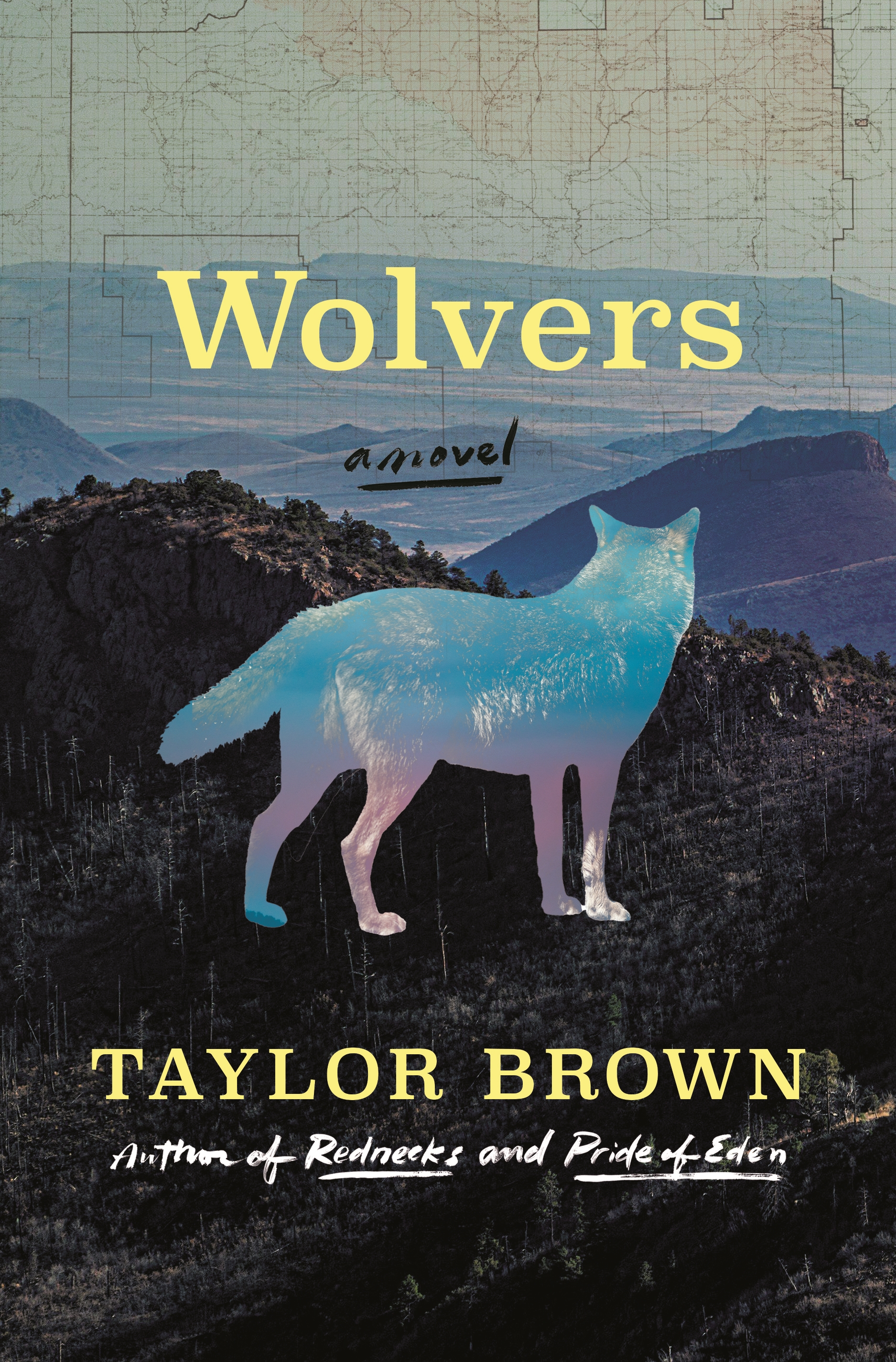
Trace Temple hates wolves. His family has spiraled downward since losing its New Mexico ranch, a ranch that was in the family for generations, because of a massive legal penalty incurred by shooting an endangered wolf. It’s legal to kill a wolf that has preyed on one’s livestock, but the circumstances under which that can be done are very specific ones. Trace’s father thought he was shooting the wolf that had eaten his sheep, but he accidentally shot the wrong wolf, and it cost him and his family everything. The patriarch went to prison, and Trace’s mother developed an addiction that has become all consuming. So when some sketchy characters approach Trace and propose to hire him to shoot One-Eleven, the legendary alpha of a wolf pack that ranchers have long hated, he’s all in. But an experience that occurs while he’s on the hunt causes him to change his mind.

Once Trace is out of the running, the organization hires someone else, a man called Murdoch. Murdoch wants to kill the wolf, and he wouldn’t mind killing Trace, too.

The story starts a bit slow, then gathers steam as it goes. The Gila wilderness where all of this takes place is resonantly depicted, and given that nearly everything that Brown has written to this point is set in the Appalachians or some other part of the American South, this is all the more impressive.  The dialogue pops! There aren’t many characters in this story, and the two-legged characters that get the most ink are males; it’s all the more amazing, then, that Brown’s respect for women shines through, and it does so naturally. By the last quarter of this story, nobody could have kept me from finishing it.

There’s some gore here; the story could not have been told authentically without it. Humans get hurt, and some get dead, and so do wolves; but none of the damage is superfluous or titillating. And I loved the ending.

Brown explains what’s real and what’s fictional at the end of the book, and he even includes a two page bibliography for those interested in the subject matter.

I was lucky enough to have both the digital and audio versions of this story, and it’s the first time I’ve listened to one of Brown’s books. Ramiz Monsef does an outstanding job as narrator, and for that reason, I recommend this format for those that like audio books. But whatever your preference is, this novel is highly recommended.
Rednecks, by Taylor Brown*****

“Law only serves them that’s in power. Ain’t no different than always…’Tis the victor who writes the history—and counts the dead.”

I’ve been an enthusiastic fan of author Taylor Brown since reading Gods of Howl Mountain, which was published in 2018. His new novel, Rednecks, is out now, and as with his earlier work, it is outstanding. My great thanks go to NetGalley and St. Martin’s Press for the invitation to read and review.

Brown tells the story of the Battle of Blair Mountain, a very real large scale battle, complete with machine guns, helicopters, tens of thousands of angry, armed miners, and the U.S. Army, an event which really did take place in the Appalachian Mountains in 1921. Over a million rounds were fired, and then the story was suppressed by the government, bosses, and big business media.

 In his author’s note, Brown tells us that the character of Dr. Muhanna, a heroic individual sympathetic to the cause of the miners, is based on his own great-grandfather. There is a meaty explanation of what parts of the story are based on the actual historical record, and what parts—small ones, to be sure—he has changed.

Apart from his skill as a writer and researcher, the thing that I have always loved best about Brown is his deep respect for the working class. It shines through every page of this novel. Mother Jones, the fiery Socialist labor organizer, is here as well, and she is possibly my favorite figure in American history. Unfortunately, she is not at her best here. Past ninety years of age and in poor health, she attempts to deceive the miners into quitting their struggle early once she learns that Washington, D.C. intends to send troops. It’s a pity that her many years of inspirational organizing and leadership are not on display here, but the facts are the facts, and this story is not, after all, chiefly about Mother, but about the miners, so I suppose that Brown has written it in the only honest way that it could be written. There are indeed passages that demonstrate her eloquence and loyalty to workers of every race and ethnicity.

As I read, I like to highlight passages to include as quotes in my review. This time, I came away with 53 quotes. Reluctantly, I am setting most of them aside; you will have to find them yourself. They’re better within the context of the story, anyway.

As a personal aside, I will mention that my own grandfather—“Papaw”—died of Black Lung disease in 1978 after having worked in a nonunion mine in South Dakota beginning in the eighth grade. He had to leave school and work fulltime, as there was not a social net back then, and he and his family would have starved if he had done otherwise. World War II brought him better fortunes, but coal dust, once lodged in the lungs, never leaves.

This is a gritty tale to be sure, one full of bloodshed and suffering, but also of immense courage and inspirational leadership. I read it in small bites lest it work its way into my dreams, until I reached the climax, at which point I had no choice in the matter, and was unable to put it down. This book is one of the year’s best. I highly recommend it to those that love labor history, historical fiction, or that just love a well-told story.