Back to the Garden, by Laurie R. King*****

Laurie R. King is best known for her Mary Russell and Sherlock Holmes historical detective novels, but I have long preferred her contemporary mysteries. Back to the Garden is her latest of these, and it is excellent. My thanks go to Net Galley and Random House Ballantine for the review copy. This book is for sale now.

Our protagonist is Raquel Liang, a detective based in San Francisco. When a long-dead body is found in the garden of the Gardener Estate—a famous mansion and grounds that sound faintly reminiscent of Hearst Castle—Liang, who is working on a task force to find and identify victims of serial killer Michael Johnston, becomes involved in the case.

Rob Gardener is the heir to the estate, and he had clashed often and bitterly with his grandfather before his demise in the 1970s. Upon learning of his windfall, Gardener turned the manse into a commune, with murals on the walls of what were once imposing, grandiose rooms and vegetable gardens where more formal floral ones previously stood. Now the place is being restored, and as gardeners work to clear a thicket of overgrown hedge, a huge statue topples over, exposing the bones of someone long interred there.

Meanwhile, in a hospital in the big city, convicted serial murderer Michael Johnston lies dying. During the same period that the commune reigned, Johnston was spiriting girls and young women off so that he could murder them. Improved technology has provided a number of leads, but the window in which the cops can extract information from the old bastard is rapidly closing. Liang suspects that the body found on the estate, which dates back to the same time that Johnston was slaying women in the area, may be one of his, and so she makes frequent visits to learn as much about the place and its residents, past and present, as possible.

The intriguing bit about this mystery is that the members of the commune, other than Rob himself, didn’t use their birth names, and it makes them tricky to trace. With names like Meadow, Pig, and Daisy, they could be just about anybody. Is one of them the body beneath the statue?

King does a fine job of segueing from past to present and back again, and of juggling a moderately large number of characters. As I read, I never have to flip back to be reminded of who someone is. The reader should know, however, that this is not a thriller. It isn’t written in a way to grab you by the hair and make your pulse pound. The pace is a bit more laid back, but for some of us, that is a pleasure. I never lost interest, and I could read this thing while eating my lunch without gagging.

There’s a good deal of period nostalgia, and so I suspect that the greatest appeal will be to Boomers.

Highly recommended.

The Winners, by Fredrik Backman*****

“Do you want to understand people? Really understand them? Then you need to know all the best that we are capable of.”

The Winners is the third book in the Beartown trilogy by the iconic philosopher-novelist, Fredrik Backman. In the afterward, he tells us, “To you who have read this whole of the saga, I’d just like to say that I hope it gave you something, because I gave it absolutely everything I had.” I am one of them, and I believe him, and yes, it did. My thanks go to Net Galley and Atria Books for the invitation to read and review. It’s been an honor.

I began reading with a certain amount of trepidation, because everything I’d heard and read, some of it by the author himself, suggested that this wasn’t going to be gentle reading. Here’s how he opens it:

“August ends with sultry, ominous heat before autumn kicks the door in at the end of the month and the temperature tumbles in free fall. The natural world around us becomes erratic and aggressive, the dogs and hunters feel it first, but soon everyone else does too. We notice the warnings, yet still the storm arrives with such force that it knocks the breath out of us. It devastates the forest and blocks out the sky, it attacks our homes and our towns like a grown man beating a child.”

Woof.

The characters we’ve met in the first two books, Beartown and Us Against You, are all present and accounted for, and now that his faithful readers already know most of the central characters, Backman gives us a few more. The new hockey coach is Elizabeth Zackell, a quirky individual if ever there was one, and smart as hell. We are introduced to a family from Hed, the nearby town whose club is Beartown’s archrival; we become attached to these people, too. But ultimately, we see the way that great love and passionate loyalty can go hand in glove with violence and even evil.

It’s a story that can take your breath away.

I won’t try to address the whole story or individual characters; that’s Backman’s job, and he does it quite nicely. I had a quibble with the way the first book ended; I said in my review that it was over-the-top, bordering on glib. I see now that this was deliberate, and he wants us to see that not every family responds to a crisis as well as the Andersons have, and not every victim of a violent crime is able to see justice done; not everyone has the heroic instincts of Amet, the player that runs toward the fire rather than away from it.

The hallmarks that make Backman’s work so special are all here. I can count on one hand the number of male authors that genuinely respect women and are willing to go to the mat for women’s rights, and he is one of them. He is a vocal champion of the rights of gays and lesbians, and his prose shows keen understanding of the struggle they face, even now that their legal rights are protected in much of the world. His capacity to juggle a large cast of dynamic characters, developing nearly every one of them in a way that is consistent, along with their relationships with each other, makes me feel as if I could recognize them on the street; I don’t mean one character, or two. I mean at least a dozen of them. There are a number of characters that do bad things or make bad choices, but only a couple are genuinely bad people, and though we see little of them, they cast long shadows on these two communities.

He got the ending exactly right.

Can you read this book without reading the other two first? Don’t be a dick. Of course not. Without familiarizing yourself with the characters in the first book before the second, and the second before the third, you won’t be able to keep everyone straight; also, this third volume is about the same length as the first and second combined. Start with the first one.

Highly recommended.

The Matchmaker’s Gift, by Lynda Cohen Loigman*****

“The heart is big enough to hold both grief and love.”

I read Loigman’s debut novel, The Two-Family House, followed by The Wartime Sisters, and I loved them both, so when Net Galley and St. Martin’s Press invited me to read and review The Matchmaker’s Gift, I leapt. Once again, Loigman has me at hello. This outstanding historical novel is for sale now, and you should get it and read it.

The story is told from the point of view of two protagonists, a woman and her grandmother; they were close, but Sara the grandmother has died, so her story is told in the past, beginning in 1910, when she arrives in the U.S. as a child, along with her family. Abby is her granddaughter; her story begins in 1994. Their stories are told alternately, but both are in the third person omniscient and told in a linear time frame, so I am free to lean back, relax, and get lost in their stories, without any confusion or doubling back to check things.

Sara was a matchmaker, although she initially had to be very careful, because Jewish tradition dictated that matchmakers be married men, and she was still just a girl. But she was gifted with visions of a sort, and could tell who belonged together. And so she was forced to create matches “in secret, pairing people together like a rogue puppeteer.” She never missed. And upon her passing, she leaves a cryptic message indicating that upon her death, Abby will inherit her special talent.

Abby is nonplussed by this, and even as she grieves her beloved grandmother’s death, she is confused as to what she should do. She’s a divorce lawyer, for heaven’s sake! Is she to toss her education and become a modern day yenta? She hasn’t even found a man for herself yet, let alone for others.

It’s always a joy to find a story that diverges from the well-worn path, and novels involving Jewish matchmakers—or any others, for that matter—are thin on the ground. But that is only a small part of this novel’s appeal. I love Sara and Abby; I almost feel they are my friends. I feel their sorrows and admire their courage and integrity. When either of them meets with unfair opposition, I want to smack their detractor with my cane.

But there’s something extra that’s infused into Loigman’s stories, an intangible but unmissable warmth. Nobody can teach anyone this. I can count on one hand the number of authors that can write heartwarming stories that don’t follow formulas or insult the reader’s intelligence. Loigman is one, and this makes her golden.

When I was halfway finished reading this glorious novel, I saw that an audio galley was available. I was a bit cautious, because I had already developed a firm sense of how these women sounded in my head, and I was afraid I might not like the narrators’ interpretations, but my concern was unfounded. I had a road trip ahead of me, and I listened to the next forty percent as I drove, and there wasn’t a single moment that I didn’t love. Narrators Eva Kaminsky and Gabra Zackman do a lovely job, and I have never had such a seamless transition from the digital galley, to the audio, and back again.

Highly recommended, and bound to be one of the year’s best loved books.

Mecca, by Susan Straight*****

Susan Straight is a force to be reckoned with. I knew this after I finished reading I Been in Sorrow’s Kitchen and Licked Out All the Pots after it came out in 1992, and after I sought out, bought, and read everything else she’d written that was available. When I discovered that her new novel, Mecca, was available on Net Galley, I leapt on it. My thanks go to Net Galley and to Farrar, Strauss, and Giroux for the review copy. This book is for sale now.

Mecca, an ironic title if ever there was one, is a story of race, class, and gender, and the way that they play into the “Justice” system in California. Add a generous seasoning of climate change and its horrific effects in dry, dry Southern California, and a fistful of opioid addiction, and you have a heady mix indeed. But these are all well worn ground at this point, and this book is exceptional, not because it examines complex current events, but because of Straight’s facility in building visceral characters we care about, and launching them into this maelstrom in a way that makes it impossible to forget.

We begin with Johnny Frias, an American citizen of Latino heritage. As a rookie and while off duty, he kills a man that is raping and about to murder a woman named Bunny. He panics and gets rid of the body without reporting what’s happened. Frias is on the highway patrol, and he takes all sorts of racist crap all day every day. But his family relies on him, and when push comes to shove, he loves his home and takes pride in keeping it safe.

Ximena works as a maid at a hotel for women that have had plastic surgery. One day she is cleaning a room and finds a baby! What to do? She can’t call the authorities; she’d be blamed, jailed, deported, or who knows what. She does the best thing she can think of, and of course, there’s blowback anyway.

And when a young Black man, a good student with loads of promise that has never been in any trouble at school, or with the law, is killed because the cops see his phone fall out of the car and decide it’s a gun…?

I find this story interesting from the beginning, but it really kicks into gear in a big way at roughly the forty percent mark. From that point forward, it owns me.

As should be evident from what I’ve said so far, this story is loaded with triggers. You know what you can read, and what you can’t. For those of us that can: Straight’s gift is in her ability to tell these stories naturally, and to develop these characters so completely that they almost feel like family. It is through caring about her characters that we are drawn into the events that take place around them, and the things that happen to them.

This is a complex novel with many moving parts and connections. I read part of this using the audio version, which I checked out from Seattle Bibliocommons. But whereas the narrators do a fine job, I find it easier to keep track of the characters and threads when I can see it in print. If you are someone that can’t understand a story well until you’ve heard it, go for the audio, or best of all, get both.

Highly recommended.

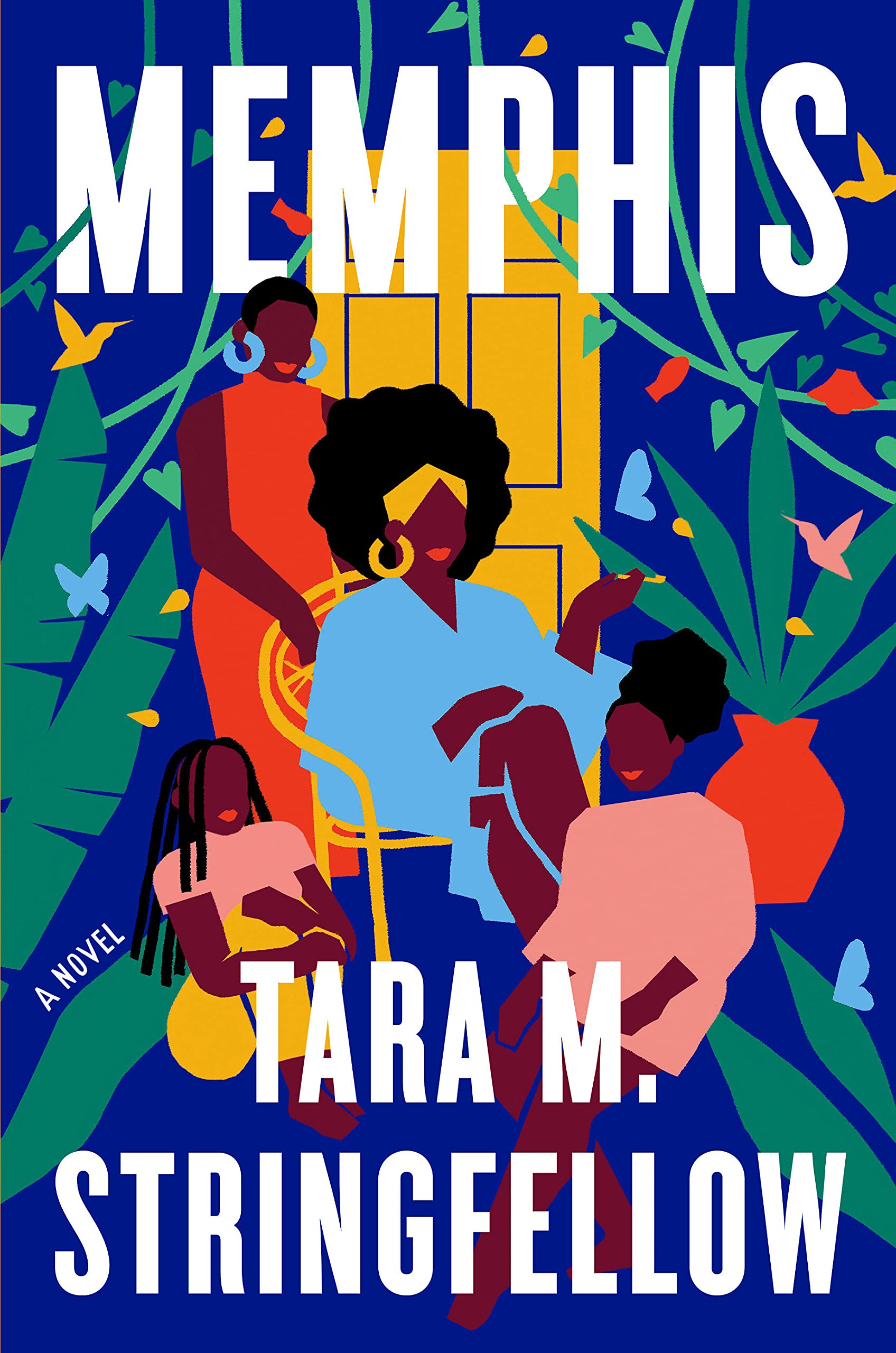
Memphis, by Tara M. Stringfellow****

Stringfellow’s debut novel, Memphis, has drawn accolades far and near. This is a family saga that features three generations of women, a story told with warmth and subtlety. My thanks go to Net Galley and Random House for the review copy. This book is for sale now.

The story commences with Miriam planning to leave her abusive husband. She gets a few things and herds her daughters, Joan and Mya, out of the house. They’re headed to live with Miriam’s sister, August, in Memphis.

The family’s story follows them across time and points of view, but always from the point of view of one of the women. About a third of the way through we find an additional point of view from a character we haven’t met yet, and since we’ve heard from Miriam and August as well as Miriam’s girls, I’m expecting Hazel to be the daughter of either Joan or Mya, granddaughter to Miriam, but that’s not the case. Hazel is Miriam and August’s mother, and the time is the 1930s, a dark time indeed for African-Americans. I like this little surprise. I also love that the narrative embraces only women, across three generations.

As with all good historical fiction, there’s a hidden history lesson here as we follow the Norths across time. On the one hand, I didn’t learn anything new, but I am a history teacher. What I appreciate is the lack of reliance on cheap pop cultural references, and also the lack of revisionism. Stringfellow writes about the past as it was, rather than as she wishes it was. The characters are resonant and believable; my favorite is August. I love the ending.

The story arc is a mighty shallow one, and I’d be hard-pressed to identify the climax. This is my only real criticism.

Because I was a bit behind, I checked out the audio version from Seattle Bibliocommons, and the narrators, Karen Murray and Adenrele Ojo, do a superb job.

Recommended to those that love historical fiction—especially surrounding Civil Rights—and to those that enjoy stories about multiple generations of families.

Joan, by Katherine J. Chen****

“Once you lift a sword, it is hard to put down again.”

I’ve been curious about Joan of Arc for a long time. I love military history, and as a feminist, I also love that Joan was responsible for leading French victories centuries before women were permitted to serve in the military of any major power. When I saw that Katherine J. Chen had written a “secular reimagining of the epic life of Joan of Arc…a feminist celebration of one remarkable—and remarkably real—woman who left an indelible mark on history,” I was all in.

My thanks go to Net Galley and Random House for the invitation to read and review. This book is for sale now.

In her end notes, Chen tells us that Joan’s biographers tend to leave out her difficult home life, with a violent, angry father that hates Joan from the moment she draws breath; he has wagered heavily on her being male, and she’s failed him. Chen sees it as a major factor in Joan’s development as a warrior.

When Joan leaves home, after her beloved uncle leaves and her elder sister, her one true friend within the family, commits suicide after she is raped by English soldiers, she expects to labor for her bread, which is nothing new to her. But ultimately, she wants to get word to the Dauphin, the heir to the throne, who is in hiding: she knows how to win this war.

I absolutely love the version of Joan that Chen develops, and my only frustration is in not knowing what aspects of Joan’s life she has had to invent, and which are historically accepted as truth. She tells us that Joan’s biographers would have her praying constantly, and that they depict Joan as little more than a totem that they carry to battle, a sort of human version of a lucky rabbit’s foot. And then I wonder even more: what facts are undisputed? Of course the Church would depict Joan as hugely religious, given that she has been beautified as a saint. Did she actually influence the battle plans? This part is frustrating to me. Had more information been provided, this would be a five star review.

In any case, the battle scenes are riveting, and Joan’s character is unforgettable. I look forward to seeing what Chen writes next.

Recommended to all that love the genre.

Patricia Wants to Cuddle: The Audio Version, by Samantha Allen and a host of excellent narrators

Note: after hearing the audio version, I changed my rating to 5 stars. 5 stars shouldn’t be reserved for Shakespeare, for Toni Morrison, for Elizabeth Strout. 5 stars means the book is among the very best in its genre; Patricia Wants to Cuddle is among the best humorous novels being published this century.

A further note: this is the first time I can recall an audio book making a narrative easier to follow rather than harder. The presence of multiple, very skilled readers (Cindy Kay, Justis Bolding, Laura Knight Keating, Susan Bennett, and Jasmin Walker) makes it easier to tell the Catch contestants apart.

It is great to encounter my favorite parts a second time; within the last twenty percent of the book, the figurative language involving a weathervane and a turkey absolutely slay me.

Below is my original review.
________________________________________

“You have to watch out for the quiet ones.”

I had an ugly upper respiratory flu, and this excellent novel was exactly what the doctor ordered. My thanks go to Net Galley, Recorded Books, and Zando Publishing for the review copy. Patricia Wants to Cuddle will be available to the public Tuesday, June 28.

As the story begins, we are midway through filming “The Catch,” which is a reality television show similar to “The Bachelor.” Our cast includes the four lucky women to have made it this far; producer Casey; a handful of crew members; and oh dear, Jeremy, a scuzz bucket if ever there was one. Jeremy is this season’s catch. We also have a handful of locals, since we are filming on location; included is a bashful cryptid in the woods, a lonely creature that reacts very badly to stressful situations. As you may guess, Patricia is that cryptid.

These people are on Otter Island, a fictional addition to the San Juan Islands off the coast of Washington State. Think deep woods, rain, and glamping. And…what the hell was that, just now? Too big to be a bear. And why are the sheep so agitated?

Baaaaa.

The contestants are mostly not interested in love; they are interested in publicity, for various reasons of their own. The shooting schedule leaves them sleep deprived on an almost permanent basis, and so given the premise of the show—competition, not cooperation—it doesn’t take long for the women to turn on one another.

Samantha Allen is new to me, but she’s on my radar now. This story is snicker-worthy at the outset, and by the time we reach the climax, I am howling with laughter. Part of the joy comes from the plot and pacing, but the biggest laughs for me are those that combine these outrageous events with some of the funniest figurative language I have ever read. In fact, were I to rate this story solely on its humor, without rating the more traditional elements such as character development, this would be a five star read.

This book will appeal most to those that lean to the left.

Recommended to those that love darkly hilarious fiction.

Patricia Wants to Cuddle****-*****

“You have to watch out for the quiet ones.”

I had an ugly upper respiratory flu, and this excellent novel was exactly what the doctor ordered. My thanks go to Net Galley and Zando Publishing for the review copy. Patricia Wants to Cuddle will be available to the public Tuesday, June 28.

As the story begins, we are midway through filming “The Catch,” which is a reality television show similar to “The Bachelor.” Our cast includes the four lucky women to have made it this far; producer Casey; a handful of crew members; and oh dear, Jeremy, a scuzz bucket if ever there was one. Jeremy is this season’s catch. We also have a handful of locals, since we are filming on location; included is a bashful cryptid in the woods, a lonely creature that reacts very badly to stressful situations. As you may guess, Patricia is that cryptid.

These people are on Otter Island, a fictional addition to the San Juan Islands off the coast of Washington State. Think deep woods, rain, and glamping. And…what the hell was that, just now? Too big to be a bear. And why are the sheep so agitated?

Baaaaa.

The contestants are mostly not interested in love; they are interested in publicity, for various reasons of their own. The shooting schedule leaves them sleep deprived on an almost permanent basis, and so given the premise of the show—competition, not cooperation—it doesn’t take long for the women to turn on one another.

Samantha Allen is new to me, but she’s on my radar now. This story is snicker-worthy at the outset, and by the time we reach the climax, I am howling with laughter. Part of the joy comes from the plot and pacing, but the biggest laughs for me are those that combine these outrageous events with some of the funniest figurative language I have ever read. In fact, were I to rate this story solely on its humor, without rating the more traditional elements such as character development, this would be a five star read.

This book will appeal most to those that lean to the left.

Recommended to those that love darkly hilarious fiction.

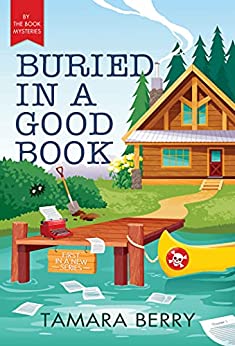
Buried in a Good Book, by Tamara Berry****-*****

4.5 rounded upward.

I’ve been enjoying Berry’s Eleanor Wilde series, which I read and reviewed from the first book forward; when I found this one, Buried in a Good Book, the start of a brand new series, I was all in. My thanks go to Net Galley and Poisoned Pen Press for the review copy.

I’m a bit skeptical of novels that feature the words book, library, reading, bookstore and such because obviously, potential buyers are likely to get all warm and fuzzy-feeling just seeing the title. It’s a soft landing, that’s for sure, marketing books and book-related topics to booklovers; and then I wonder if the author is just too lazy to take on something more challenging. But every time Berry embraces the obvious, it turns out to be with her tongue planted firmly in her cheek, and by the end of the book I am laughing out loud. That holds true for this one as well.

Tess Harrow is newly divorced, and her adolescent daughter, Gertrude is heartbroken, because her father has more or less ghosted on her. When an elderly relative dies and leaves his cabin and his hardware store to Tess, it seems like an omen. She’ll get her girl out of Seattle and the heartbreak she’s experienced there; get off the grid, more or less, and enjoy Nature. Yikes.

Be careful what you wish for!

The day is nearly over when they pull up to the cabin, a fixer if ever there was one; Tess knew it might be rugged, but she didn’t know that the lovely little pond out back would be fully stocked with body parts, too. And whereas some might be daunted by such an occurrence, she looks at all of it as excellent material for her next bestselling thriller.

This novel is different from the Ellie Wilde mysteries in that we are more than half into it before the author moves in for the laughs. Just as I conclude that this time Berry is playing it straight, something happens—no, I will NOT tell you what—and I am guffawing and snorting, neither of which is becoming while one is eating lunch, but it simply cannot be helped. Berry is a sly one, all right. My notes say, “I never knew metacognition could be so damn funny.”

I enjoy everything she does here, and the fact that it’s set in my own stomping grounds of Washington State makes me love it all the better. Recommended to any reader that is ready for a good story and a good laugh. It’s for sale now.

The Book Woman’s Daughter, by Kim Michele Richardson****

Kim Michele Richardson broke new ground in 2019 with her blockbuster novel, The Book Woman of Troublesome Creek, which features an oppressed minority in Appalachia. In the early years of the 1900s, and possibly before, tucked into the hills and hollers of rural Kentucky were a small number of people that had blue skin. This first novel featured Cussy Mary Carter, a Blue woman that worked as a pack horse librarian as part of the WPA, a new government agency created by the FDR administration. In this sequel, it is her daughter, Honey Mary Angeline Lovett that joins this organization and in doing so, struggles toward emancipation when her parents are jailed for violating the miscegenation laws existing at the time.

My thanks go to Net Galley and Sourcebooks for the review copy.

When her parents are jailed for having intermarried—with “Blues” considered colored—Honey Lovett is sent to live with Retta, an elderly woman that has been like a grandmother to Honey. Returning to the area where she was born, Honey—who is also Blue, but only on her feet and hands, particularly when she is distressed—collides with many of the same biases and legal obstacles that her mother faced.

This sequel features more women that occupy nontraditional occupations; in her notes, Richardson says that she wanted to “explore themes of sisterhood.” The sentiment is a welcome one to this feminist Boomer; at the same time, it’s important to recognize that until the outbreak of the second world war, women seldom occupied positions with the government (our protagonist, plus her friend Pearl, who works for the Forestry Department as a fire lookout,) and as miners (another woman friend, who is harassed relentlessly.)  For there to be three such women inside such a sparsely populated area would have been unusual. That said, I like the character of Pearl a lot, and providing Honey with a friend and peer gives the author more opportunities to flesh out her protagonist.  

The novel’s greatest strengths are in the research behind it, the concept—informing readers about the existence and victimization of the Blues—and in the general setting of the time and place. Richardson knows her field.

Once again, I enjoy the return of Junia, the mule that I confess was my favorite character in the last book, as well as Tommy the Rooster, who is new. Another strength is that Honey is depicted in a more even and credible fashion than Cussy Mary, who was too saintly to be entirely believable.

However, I would still like to see some nuance in characters. There is a wide cast of characters here, but every single one is either a good guy—one that never does anything wrong—or a bad guy that never does anything good. This is a failing that would take the novel down, in my eyes, if not for the fact that Richardson has pioneered this particular time, setting, and topic. Even when a novel is primarily driven by setting, as this one is, the main characters need to be rounded out.

This book is for sale now.