American Gothic:The Story of America’s Legendary Theatrical Family—Junius, Edwin, and John Wilkes Booth, by Gene Smith***

americangothicI was invited to read and review this title by Open Road Media and Net Galley. Thanks to them for the DRC, which I received in exchange for an honest review. This title was released to the public October 4 and can be purchased any time you want it.

Although I love a good night at the theater as much as anyone else, I came to this bearing a love of history and a strong affinity for the American Civil War. I didn’t realize to what extent this would be purely a biography of this family of actors, and it was because of this that I became somewhat disillusioned.

Smith has carefully documented the lives of Junius, Edwin, and John Wilkes Booth. He talks about their predecessors, their early development, and their careers, and he documents everything he talks about. Those studying nineteenth century American actors will want this book, because these men were the most famous of their time period, tickets to see them perform much sought after.

My problem is with the elephant in the room.

It’s hard not to approach John Wilkes Booth without thinking about military history, and about his role in what was essentially an incipient CIA within the Confederacy. Other sources neatly document the fact that it was not a case of simple mental illness on the part of an assailant that made President Lincoln, the greatest president in the history of the USA, die. There was a great deal of planning involved, of research about where he would be and when he would be there. Contacts were made, and a plot was launched that was initially much more far reaching in scope, but with the surrender of Lee’s army, others within the cadre left town fast and didn’t look back. Booth was the one that decided he was going to follow through, one way or the other. How much of it was due to a longing for an historical spotlight, how much was due to emotional instability, and how much was a calculated effort to revive the Confederacy by assassinating Lincoln, we do not know, but what we do know, and what Smith doesn’t say, is that this was not a matter of simply yielding to impulse, of losing one’s sanity and suddenly deciding to kill a great leader. It was done in a calculated way, and I can’t respect this biography when this information is omitted. All we hear about are references to early signs of “madness”, as if this horrible deed can be swept to the side by the use of one well-placed word.

That being said, The New York Times loved this book. If the history of acting is your wheelhouse, you may want to read it. There’s nothing of method or technique that will help a developing actor, but it doesn’t pretend to be. It’s about the actors’ lives and careers, and that’s pretty much it.

Those that treasure history as a bigger picture, or that are looking for some tiny morsel to help them understand what made John Wilkes Booth carry out this monstrous, well-planned killing will remain as much in the dark when the book ends, as they are now.

Fire Lover, by Joseph Wambaugh*****

fireloveratruestory John Orr was a fire fighter that wanted to become a cop. The psychological test weeded him out; his personality wasn’t stable enough for a guy that carries a gun for a living, and they turned him down. Over the years, however, he became not only a fire chief, but a highly respected arson investigator, and took tremendous pride in the fact that he was part of the law enforcement community. However, occasional snubs from that group made him livid, and he dealt with his rage in the most horrific manner imaginable: he became the most prolific arsonist in California history. Joseph Wambaugh captures this true crime story in electrifying detail. I received my copy from Open Road Media and Net Galley in exchange for an honest review, but you can get your copy Tuesday, October 18, 2016 when it is digitally released.
It starts with the Ole Hardware Store fire. Ole is a family owned business, but it is large in scale, the size of a big box store, and four people die there. Wambaugh provides personal, poignant details of those that perish, and I appreciate this. The white Volkswagen is particularly moving.

Orr doesn’t see it as poignant or tragic, however; he is enraged at the cops and insurance investigators for calling it an accident, and in order to achieve recognition for his twisted projects, he sets more fires. More. And still more. And as the fires increase, the budget, which had been going to be cut, isn’t cut after all, and Orr has all the work he can handle and more, because he is investigating his own crimes. Time and time again, he is seen at the sites of fires doing uncharacteristic things, or before an alarm has yet been sounded, but no one is ready to suggest that he is the party responsible until it is screamingly obvious.

The author is tremendously skilled at shifting the mood from the somber, to the ironic, to the occasional moment that is genuinely comical, without ever missing a beat, setting an inappropriate tone, or dropping his documentation, which is meticulous and must have taken a lot of years to compile. I usually am not fond of true crime stories because I know I may not like the ending; the author can’t choose how it comes out if his story is true. But this one drew me like a moth, and I had to get a closer look.

Wambaugh chronicles Orr’s life as well as the arsons, investigations, and then the trials that follow, and he does it brilliantly. He received an Edgar Award for Best Fact Crime, and it was an honor he earned.

Highly recommended.

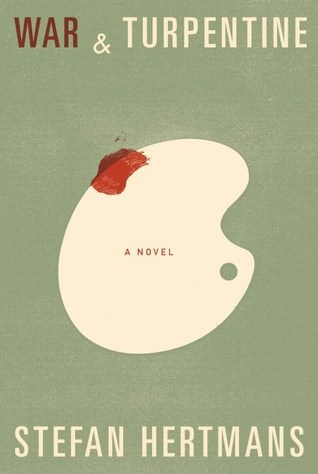
War and Turpentine, by Stefan Hertmans***

warandturpentineI received a DRC of this memoir from Random House through its First to Read program. I read the book free in exchange for an honest review. Though it wasn’t a good fit for me, I think there are niche readers out there that might enjoy it.

This memoir chronicles the life of the author’s grandfather, Urbain Martien, a Dutch worker that fought in World War I. The son of a brilliant artist, Martien worked whatever jobs were available until the war broke out. He had hoped to become an artist like his father before him, but instead wound up painting buildings just to earn a living.

Apart from its historic aspect, this title is one that I knew would be outside my comfort zone. Since retirement I’ve pushed myself outside my usual well-worn paths and taken a few risks, and though it doesn’t always work out for me, a few unlikely choices have affected me so favorably and so deeply that I have continued to push my own walls outward. I don’t know a thing about art, but I thought it might not matter. I pushed myself to read The Goldfinch, which was about a stolen museum painting but also much more, and once I did I couldn’t believe I had let the DRC pass me by. So I had this in my mind; War and Turpentine might be one more opportunity that I shouldn’t miss.

The basis for the memoir is a series of notebooks that the author’s grandfather gave him, a journal of sorts, and the memoir itself is done not in the usual linear fashion, but as a series of snapshots. I confess I prefer my memoirs to start at the beginning and end at the end, if not the end of life, then at the end of the period being discussed. But an artist would perhaps not have thought that way; I can see the reason for selecting a different format, but because there was no discernible story arc, I found myself floundering and eventually avoiding the book altogether.

The prospective reader should know that along with some really strong imagery and other word smithery, the memoir contains some very graphic violence.

I suspect the ideal reader for War and Turpentine would be one that loves art, art history, and European history.  It is for this niche audience that I recommend this book.

Notorious RBG, by Irin Carmon****

notoriousrbgIf I were to review the subject of this memoir rather than the book itself, it would be a slam-dunk five star rating. As it is, I can still recommend Carmon’s brief but potent biography as the best that has been published about this fascinating, passionate justice of the Supreme Court of the United States. I have no doubt many more will follow, and it’s possible I will read every one of them. As it stands, this is a rare instance in which I turned my back on my pile of free galleys long enough to ferret this gem out at the Seattle Public Library, because I just had to read it. You should too.

I’m an old school feminist from the seventies, but Ginsberg is one from the fifties. How is that even possible? Imagine the courage it would take to step forward at a time when no women’s movement even existed! She sued Rutgers University for equal pay and won. Later, she was the first female law professor at Columbia University, and she sued them for equal pay too. She volunteered as an attorney for the New Jersey American Civil Liberties Union, represented custodians in a class action suit, and later, when the Free Speech Movement on campuses in the 1960s began to warm up, she was already red hot and ready to go.

The best parts of Carmon’s memoir are the primary documents, because we get to see RBG’s own words. Ginsburg was made a federal appeals judge by President Jimmy Carter and moved to fill a vacancy on the U.S. Supreme Court by President Bill Clinton. She’s issued a number of tremendously eloquent decisions, and has chosen to read her dissent aloud, a thing not usually done, a record-breaking five times at the time this book was written. The lacy-looking necklace that fans out on all sides of her neck is her dissent collar, and so those that hear the Court deliver its decision can see exactly where Justice Ginsberg stands as soon as they see what she is wearing.

At times such as these, in which a woman in Indiana was recently sentenced to 20 years in prison for having an abortion [reference mine], it gives women hope to know that there is a fighter on the Supreme Court who’s looking out for our interests. It doesn’t mean that women can step away from this political battle, but it’s a thing that encourages us and lends us fortitude.

In January, it is rumored that Ginsberg will release her own memoir, one that relies heavily on her court decisions. Likely this will be an even better memoir than this one. For now though, this uplifting, funny, well-documented memoir is as good as it gets. Go get it.

Fragments of Isabella: A Memoir of Auschwitz, by Isabella Leitner****

fragmentsofisabellaIsabella Leitner was a Holocaust survivor, and she scribed her memoir using brief entries similar to a diary in format. The length is just 120 pages, about the size of a novella. I was asked to read and review this memoir free of charge before it was released digitally. Thanks go to Net Galley and Open Road Integrated Media for the invitation. This title was just released, so it is available now for purchase.

I confess I struggle with Holocaust memoirs these days. Part of me has decided not to read any more of them. I am out of the classroom, so my ability to educate young people of today about the horrors of the past is nearly at a standstill, apart from the knowledge I pass on to my grandchildren. Reading another Holocaust memoir isn’t going to make the ending any better; it’s always going to be horrifying, and heaven help me if I should become so accustomed to reading about the Holocaust that it doesn’t affect me that way anymore.

So though I swear off Holocaust memoirs from time to time (and am doing so right now, again), when a particular memoir is offered, frequently there is some aspect of this one that sets it apart from the crowd, and so it is with Isabella’s memories. Not many survivors managed to get out with family members at their side; Isabella and her sisters were unusually clever and imaginative in finding ways to survive. This along with the invitation induced me to roll up my sleeves and revisit this calamitous part of history once more.

When the notorious Mengele motioned with his deadly white glove to send Isabella and one of her sisters to the extermination side, they found a way to creep back around and intermingle with the side selected to be kept alive as workers. At one point they escaped and found an outstanding hiding place…but before they were identified as missing, the Germans began cooking potatoes, a luxury Isabella and her sisters could not resist, and they slunk out of their haystack and into the food line. There are a number of these instances, and I found the short chapters merciful, because I could only read this in small bits and pieces.

Most powerful of all, as far as I am concerned, is the clear, unmistakable truth that Germans knew, absolutely had to know, exactly what was going on around them. As their own lives improved materially, they chose to look the other way as skeletal work crews of Jewish and other prisoners were marched directly down the main streets of towns and villages on a daily basis:

“Germany was one giant concentration camp, with Jews marching the length and breadth of the country, but these refined, sensitive Germans never saw us. Find me a German who ever saw me. Find me one who ever harmed us.”

The memoir is of necessity harsh in its remembrance. The teaser for this story bills it as having been written for young adults, but the background material required to understand some of what is said requires a good deal of pre-teaching.  In other words, if a teacher or home-school supervisor has run out of social studies time and is looking for a shortcut to make up for teaching about the Holocaust, this isn’t it. Frankly, this reviewer and teacher wonders how a full unit regarding the Holocaust could be lower on the chain of important social studies curriculum than anything else, apart from possibly the Bill of Rights (for US students). But if one is determined to substitute one memoir for a longer unit that gives more information, use Elie Wiesel’s Night, which stands on its own.

Finally, any teacher or prospective reader needs to consider exactly how searing this material is, and all the more so to the young mind; to Jewish readers; to anyone with triggers.

I should also mention that a bisexual guard at Auschwitz, a woman that was interested sexually in one of the prisoners, is referred to as “aberrant”, not for being a guard at such a place, but for her sexual orientation.

Do I recommend this memoir to you? Those that are studying the Holocaust should read it; the fact that it’s written by a survivor makes it a primary document. But those that are looking for an engaging, enjoyable slice of history should look elsewhere. There are no light moments, no surprisingly kindly individuals that go out of their way to help. It’s a cold, hard story, and the only joy is provided up front when we learn that she gets out alive and not alone, as so many Holocaust survivors found themselves.

It’s a hard, hard lesson, but given that revisionists are diligently trying to deny that the Holocaust actually occurred, attempting to rake over the evidence as if it were not nearly as serious as we may believe, it also has a great deal of value.

Because Isabella was there.

Florence “Flo” Kennedy: the Life of a Black Feminist Radical, by Sherie M. Randolph***

Florynce Flo KennedyFlo Kennedy was a force to be reckoned with, dismissed by a portion of mainstream Caucasian America as a kook, yet far too clever, too cagey, and too damn smart to be wished away by those that wanted to defend the racist, sexist status quo. When I saw that a memoir of her life was up for grabs at Net Galley I requested a copy immediately, and then took a long time to finish reading it. Part of my tardiness is a stubborn dislike for the PDF format, and so I apologize to University of North Carolina Press and my readers for being so slow; yet a small part of it was the surprisingly dry quality of the memoir. Given the subject, I had expected this biography to set my hair on fire.

Though she was new to Randolph, according to the introduction, Kennedy was no stranger to those of us in the Boomer generation. Her audacity, her wit, and her raw courage that at times bordered on recklessness made for great theater and fascinating press coverage. Raised by parents that taught her not “to take any shit” long before the Black Power movement or even the end of Jim Crow, Kennedy pushed the margins. She studied, worked, and fought her way into Columbia Law; she defended famous individuals like Billie Holliday and Stokely Carmichael, and she did it with style.

By far the most significant part of her legacy was the leadership she demonstrated in bringing together the women’s movement of the late 1960’s and 1970’s with the Black Power movement. As a young woman sending out my own tendrils into the larger world apart from high school and my parents’ home, some of the most influential feminist speeches given were by Kennedy and Gloria Steinem, and sometimes they appeared together. I never got to see them in person, but it didn’t matter that much, because I knew what they had written and what they had said, and soon I was attending meetings of NOW, the National Organization for Women, which was the leading women’s rights organization in the US before their split over women in the military later in the 20th century. Because of women like Kennedy and Steinem, I fundraised my fare to national marches on the Capitol for women’s right to choose whether to reproduce, and to fight for the Equal Rights Amendment.

So I owe Kennedy a great deal.

Kennedy’s confidence and controlled rage positively crackled; she made headlines and was often seen on the evening news. Once when I told a classmate that I wanted to support a female candidate for president of the US, he told me that if I was going to vote for a protest candidate, I should shoot for the moon and vote for Flo Kennedy.

He had a point.

I don’t agree with everything Kennedy said or did, particularly her suggestion that rather than expending great effort to end the US war against the Vietnamese people, Americans should focus their energy toward supporting Black owned businesses. Say what? But nearly everything else she did was so vastly ahead of her time that it made me gasp in awe.

I understand that a memoir produced by a university press is generally going to be scholarly in nature, and that’s one reason I request works like this that are associated with such reputable sources. But a scholarly treatment doesn’t have to drone. By arranging a few of Kennedy’s livelier quotes up front and at chapter beginnings and endings, she might receive the treatment she deserves, instead of being consigned to the dustbin of history a mere decade, give or take a year, after she wore a tee shirt reading “I had an abortion” during her most senior years.

So although I know Randolph is new to Kennedy and probably also has some academic parameters within which she has to work, I still feel that Flo’s memoir should reflect her verve and character to a greater degree.

Nevertheless reader, if you care about women’s rights and the rights of African-Americans, if women’s history and African-American history hold meaning and importance for you, I think you should read this memoir anyway, because as of this writing, it’s really the only memoir of Kennedy that’s available. You can find some of her speeches in feminist collections, but no one else has tackled this woman’s life, and so until and unless something better comes along, you should get this and read it. Because a dry, somewhat conservative treatment of Kennedy is better than nothing.

Friendly Fire, by C.D.B. Bryan****

friendlyfireBryan was a journalist and author during the mid-twentieth century, and Friendly Fire, which originally began as a story for the New Yorker and grew into something more, tells the story of the Mullen family and their response to the death of Michael, a clean-cut young man that answered his draft notice, dutifully served and was killed by friendly fire not long after he was sent to Vietnam. Thanks goes to Open Road Integrated Media and to Net Galley for the invitation to read and review. This is right up my alley and I found it compelling. It was published digitally May 10, 2016 and is now available for purchase.

Michael Mullen was the favorite son of Iowan farmers Gene and Peg Mullen, working farmers steeped in traditional values and respect for authority, who had never questioned the US involvement in Vietnam. If the government said that US forces were fighting there to contain the spread of communism and keep Americans safe, then it must be so. Michael was the kind of young man that called people “ma’am” and “sir”.  When his effects were delivered to his family following his death, there were no fewer than three rosaries he’d carried on his person. He had expected to return from service, as his father had done from an earlier war, and inherit the family farm. His family was part of the Silent Majority to which governmental authorities referred when defending the role of the USA in Indochina.

In short, they were the last people anyone would have expected to see become anti-war activists.

Michael’s death rocked parents Peg and Gene, and their grief eventually alienated them from the three children left to them. The part of their story that galvanized me was in reading their intelligent, sharp responses during the initial period following their bereavement. For many of us facing the loss of any loved one—and the death of a child is the worst loss of all—ferreting out information about that person’s days, weeks, even months is our last link to them. But Peg and Gene took it to another level when they realized that some of the information they had received was untrue. Peg became an organizational whirlwind, searching for the names and stories of other Iowa boys that had died in that conflict and she realized that the casualties that were being reported to and in the media were incorrect. The responses she received from everyone from US officials to the parish priest were so insensitive, so baldly insulting that she and husband Gene made the war and those near their son when he died into an immense research project, reaching out to newspapers and television news widely. This reviewer grew up during this period and when I read that Peg was on the phone with national newscaster Chet Huntley’s secretary in New York, my jaw dropped!  In this era before satellites gave us phones in our pockets and information available at the touch of a keyboard, they typed letters, made long-distance phone calls, and in time even traveled to Washington D.C. in order to know how and why their son had been killed and who was to blame.

The fifth star here is denied because the beginning of the story, which goes into overmuch detail about the family’s genealogical beginnings and its long history in Iowa soil, is deadly dull. When the book was first published, the video game had not yet been invented and readers had longer attention spans.  Today if a book does not hook a reader from the start, chances are excellent it will be immediately and forever abandoned. Although the point that the Mullen farm had stood for five generations is surely relevant to the story, the author drags this portion of the story out sufficiently to glaze even the eyes of this history teacher, and together with an awkward introduction that appears to substitute for a bibliography or end notes, a lot of readers won’t get to the interesting part, and that’s a crying shame.

Ultimately the Mullens’ cause alienated them from their community, probably because they were so free in dispensing blame to everyone that drew breath. Everyone that had not actively opposed the war was called out at some point. The heat of their rage and grief lacked focus.  In many ways they undid a lot of the good they had done by cursing old friends and neighbors simply because they had never done anything about the war.

The story will interest those that research conspiracies. The Mullens believed more deception was in play than actually was, yet when a person knows he has been lied to about one thing, it is the intelligent thing to do to wonder how much more one was told is also untrue. And so as they relentlessly sought to find one particular officer that might be to blame for the friendly fire that killed their son, I wanted to bang my head on the wall, because it was so much more than that; the conspiracy, we know now, was seated in the Oval Office, jotting more names, possibly their own, onto his enemies’ list. Targeting this soldier or that minor officer was just wrong-headed, but when people are hurt, they lash out, and the Mullens did so exponentially.

The end of the book deals with the author’s own motivation in following the Mullens and their search for the truth so diligently; nevertheless, it seemed strange to find a host of author photos at the end of the book rather than of the Mullen family.

Had the editing of this digital edition been given to me along with permission to do anything I wished, I would have tightened up the beginning, put the author’s notes at the end of the book rather than the start, and deleted the photo section entirely.

Nevertheless, those with an interest in the struggle to end the US war in Vietnam will find this story well worth reading, and to them I recommend this memoir.

Immunity: How Elie Metchnikoff Changed the Course of Modern Medicine, by Luba Vikhanski***-*****

immunityElie Metchnikoff is credited with several medical discoveries, some of which were found before Mother Russia was entirely ready to receive them. This interesting though technically challenging text is the story of his life, and especially of his scientific career and achievements. Thank you Net Galley and Chicago Review Press for the DRC, which I received in exchange for an honest review. This title will be available to the public April 1, 2016.

In the latter half of the nineteenth century, Russia still had a tsar—a royal ruler with power similar to that of an emperor—and it still had serfs, who legally could not leave the plots of land assigned to them to farm for the benefit of royal landowners. It was not an ideal climate for science or any other aspect of enlightened thinking, but Metchnikoff was not only gifted, he was immeasurably stubborn, and by such methods as posing as a college student in order to sneak into lectures, he achieved an excellent education and began to pave new inroads toward discovering how the human immune system works.

His theory that cells in the human body swarm around and dispose of microbes that enter the body in order to kill germs was true, but proving it to those with authority in Russia was not an easy thing to do. Only recently had germs been discovered to cause disease; not so long before, it was assumed that God smote certain people or their loved ones in retribution for their bad behavior or thoughts. Being a scientist in such a place was challenging, and eventually, after being snubbed repeatedly by the German academics he sought to win over, Metchnikoff found his way to Paris, and the Pasteur Institute, where he would spend the bulk of his career.

His refusal to participate in elitist cliques that feasted on 8 course gourmet meals while half of London starved warmed my heart, as did his refusal to be roped into other social pretensions. Really, in another time and place, this would be my kind of guy.

Here I must disclose the fact that the sciences are not my forte. Only since retirement from teaching in the humanities have I found the time and confidence to explore memoirs of famous scientists. Last autumn I read and reviewed the biography of Dr. Bennet Omalu, the man that discovered a brain disease that was the result of repeated blows to the head consistent with American football. Cheered by my success in understanding and reviewing that fascinating story, I decided to tackle this one…with less satisfactory results.

I have never been good at understanding science. It’s that simple.

So if science and in particular the history of immunology or disease is your wheelhouse, this may be a four or five star read for you. But although I am not scientifically minded, I do have a sturdier education than the average American, and so I think I’m being fair in saying that the average reader-on-the-street that picks this up due to general interest rather than exceptional training may find it to be a great deal of work.

I did check the endnotes; I always do. So unless the author has simply invented a lot of sources in other languages than English—which seems very unlikely indeed—then I can safely say that this author has relied primarily on sources that the average English-speaking reader will not be able to tap into. Strong documentation from a wide variety of sources.

Recommended to those with a higher than average facility for matters of science, and for those interested enough to wrestle with challenging material.

The Autobiography of Mark Twain, Volume 3, by Mark Twain****

autobiomarktwainv3Huge thanks go to Net Galley and University of California Press, who provided me with a DRC in exchange for an honest review. It has taken me some time to read and rate it because once I had the DRC for Volume 3, I decided I should hunt down volumes 1 and 2 and read those first. Now I am finally finished, and it was well worth the effort.

First let’s talk about the obvious thing: how dare I rate Twain four stars rather than five?  I considered the matter and reflected that if Twain himself were to rate it, he might say the same. The reason is that, as he plainly states more than once in his narrative, he is writing not for posterity, but for bulk. An unfair copyright law that was present at the time he began his autobiography permitted a copyright to stand for only 42 years, after which the work entered the public domain. Twain hired a lobbyist to attempt to gain an amendment offering the author the option to renew the copyright, and ultimately he won. But when he started the autobiography, his plan was to write 500,000 words and then republish each of his books with a portion of the autobiography attached so that it could be called a new work and thereby merit a brand new copyright. Twain’s wealth had been considerably depleted by dishonest people in his employ, not once but three times. He had made a fortune, but much of it was gone, partially due to an unscrupulous publishing agent and then later to two household employees he regarded as close to him as family. The double blow of losing so much money and learning of the duplicity of people he had loved and thought loved him was a bitter pill indeed.

So the book contains filler, and this he unabashedly admits. And at times I had found myself wondering why he included all of the letters he had received from cute children he had met onboard a ship, but until I found the bald statement that he needed 500,000 words, I had attributed it to his eccentricity. No, not so much. There is gold in this memoir, and if you like Twain, or history, or both, you should buy it and read it. He says things nobody else has said, and so even once you realize you have entered into a portion of the memoir that is just plain filler and you skim till that section ends, the next things you read will be worth your time and money.

I promise.

Twain stipulated that the autobiography in its entirety must not be published until he had been dead 100 years. He did this because if he wanted to say someone was a rotten scoundrel and then give details that might well draw a lawsuit, he could go ahead and say it; he also said he didn’t want to hurt the feelings of said people’s children or grandchildren. I’d say he succeeded. Some of those he consigns to the flames are individuals contemporary readers won’t recognize. However, he hated President Theodore Roosevelt with a fiery passion, and he doesn’t mince words where he is concerned.

Most of the memoir is not angry in tone, however; there are places where I laughed out loud. The way he talks about Carnegie, who mentally catalogued every compliment ever paid him and then went through the entire litany when one visited, adding new ones but never removing or abbreviating the old ones, just cracked me up.

Most of all, I loved his explanation of the privileges conferred upon us by old age, one of which was the right to pitch a fit if one felt like it:

“But indeed the older you grow, the less secure becomes the furniture. When I throw chairs through the window I have a sufficient reason to back it. But you–you are but a creature of passion.”

Toward the end  I wanted to sit down and cry with him. He lived a long life, but the outcome was that he outlived three of his four children—a little boy that died shortly after birth, as well as two of his three daughters—and also his lovely wife, whom he adored, and his best friends. The autobiography was to provide support for the two daughters that he feared would not see a nickel from his earlier works because of the copyright laws.

Then two things happened almost simultaneously: the law was changed, with the amendment he had fought for added so that his copyrights could be extended; and the daughter that still needed his financial support, a woman that had spent much of her life in an institution because of epilepsy but now had medication that made it possible for her to be at home with a private nurse, died in the night.

It was right before Christmas, and she had been planning a surprise for her father, a Christmas tree decorated in an unusual, very artistic and tasteful manner, as he discovered when he entered her private sanctuary after her death. There were over fifty Christmas gifts there in various stages of wrap, many of them for people Twain says he would not have even thought of shopping for, and so he just sits in that room with his memoir, and he sobs. His other daughter, Clara, has married an affluent man and is very happily married; she won’t need his money. And now Jean is gone. Twain records the fact that the purpose the autobiography was to serve no longer exists…and he stops writing.

It’s enough to break your heart.

And so it ends, but it is an epic work.

For those planning to get this memoir, I give two crucial bits of advice: first, look at the title of the book carefully. Make sure it is this exact title. If it’s turned around—if for example the title becomes “Mark Twain’s Autobiography”—that’s not the one you want; it’s a knock-off and it’s not really even readable. It’s cheaper, but it is a false economy. The Twain Project took painstaking care in sorting and assembling what amounted to two whole file drawers full (or ten feet of files) of Twain material, some of it duplicated, some of it in his own handwriting, and some of it dictated, then typed by someone else. It was a huge job, and UC did it right.

The second bit of advice is not to worry too much about reading volume 2, or if you do, purchase the book that includes volumes 1 and 2 together. For some reason, even after all the effort that was expended into the organization of this hefty memoir, there is some duplication that renders most of volume 2 the same as portions of volume 1. Maybe it was Twain’s intention to duplicate it and so the Twain Project did so to honor his wishes; I can’t say. But everything you need in order to read this memoir in its entirety can be found in volumes 1 and 3.

Even with the filler, it is amazing work, and I highly recommend it to those that love Twain; those that love history; and those that love great memoirs.

Grant, by Jean Edward Smith*****

grantWhat, another one? Yes friends, every time I find a noteworthy biography of Grant, it leads me to another. This is not a recent release; I found it on an annual pilgrimage to Powell’s City of Books in my old hometown, Portland, Oregon. I always swing through the American Civil War shelves of their history section, and I make a pass through the military history area as well. I found this treasure, originally published in 2001 when I was too busy to read much of anything. It was a finalist for the Pulitzer; A New York Times and American Library Association Notable Book; and Publishers Weekly Book of the Year. But in choosing a thick, meaty biography such as this one—it weighs in at 781 pages, of which 628 are text, and the rest end-notes and index—I always skip to the back of the book and skim the sources. If a writer quotes other secondary texts at length, I know I can skip the book in my hand and search instead for those the writer has quoted. But Smith quotes primary documents, dusty letters, memos, and military records for which I would have to load my wide self into the car and drive around the country to various libraries in out of the way places. Source material like Smith’s is promising, so I bought a gently used copy for my own collection and brought it on home. And unlike the DRC’s I so frequently read at a feverish pace in order to review them by a particular date, I took my time with this one, knowing that if I only read a few pages each day and then reflected on them before moving on, I would retain more.

Usually the best place to read about a famous person is to read their own account. Grant’s autobiography was, at one time in US history, the second most commonly book owned by ordinary families. He was so deeply loved that many homes held two books: the Bible, and Grant’s memoir. That says a lot. And I did read that memoir quite awhile ago, and it was great. I recommend it. However, there are areas where we need an outside party to discuss things. For one thing, Grant was exceptionally modest. It takes an outsider to tell the full extent of his remarkable achievements, which Grant tended to soft-pedal. Also, alcoholism was not considered a disease during Grant’s lifetime, and his memoir simply makes no note whatsoever of his struggles with it; he doesn’t tell us about his early problems with it, or when he quit, and so he also doesn’t defend himself against later charges by enemies at times when most scholars say he was likely dry as a bone. And finally, of course, Grant was unable to tell us how the nation would respond to his death. So for those with a deep and abiding interest, it’s worth it to read multiple histories in which he is largely figured, as well as multiple biographies.

The fact that I had read a handful of Grant biographies in addition to Grant’s autobiography, yet came away with this volume studded with sticky notes marking new information as well as new insights and perspectives on known information is a good indication that Smith’s biography has met the gold standard.

We start with Grant’s childhood and his early gift for working with even the most difficult horses. Grant was physically quite compact, even by the standards of the day, about five feet five, weighing not more than 120 pounds. In another life, he could have been a jockey, but the purpose his life served gave us so much more. His education at West Point was not part of an initial plan toward a military career; his family could not afford to send him to college, and Grant sought higher education. A connected friend of his father’s got him into West Point, which charges no tuition but requires a period of service after graduation; until war broke out, his plan was to become a professor of mathematics, at which he excelled.

The war with Mexico is where he first saw service, and his job as quartermaster taught him a thing or two about priorities. Although many biographers say that Grant had no head for business, Smith argues that his early misfortunes in business were flukes for which outside causes were really to blame. As quartermaster, Grant succeeded in actually turning a profit for the army by buying flour, baking enough bread with it to feed the army and also sell to the local Mexican populace, with whom he kept friendly relations, and so Uncle Sam was able to feed his troops at bargain prices, since Grant put the profit back into food purchases and did not have to requisition the amount of other food ordinarily required. While in Texas and Mexico, he grew to greatly admire his commanding officer, General Zachary Taylor, whose understated, unpretentious manner and friendly relationships with those he commanded Grant would later emulate.

Smith carries us through all of Grant’s major battles, including Donaldson, Shiloh, Vicksburg, and The Wilderness. He argues convincingly that Grant was never corrupted, but that those that would overturn the victory for African-Americans gained by the Civil War by denying them suffrage went out of their way to smear Grant’s reputation. Grant was also somewhat naïve when it came to politics. Surely he had had to deal with military politics—struggles for control between generals and generals, between generals and bureaucrats—but he did not understand initially how limited the executive power is, and how much Congress can undermine a president.

Grant had not wanted to become president, had in fact hoped to return to the beautiful West Coast after the war, but Andrew Johnson, who succeeded Lincoln as president after his assassination, so brutally and intentionally set about dismantling Lincoln’s legacy that he felt compelled to run. He was nominated by his party unopposed, never even attended the nominating convention, and won the general election by a landslide.

The American people loved him. I myself feel he was our last truly progressive president, and although Smith never makes such a flat assertion as mine, he gives me plenty of documentation to back it with, should I ever again find myself in a position where it’s called for.

This tome is not for the novice. If the reader is new to the American Civil War, I recommend James McPherson’s Pulitzer winning Battle Cry of Freedom, which is lengthy, comprehensive, and fascinating. For those looking for less of a time commitment, Michael Shaara’s The Killer Angels, well researched historical fiction which also won the Pulitzer, is excellent. If you like it and want more, his son Jeff has continued the series one battle at a time, and I have yet to find a book he’s written that is not worth your time and money. All of these titles are reviewed on my blog.

For those that know the basics of the Civil War but are interested in learning more about Grant himself, this biography is the best I have read to date apart from his autobiography, which is also excellent.

Highly recommended to those with a strong interest; basic knowledge of the American Civil War; and college level literacy skills and stamina. Brilliant work.
