Grant, by Jean Edward Smith*****

grantWhat, another one? Yes friends, every time I find a noteworthy biography of Grant, it leads me to another. This is not a recent release; I found it on an annual pilgrimage to Powell’s City of Books in my old hometown, Portland, Oregon. I always swing through the American Civil War shelves of their history section, and I make a pass through the military history area as well. I found this treasure, originally published in 2001 when I was too busy to read much of anything. It was a finalist for the Pulitzer; A New York Times and American Library Association Notable Book; and Publishers Weekly Book of the Year. But in choosing a thick, meaty biography such as this one—it weighs in at 781 pages, of which 628 are text, and the rest end-notes and index—I always skip to the back of the book and skim the sources. If a writer quotes other secondary texts at length, I know I can skip the book in my hand and search instead for those the writer has quoted. But Smith quotes primary documents, dusty letters, memos, and military records for which I would have to load my wide self into the car and drive around the country to various libraries in out of the way places. Source material like Smith’s is promising, so I bought a gently used copy for my own collection and brought it on home. And unlike the DRC’s I so frequently read at a feverish pace in order to review them by a particular date, I took my time with this one, knowing that if I only read a few pages each day and then reflected on them before moving on, I would retain more.

Usually the best place to read about a famous person is to read their own account. Grant’s autobiography was, at one time in US history, the second most commonly book owned by ordinary families. He was so deeply loved that many homes held two books: the Bible, and Grant’s memoir. That says a lot. And I did read that memoir quite awhile ago, and it was great. I recommend it. However, there are areas where we need an outside party to discuss things. For one thing, Grant was exceptionally modest. It takes an outsider to tell the full extent of his remarkable achievements, which Grant tended to soft-pedal. Also, alcoholism was not considered a disease during Grant’s lifetime, and his memoir simply makes no note whatsoever of his struggles with it; he doesn’t tell us about his early problems with it, or when he quit, and so he also doesn’t defend himself against later charges by enemies at times when most scholars say he was likely dry as a bone. And finally, of course, Grant was unable to tell us how the nation would respond to his death. So for those with a deep and abiding interest, it’s worth it to read multiple histories in which he is largely figured, as well as multiple biographies.

The fact that I had read a handful of Grant biographies in addition to Grant’s autobiography, yet came away with this volume studded with sticky notes marking new information as well as new insights and perspectives on known information is a good indication that Smith’s biography has met the gold standard.

We start with Grant’s childhood and his early gift for working with even the most difficult horses. Grant was physically quite compact, even by the standards of the day, about five feet five, weighing not more than 120 pounds. In another life, he could have been a jockey, but the purpose his life served gave us so much more. His education at West Point was not part of an initial plan toward a military career; his family could not afford to send him to college, and Grant sought higher education. A connected friend of his father’s got him into West Point, which charges no tuition but requires a period of service after graduation; until war broke out, his plan was to become a professor of mathematics, at which he excelled.

The war with Mexico is where he first saw service, and his job as quartermaster taught him a thing or two about priorities. Although many biographers say that Grant had no head for business, Smith argues that his early misfortunes in business were flukes for which outside causes were really to blame. As quartermaster, Grant succeeded in actually turning a profit for the army by buying flour, baking enough bread with it to feed the army and also sell to the local Mexican populace, with whom he kept friendly relations, and so Uncle Sam was able to feed his troops at bargain prices, since Grant put the profit back into food purchases and did not have to requisition the amount of other food ordinarily required. While in Texas and Mexico, he grew to greatly admire his commanding officer, General Zachary Taylor, whose understated, unpretentious manner and friendly relationships with those he commanded Grant would later emulate.

Smith carries us through all of Grant’s major battles, including Donaldson, Shiloh, Vicksburg, and The Wilderness. He argues convincingly that Grant was never corrupted, but that those that would overturn the victory for African-Americans gained by the Civil War by denying them suffrage went out of their way to smear Grant’s reputation. Grant was also somewhat naïve when it came to politics. Surely he had had to deal with military politics—struggles for control between generals and generals, between generals and bureaucrats—but he did not understand initially how limited the executive power is, and how much Congress can undermine a president.

Grant had not wanted to become president, had in fact hoped to return to the beautiful West Coast after the war, but Andrew Johnson, who succeeded Lincoln as president after his assassination, so brutally and intentionally set about dismantling Lincoln’s legacy that he felt compelled to run. He was nominated by his party unopposed, never even attended the nominating convention, and won the general election by a landslide.

The American people loved him. I myself feel he was our last truly progressive president, and although Smith never makes such a flat assertion as mine, he gives me plenty of documentation to back it with, should I ever again find myself in a position where it’s called for.

This tome is not for the novice. If the reader is new to the American Civil War, I recommend James McPherson’s Pulitzer winning Battle Cry of Freedom, which is lengthy, comprehensive, and fascinating. For those looking for less of a time commitment, Michael Shaara’s The Killer Angels, well researched historical fiction which also won the Pulitzer, is excellent. If you like it and want more, his son Jeff has continued the series one battle at a time, and I have yet to find a book he’s written that is not worth your time and money. All of these titles are reviewed on my blog.

For those that know the basics of the Civil War but are interested in learning more about Grant himself, this biography is the best I have read to date apart from his autobiography, which is also excellent.

Highly recommended to those with a strong interest; basic knowledge of the American Civil War; and college level literacy skills and stamina. Brilliant work.

The Man Who Cried I Am, by John A. Williams*****

TheManWhoCriedIAmThe Man Who Cried I Am was originally published during the turmoil of the late 1960’s, in the throes of the Civil Rights and antiwar movements, and following the assassinations of President Kennedy, his brother Bobby, Martin Luther King Junior, and Malcolm X. Now we find ourselves in the midst of a long-overdue second civil rights movement, and this title is published again. We can read it digitally thanks to Open Road Integrated Media. I was invited to read it by them and the fine people at Net Galley. I read it free in exchange for an honest review. It is available for purchase now.

The story is a fictionalized account of the life of writer Richard Wright, one of the giants within African-American literature. I am ashamed to say that although I did pick up a copy of both Native Son and Black Boy, his two most famous books, they were still perched on my to-read pile when this invitation rolled in. I found myself perusing this meaty material without knowing anything about Wright himself, apart from his legendary stature and his occupation. I wanted to be able to give my readers a strong critical analysis of this novel, but I have really struggled with it. I found myself having to do a Wiki search in order to figure out whether Max Reddick or Harry Ames was supposed to be Wright. It’s embarrassing. I will read it over again and try to publish something more useful than this review in the future, but I promised to publish my thoughts on the book no later than today—a week following its release—and so I’m going to tell you what I can.

As literary fiction, it’s strong. Ames, who is Wright, as it turns out, and Reddick, who is James Baldwin fictionalized, go on an Odyssey all their own, leaving the USA and its myriad racial issues behind for Europe. A number of other historical luminaries are recognizable in its pages by different names, in addition to those called by their real names, such as Dewy and Truman, and philosopher Camus. The time period spans from post-World War II to the Civil Rights movement.

So many social issues are embraced here that I found myself making far more notes and highlighting more quotes than I can use. The debate unfolds as to how the Communist Party USA treats artists, as opposed to workers, and even touches briefly on the assassination of Trotsky at the hands of a Stalinist agent. Discrimination against African-American (then referred to as Negro) soldiers in the Buffaloes is part of Reddick’s inner narrative. Black Pride had not yet had its day, and Black men often coveted relationships with Caucasian women, partly, as Malcolm X later pointed out, from self-hatred, partly as a social status symbol, and occasionally for the practical material benefits of marrying into, or becoming aligned with, a woman that had access to money. But this was also a double-edged sword, because the women’s movement hadn’t occurred yet either, and women were supposed to stay home and have babies while their men went off to work.

The whole thing is very complicated.

In this time prior to the 1973 Roe vs. Wade decision that made abortion legal for American women, an unwanted pregnancy is dispatched by a doctor who is supposed to be quite good and risk free, but of course, the procedure is not legal, and there are no emergency facilities available. One of the characters loses the woman he loves when she bleeds to death after a back-alley abortion. This is not intended to be the primary focus of the book, but it’s huge to me, and so it stayed with me.

Be aware that there are scores of ugly racist terms, used for the purpose of highlighting racism, as well as sexist terms and references to gay men as the f-word. All references are either there because of the time period in which the story is set or for the purpose of defining the struggle of the Black man in America, but readers have a right to know and to brace themselves. There are descriptions of the atrocities visited upon European Jews during the war, as well as references to their struggle in the USA, primarily New York City; again, there are some ugly terms used.

Should you read this title? Not at the beach. This excellent novel is for the serious student of African-American history and for the history student focused on social justice. It’s more than worth your while, and I will re-read it myself after I have read Wright’s work. Just understand that there are many, many historical references that will make you reach for Google. The story was written during a time when the average reader had most of these things—from clothing styles such as zoot suits and pegged pants, to offhand references to the cigarette jingles that once punctuated our radio and television broadcasts as frequently as Coke and Pepsi do now, to slang terms whose use is either gone or worse, changed to mean something else. For example, if someone is high, they haven’t been using street drugs; they are drunk. None of these things is explained to the reader. We must have them stored in our memories; search for the meanings of unfamiliar references; or attempt to understand the text without knowing them.

I consider this literature to be accessible only to those that read at college level.

Highly recommended for those that take African-American literature and history seriously, and whose reading ability is well above average.

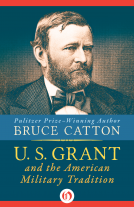
U.S. Grant and the American Military Tradition, by Bruce Catton****

usgrantandtheamericanmilThis brass-tacks biography of US Grant, who served as America’s finest Civil War general and also two terms as US president, was originally written for young adults. Now it is something of an anomaly, and yet not a bad read for the right audience. Thank you, thank you to Open Road Integrated Media and to Net Galley for providing me with the DRC. This book will be for sale in digital format November 3.

Reading this nifty little book reminded me—not entirely happily—of how much sturdier literacy in the United States stood during the 1950’s, when this biography was originally written, compared to now. True, it was a less egalitarian, less inclusive school house that could throw this level of reading at its teenagers, and that is a different debate for a different day. Right now, I just have to tell you that Catton’s boiled-down biography is going to be over the heads of most high school students. In addition, there are a couple of slang terms no longer in use that may confuse the reader. I understood one of them—and I was born in the late ‘50’s—but another phrase left me scratching my head. My two fields, when teaching, were literature and US history, primarily the American Civil War and government, so if I don’t get it, then high school kids will miss some of it also. The book could be used for honors students, most likely, but is no longer ideally suited to high school students.

However, I can see its use today for community college students, and also for adults who are not doing research and don’t care to see Mr. Catton’s sources or argue his perspective. He takes a few enormously controversial aspects of Grant’s life and makes his own pronouncements, some bold, some bland, with absolutely not one shred of evidence to back them up, apart from his own excellent reputation, and so scholars in the field are more likely to find his Civil War trilogies more satisfying than this little nugget. But for the history buff who just wants a thumbnail sketch, one book and we’re finished thanks, this could be it. It is certainly less of a meal than Grant’s own memoir; also, unlike Grant’s inarguably excellent memoir, Catton addresses the rumors about Grant and liquor that Grant himself refused to even discuss.

Catton focuses primarily on the Civil War years, which I believe is the right way to remember the man, but he also talks about the setting into which Grant was born, and in a relatively short amount of text provides us with the lifestyle and expectation of the average American farmer, which is what the vast majority of Americans were at that time. He carries us through Grant’s time at West Point, then through the wars with Mexico.

He takes apart and casts aside, brick by brick, the nasty allegations that Grant’s detractors made then and in contemporary times, and shines an authoritative light on them. What about Grant and the booze? Was Grant really a bad businessman who lost his own money and that of other people? Was he really Grant-the-butcher, as a brief but ugly period in revisionism charged, willing to plow willy-nilly into any and every battle regardless of the number of soldiers’ lives lost? What about his presidency, and the scandal that clouded it?

Grant is one of my heroes, and I appreciate the way Catton defends him here. I particularly was interested in his very convincing defense of Grant as businessman. I found Catton slightly abrasive in his tone toward Grant’s defense of the rights of African-Americans during Reconstruction; it was clearly this, rather than anything else, that caused the glow of his wartime glory to dim, because the Klan and Southern white reactionaries were absolutely hell-bent on creating a stratified society in which the Black man did not have equal rights to those of Caucasians, and one determined U.S. president was not able to stem that tide. That’s really what Grant was up against, and what tarnished his reputation. Catton feels he should have been more, um, “flexible”. I personally am pleased that he was willing to ride his principles to hell and back if need be…and that was about what happened.

I find it so sad, so ironic that the vast overload of expensive cigars sent to General Grant by patriotic admirers are what most likely lead to his death; throat cancer checked him out of this world only 48 hours after his memoir was completed.

Although there are no citations for the facts provided in the text, there is a nice little index that will prove useful to students.

Recommended for adults at the community college level, and to history buffs who just want to read one relatively simple biography of Grant.

Napoleon: A Life, by Robert Andrews *****

napoleonalifeRobert Andrews has created an historical masterpiece in this massive tome, a biography of Napoleon. Thank you and thank you again to Net Galley and Viking Adult Publishers for the ARC.

Andrews is well known among historians; his scholarship and experience firmly establish him as an expert in the field of European history, especially military history and biography. The recent availability of a vast treasure-trove of primary documents made this biography possible, together with a tremendous amount of work and travel. He visited libraries all over the world and battle sites where Napoleon had been before him, before all of us. (And he set off the alarm in Napoleon’s throne three times!)

How long did this take, I wonder? By the time it was published, Andrews must have felt an overwhelming sense both of loss and of satisfaction.

As for your humble reviewer, I came to read about Napoleon, whose military career, rule, and downfall I had studied only at the shallowest level during my undergraduate years a whole long time ago, through the back door. My field is the American Civil War, but I was intrigued by the number of Civil War heroes (and others) who had studied Napoleon’s methods in detail, and referred to them when creating their own battle plans. What was it about Napoleon?

Generally, my advice to those contemplating reading a lengthy biography is to get the basics down first, but I didn’t follow my own advice here. I had the opportunity to get the ARC at the end of November, and it was now or never. I decided to plunge in, poorly prepared though I might be. When I was finished, I found I had bookmarked or made notes in over 700 places in this 926 page work. So whereas I won’t use all of my references, I can truthfully say that there is no filler, no fat. If you haven’t the patience for almost a thousand pages of Napoleon, then don’t go there, but for heaven’s sake don’t pretend that more is included here than is necessary for a thorough, scholarly, yet interesting treatment.

Having said that much, I also have to confess that I struggled somewhat with the ARC. My knowledge of European geography is pretty basic. I know where most of the countries are, what their climates are like, and for the most part, where the borders are located. When we morph into the Napoleonic era, I really, really needed maps, and that’s the price one sometimes pays for an ARC: your “map” is [map insert] noted. There will be a map; I don’t get to see it. So I gamely brought myself to my desktop for the first four Coalition Wars, and was lucky enough to find an interactive map that gave me part of what I needed to know. In some places, Andrews explained what took place so well that I could see most of the battle inside my head. But as of the fifth coalition forward, I quit trying to find my own maps when I couldn’t follow the action, and just read what was in the book.

All told, Andrews corrected some misperceptions I had developed regarding Napoleon. My own view had been that there was a heroic French Revolution, followed by what are usually termed “excesses” by the Jacobins who began the Revolution. (Today these en masse trips to the guillotine would be called atrocities.) But could the whole thing be salvaged? It seemed such a terrible waste to have a popular revolution, throw out not only a monarchy but one unusually lacking in decency toward the peasants and urban poor of France, and then have it all come tumbling down. And it also seems like a waste to have an autocrat take over. This was my perspective before reading Andrews’s biography.

Though his approach is both scholarly and balanced, Andrews offers a positive portrait of Napoleon, whom he treats with a fond, almost affectionate narrative. He points out that Napoleon kept the Bourbons off the throne for over twenty years, and it’s true that they returned in 1815 after Napoleon’s first abdication. Things got really ugly then. And he also points out that Napoleon’s career was unusually complicated. The point is well taken.

For example, who invades neighboring nations, overthrows their leaders, presumes to rewrite their constitution without consulting anyone that lives there…yet bestows upon them more civil rights than they have ever had before? And who else would insist in his terms for peace not only remuneration so that he can pay his troops and the annual benefits of military widows, but also demands that great works of art, privately owned, be turned over to him…whereupon he places them in a gallery where all visitors can enjoy them?

Mind you, the man is no Robin Hood. Far from it! He makes it clear from the beginning that he has no use for the ‘hoi polloi’, and whenever he ceases privately held property, he also sees to it that the previous owner is compensated.

The word “hubris” is often applied to Napoleon, and if not him, then who? Andrews argues that he might have been successful…if only. And there’s the rub, right? Because initially, he and his troops travel fast and hard. In the beginning, he asks nothing of them that he would not do himself. His opponents, on the other hand, are spoiled and effete. They travel with vast amounts of personal baggage and servants. They can’t move until they personally have this, that, the other. And in the end, that is the guy that Napoleon becomes.

The text is made more lively throughout with quotations of Napoleon himself, a prolific writer and a brilliant, articulate speaker.

The chapters are organized according to place, generally speaking, and this is very useful when the reader needs to go back and fact-check.

Andrews argues that Napoleon’s autocracy-as-meritocracy might have been successful if he had applied the standard to all of the dynasties he created after toppling their rulers that he applied to France. Nepotism created endless problems, and though Napoleon somehow thought that he personally might make up for the failings of his relatives, there is only so much one man can do. The many, many worthless siblings and other relatives he installed as instant royalty drained his resources and made problems that didn’t have to happen. His first wife, Josephine, was such an obsessive spender that one hates to think of the number of children under age six who might have lived had the wealth been more widely distributed.

Napoleon’s most loyal base of support was within the military, but he fought so aggressively that too many soldiers died, and the backlash was bound to come sooner or later. Yet the military base he so depended upon wanted him back again after just ten months of Bourbon reign.

Could Napoleon have been successful if he had left the Iberian peninsula alone? If he had avoided attacking Russia? Napoleon himself, upon looking back while in exile during his last years, recognizes that trying to best Britain, with its unstoppable navy, was folly; yet he certainly kept them busy for a good long while.

At one point, he reflects that if he had known he would end up defeated, he could have made different choices. He would like to be allowed to emigrate to the United States; who knows, he could have founded a state there! And here, my jaw drops as I imagine that instead of selling the Louisiana Purchase (which doubled the size of the USA) to the USA via President Thomas Jefferson, he had decided to settle it. But being Napoleon, would it have even stopped there, I wonder? He hated Britain and had nothing against US rulers; maybe he would have been able to kick the British out of Canada instead of fruitlessly attempting to rout them from their homeland.

Suddenly I can see how Andrews has become spellbound by what might have been. He has spent a lot more time with this material than I have, and it’s starting to affect me, too!

I know that some of those who read my reviews are teachers. I don’t see this as high school material; a small portion of it could be selected for honors level seniors or community college students perhaps, but then you have huge books to buy in order to use just a portion. I don’t see even the most gifted teenager sticking it out from start to finish. Though the narrative is engaging, the definitive biography is epic .It requires patience and dedication on the part of its readers. Developmentally, most young folks in their late teens and early twenties just won’t be there yet.

But if you are in doubt, buy one copy and read it yourself, then pass it around a little bit and see how it goes. Likewise, if you are homeschooling a truly extraordinary teenager that you think would gobble this up, buy it, read it (because you can’t home school anyone using a text you have not personally read), and then if you still think it may work and your student is game, give it a try.

All told, the price you will pay for this remarkable single volume biography is nothing compared to its worth in your own library, even if only used as a reference source.

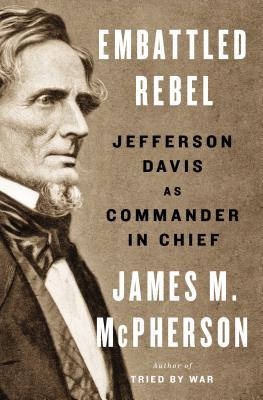
Embattled Rebel: Jefferson Davis as Commander in Chief, by James M. McPherson *****

embattledrebelThis was my first biography of Jefferson Davis. I have studied and taught about the American Civil War for decades, and read biographies and memoirs of and by some of the other principals in this conflict; I have avoided biographies and memoirs of Southern generals and politicians that smacked of nostalgic yearning for that Lost Cause. I would swear some of their authors would cheerfully go back to the enslavement of people of color given half a chance, the way they carry on. In any case, when I found this gem recently released by one of my favorite historians who has proven his scholarship trustworthy, I knew I had to read it. Sadly, I didn’t get the ARC when I requested it; hey, it happens! But my spouse popped through the door with a copy of it and I was in business at last. It was well worth his time and effort. James M. McPherson won the Pulitzer for Battle Cry of Freedom, the best single volume treatment of the Civil War I have read. He didn’t disappoint this time either.

If you read this biography, don’t skip the introduction. All of the details that follow are succinctly outlined in interesting and readable form; in fact, I read it before I read the book, and then I read it again afterward.

The book is punctuated by photographs of commanding generals in excellent resolution when read on an e-reader. I was also pleased to see that the maps could be zoomed to where I could generally tell what was on them when I held the e-reader near the light. This is a huge improvement over earlier history texts produced digitally. I used to suggest to those reading military history that they spring for a paper copy so that they could read these, which are often key to understanding what is being said. This time if you buy the book digitally, it will serve just fine.

The thing I was most curious about was whether it was true that Davis was insane by the time the war ended, and that the proceedings were mostly left to Robert E. Lee. Whereas Lee made his own decision to surrender to Grant, Davis, though undoubtedly in denial and out of touch with the reality of Northern conquest, was not insane nor near death, as the terrible textbook I was assigned to use with my teenagers had it. Happily, I noted that the sections on the Civil War had a number of other incorrect entries, and so I greatly limited my use of that book. Now I am really glad I did. Davis didn’t want the presidential nod, but he got it and took it; in fact, when he died many years later, he was entirely unrepentant. McPherson believes he was a strong politician who did a creditable job with a damnable task; Lincoln was a better president, but the Confederacy did not lose the war because of Davis’s failures. It was almost surely going to lose anyway.

Prior to reading this biography, I had believed that the south held on for as long as it did because its military leaders were stronger than those of the Union. This actually isn’t saying much about Confederate leadership.Union General McClellan cost both sides a lot of years and bloodshed that didn’t have to happen. It isn’t so much that the South had amazing generals; it was more that the Union had nobody who was both dedicated and proven. In fact, says McPherson, the Confederate military was practically tearing itself apart through gossip, infighting, and rivalry. Jefferson probably was guilty of promoting his friends beyond their level of competency; yet the cabals and gamesmanship practiced by those assigned to answer to General Bragg were at best a morale-draining waste of time, and at worst may have cost the Confederacy some battles. And the now-venerated Robert E. Lee was castigated in the Southern press for the number of Confederate soldiers who didn’t walk away from his battles. He was dubbed “the king of spades” for the graves that had been dug.

One Confederate general I had wondered about was John Bell Hood. My impression of him, I admit, was that he was a bad-ass general. He never seemed afraid to attack, even with one leg and one arm gone. Who does that? Still up there on his horse; “Charge!”  But this was one more hole in my scholarship that McPherson quickly filled. Hood would fight unwinnable battles. He destroyed an army during the last-ditch effort to save the Confederacy, losing a full fifty percent of the tens of thousands of men he led into just one fight, and most of the rest of them soon thereafter. The “reserves” consisted of old men; children too young to sign up initially; and those proud wealthy souls who had originally paid someone else to fight on their behalf. (I can imagine how well the latter took orders!)

I was familiar with a lot of the primary information provided here and was therefore free to focus on, and enjoy, the details. One new bit of amusing minutiae was that Southern women saved “the contents of chamber pots to be leached for nitrate to produce gunpowder”. Those of you more familiar with chemistry will know whether the women were lined up with their number one or number two. For me, it was a stitch to envision all those fine ladies dressed up in their hoops and bonnets standing in the potty-donation line!

I was particularly interested in what McPherson had to say about guerilla warfare. Lincoln was intent upon making it as easy as possible for the Confederate states to rejoin the Union. Some of us, had we been present, would have made a strong case for executing Davis and some other leaders—particularly those in South Carolina who started the whole mess—for treason. And some who were in Washington DC at the time made that case, too; but the decision was for quick, peaceful reunion. One reason for this was the concern that rebels made bitter by the price of losing the war might take to the hills and wreck endless havoc upon the offices of government and the economy long after the war had officially ended. But guerilla actions during the period when the Confederate government was in place and holding out for official recognition would have been unwise. Says McPherson:

Guerrilla actions as the main strategy are most appropriate for a rebel force trying to
capture the institutions of government, not defend them. And a slave society that
practices guerrilla warfare is playing with fire, for it opens up opportunities for the
slaves to carry out their own guerrilla actions against the regime.

But what of Beauregard? What about General Johnston and General Johnston? (Of course, there were two.) Bedford Forrest? What was the deal with Kentucky? Ah, there’s so much more to discuss.

I write really long reviews. If you are still with me by the end of this one, your interest is sufficient to go out and get this wonderful book. I don’t recommend it for those unfamiliar with the Civil War; for that, you ought to read Battle Cry of Freedom first. But once the basics are in your tool kit, you will find this biography accessible, interesting, and rewarding. Go for it!

The Impossible Exile: Stefan Zweig at the End of the World, by George Prochnik ****

 theimpossibleexile If you’re looking for a real-life horror story, this one is for you. It is the story of Stefan Zweig, a writer and collector of original musical scores, very well known in Vienna and throughout Europe prior to the rise of the Third Reich. It’s also a Holocaust survivor’s story, to a degree. When one surveys it objectively, his fate seems so much more sanguine than so many others who were unable to escape, or who suffered terrible physical and material misfortune before doing so. And yet it isn’t. Zweig makes it out of Vienna in time…and yet, he doesn’t.

My thanks go to Net Galley for the ARC.

Prochnik is an able writer, and he balances Zweig’s perspective with world events well in most instances; it is a highly literate, well documented biography. It is hard to rate a book like this, because while the writer is proficient, I finished the book not knowing why Zweig’s story was important. The man cut himself off from political resistance, and while he initially helped other Jews who needed to escape, eventually he was so overwhelmed by their need that he not only turned them away, but spoke of them in contempt as “schnorrers” (Yiddish which literally means ‘beggars’) who had not had the prescience to get out in time.

At one point, he is said to have thrown one giant party in order to discharge all of his social obligations in one extravagant evening. He supposedly embraced “all classes”, but the single “working class poet” is the only member of the working class ever mentioned as a guest or friend, and the poetry arguably inches that man toward the intelligentsia and professional crowd that Zweig embraced, when he was embracing anyone.

Depression and mental illness were not understood well in that time, and that had to be the key to his terrible end, which otherwise seems so unnecessary. Without it, the reader may have a difficult time sympathizing with a man who was able to travel the world after his escape and afford servants upon his arrival. I had a hard time liking this protagonist.

Before reading The Impossible Exile, I had never heard of Zweig, but I have read hundreds of biographies, autobiographies, and memoirs, and often they are by or about strangers (or both). Often I find myself seeking out the protagonist’s work after I have read about them, because they have endeared themselves to me as I read their stories. Not so with Zweig. But again, those who have spent any amount of time with a depressed individual know that depression doesn’t merely imbue sorrow; depressives are often angry, moody, or appear lazy when they just won’t get out of bed. Thus, I can understand his difficult nature to that degree (and Prochnik also recognizes it).

My recommendation, then, is for a niche audience only. If you are interested specifically in Stefan Zweig, read Prochnik’s book; I cannot imagine the subject in better hands. If you seek a wide cross section of Holocaust refugee stories, this one is likely atypical enough that it should be included.

If you are looking for a story in which a survivor rises triumphant against adversity, or dedicates himself to helping others after a narrow escape, this is not your story. It is instead, almost unbearably tragic.

Ulysses S. Grant: Triumph over Adversity 1822-1865, by Brooks D. Simpson *****

ulyssessgrantEveryone needs heroes, and Grant has long been one of mine. This outstanding biography by Brooks D. Simpson is engrossing, and Simpson’s storytelling is well documented. I read several books at a go, but I found myself turning to this one oftener than my others. It is well organized and provides a balanced, meticulously researched look at Grant’s life through the end of the American Civil War. (Another volume that will deal with his presidency through the end of his life is planned, and I look forward to it also.) Thank you, thank you to Edelweiss Books, Above The Treeline, and Zenith Press for the ARC. I rated this book 4.5 stars and rounded it up.

Generally, I have a bias toward autobiographies and memoirs, because in most cases, the person can tell their own story in their own voice much better than some outside person. Exceptions are those who would over-inflate their own glory, sometimes unnecessarily (think Patton); really bad guys, like Goebbels; dead folks who went without writing a memoir, also like Goebbels; and a fourth group that I hadn’t even considered till I read this biography: people who are so modest that they understate their own achievements. Grant was just such a modest man, and he only wrote his autobiography because he was dying and in debt, and was told that the book would provide enough income to keep his wife Julia housed, fed, and reasonably happy until she followed him in death. He passed over many opportunities to point out his own remarkable qualities because his nature was unpretentious and unassuming, and so those of us who love history and biographies can’t ask for much better than what Simpson has offered here.

My second-favorite general (the first being Sherman) was born Hiram Ulysses Grant. The regional accent made his first name into a single syllable that sounded like “harm”. His father Jesse was overcome with pride in his young son, who could ride standing up on the back of a horse by the time he was five years old. “My Ullys” was bragged about constantly, to where people grew tired of hearing about it. In later years, his horsemanship would stand him in good stead, both in the war with Mexico and the American Civil War. If the reader considers that a horse back then was militarily a lot like a jeep of today, but animate and so more subject to performance based on its treatment by the rider, this takes on greater importance still.

Simpson characterizes Grant’s father Jesse as a braggart and windbag, but I could not help thinking that all children ought to have at least one parent who is so absolutely convinced they will grow up to do marvelous things.

Some parents who dream big and dream early about their offspring are deflated when the child reaches the age of majority without turning rocks into bread or parting the nearest sea to walk through it. So it was with Jesse Grant. His son didn’t do well at farming or in business, and Jesse made it clear to his son that he hadn’t lived up to expectations. At least, not yet. Although it meant having to go hat in hand to an old friend with whom he had quarreled, Jesse asked that his son be given one of his state’s positions as a student at West Point. It wasn’t about being in the military; it was about getting a college education free. And it was there that “Sam” Grant (nicknamed by Sherman, who was an upperclassman when Grant arrived) found the key to his future. Grant excelled at mathematics, and had war not come, he would most likely have followed through on his ambition to become a professor of mathematics. Fate crossed his path, and between the events that unfolded and Grant’s superior qualities, his life impacted the world in ways that are impossible to measure.

Simpson fills in all sorts of gaps in my own knowledge of Grant. He speaks frankly about Grant and alcohol, and sets the record as clear as it is likely to get given the time elapsed. He talks about his leadership qualities, and also points out what he sees as the errors in judgment Grant made (although I occasionally quibbled with him, as if he were in a chair across the room and could hear me; seemed to me in some cases, Grant could have been criticized no matter which way he went.) But our writer champions Grant’s greatest qualities, among which were his absolutely even temperament, and the fact that he never became frightened or agitated during battle, as well as his unstoppable determination and work ethic. He was a man of high principles, and he also knew how to back off from a power struggle even when he carried the authority to smack someone down. Humanity could use a few more folks like that.

Grant was unafraid to promote the use of Black soldiers, and pushed to include them even when the generals he commanded weren’t all that happy about doing so. He treated them with more decency and dignity, perhaps, than any other general (all of whom were Caucasian). He refused to participate in prisoner-of-war exchanges with the Confederates for as long as they killed or mistreated Black soldiers rather than regarding them as military prisoners. That’s integrity.

Most of all, the writer demonstrates that the greatest historical criticism of Grant’s generalship, that he used men up needlessly and was heedless of lives lost, is unfair and incorrect. In fact, had the Union had fewer generals like McClellan and more like Grant earlier in the war, it might have been done and over a whole lot sooner.

I flagged a lot of quotes and have not included all of my notes in this review, but common sense dictates that I end this here. By now surely you can see that if the American Civil War and General Ulysses S. Grant are topics that interest you—or that might do so—then this approachable yet scholarly volume is surely worth your time and money.

Goebbels, by Peter Longerich ****

goebbelsLongerich has established himself as a scholar who specializes in writing about the Nazi thugs who surrounded and supported Hitler’s regime in the 1930’s and 40’s. Thank you to Net Galley and Random House for the ARC.

The fact is, despite my strong preference for meaty, well-documented, detailed historical works including biographies, I really struggled with this one. At first I thought it was my own fault for asking for 992 pages (about a third of which is documentation) about such a rotten guy, but that isn’t the reason I kept setting it aside. I devoured John Dean’s recent tome on Nixon, who while not actually a fascist was a really dirty guy, and that was really interesting reading. This colossal volume on Goebbels, on the other hand, is dry, dry, dry.

Longerich’s thesis, if such a large work can be boiled down to its essence, is that while Goebbels was a villain and a sociopath, he wasn’t nearly as important a player in Hitler’s regime as he considered himself to be. He was emotionally dependent on Hitler and the reverse was also true, but his scope and authority were not as great as many people may believe. Longerich makes his case thoroughly and carefully, using Goebbels’s own journal entries and other primary documents, often citing works in the German language to back his assertions. And maybe that is where part of my ambivalence lies, because what he sets out to prove, isn’t what I wanted to know. I wanted to know—just as we always do when something really calamitous occurs or a really monstrous person draws the public eye—what the hell happened to make someone participate in, and even initiate, the things that Goebbels did. I don’t care about his love life, and would just as soon see a good portion of the first 200 pages edited, since the interesting part of his story is later in his life, once the fascists assume power. However, Longerich has written about at least one other top Nazi, and he followed the same basic format, relying on the man’s early life to demonstrate the formation of his character, and he’s had success and acclaim by doing so, and perhaps that isn’t entirely the reason I found this work to be so unexpectedly dull.

For those who are pursuing research projects that involve Nazi top officers, Goebbels is bound to be a valuable resource. For general audiences it might have been more interesting to see him from multiple perspectives. We see Goebbels through his own eyes, and we see what Longerich has discovered to be fact in terms of the authority he was given and the positions he held. I wonder, what about what others who worked with him thought about him? What about how the German public perceived him? I think it might have livened up the text to include more vantage points.

I have no doubt whatsoever that this is the most thorough biography of Goebbels that is widely available and written in English. For scholars seeking information for purposes of research, I highly recommend it. For the audience that seeks an accessible and interesting history and biography that relates to the Holocaust and Nazi officers, I recommend Six Million Accusers: Catching Adolph Eichmann, by D. Lawrence-Young.

In short, Goebbels is more appropriate for a niche audience than as a general read.

Last Train to Memphis: The Rise of Elvis Presley, by Peter Guralnick *****

lasttraintomemphis I belong to the generation that came about a decade after Elvis was king, and so for a lot of years I tended to avoid his music. It was not my music. And that was my mistake.

Whether or not you are an Elvis fan, this biography is best read with internet access to his music, and better still with access to film footage of him performing (and it does exist). It is hard to understand much of what Guralnick writes about unless you can see the body language in the performance. Even if Elvis’s work has served as background music that you’ve never listened to very much, a review is in order to understand any of the tumult that his work created.

Last Train to Memphis: The Rise of Elvis Presley was a New York Times Notable Book of the Year and garnered other awards and praise as well. It is justified. So much research, so many interviews, so much data has been crammed into an easy-flowing, readable narrative that he makes it look almost easy. Almost.

Presley was not a song writer, he was a performer. It was the style with which he interpreted songs that were already popular and well-known, such as Blue Moon Kentucky, as well as to lesser-known hits that came from the Black community, that rocketed him to fame. It’s hard to get a bead on the man, even with everything the writer has ferreted out from all possible sources. A pair of musicians he worked with referred to him as an “idiot savant”. If he were alive today, he might be diagnosed as OCD (my own conclusion); though his family was poor enough to qualify for the first public housing, he has his very own plate, his very own knife, and his very own fork, and if anyone else had used it, no matter how many times it had been washed, he would not eat. His closer-than-average relationship with his mother probably was the saving factor here. She accommodated this and more, and between this and the fact that there were no other children in the family (apart from his twin, who was stillborn), no diagnosis was necessary. He was ostracized at school, but found his greatest love was not in the halls of academia anyway. He began with a child’s guitar that his mother scrimped and saved to buy for him, and worked his way up the ladder. (He later said that he had found some of his ideas by sneaking out of the church his parents took him to on Sundays and sneaking over to the “Negro” church service, where he could listen at the door. He went for the music.)

His dance style had never been seen  by any wide audience. His hair and clothing, while fodder for a whole lot of jokes up the road, had found their time and place. Somehow he knew exactly what would work, and those who worked with him also said that he was always aware of what individual components of his act resonated with his audience, and which fell flat. He wore makeup on stage to enhance his features before any other known male American musician did; some of his fellow musicians wondered what that was about. Someone else asked him why he put glop in his hair; he said it was so that a lock of it would fall forward in a particular manner when he snapped his head. Once he got the opportunity to make a movie–an opportunity he actively sought–he spoke with hairdressers about its color. One of them told him black would look wonderful on film against his pale skin tones, and so he dyed his blond hair black from then on. (I had always thought that was his natural hair color.)

As a young woman, I often heard about how tragic Elvis Presley’s life had been. I was not yet twenty, clerking in a convenience store nights to augment my student financial aid, when the newspaper delivery van came with the evening newspaper and there was the headline. Elvis–the older, heavier Elvis–was dead. I was young enough that most adults seemed pretty ancient, but I mused, “Huh. He wasn’t THAT old yet.” My boss came over to look, and was surprised also.

But in reading this biography, I am more struck by how many dreams came true for this young man. He got to do exactly what he wanted to do for a living, and he loved having fans scream out his name. He wanted a Cadillac; he had half a dozen of them. He was able to provide well for his parents, and he built his dream home, complete with a real soda fountain. He had women on his arm everywhere he went.

…and he scared conservative America half to death! Oh, the panic! “New York congressman Emmanuel Celler, chairman of the Antitrust Subcommittee of the House Judiciary Committee” labeled Elvis Presley and his “animal gyrations…violative of all that I know to be to good taste.” He and several other prominent politicians managed to work some racist demagogy into the mix as well. Elvis later let everyone know exactly what he thought of that by showing up at the fairgrounds in the Jim Crow south on the one day of the month designated as ‘Colored Day’ and buying a ticket. He was the only white boy at the fair. He was allowed to attend and widely welcomed, though there was some push-back later in the local Black press complaining that too many young ladies at that same fair had been screaming after him instead of young men of their own skin tone. Ah well.

This marvelous book is volume one of two. It ends when he is drafted and goes to Germany (a peacetime draft that his agents decided it would look bad for him to avoid). Maybe it is just as well. We send young Elvis off to Europe still full of youth, joy, and hope. (Your reviewer confesses that she has ferreted out the second volume, gently used, from her personal book temple, Powell’s City of Books, and will read it when time allows.)

Highly recommended to anyone who enjoys biographies of famous musicians. I loved it!

Cosby: His Life and Times, by Mark Whitaker *****

Now that it’s on the shelves where you can buy a copy, I thought I’d post this one more time.

seattlebookmama's avatarSeattle Book Mama

In the lateCosby twentieth century, Americans trusted “God, Walter Cronkite, and Bill Cosby”. Cosby is an icon, and Mark Whitaker is his biographer, author of the first comprehensive biography of the great comedian, actor, author and humanist. I have admired Bill Cosby my entire life, and it was an honor to be able to advance-read this well written, thoroughly documented biography. Kudos to Whitaker for a job well done.
Cosby grew up really poor, the child of a man his friends later described as a “wino” and a hard-working, ambitious mother who valued education. His teachers could tell he was very bright, but he had no interest in school work during his formative years, enjoying sports, friends, and jazz music more than academia. He would later change his mind. His college degree and graduate work were done legitimately; he respected education too much to ever accept an honorary degree anywhere…

View original post 907 more words