Summers at the Saint, by Mary Kay Andrews****

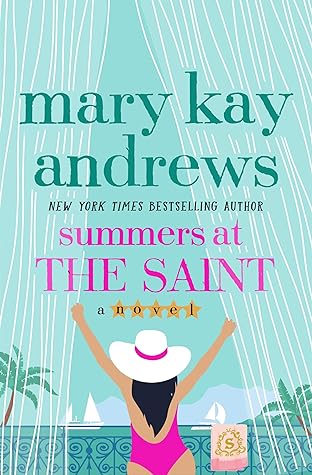
Summers at the Saint is the latest novel by veteran author Mary Kay Andrews. I am not usually a fan of what I think of as light and fluffy books, but over the last couple of years, I’ve developed an appreciation for this author’s work. This story centers on a fashionable beach resort hotel and those that run it, with the focus primarily on the women. It’s a good summer read—not a bad choice to take to the beach, actually. My thanks go to NetGalley, Macmillan Audio, and St. Martin’s Press for the invitation to read and review. This book will be available to the public May 7, 2024.

Our protagonist is Traci Eddings, the young widow of Hoke Eddings, heir to the Saint Cecilia resort. Traci has inherited part of the business from her late husband, but there is a power struggle in play as the book opens. The old man is dying, and the surviving heirs are scheming. The business seems to be on the rocks, or near to it, and Traci can’t figure out why. She makes several smart changes, hires good people, and yet…

We have interesting side characters. Parrish is Traci’s niece, whom she persuades to postpone her studies for one more summer as Traci implements the changes that are needed. We have the new cook, Felice, as well as Livvy, a capable young woman that Traci hires away from the diner where she is waiting tables; and we have Livvy’s mother Shannon, who used to be Traci’s best friend. Shannon completely dumped Traci many years ago, leaving Traci bewildered and hurt; she still feels that way. Lastly we have Whelan, who is working at the Saint as a pretext while he tries to unravel the circumstances that led to the death of his younger brother at the resort’s pool many years ago.

The book’s strongest aspect is the side characters, particularly Felice, Shannon and Livvy. Other characters are one dimensional, either entirely good or entirely awful. Rather, this is a plot based book. There are a great many moving parts, with a blend of genres that include romance, mystery, beach reads, women’s fiction, and contemporary family drama. It is in weaving the many pieces of this story that Andrews’s experience shines through. If there is a plot element that conflicts with another, or that is simply illogical, I didn’t spot it. At the end, everything and everyone is accounted for; in fact, I might have preferred not to have every single aspect resolved, and every positive character quite so perfectly happy. I seldom argue in favor of ambiguity, but in this case, it wouldn’t hurt.

I was fortunate enough to receive both the Kindle and audio versions, and once more, Kathleen McInerney does a fine job of narration with all of the women characters and the internal monologue. Her voice isn’t deep enough to voice the men’s characters well, and I suggest adding a second, male narrator next time around.

The story held my attention quite nicely as I did my morning bike ride, and I recommend it to Andrews’s loyal readers, and to those that enjoy a good beach read.

Piglet, by Lottie Hazell****

“Such a special day.”

Piglet is an offbeat novel that marks the debut of author Lottie Hazell. The protagonist is a young woman named Pippa, but everyone calls her Piglet. This author has me before I open the book, because with a nickname like this, I have to see what’s behind it, and where it’s going. My thanks go to NetGalley and Henry Holt for the review copy; this book is available to the public now.

Piglet lives in London, far from the working class area where she was raised, and where the rest of her family still resides. She’s a cookbook editor for a publishing company, is engaged to marry Kit, who is handsome and comes from a well to do family, and they have recently purchased a gorgeous home. Her star is clearly rising.

It’s a tightrope walk, to be certain. People with money have expectations, and so it’s not easy for Piglet to advocate for herself in the presence of his family. But she genuinely likes them, and so she works with them—which generally means that they get their way. Her own family mildly embarrass her when the two families meet, but her folks won’t often cross paths with these people once she and Kit are wed.

Then, two weeks before the wedding, Kit confesses a terrible, terrible betrayal, and Piglet has to decide whether she is in or out. As she unravels, I watch in horror. Piglet, you see, is an emotional eater.

In many ways, Piglet is the protagonist I have been wanting to read all my life. So often female main characters respond to stress by not eating. The lesser characters around them cluck over how pale, how thin they’ve become, and I sit back on my ample behind and say, “Yeah, right.”

But Piglet’s stress eating is epic in scope, and I also worry that the resolution will involve therapy, a new diet and a wedding gown in a size smaller than anything she’s ever owned. And since this much comes from my own imaginings rather than the book, I’ll go ahead and tell you, no. That doesn’t happen, and I am so grateful.

For most of this novel, I feel an intimacy with the protagonist that is rare. I can’t wait to find out what happens next, but I also can’t tolerate interruptions, and so I choose my reading sessions carefully. I am fortunate enough to receive both the digital review copy and the audio galley, and at the outset, I do what is my usual routine in such circumstances, listening to it while I am doing something else, but with the DRC nearby so that I can make notes or highlight likely passages for quotes. But by the time I am about thirty percent in, that’s over, and instead I am listening while reading also, because how can I think of anything else?

There are two things that I am dying to know. First, does she stay with Kit? And more importantly, what terrible thing did he do? Piglet keeps this information close to her vest, but the few people she tells are uniformly horrified, and so I know it’s bad. But what is it? Just what the hell did he do?

The ending feels incomplete to me. There are so many things that Hazell could have done and didn’t that I am disappointed by what feels like a slightly bland resolution. This is a good book, but it could have been a great one.

Hazell’s word smithery skills are stellar, and when I was done, I found I’d highlighted over 150 passages. Obviously, I won’t use them all here. Most of the novel’s tone is quite serious, but there are a few moments of dark humor that leave me shaking my head in admiration. In particular, there’s a wedding photographer that makes me howl!

The narrator is outstanding.

One way or another, Lottie Hazell is an author to watch. I look forward to seeing what she produces next.

Bright Lights, Big Christmas, by Mary Kay Andrews****

I tend to avoid heartwarming holiday stories and romances because so many of them are infused with saccharine and require the reader to put their I.Q. in a box until the book is over. But two years ago, I was happily impressed with Mary Kay Andrews’ The Santa Suit, and so when I was invited to read and review Bright Lights, Big Christmas, I happily agreed. My thanks go to Net Galley, St. Martin’s Press, and Macmillan Audio for the review copies. This book is for sale now.

The Tolliver Christmas tree farm is an institution, not only at home in North Carolina but as far north as New York City. As a child, Kerry sometimes accompanied her family to New York to set up a tree stand and sell the trees, but as an adult, she’s had other priorities. This year, though, she finds herself unexpectedly jobless, while at the same time, her father’s health prevents him from executing the task. Kerry must take his place, traveling to the Big Apple with her brother, Murphy. They set up the stand, and they sleep in the ancient pink trailer nicknamed “Spammy” because of its resemblance to a canned ham. Adventure awaits.

Kerry’s love interest pops up before we’re even ten percent into the story, but it appears that the author planned for us to know that, and it doesn’t hurt anything. Over the weeks they are in New York, various small (and large) crises present themselves and are worked out with team work, ingenuity, and the occasional well-placed bribe. They have Murphy’s dog Queenie with them, but she is primarily left in the background where she belongs.

What I appreciate most about this novel is how well grounded the plot is, and the author’s restraint in not permitting any elements to go over the top. There are a host of stereotypes possible, but every time I see one coming, Andrews chooses a different path, and it keeps the story fresh and original. Small details that might be overlooked by someone less detail oriented are seen to, and it keeps the narrative credible. Examples are the need for a shower or bath, given the length of their stay in a trailer without working plumbing; the cost of living in New York; the hazards of theft and vandalism, especially active at Christmas. None of these sidetracks the plot or slows the pace, but the questions a reader might have are tidied away, and this makes for greater enjoyment.

One small criticism involves a situation where theft and vandalism occur at a time when Murphy has to be away, and immediately, other men folk clamor over the need to have someone—someone with a Y chromosome, folks—to do lookout duty, protecting the fair damsel, her trees, and so on.

Apart from that, this is a delightful story. However, for awhile I wasn’t sure I liked it, because I was listening to the audio version, which is poorly done. The male characters are voiced in a way that is choppy, wooden, and unconvincing; but worse is Kerry’s voice, which is performed in a high-pitched, girly-girl voice so off-putting that it took me awhile to realize that the problem wasn’t the author’s, but rather the voice actor’s. The children’s voices are much better, and I actually howled with laughter when the baby in a stroller wailed!

As the story reaches its climax, Kerry has to make some serious choices, and I admire the way this part is resolved. The side character Heinz, an elderly man that lives in the neighborhood and often stops by the tree stand, is terrific.

When all is said and done, I rate the printed version of this novel 4+ stars, and the audio version 3+ stars, with an overall score of 4. I recommend the print version of this book, but not the audio.

The Magic Kingdom, by Russell Banks*****

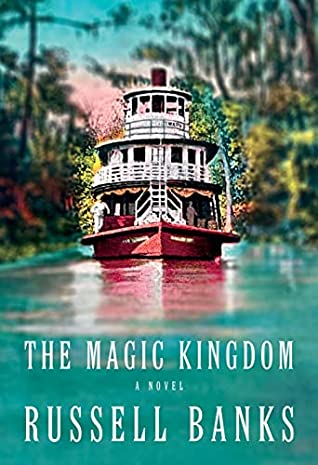
Some writers may fade as their bodies begin to fail them, publishing books that aren’t quite up to their usual standards; Russell Banks, on the other hand, seems to have saved one of his best for last. The Magic Kingdom tells the epic tale of Harley Mann, a boy that spends most of his boyhood on a Shaker plantation in Florida, and then becomes a real estate mogul later in life. My thanks go to Net Galley and Knopf Doubleday for the review copy. This book is for sale now.

Harley’s father dies when he is young, and his mother is forced to take him and his many siblings elsewhere. At first, they land in a religious cult on a plantation that works them like slaves; then Elder John, the head of a Shaker Colony in Florida, rescues them. Harley’s mother and most of his siblings become Shakers and remain with the colony until its eventual demise, but Harley has his doubts.

Nobody can craft character the way that Banks has, and he has melded a fascinating setting, one which begins over a hundred years in the past and follows Mann into his dotage in 1971, and which also incorporates a fair amount of Florida geography and history. Most of the story centers around Harley’s deep and abiding love with Sadie Pratt, a young woman being treated for tuberculosis in a nearby sanitarium. Sadie is not a Shaker, but is friend to them, and visits often when her health permits; Harley, just coming of age, falls for her hard. There’s a good deal of tension between Harley and Elder John, who despite all of his adherence to Shaker beliefs and practices on the surface, is also privately building himself a personal stake that only Harley knows about. By the time the book is over, I find myself wondering whether Harley’s character represents a real historical figure. No indeed; this is just the kind of magic that one finds in Banks’s novels, his capacity to build characters so real that they are nearly corporal.

The little shots off the bow that are fired at the Disney Corporation—by Harley, of course, and his representative after his demise, not by Banks—add a tinge of edgy amusement.

Because I had fallen a bit behind, I procured the audio version of this book from Seattle Bibliocommons, and so I can tell you that the narrator does a fine job, and it’s as easy to get lost in this story listening to it as it is reading it from the text; I did some of each.

This novel is brilliant, and all that love excellent literary fiction or historical fiction should get it and read it.

When the Moon Turns Blue, by Pamela Terry*****

Once in a while the odd thing happens,

Once in a while the dream comes true,

And the whole pattern of life is altered,

Once in a while the moon turns blue.

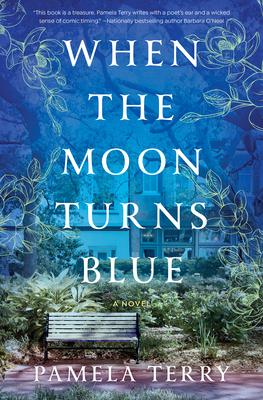
The tiny Georgia hamlet of Wesleyan is preparing to bury one of its own, and Mother Nature is preparing to cover the entire town in ice. But nobody—well, almost nobody—knows that a source of local tension is about to go nuclear, as someone is planning to topple and destroy the statue of a Confederate general in the park inside the boundaries of Old Man Griffin’s land. “The fight was just getting going good, and now somebody’s declawed the cat.”

This riveting, curiously charming and sometimes hilarious novel is the second by Pamela Terry, whose outstanding debut novel was The Sweet Taste of Muscadines. This one may be even better. My thanks go to Net Galley and Random House Ballantine for the invitation to read and review. This book is for sale now.

With the death of Harry Cline, we find ourselves at his funeral, a massively attended affair. But his wife, Marietta, develops a disabling, blinding migraine, and although they have been on the outs for years, Butter, her (former) best friend, comes to the rescue. By the time they’ve snuck out the side door of the church, we already know at least a little about both women, and now we want to know everything.

With just two novels published, Terry has already proven herself to be among the best authors when it comes to character development. Soon we’ll meet others—Marietta’s obnoxious brother, Macon and his beleaguered wife Glinda, who will have a large part in this story and is one of my favorite characters, as well as a host of others, who have smaller roles but are each so unmistakably established that it’s no work at all to keep track of them. But perhaps her finest achievement here is in creating a masterpiece that is ultimately a feel good book, despite the use of a red hot real world controversy within its pages.

I generally read several books at a time, and this one is the one that I saved for bedtime, because I wanted to be able to read it uninterrupted, and it is the one I wanted in my head when dreams came. It didn’t let me down.

This inspirational work of Southern fiction stands shoulder to shoulder with the finest classics, To Kill a Mockingbird and Fried Green Tomatoes. I wholeheartedly recommend it to you.

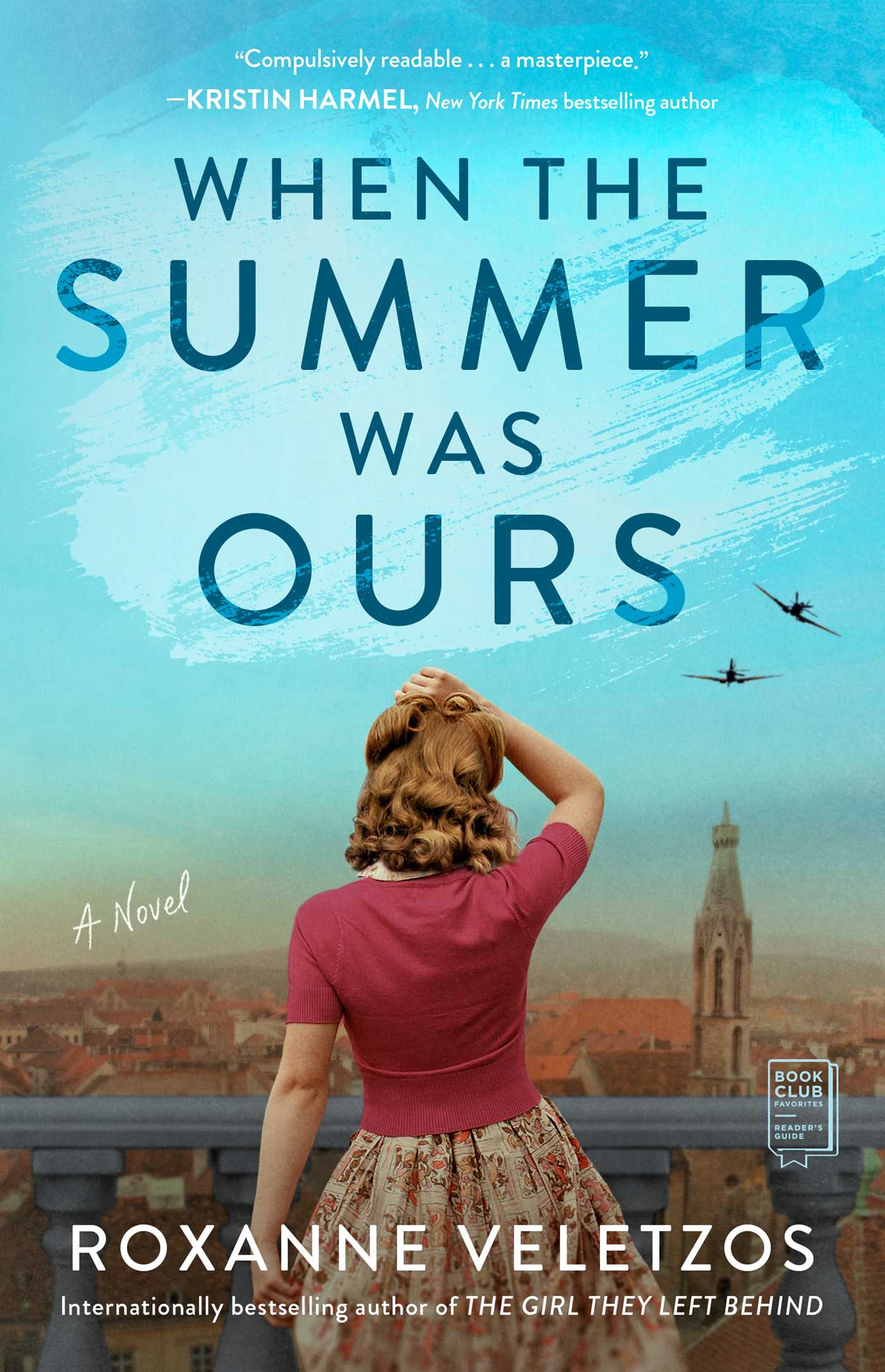
When the Summer Was Ours, by Roxanne Veletzos***-****

3.5 stars, rounded upward. I had proclaimed myself to be over and done with World War II fiction; there’s been a glut of it in the publishing world, and I have well and truly had my fill. My soft spot, however, is for any book written by an author whose work I have read and enjoyed. I reviewed Veletzos’s charming debut, The Girl They Left Behind, in 2018, and so when the opportunity came up, I agreed to read and review this one, too. It was a good decision.

My thanks go to Net Galley and Atria Books for the invitation and review copy. This book is for sale now.

Eva Cesar, daughter of the well-to-do but terribly strict local bourgeois, falls in love when Aleandro, a Romani artist stops in her tiny town in Hungary. He is a painter and a fiddler, raising his younger brothers alone following the deaths of their parents. Eva’s father knows nothing of this romance, and it’s a darned good thing. Not only is her father a Nazi sympathizer and bigot, but she is already engaged to marry Eduard, a dedicated Red Cross physician whom she also loves.

The story follows all three of them over the years, shifting points of view. All three are likable characters; Aleandro is obsessive enough that he seems a little creepy at the outset, but as the story develops, that’s no longer the case. Eduard is a stable, likable human being, but he is the one that is least developed. Eva often makes passive decisions, which I find grating, yet these are the early 1940s, and women don’t yet know they’re entitled to be decisionmakers, at least in many regards. The plot seems to go all over the place, but it comes together quite nicely at the end.

There are two related developments I would have liked to see handled differently. First—and I’m telling you this because it occurs early—Eva becomes pregnant after just one night of passion with Aleandro. Picture me sticking two fingers down my throat. Gag, spit, gag some more; what an overused trope. But then it gets worse. Eva heads to a clinic where abortions are performed quietly, since the procedure isn’t legal; the facility is filthy, and the staff are rude; we briefly meet the doctor, who virtually has horns and a spiky tail, and dines regularly on the flesh of aborted embryos and fetuses. More or less, anyway. And with women’s rights to choose our own reproductive decisions under attack, this is the very worst possible time to put such vile propaganda into a novel. She flees, of course, and has the baby, of course. In fact, as I write this, I question my choice to knock off only half a star from my rating. I’m growing madder by the minute, just writing about it.

Moving on!

The most difficult aspect of a complex story like this one is deciding how to end it. I come back around when I see how tastefully and realistically this is achieved. The ending is both credible and sweet.

There it is; you decide.  

Patricia Wants to Cuddle: The Audio Version, by Samantha Allen and a host of excellent narrators

Note: after hearing the audio version, I changed my rating to 5 stars. 5 stars shouldn’t be reserved for Shakespeare, for Toni Morrison, for Elizabeth Strout. 5 stars means the book is among the very best in its genre; Patricia Wants to Cuddle is among the best humorous novels being published this century.

A further note: this is the first time I can recall an audio book making a narrative easier to follow rather than harder. The presence of multiple, very skilled readers (Cindy Kay, Justis Bolding, Laura Knight Keating, Susan Bennett, and Jasmin Walker) makes it easier to tell the Catch contestants apart.

It is great to encounter my favorite parts a second time; within the last twenty percent of the book, the figurative language involving a weathervane and a turkey absolutely slay me.

Below is my original review.
________________________________________

“You have to watch out for the quiet ones.”

I had an ugly upper respiratory flu, and this excellent novel was exactly what the doctor ordered. My thanks go to Net Galley, Recorded Books, and Zando Publishing for the review copy. Patricia Wants to Cuddle will be available to the public Tuesday, June 28.

As the story begins, we are midway through filming “The Catch,” which is a reality television show similar to “The Bachelor.” Our cast includes the four lucky women to have made it this far; producer Casey; a handful of crew members; and oh dear, Jeremy, a scuzz bucket if ever there was one. Jeremy is this season’s catch. We also have a handful of locals, since we are filming on location; included is a bashful cryptid in the woods, a lonely creature that reacts very badly to stressful situations. As you may guess, Patricia is that cryptid.

These people are on Otter Island, a fictional addition to the San Juan Islands off the coast of Washington State. Think deep woods, rain, and glamping. And…what the hell was that, just now? Too big to be a bear. And why are the sheep so agitated?

Baaaaa.

The contestants are mostly not interested in love; they are interested in publicity, for various reasons of their own. The shooting schedule leaves them sleep deprived on an almost permanent basis, and so given the premise of the show—competition, not cooperation—it doesn’t take long for the women to turn on one another.

Samantha Allen is new to me, but she’s on my radar now. This story is snicker-worthy at the outset, and by the time we reach the climax, I am howling with laughter. Part of the joy comes from the plot and pacing, but the biggest laughs for me are those that combine these outrageous events with some of the funniest figurative language I have ever read. In fact, were I to rate this story solely on its humor, without rating the more traditional elements such as character development, this would be a five star read.

This book will appeal most to those that lean to the left.

Recommended to those that love darkly hilarious fiction.

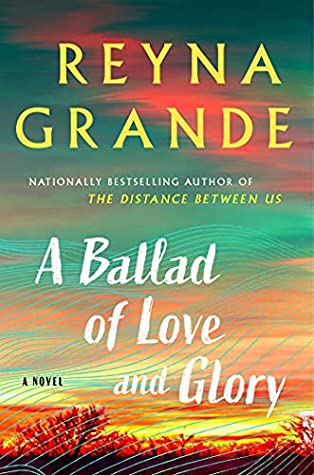
A Ballad of Love and Glory, by Reyna Grande****

“We Irish know what ’tis like to be oppressed by an aggressive neighbor.”

Reyna Grande can really write. This is the first of her novels I have read, but it surely won’t be the last. My thanks go to Net Galley and Atria Books for the review copy; this book is for sale now.

A Ballad of Love and Glory encompasses two genres, romance and historical fiction. It’s the story of John Riley, an Irish immigrant to the USA in the mid-nineteenth century, who is met at the dock by military recruiters that want him and his compatriots to serve in the US army, fighting the war against Mexico. Riley arrives half-starved and worried sick about the fate of his family that he left behind. The promise of soldier’s wages is enough to persuade him, and he enlists.

It’s also the story of Ximena, a Mexican naturopath whose husband is killed by Texas Rangers. She follows the army to help care for the wounded; she and Riley are drawn together.

As for me, I am drawn to this tale by my love of military history, whether nonfiction or fiction, and by the unconventional point of view regarding the U.S. land grab. At the time of the annexation of Texas, followed by the war against Mexico, most Americans accepted the official explanation and believed that the war was initiated by Mexican aggression toward U.S. citizens across the border. Some, including an up-and-coming politician named Abraham Lincoln, saw threw the ruse and understood that the whole thing was a pretext on the part of the US designed to capture Texas, California, and points in between. This is the background information that I bring with me as I begin reading this novel.

The title and book cover both focus on romance, and if a friend hadn’t mentioned this story, I would have passed it by; most romance is too sappy for my tastes. But an entire brigade of Irish immigrants that jump sides in the midst of the conflict and fight, instead, for Mexico? I have to read this!

Grande honors historical truth in her storytelling, and as such, this is one sad read. The Irish soldiers are treated more savagely by the American-born officers than I had known, and Grande gives us plenty of detail. And although I know, when I begin reading, exactly who wins this war, it’s hard to face the inevitable once I am bonded to these characters.

That said, I do think Grande does a better job with the military end of this thing, and of developing John Riley in other regards, than romance. There’s this tension between Riley and Ximena, because he is a married man with a child back home—and I can guess immediately how this conflict will be resolved. Until that resolution, the tension, part of the “honor” mentioned in the title, is drawn to nearly ridiculous proportions; at one point, as the two are straining passionately toward one another, they both stop simultaneously, whip out their rosaries, and start saying Hail Mary’s together. I threw back my head and laughed!

Nevertheless, this is a wonderful novel. If you enjoy historical fiction; unconventional points of view; working class fiction; or tales of forbidden love, this book is for you. If you are in need of a good ugly cry, this book is your catalyst.

Chevy in the Hole, by Kelsey Ronan***-****

3.5 stars, rounded up. Chevy in the Hole is Kelsey Ronan’s debut novel. I love strong working class fiction, and the title and book cover spoke to me. But while it shows a good deal of promise, it’s also a cautionary example of how, in trying to do too much, one can do too little. My thanks go to Net Galley and Henry Holt for the review copies. This book is for sale today.

The protagonists are Gus Molloy, who is Caucasian, and Monae Livingston, who is Black. The book opens as Gus is being revived with Narcan on the floor of a dirty restroom in Detroit. We follow him as he meets Monae, a student working at a farm outside of Flint. Their stories are told alternately with bits and pieces of the lives of their predecessors.  

The story is promoted as a love letter to Flint, and a tribute to the resilience of its people; it’s a story of “love and betrayal, race and family.” And we do surely see all of those things, but as soon as one aspect or another is touched on, I wink and poof, it’s gone. Gus and Monae are both sympathetic characters, and I can’t help pulling for them, but I suspect the author could have developed them more fully had we not spent so much time and detail on fragments of their parents, grandparents and so on.

If the author’s purpose is to use these characters from the past to showcase the various struggles through which Flint has gone—sit-down strikes, Civil Rights marches, and now, this horrifying industrial sludge that has polluted the town’s drinking water—it could have been done in a paragraph or two, or through some other device than shifting the point of view. The frequent changes of character and time period make it confusing as heck, particularly while listening to the audio version; that’s a shame, because Janina Edwards is a warm, convincing reader.

But we frequently shift from one protagonist to the other, even after they are married, and all of these people from the past have to be sorted by both time period, and by which protagonist they are related to.  A story like this should flow. As it is, it’s work listening to it, and had I not been granted a digital review copy as well to refer to, I might have given up.

My other frustration is that both the labor history and the Civil Rights issues—with Black people shut out of company housing in the past, and the issues with cop violence as well as the pollution that is visited most within the Black community—are huge. The pollution problem is immense, and ties back into both of the other issues. This book could be a powerhouse, a call for change to reward to the plucky souls that have stuck with this place through hell and high, toxic water. Instead they present almost like postcards; oh, look at this! Now look at that! Okay, never mind, let’s go on back to the present.

That being said, the author’s mission is an ambitious one, and her word smithery is of high caliber. I look forward to seeing what else she publishes.

If you choose to read this book, I recommend using the printed word, whether digitally or as a physical copy.

Our Country Friends, by Gary Shteyngart*****

Gary Shteyngart is a funny guy. In Our Country Friends, he tells a story in which Sasha, a former literary luminary, up to his eyeballs in debt, invites five friends to join him and his little family at their country estate to weather the pandemic. The results are not at all what he anticipated.

My thanks go to Net Galley and Random House for the invitation to read and review. This book is available now.

Shteyngart does us the favor of listing the cast of characters (“Dramatis Personae,”) at the book’s opening, and I relied on it heavily. Because all of the characters are introduced at the outset, I took a ridiculously long time getting them straight, but it was worth it. The group’s dynamic would be fairly stable but for the introduction of “The Actor,” someone he knew back in the day but who is an A-lister now. But frankly, some, if not all, of the other guests would probably not have come but for the mention of The Famous One as a possible addition. When he comes, the women practically swoon in his presence, and then nothing is the same for the rest of the story.

The first third of the book seems relatively formless, but I suspect the author (should I say, “The Author?”) is warming us up, letting us get to know the characters before a lot of other action takes place. The promotional blurb tells us that this story encompasses six months and four romances, and that it’s about love, friendship, and betrayal, and that sums it up.

Generally speaking, I don’t enjoy novels about rich people, but because Shteyngart is setting them up for satirical misery and angst, I dive in, and I emerge shortly afterward, laughing. This sly humor is unmissable.

Because nearly all of the characters are over forty, I highly recommend this story to readers of a literary bent—if you know Chekhov, it’s even funnier—who are forty or over.