
It’s almost as if two crimes are committed inside these pages: the first is the premeditated murder of Sherri Rasmussen, and the second is this atrocious book. How many writers can take a compelling story—that of a cop killing her romantic rival, and her arrest and conviction—and make it this dull? So I still thank Net Galley and Henry Holt for the review copy, but nothing and nobody can make me read anything written by this author again. It appears that very few reviewers even forced themselves to finish it; those of us that soldiered on till the end either deserve commendations for our determination, or a mental health referral for not cutting our losses.

The book’s beginning comes the closest to competent writing as any part of this thing. We get background information about Sherri and John’s courtship and marriage, as well as John’s relationship with the murdering woman he scorned, Stephanie Lazarus. Don’t get me wrong; I am not saying this part is well written. Even here, there are serious issues with organization and focus, yet I continue, believing that when we get to the meat of the story where the truth is revealed and the killer arrested, tried and convicted, it will be worth the wait. In that, I am mistaken.
The author wanders anywhere and everywhere, apparently unwilling or unable to exclude one single fact about anyone, even those tangentially involved. Why do we need pages and more pages devoted to the life and times of people the victim barely knew? To add insult to injury, many of the facts he’s uncovered are inserted into multiple places in the narrative in a way that emphasis doesn’t justify. It appears as if he is attempting to reveal a cop cover-up, but his inner attorney forces him to equivocate, hinting throughout without ever reaching the punchline. He infers that maybe Sherri’s husband John knows more than he’s saying, but again we see innuendo everywhere without an accusation being made outright. The writing is riddled with clichés. In many places he tells us how one character or another feels, or what they are thinking, and yet there are no citations anywhere for anything; this is a cardinal sin in writing nonfiction. I go to check the notes at the end of the book and there are none. The copious gushing over Sherri’s excellent character and intelligence, while it sounds warranted, is salted so liberally over 597 interminable pages makes me wonder if there is a connection between the author and the victim’s family, but again, if it’s true, he doesn’t say so. All told, it’s a very unprofessional piece of…writing.
By the time I consider abandoning this thing, I have put in the time required to read over a hundred pages, and so I see it through. I skip the section about the murder of someone else; had it shown up before I was completely disgusted, I’d read it in case it provides strong evidence to back up what the author is inferring but not saying, but as it is, I just want to get to the meat of the matter and be done with this thing.
Imagine my surprise when the Rasmussen murder case is not reopened, and Lazarus is not investigated, arrested, tried and convicted until…the epilogue.
There is not one redeeming feature of this book. It’s a train wreck from the start to the blessed ending. If I feel this way after reading it free, how might you feel if you paid money for it?





 Brooks is a journalist and also a parent; she is nearly sent to prison for having permitted her son to remain in the car watching a video while she bopped in to a big box store to purchase headphones. The experience provided a catalyst for discussions and research she has done on structured parenting practices versus a looser model, for which she advocates. The resulting book is a plea for greater flexibility and more options for parents that either question the wisdom of tight societal controls on parenting, or that cannot find or afford the childcare that their children are legally required to have when the parent or parents must go to work.
 I was rooting around on Net Galley looking for some good nonfiction when I ran across this title. Many thanks to Net Galley and Doubleday for the DRC, which I read free in exchange for this honest review. This book is now available to the public.
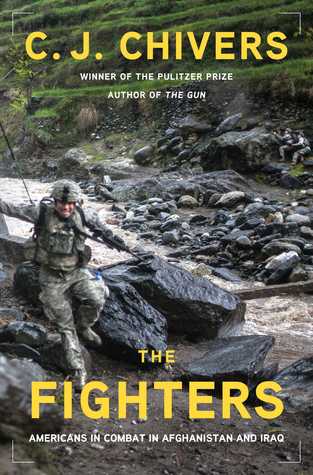 Chivers is a senior editor at The New York Times, and has won the Pulitzer for journalism. This meaty but readable book is the culmination of his years covering the U.S. wars in Iraq and Afghanistan. It is not the creation of a man parked in a library behind his laptop; he has personally gone to Iraq, Afghanistan, Syria, Ukraine, and Libya, and has either accompanied the people he writes about or retraced their footsteps. He covers the lives of six servicemen in the lower and middle ranks of the armed forces, and so he primarily uses eye witness reporting and interviews, in addition to American military data. I read it free courtesy of Net Galley and Simon and Schuster in exchange for my honest review. The Fighters will most likely be regarded in future years as the go-to book for those that want to know more about this war and the people whose lives were changed by it—including many of those whose homeland is or has been part of the war zone.
 Seattle Book Mama