To Wake the Giant, by Jeff Shaara*****

“It’s the admirals, sir, playing with us like this is their own big-assed bathtub and we’re just toys.”

Jeff Shaara has written some of the best war stories ever published, and he’s done so for almost 25 years. I have read every last one of them. When I was invited to read and review his new novel about the Japanese attack on Pearl Harbor by Random House Ballantine and Net Galley, I was delighted, but also slightly apprehensive, because even after all these years, the subject remains an incendiary one; I needn’t have worried. This may be Shaara’s best book, and that’s saying a lot.

I’ll share a brief note about my own biases going in. My father was among the last men called to serve during World War II; he never left the U.S., however, where he was tasked with training new recruits to the still-new U.S. Air Force. But I grew up hearing about Japanese atrocities, and many of the bizarre stereotypes and misconceptions based on pseudoscience were told to me as fact. When as an adult I announced that I was about to marry a Japanese citizen, I sounded the waters with my family to see if there was resistance. I was told that my parents “still remember Pearl Harbor.” Meanwhile, my husband’s father also served during World War II—in the Japanese army. The topic was never raised by his parents around me, or at all as far as I know; but I asked my spouse a few questions to help me understand the Japanese perspective about this horrific conflict, and then I understood exactly how erroneous most of what I’d been raised to believe actually was.

So I was primed to read this book, and also a little afraid of what I might find. My internal map of Pearl Harbor was studded with emotional landmines, and at the book’s conclusion, none of them had been tripped.

Shaara tells this story primarily through the eyes of three people: Cordell Hull, U.S. Secretary of State under President Franklin Delano Roosevelt; Admiral Yamamoto, the Japanese architect of the invasion; and Tommy Biggs, a 19-year-old naval recruit from an impoverished Caucasian family in rural Florida.

Shaara faithfully incorporates a character from the rank and file in every story; he does this even if there is nobody on record that he can report on, and so often, he is forced to create a fictional character based on experiences and characteristics from several people. When I saw no such disclaimer in any of his notes, I grew curious and wrote and asked him whether this is the case with Biggs. He replied that this time there is a Tommy Biggs (though the name is not the same), but that he did add the experiences of others in order to flesh him out. So this time, each of the three chief characters is based on an historical figure.

I learned a great deal. Though it’s well known that this attack profoundly crippled the U.S. Navy, sinking or badly damaging most of the fleet, I had never considered it from the Japanese perspective. Looked at in that way, it was not only audacious, it was immaculately planned and wildly successful. I also had never considered what a blunder it was on the part of the U.S. military to leave its equipment, ships, planes, and more so unguarded. In the fallout after the attack, we learn that the Navy considered security to be the job of the U.S. Army and vice-versa. What a colossal bungle.

Japan had emerged victorious from the Russo-Japanese War, and its leadership was suffused with overwhelming confidence. Japanese racial superiority would lead to Japanese dominance throughout the China, Indochina, and across all of Asia, they claimed, because they were meant to dominate their portion of the globe. Japanese leaders were convinced that the U.S. would not seek retribution following an attack on its soil because American isolationist sentiment was so strong. They genuinely hoped that this attack would result in an end of the U.S. embargo that crippled Japan, and which existed in order to halt Japanese expansion and force Japan to withdraw from its alliance with the Axis powers. Americans, the Japanese brass told one another, were too big, too slow, too lazy to retaliate. There were voices of dissent, however:

“For any of you who believe the Americans are not worthy of a fight, that they do not have the stomach for blood, perhaps you are familiar with the American Civil War? In the 1860s, they divided and fought each other in the bloodiest war in their history. They did not require any enemy to inspire them. They fought each other. Are you familiar with football?”

Meanwhile the U.S. military, press and popular culture treated the Japanese as a bad joke. One myth dressed up as science suggested that Japan would never be able to build an air force because of an inherent defect in the inner ear of all Japanese. It was physically impossible for them to become pilots! The condescension was rife, everywhere one turned. Hollywood depicted the Japanese as ridiculous, rodent-like creatures with minds that didn’t function properly. The Chicago Tribune stated that for Japan to attack the U.S. was “a military impossibility.” Japanese were said to be too myopic to be effective against a military target. And it goes on.

There’s all sorts of blame to spread around. Nobody in Washington, D.C. had told the top brass at Pearl Harbor, Admiral Kimmel and Lieutenant General Short, about the project named Magic, which intercepted and broke Japanese code. They had no idea that Japan was rattling its sabers to such a degree.  And these two men appear to have been lazy, bureaucratic fools that ignored what little intelligence came their way. For example, shortly before the attack, the man on watch sees a Japanese sub in the water. Kimmel immediately assumes that the guard has seen a whale, and he goes back to bed.

There are three aspects of this novel that keep the pages turning for me. The first, of course, is my interest in military history. Shaara’s research is meticulous. The book is historical fiction at its best, which is when the contours of the story, even fairly detailed aspects of it, are correct, but the fictional genre is chosen so that dialogue and inner monologue can be added. Second is Shaara’s perceptive nature, and it’s this that permits him to choose the best details to include and cut what is inessential so that pacing never flags. And finally, his capacity to develop a character so that we feel we know him is matchless; in particular I bond to poor Tommy Biggs, a guy that can’t catch a break, until he can.

Nothing I can say will serve as well as what Shaara says himself. Get this book, even if you have to pony up full cover price. This is hands down the best fictional representation of Pearl Harbor on sale today. Believe it.

The Third Rainbow Girl, by Emma Copley Eisenberg**

Emma Copley Eisenberg is a journalist who researched the murders of young women headed for the Rainbow Gathering, a music festival in Pocahontas County, West Virginia. Thanks go to Net Galley and Hachette Books for the review copy, which I received early in exchange for an honest review.

What I was expecting from this book is not at all what I got. The cover suggests something spooky, and the topic also tells me this is a true crime story. The promotional blurb says it’s

Part “Serial”-like investigation, part Joan Didion-like meditation, the book follows the threads of this crime through the history of West Virginia, the Back-to-the-Land movement, and the complex reality contemporary Appalachia, forming a searing portrait of America and its divisions of gender and class, and its violence. 

Instead, it’s a strange mishmash of genres that don’t blend well, and the result is a wandering narrative entirely devoid of suspense or even focus of any kind, and though I tried reading it multiple times, then checked out the audio book from Seattle Bibliocommons, I could not push myself all the way through this thing. I resolved to finish it and get it reviewed, and I wouldn’t let myself read anything else till it was done; the result was that I found excuses not to read or listen to anything at all. I finally let myself off the hook, but not until I had skipped to several parts of the second half, just to make sure there was no shining epiphany at the end.

It’s a tough spot to be in, journalistically speaking, because Eisenberg spent five years researching “these brutal crimes,” but she came up dry. How do you squeeze a story out of that? Instead of writing about the murders, she mostly writes about herself investigating the murders, making this story more of a journalistic memoir with a side serving of Pocahontas County history and culture.

If this is what the book is, then it should be sold as such. The title is deceptive, and the murky woodland illustration on the cover is deceptive as well. A journalistic retrospective should be billed as exactly that, so why wasn’t it? Possibly because nobody wants to buy a journalistic retrospective. Why not? Because it’s boring, boring, boring.

Ordinarily I would be gentler with a writer that’s published a debut, but I came away feeling resentful of the time I wasted reading and listening to a book that wasn’t what the reader was led to believe. I felt this way when I read it free; how might you feel if you ponied up the jacket price only to find that it’s not scary at all, and says little about the murders it’s supposed to be about?

No. No, no and no.

The Paladin, by David Ignatius***-****

David Ignatius writes reliably entertaining spy novels, and when I saw that this one was available, I hopped right on it. Big thanks go to Net Galley, Edelweiss, and W.W. Norton for the review copies. It’s for sale now.

Michael Dunne is a career operative for the CIA, and he’s sent to sniff out what appears to be an enemy intelligence service fronting as a news organization. This particular assignment is risky because it’s illegal to run surveillance on journalists, but his boss tells him that he’ll run interference for him, and like a good soldier, he goes. He does what he’s been told to do, and next thing he knows, he’s been arrested for spying on the press, and nobody at the CIA will go to bat for him. What the hell just happened? With his career in tatters, and his family torn asunder, Dunne’s only interest, upon emerging from the year he spends in prison, is vengeance. He wants to find the guy that set him up and ruin him. From there come multiple surprising twists that kept me on the edge of my seat.

My first David Ignatius book was The Director, which I won in a Goodreads giveaway in 2014. I liked it so well that I bought one of his older novels during my annual pilgrimage to Powell’s City of Books that summer. In 2018 I read and reviewed The Quantum Spy, a title perched on my favorites shelf not only for its brilliant pacing and suspense, but also for its insightful take on the challenges faced by Asian Americans within sensitive government positions. The strong impression I received reading it is likely to blame for my being slow on the uptake this time around. I realized when I finished reading The Paladin that it wasn’t as strong as his earlier novels, but I don’t think it’s fair to judge an excellent writer against himself when rating a novel. I initially rated this book five stars because there’s still no other spy novelist whose work I like better than his…except.

There’s a serious problem with his use of gender roles here, one I am surprised not to have noticed from the get-go, because it’s so obvious. Another reviewer opened my eyes and made me ashamed of myself for not homing in on the problem, because it’s not a small one.

There are two women that play important roles in our protagonist’s life. One is the virgin, and the other is the whore. Frankly it is so obnoxious that for any other writer, I would have given a negative rating and a scathing review. I am being measured in my response because I still see this as atypical of this author’s work, and I suspect it’s a slip rather than a true reflection of his own ideas. Then too, protagonist Dunne is portrayed as a hawk with regressive attitudes, and so the value he places on his wife’s virginity when he married her may have been a deliberate choice in developing this flawed character. I surely hope so.

The second female character is the seductress that lures Dunne into a “honeypot trap,” his sole but egregious infidelity that makes his overseas behavior all the more contemptible and costs him his family. Whereas this is a classic element of a great many spy stories, both old and new, it would have been more acceptable if Ignatius had included some other female roles that were more nuanced and that fell into neither category.

It is perhaps a measure of the author’s ability to write tense, believable tales of espionage that I had to have this major flaw pointed out to me. Because of his track record, I give this story 3.5 stars and round up. I will be interested to see what he writes next time.

If you read this one, I recommend doing so critically.

Firewatching, by Russ Thomas***

Firewatching is the first in the Adam Tyler detective series, and also the first novel written by Russ Thomas. It’s been praised by Lee Child, and published by Putnam Penguin, an auspicious sign. Thanks go to the publisher and Net Galley for the review copy.

All of the right elements are here for a rip roaringly great tale, but the execution fell short. When I found myself drifting off while reading the digital review copy, I went to Seattle Bibliocommons and checked out the audio book. Sadly, I couldn’t bring myself to listen to all of it, either. I kept with it to the 45 percent mark; skipped to 75 percent in hopes there would be something tantalizing that would reel me back in; and when that didn’t work out, I listened to snippets from there to the end.

Here’s what I like. Conceptually, it sounds promising. Tales of crazed arsonists are generally irresistible, and there haven’t been a lot of them published lately. Fiction writing is as prone to fad and whim as is anything else, as any reviewer can see. This story steers clear of dead, sick, or disabled siblings; Paris; alternate past and present narratives, and struggling alcoholic detectives. Detective Tyler resists his boss’s impulse toward stereotypes. There are two elderly women side characters, one of whom struggles with dementia, and Tyler is told that old women in small towns always love gossip; he refers to them often as “the old dears.” I know I am not the only Boomer that wants to smack that obnoxious character, and so Tyler endears himself to me by not going there. And actually, I like the two older women in this story a great deal. I also like the brief—maybe too brief—passages where we are inside the head of the firebug.

But alas, the story’s protagonist isn’t the arsonist, and it isn’t either of the elderly women. It’s Tyler, and Tyler just bores the snot out of me. I want him to just do something. I don’t need to know what he is wearing, what he is thinking, what he is feeling, wearing, feeling some more, thinking….

During my teaching career, I recall one impatient girl that was sent home for a few days because of her tendency to walk up to a teacher that was standing in her way—tutoring, or speaking to another student—and barking at him, “MOVE!” And I found myself channeling this student as I read and/or listened to this story. I don’t care about your damn wardrobe, Tyler, just move! Move it! Do something, for the love of…

Fine. Whatever.

A possible silver lining occurs to me, and that is that with this first in a series, all of the personal details of wardrobe and emotion may be emphasized in order to introduce the protagonist, and perhaps with the second in the series, the pace will pick up and we’ll be on our way. I surely hope so.

But for now, I can only write about what I know, and I know it would be wrong of me to urge you to purchase this book at full jacket price. If you’re going to read it, get it cheap or free, because most of the joy I see here is in potential, and future maybe-joy makes a thin soup indeed.

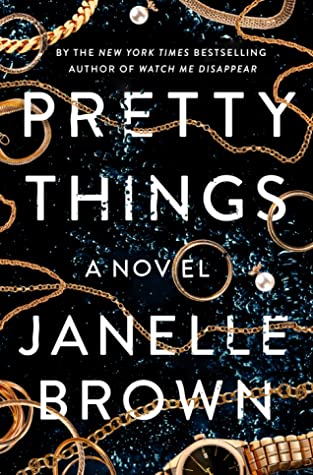
Pretty Things, by Janelle Brown*****

Nina is a second generation grifter, a talented thief that uses social media to spot and follow the conspicuously wealthy, then set up an opportunity to rip them off. But now Nina has gone straight; her college education has made it possible to earn an honest living. However, her mother’s chemo bills are stacking up, her mom too weak to find and execute her own ten-finger specials, and so Nina finds herself back in the game.

My thanks go to Net Galley and Random House for the review copy. This book is for sale today.

Vanessa Fucking Liebling is an heiress, a spoiled daddy’s girl that has found an avocation as a social media influencer. She thinks nothing at all of dropping tens of thousands of dollars for a single dress that she will wear once; she is courted by upscale manufacturers of women’s clothing, accessories, and you-name-it, and she flies free of charge to famous cities around the world with a small coterie of women like herself, the chosen ones that have the Instagram followers that make their endorsements so valuable. But when her father dies, Vanessa soon learns that the money problems he’s tried to tell her about are indeed real. With her party budget in the crapper and a schizophrenic brother to look after, Vanessa ditches the New York fashionistas and heads to the family’s vacation home, Stonehaven, located in Lake Tahoe, California. She is about to come nose-to-nose with destiny.

Our two protagonists, Nina and Vanessa, are featured alternately in the first and third person respectively; in addition, we catch snippets of their earlier lives and the critical events that have molded them.

Though Nina is a crook, I find her easier to like and bond with than Vanessa. Nina, despite her dishonesty, cynicism, and the immense chip on her shoulder, is an underdog, a scrappy fighter determined to better herself and to take care of her mama. She isn’t a violent offender, and the marks she steals from are so filthy stinking rich they hardly notice the loss of a wristwatch here, an antique vase there. It’s hard not to feel that if the world were a fairer place, the dilettante wouldn’t have that much stuff to start with, and Nina wouldn’t have to scramble to get by and take care of her sick mother.

Vanessa, by contrast, is a much harder sell. Brown develops the hell out of this character, showing her gradual awakening as she realizes how shallow her entire existence is, and how devoid she is of any true friends. At first I am having none of it. Poor little rich girl indeed; cry me a river! But Brown keeps chipping away at my resistance, and eventually I see Vanessa as a flawed human being with problems, rather than a rich person that deserves whatever karma comes her way.

My first book by this author was Watch Me Disappear, a glorious work of suspense that kept me enraptured till the last twenty percent, at which point I was consumed by dismay. Therefore I read this book with avidity, and yet at the same time I am on the alert, wondering if this story will also be resolved with a you’ve-gotta-be-kidding-me ending. My fears prove groundless. The main storyline as well as the smaller bits all come together in a way I find deeply satisfying. The ending is a complete surprise.

My one small criticism at the outset was the schtick about Nina’s mother’s chemo. It’s been done, and done again, and done again. I’m thinking I’d like the story better if she would just let the grifter be a grifter, rather than carrying on about poor, dying mom. However, there’s an additional twist at the end that I did. Not. See. Coming.

In the end, this book is the total package. I wouldn’t change a single thing.

Highly recommended. Get this book now!

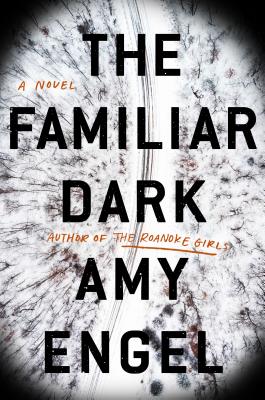
The Familiar Dark, by Amy Engel*****

When it comes down to it, some people just have it coming to them.

Amy Engel is the author of The Roanoke Girls, a shocking thriller that proves she is a force to be reckoned with. The Familiar Dark is even better. My thanks go to Net Galley and Random House Dutton for the review copy. It’s for sale now, and you should get a copy to help chase away your cabin fever.

Eve Taggart was raised poorer than poor in a ripped up trailer in Barren Springs, Missouri; it’s “a slippery part of the world. People dart in and out like minnows in a shadowy pool…Folks here are hard to pin down, even harder to catch…It’s a place for people who don’t want to be found.”  Her mother is an addict with a mercurial temper, and so when Eve gives birth to Junie, she resolves to parent differently from her mama, and to never take Junie to visit her. The more space there is between her present and her past, the better off Junie will be.

But when Junie and her best friend, Izzy are found in a public park with their 12-year-old throats slit, everything changes. Without Junie to provide for, all of the social conventions that Eve has so carefully nurtured, all of the tentative connections she has made with mainstream members of the community are gone in an instant. Eve’s older brother Cal, a cop, tries to provide a buffer between Eve and the town, between Eve and their mother, and between Eve and the disastrous errors she makes as a result of her grief; none of it does any good. And Cal is sitting on a secret of his own.

I am generally a reader that has between six and twelve books going at any given time, but once I was about a third of the way into this one, I read nothing else. Instead of asking myself which book I’d like to read right now, I knew exactly. The suspense is built numerous ways, by foreshadowing, by the little hints given by others in her tiny town, but there’s more to it than that. Part of it is Engel’s unusually vivid word smithery and the frank, unsentimental dialogue that moves it forward. But the meatiest part of this story is in the pathological family triangle that—resist it though she has—forms most of Eve’s world. The further we get into the story, the more layers are peeled away and the more we learn about Eve and mama, mama and Cal, and Eve and Cal. We learn some secrets about Junie that poor Eve didn’t know, but these are almost secondary as they reveal more about the three adults. It is mesmerizing.

Eve thinks she has nothing left to live for now that Junie is gone, but Mama, who’s been drawn to the killing like a vulture to roadkill, assures her she is mistaken. What’s left is vengeance. This resonates with Eve. Pulled into a press conference in which she doesn’t want to participate, standing alongside the other bereaved parents, people that are well groomed and whose social skills make them vastly more sympathetic figures to the public than she will ever be, Eve decides to cut to the chase. After the other two plead for possible witnesses to call in tips to the local cops,

“I pointed out at the cameras, stabbing my finger into the air…’I’m going to find you, you sick fuck. And I’m going to tear you apart.’

“I thought about all the press conferences I’d seen over the years, parents trotted out for missing kids, killed kids, abused kids. Everyone feels sorry for those parents, those mothers, until they don’t. Until the mothers don’t cry enough or cry too much. Until the mothers are too put-together or not put-together enough. Until the mother are angry. Because that’s the one thing women are never, ever allowed to be. We can be sad, distraught, confused, pleading, forgiving. But not furious. Fury is reserved for other people. The worst thing you can be is an angry woman, an angry mother.”

Does this ring as true to you as it does to me? Sooner or later, the mother always gets the blame. And so now I am still riveted and I am nodding. Uh huh. That’s right, Eve. Tell it!

When a novel is as outstanding as this one is, I almost hate to read the last fifteen or twenty percent, because often as not, that’s where it comes undone. Either the solution doesn’t hold water, or a hard cold tale of murder and revenge takes on a sudden sentimentality that doesn’t match the rest of the book; in these I sometimes picture editors and publicists urging the author to provide a feel-good ending, and the author ultimately bending. As I progress, I have figured out what the poignantly sweet ending to this one will likely be, if Engel goes in that direction.

But she doesn’t.

Instead, this story is one of badass female bonding gone dark, dark, and darker. Oh hey. The title.

Highly recommended.

Dead Land, by Sara Paretsky*****

Detective Vic Warshawski was born in 1982, a time when a woman advocating for herself, or another woman, or women on the whole were few and far between. Such a woman often spoke softly, hesitantly, and to reassure the listener that she wasn’t stark raving mad, she might begin by saying, “I’m not a feminist or anything, but…” And so for the lonely few of us that were uncloseted, audacious feminists, this bold, brazen, unapologetic character was inspirational. Vic is fictional, but Paretsky is not. It was leading lights such as hers that made me feel less alone. I have loved her from then, to now.

Paretsky is no longer a young woman. I know this because I am a grandmother myself, and she is older than I am. For her readers that wonder if she’s still got it, I have great news. She’s better than ever.

By now I should have thanked William Morrow, Net Galley, and Edelweiss Books for the review copies. You can get this book April 21, 2020.

Victoria’s young goddaughter, Bernie Fouchard appears in an earlier story, and now she returns. Bernie’s youthful passion and impetuous disposition counter Vic’s experience and more measured responses. I liked Bernie when she was introduced, and am glad she is back. Chicago’s shady politicians are about to quietly sell a prime chunk of the city’s park lands to developers; the corrupt nature of the deal makes it essential that the whole thing be done fast and with as little publicity or public input as possible. Bernie and a handful of others learn of it, and they protest at a meeting at which the city fathers had hoped to slide this oily project through. There are arrests, and soon afterward, Bernie’s boyfriend is murdered.  

At the same time, Bernie tries to help a homeless singer named Lydia Zamir. Zamir is brilliant and was once very famous, but everything crumbled around the time that her lover was shot and killed; she’s been living under a bridge, filthy, disoriented, playing her music on a child’s toy piano. Now Lydia is missing. Lydia’s champion has been a man named Coop, and Coop is missing too. Before pulling a bunker, Coop deposits his dog outside Vic’s apartment, earning her the enmity of neighbors that are already up in arms over the barking of Vic’s own dogs when she is gone. Now Vic has every reason to help find Coop, Lydia, and the murderer. At the same time the reader must wonder how the sleazy deal, the murder, and the disappearances are connected. The pacing is urgent and my interest never flags; the haunting mental image of Lydia and her small, battered piano tug at my social conscience, all the more so as the world is hurtled into quarantine.

Long-running characters Lottie and Max, who are like parents to Vic, and newspaperman Murray, a close friend of Vic’s, return here, and I love them all. No doubt this colors my response as well. I have known these characters longer than my husband of thirty years; at one point I realized that somewhere along the line, I had separated the other books I was reading (some of them quite good) from this one. I had my books-to-read category, but I had mentally shifted this story into the same category as my family business. I should check on my sister, who’s been ill; I wanted to set a lunch date with one of my kids; and I should check and see whether Vic is having any luck finding…oh hey. Wait a minute.

Can you read this story as a stand-alone? You sure can. However, this bad-ass, hardboiled Chicago detective is an addictive character; once you’ve read it, you’re going to want to go back and get the other 21 in the series. I swear it. You probably won’t experience the nostalgia that I do, but a damn good read is a damn good read, any way you slice it.

Highly recommended.

The Porpoise, by Mark Haddon***-****

My thanks go to Net Galley and Doubleday for this much-buzzed-about novel, and I am sorry it took me so long to plow through it. Haddon is a gifted writer and it shows, yet for me, this one was more pain than gain; I read part of my galley and then, after publication, received an audio version via Seattle Bibliocommons. It’s for sale now.

Our protagonist is Angelica, the only child of the extremely wealthy Phillipe.  Her mother, Maya, dies in a plane crash and her father, wild with grief, withdraws from the world. He substitutes Angelica for Maya, sexually molesting her from a very young age; he is magnanimous enough not to “penetrate” her until she is fourteen. What a champ. When she is an adolescent, a handsome young visitor tries to liberate her, but Phillipe makes short work of him.

The story is modeled upon a Greek myth, and a second story is told alternately with Angelica’s, rendering a complex story more so. The prose is beautifully rendered, and I think if I were a student tasked with writing an essay involving allegory in a novel written in the twenty-first century, I might have enjoyed using this one. However, as a popular read it is both largely unpleasant and a great deal of work. The one passage that I found deeply satisfying was around the halfway mark, and it involved the revenge of rape victims.

Those looking for skillfully written literary fiction will likely appreciate the artistry Haddon unspools, but I didn’t find a lot of pleasure in reading it.

Pride of Eden, by Taylor Brown*****

Taylor Brown is quickly becoming one of my favorite novelists. His 2018 book, Gods of Howl Mountain is one of my ten best loved books among the 1,300 I have reviewed since 2012, so I have been waiting for this book, and it does not disappoint. My undying thanks go to Net Galley and St. Martin’s Press for the invitation to read and review. This book is for sale today.

Pride of Eden is a wildlife sanctuary in Georgia, owned and run by a Vietnam vet named Anse. Anse has PTSD related to his service, and his most searing memory is of the loss of a service dog that sacrificed its life to prevent a soldier from being killed by an explosive device. Anse is a complicated character with a possible death wish, but this aspect of his character is never overplayed, and after a haunting, visceral passage at the beginning, it becomes a subtle quality that runs beneath the surface, as it likely would in real life.

Anse accepts animals of all sorts; some come from illegal private zoos, or from private owners that are surprised that their adorable lion cub has grown up to be a wild animal. But secretly, he is also a vigilante. When he sees an animal in need of rescue whose owner plans to keep it—or sell its dead body for parts—he creeps in at night and liberates it.

Tyler is the preserve’s veterinarian, a buff no-nonsense woman who is also Anse’s girlfriend. My favorite passage involving Tyler is when a man comes to see Anse, and Anse is in a mood and wants Tyler to get rid of the guy. Tyler pushes back; it might be important, and the man has traveled a long way to see him. Anse grudgingly tells her to “Send him in,” and Tyler fires back that she is “not your fucking secretary, Anse.” At the outset of the story, Tyler does not know that Anse does not acquire all of his animals legally.

The third main character is Malaya, who comes to the sanctuary looking for work:

  “What do you want to do?” he asked.

   “Anything.”

    “What are your qualifications?”

“Third infantry, two tours in Iraq. Honorable discharge. Then I contracted in South Africa, tracking ivory and rhino poachers.”

“You catch any of them?”

She uncrossed her arms, buried her hands in the pockets of her shorts. Anse could see her knuckles ridged hard against the denim. “Yes,” she said.

Malaya is complex as well. But I love Malaya not only for her meaty internal monologue, but for the things she isn’t. Most male authors (and some female ones too) wouldn’t be able to resist these tired elements, and once again I admire Brown’s respect for women, which shows vibrantly in the way he frames his characters. Malaya is not romantically interested in Anse, nor does she try to mother him. Malaya and Tyler are not jealous of one another, and they do not compete. Both characters are buff and intelligent, and at no time do they have to be rescued by men. As a result, I could appreciate this story as it unfolded without the distraction of stereotypes or overused, sexist plot devices. Neither female character is motivated by sexual assaults in her past.  

The other two characters are Horn, another damaged vigilante that collects wild animals, and Lope, Anse’s driver, who helps him move large animals.

This is not an easy read. It will attract Brown’s fans, of course, and also animal lovers; yet those same animal lovers have to wade through an awful lot of sorrow, as the story is rife with tales of animal abuse. Brown’s purpose, apart from writing outstanding fiction, is likely to raise awareness of poachers that kill endangered animals for profit, and of private game reserves that send semi-tame animals to an enclosure so that wealthy ass hats can bag some big game, take that animal’s head home to hang in the den.

 Yet there’s nothing at all here that is included to be prurient or sensationalistic; every word has a purpose, either to develop a character or drive the plot forward, or both.

My emotions run the full gamut as I am reading, and this is a sign of excellent literature. I laugh out loud a couple of times; at others, the prose is so painful that I have to walk away for awhile and then come back. But I am never sorry to be reading it. The ending is so deeply satisfying that I want to high-five someone, but alas, I am reading it alone.

Once again, Brown’s novel is destined to be one of the year’s best reads. I highly recommend it.

Hidden Valley Road, by Robert Kolker****

Happy anniversary, Doubleday. This is my thirtieth review for you.

Big thanks go to Net Galley and Doubleday for the review copy.

I wanted to read Kolker’s book because so little is written about schizophrenia for the general readership. My best friend’s older brother was schizophrenic, and sometimes she would phone me crying and whispering from the floor of her bedroom closet. The bro—let’s call him Marco–was a large person, over six feet tall with a towering red afro that made him appear even larger. He and my friend were both adopted, and their parents weren’t nearly that big. Marco hated taking his medication, and once he reached his teens, he self-medicated with every street drug he could get his hands on. As a result, he often became violent, breaking out all of the windows of the family home and assaulting his poor sweet mother with a crowbar before the cops arrived to haul him off to the hospital again.

And so I wondered, when I saw this book, whether this was a common experience (yes,) and what inroads had been made in the decades between then and now (very few.)

The Galvin family is an anomaly, a very large family of twelve children, half of whom were stricken and the other half traumatized from growing up with them. The family participated in The Human Genome Project, a compilation of genetic samples and other information aimed at unlocking Mother Nature’s terrible secrets. Of course, researchers were also absorbed in the question of nature versus nurture.

Kolker does an outstanding job of chronicling the Galvin family’s history alternately with passages about what was known about this disease at the time when the eldest sibling began to show symptoms, and what has been learned since. It’s a lot of information to organize and share, and who knows what information he weeded out as unnecessary, because one has to stop somewhere.

When the Galvin children were diagnosed in the mid-twentieth century, professionals in the field leaned heavily toward the idea that there was no hereditary cause for the condition, but instead embraced a “mother-as-monster” theory. Because of this, Mimi Galvin, the mother of all of those children, was inclined to stonewall rather than seek help. But who could blame her? Our society was only slightly removed from the days when the ‘crazy’ family member was locked in the attic. (“That thumping sound? Oh dear heaven, perhaps that old raccoon has snuck back in. Enjoy your pie; we’ll chase him out of there after you’re on your way.”) To make matters more complicated, Don, father of the brood, had a high profile position in the U.S. military, and rumors of family drama could have impacted his career.

Like my friend’s family, the Galvins dealt with the noise, the horror, the disruption by moving to the far edges of town, seeking geographical isolation so that neighborly complaints need not be an added worry.

Here’s the difficult part of writing about schizophrenia: readers want to find a grand discovery at the end; if not a cure, then a new and impressive treatment, or an historic advance in eliminating the problem. But solutions are elusive, and because of the stubborn nature of this disease, what may seem ground breaking to a researcher looks like a big, fat so-what to the average reader.

All told, Kolker has done a fine job describing what has taken place within the family and within the field; I thought he was a little hard on Mimi, who made a lot of errors but was facing a terrible dilemma during a period when our culture was very different from today. That aside, I do recommend this book to you. It will be available April 7, 2020.