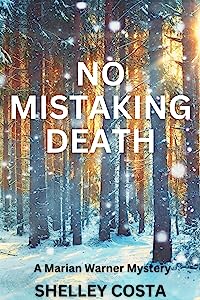
I love a wry mystery series, especially when it features a wry female sleuth. Kinsey Millhone is done and there’s nothing I can do about it, but Marian Warner is here, and this series is just getting off the ground. My thanks go to Net Galley, Level Best Books, and Shelley Costa for the review copy. This book is for sale now.
Marian is a private eye, mostly; when there isn’t enough custom to pay the landlord, she does other things on the side. But now, her sister Joan is sending her to investigate whether a former Jesuit Mission house in Carthage, Ohio qualifies for National Landmark status. Carthage is a tiny little hamlet in the middle of nowhere, but it contains Marian’s old flame, Charlie. She goes.
The first book of a mystery series poses extra challenges to its author, who must simultaneously spin out the mystery itself while also introducing and developing its protagonist and any repeating secondary characters, all without slowing the pace. Costa does both splendidly.
By the time Marian hits town, things have grown more complicated; you see, the possibly-historical mission house now sports its own murdered corpse. From here, the story builds in a way that is undeniable, and occasionally laugh-out-loud funny. In particular, there is quirky figurative language sprinkled throughout, and it jumps at the reader unexpectedly.
By the story’s conclusion, I feel as if I’ve just stuffed myself with something delicious. Nothing here is predictable, and I can’t wait to see more of Marian Warner. Highly recommended to those that like a cozy mystery with a bit of an edge.
Liberation Day is a collection of the best short stories you will ever encounter. I had never read George Saunders before, but when I received an invitation from Random House and Net Galley to read and review this book, I remembered him by reputation and jumped at the chance. This book is for sale now.
Sometimes I feel conflicted when I see words like “Booker prize winner” and “exquisite” I feel torn. The book may be brilliant, but it also may be a whole lot of work to read. I am happy to report that is not the case here. Every one of these nine stories could serve as the cornerstone of a collection; the title selection is first, but I suspect that is more about length than anything, as it approaches novella length. It’s science fiction but also vaguely political; a group of people have had their brains scrubbed to near emptiness, and they are mounted on a “speaking wall.” Their sole purpose is to provide entertainment as a sort of scripted Greek chorus. They may only speak upon command; they assume this is a good arrangement, because they have no memories of their prior lives. But then the home (and Speaking Wall) owners are visited by their adult son, who concocts a scheme to liberate the speakers.
Many of these stories have stylized prose and invented words that might be difficult for a reader whose first language isn’t English. “Mother’s Day,” which is one of my favorites, begins:
“This distinguished-looking gentleman would appear at your door somewhat sloshed and ask, Were your trees slaggard? Were they gublagging behind the other trees? Did they need to be prodderated? And hold up the little device. In this way they had nearly lost the house.”
Happily, for underconfident readers, there is an audio version available. I used it part of the time because I was running behind. There’s a different narrator for each story; actor Tina Fey does one of them! My notes are full of praise for these performers, who make a brilliant book even more so.
I especially enjoyed “The Mom of Bold Action,” which features the ultimate unreliable narrator, and my absolute favorite, “Ghoul”. Imagine, if you will, landing in Hell, or its amusement park equivalent, but there are still rules of etiquette to be observed; in particular, you are expected to be positive, and constantly encourage the other ghouls as they commit the ultimate misdeeds assigned to them. I laughed so hard at this one that it made my family a little cranky, and I had to go off by myself to hear the rest. Worth it.
The stories are a mixed bag in terms of genre, and all are outstanding.
Highly recommended in whatever format makes your heart happy.
“There came a time in every crime solver’s life when they wanted to stop getting stuffed in the backs of vans and facing down danger at every turn.”
My thanks go to Poisoned Pen Press and Net Galley for the review copy. This book is for sale now.
Tess Harrow lives with her daughter, Gertrude, in a tiny hamlet in Washington State. She’s taken the hardware store she inherited and had it redone, and so now it’s her bookstore. But the locals are a bit leery of Tess; everywhere she turns, somebody drops dead. To reassure them that she is normal and trustworthy, she’s throwing a gala bookstore opening; wine, cheese, books, and…a corpse.
Well, heck.
But the good news is, Tess is a pretty decent sleuth. She’d be a lot better if she knew when to shut up, though:
“His words became a snarled growl. ‘Has anyone ever told you that you talk too much?’ Everyone, all the time—and she wasn’t about to stop now.”
This book, and this series, contains exactly what I like to see in a cozy mystery: colorful characters, an easily followed plot, and a good deal of whimsy.
Because I was running late, I checked out the audio version of this story from Seattle Bibliocommons. I like the reader, and the narrative is easy to follow, even for a text-oriented reviewer like me. I highly recommend this book in whatever format is your favorite.
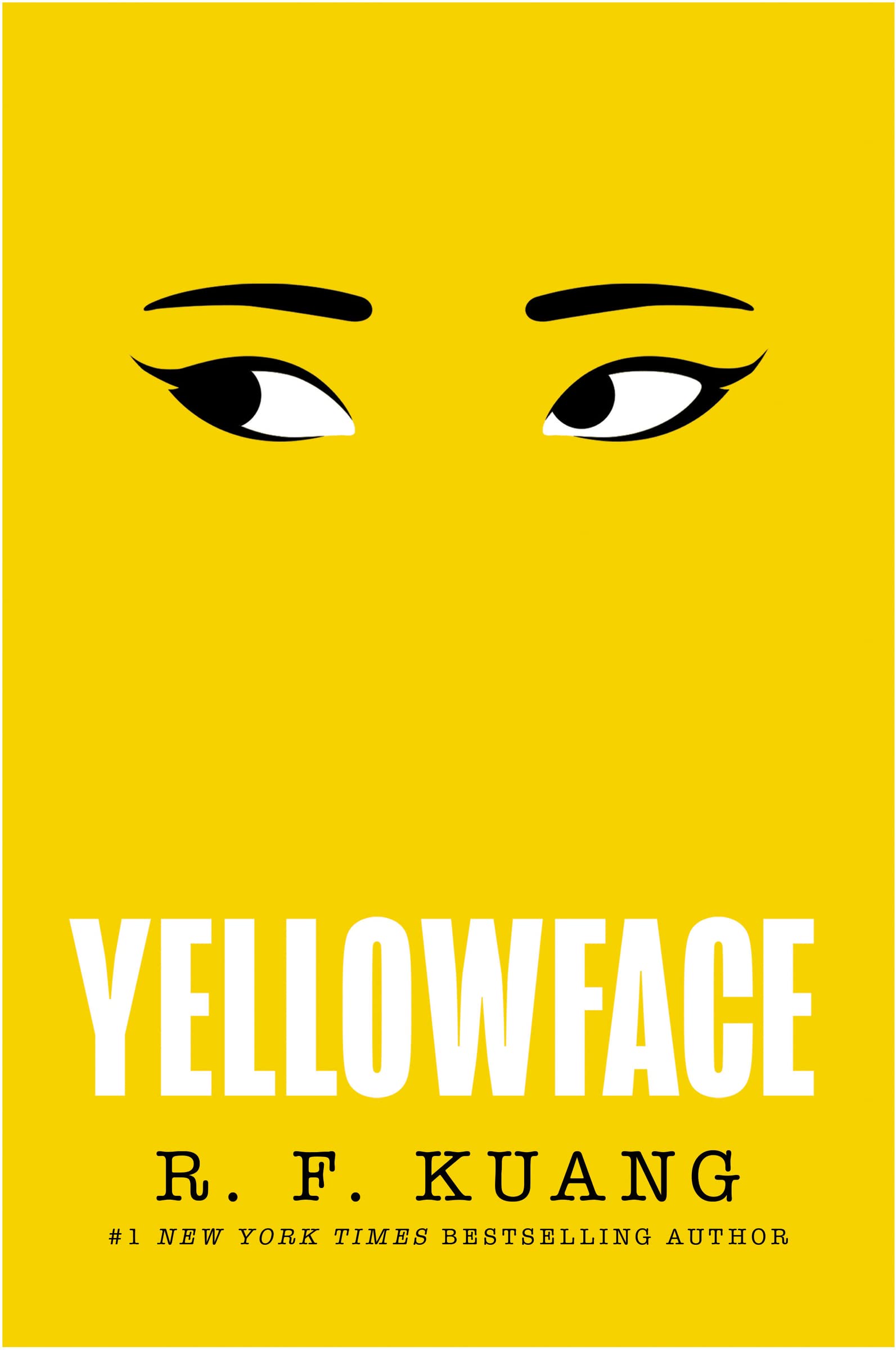
Rebecca F. Kuang lights a match, and the literary world explodes! Her new novel, Yellowface, takes on issues of racism, cultural appropriation, cancel culture, and identity politics. My thanks go to Net Galley and William Morrow for the review copy; this book is for sale now.
Our protagonist is Juniper Hayward, a struggling writer. June’s longtime friend, Athena Liu, is spectacularly successful, and though June tries not to be bitter, Athena is a bit oblivious to June’s distress, and so although June likes her, she also kind of hates her. Then one day, as the two of them are discussing Athena’s newly completed masterpiece, which took a decade to create and has been seen by no one yet, Athena chokes to death on a bit of food. June employs the Heimlich maneuver, but it doesn’t work. Now Athena is dead, and June has in her possession the unpublished manuscript.
What comes next makes my jaw drop! June leaves with the manuscript, which still needs cleaning up before it can be published, and using every lame attempt at justification one can imagine, she edits it and publishes it under her own name. She rationalizes:
“The truth is fluid. There is always another way to spin the story, another wrench to throw into the narrative. I have learned this now, if nothing else…My only sin is loving literature too much.”
To make matters worse, her publisher suggests she use her middle name, Song, as a pen name. (Oh, snap! There’s already a mystery series that stars Juniper Song, though this doesn’t make it into the novel.) The book is a brilliant success, but during her book tour, audiences cannot help noticing that June is, well, Caucasian.
Man your battle stations!
Initially, June seems like a decent enough person that has made one self-serving mistake, but as the narrative unfolds, her judgment, behavior, and moral character deteriorate. The suspense is thick and absorbing as I wait to see just what will happen next.
In places, this story is drop dead funny.
I recommend this book to those that love to see good fiction based on current events.
Pulitzer Prize finalist Matthew Hongoltz-Hetling takes on the weird world of alternative medicine and the medical freedom movement in his new book, If It Sounds Like a Quack. My thanks go to Net Galley and PublicAffairs for the review copy. This book is available to the public right now.
The fact is, I have—or I had—no particular interest in alternative medicine, but I had read Hongoltz-Hetling’s last book, A Libertarian Walks Into a Bear, which was well researched, well written, and most importantly, completely hilarious. I have reviewed over 800 books, but the number of those that I later purchased is smaller than 10; yet I bought that book to give as a Christmas gift. So when I saw that he had another book available, I didn’t hesitate. And I wasn’t disappointed.
The book describes the bizarre programs and treatments espoused by six individuals: Larry Lytle, Toby McAdam, Robert O. Young, Alicja Kolyszko, Dale and Leilani Neumann, and The Alien. The seventh player in each section is America, and that’s where we see what U.S. laws say, and what enforcement, if any, comes down on these snake oil salesmen.
The opening section, the first of four, introduces each of these players and explains what led to them going into the businesses they have chosen. Among the various One True Cures are a laser salesman, a leech peddler, faith healers, a supplement seller, and a Mormon missionary that resurrects a long-dead theory about germs. There’s also a pair that develops a health drink; one of them is human, and one is not.
The author suggests that the success of these characters—and some of them have become wealthy beyond belief—has a good deal to do with the state of standard medical care in America. Nobody trusts Big Pharma. The disparity of what treatments we can expect is so great that in one New York hospital, there’s a wait time in the ER of nearly 6 hours for most people, whereas the wealthy can get a private room with high thread count sheets and a butler. One can see why many people conclude that anything must be better than this; yet, they are mistaken.
Apart from his sterling research and documentation, and his clear, conversational tone that at times caused me to forget, momentarily, that I was reading nonfiction, the thing that sets Hongoltz-Hetling apart from others is his ability to shift seamlessly from prose that is falling-down-funny, to that which is not only serious, but tragic, without ever breaking the boundaries of good taste. Because he did it so brilliantly in his last book, I watched for it this time—and I still couldn’t catch the segue way from one to the other.
Because I had fallen behind in my nonfiction reviews, I checked out the audio version from Seattle Bibliocommons and listened to it while I watered my plants. It is very well done, and I had no problem following the thread. The only downside is that the printed version has some humorous puns by way of spelling that the listener misses.
One way or the other, get this book and read it, even if the topic isn’t inside your usual field of interest. Highly recommended to everyone.
I read Kelly Barnhill’s The Ogress and the Orphans, and I loved everything about it, so I was pumped when I saw she’d published another book last fall. I was disappointed not to get the galley, but I pulled my socks up and got in line at Seattle Bibliocommons. I was able to get the audio version, and narrators Kimberly Farr and Mark Bramhall do an outstanding job, so perhaps it was for the best. This book is for sale now, and it is a true delight.
The story is set in the American Midwest during the 1950s, a time known for its stifling repression of women. Some women can take it; others turn into dragons. It’s not always by conscious choice; when you’ve had enough, you’ve had enough.
The tale centers on one family, with a mother, father, daughter Alex, and the devoted Aunt Marla, who visits frequently with her adorable baby, Beatrice. Marla is a physically strong and imposing woman, and she raises eyebrows by sometimes showing up in overalls instead of a dress or skirt. The most important person in her life is her sister, a gifted mathematician whose talents are withering away while she focuses on making the perfect pot roast, getting tough stains out of the laundry, and creating endless patterns in her knitting.
Alex is the narrator for most of the story, with the occasional change to the points of view of various bewildered men that live locally. It is the characters here that make this an outstanding story rather than a manifesto. Alex has so many questions as a child, and as she grows up, she struggles to absorb the predominant values of the time, which seem unfair to her. She wants to be a good daughter and play by the rules, but so many of them baffle her, and we feel that struggle with her. For reasons that I won’t share, little Bea comes to live with Alex’s family, and we see Alex try to help raise Bea to be responsible and obey all of the requirements of the time, whether written or unwritten, but Bea struggles with them even more than Alex has, and because of this, Alex is forced to think critically about the things she’s been sweeping under the rug in order to get along. And ultimately, Alex learns the lesson that all parents and older siblings face to some degree, that to help a child grow, we must let go.
Teachers and librarians must especially love this book.
I have read a few unfriendly reviews that insist that this message has already been conveyed by The Stepford Wives. I loved the Stepford Wives, too, but seriously, are we saying that once a novelist drives home a point, that’s it, and nobody else can have a go at it? If it comes down to it, I’d take this novel over the other anyway, for nuance and character development. My favorite grumpy review asks why a dragon needs a purse! I ask you, would you be the one to take that dragon’s purse from her?
I love this book with all my fiery heart, and I highly recommend it to feminists, and to those that love us.
This charming cozy mystery, set in Paris during the postwar years, had me at hello. Tabitha is an American expat, and her best friend, Julia Child, is teaching her how to cook. But one evening, during one of the Childs’s many soirees, a woman is murdered…and the knife in question came from Julia’s kitchen! To make matters even worse, the victim was carrying a card with Tabitha’s name and address on it when she was found. For some young women, this would be a wakeup call, and the morning would see them on the next available plane to Detroit; but Tabitha is made of sterner and more curious stuff, and so she begins snooping.
My thanks go to Net Galley and Kensington Books for the review copy; this book is for sale now.
To cope with the horror of the previous night’s events, Julia is roasting a ham. “I just had to take my mind off everything. Can you even believe it, Tabs? Someone murdered a woman in this building—with my knife! That means they had to have been in my kitchen! This kitchen!”
Like many an amateur sleuth in other mysteries, Tabitha begins poking around. Sometimes she has smart ideas, and at other times she is breathtakingly dense, but there is never a time that I am thinking about the author rather than the protagonist, and that means that I believe the character. There are some familiar tropes and the occasional cliche: “She knew too much!” But it never becomes a problem, possibly because this is a novel that doesn’t take itself too seriously. Now and then the author breaks down the fifth wall, or nearly so. For example, Tabitha tells us that she knows what to do because she has read plenty of Nancy Drew mysteries.
The solution to this whodunit is fairly transparent, and I am able to predict the solution, along with the conclusion of the additional thread of incipient romance early in the book, but the whole thing is so adorable that I never become annoyed. “Just like an Agatha Christie novel—all the questions answered at the end, and the villain is caught, and everyone else is happy.”
Because I had fallen behind, I supplemented my review copy with the audio version, obtained from Seattle Bibliocommons, and narrator Polly Lee does a brilliant imitation of Julia Child! In fact, all of the passages involving Julia are brilliant, and that is my favorite aspect of this story.
Sometimes an author manages to step on multiple pet peeves of mine, and yet I emerge pleasantly entertained anyway, and that’s what has happened here. This is light reading, but it isn’t insipid. I look forward to reading the next in this lovely new series. Recommended to cozy readers.
Susan Isaacs has been writing bestsellers since the late 1970s, and she’s hilarious! I’ve been a fan since then. During that earlier time, a period of third wave feminism, her tales often featured rotten husbands and ex-husbands reaping what they’d sown. Her creativity and trademark snark have always kept me running back for more. Her new novel, Bad, Bad Seymour Brown is the second in the Corie Geller detective series, and it’s deeply satisfying. My thanks go to Net Galley and Grove Atlantic for the review copy. This book is for sale now.
Seymour Brown was an accountant for the Russian mob. “I’ve never heard of a violent accountant before,” my mom observed. “At worst, they’re a little pissy.” But by all accounts, Seymour was a rotten guy. “He made regular bad look good.” Bad to everyone, that is, except his five year old daughter April, his only child, for whom the sun rose and fell. But Seymour’s family was tucked away for the night when an unknown assailant came and burned the house to the ground with the Browns inside it. Happily, April made it out the window alive. The case was never solved.
Now April is an adult, a professor in film studies. She’s put her past behind her, and now, all of a sudden—someone is trying to kill her! She contacts the detective that was assigned to the murder investigation; he’s retired now, and he is Corie Geller’s father.
All of the things that I love about Isaacs’s work are here in abundance. The story is full of feminist moxie—Geller isn’t an assistant to her father, but rather retired from the FBI in order to raise her stepdaughter—she is his partner in this new investigation, and as it happens, in the new detective agency they’ve begun. But another thing I’ve always loved about Isaacs’s prose is her trademark snark, and I snickered and chortled all the way through this engaging novel. The pages flew by, and I found myself looking for extra reading time when I could sneak off to plunge in once more. Susan Isaacs writes the most creative figurative language I’ve seen anywhere. She’s funny as hell.
You can read this book as a stand-alone, but I’ll tell you right now, once you read the second, you’ll want to read the first one, Takes One to Know One also.
Highly recommended, particularly to feminist boomers.
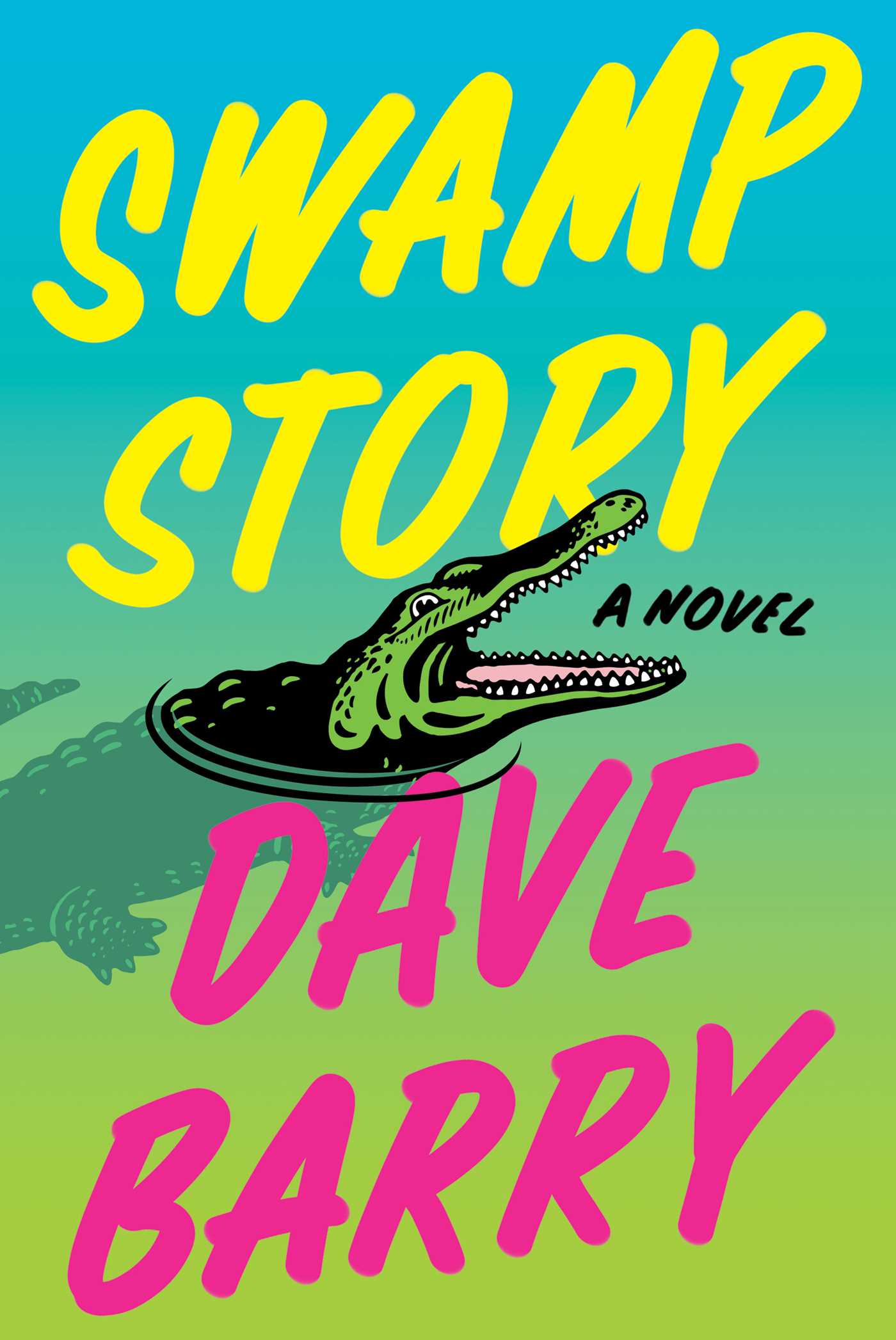
Dave Barry’s new novel, Swamp Story, should come with a warning label: Danger. Do not read in area where explosive laughter is not permitted. Fans of Barry’s will be pleased to hear that this is possibly the best thing he’s ever written. Readers new to Barry will want to read more. This book will be available to the public May 2, 2023.
My thanks go to Net Galley and Simon and Schuster for the invitation to read and review.
Our protagonist is Jesse, a lovely person that has made a huge mistake. She feel hard for Slater, a young man with a smokin’ hot body, a limited brain, and a solipsistic world view. Now she’s stuck in a cabin in the Everglades with him and his camera wielding buddy Kark, and oh yes—their baby, Willa; not to mention all of the flora and fauna that live here:
“Kark! You need to get this!”
“What?” said a voice, as hoarse as Slater’s, maybe hoarser.
“Big fucking snake,” said Slater. “I mean big.”
The snake slid forward another two feet, directly toward Jesse and Willa. Jesse saw that she now no longer had the option of even trying to run past it.
“Slater!” she said, trying to keep the panic out of her voice, not wanting Willa to pick up on it.
Slater held up his hands in a Calm down gesture.
“It’s cool,” he said. “This’ll be good. Good footage.”
“Good footage?” said Jesse. “Are you—”
“Goddammit, Kark,” yelled Slater, “get the camera out here!”
“OKOKOK,” said Kark, emerging from the cabin, holding the video camera. ” Fuck. The battery’s dead.”
Things appear to improve for Jesse when she stumbles across a cache of gold bars hidden in the glades, but this proves to be a mixed blessing, as some truly bad men learn of her good fortune and seek to take it from her, using any means necessary. However, the first such men, Billy and Duck, are not only evil, but also hilariously bumbling at times. And then, of course, there are the others.
Meanwhile, the owner of Bartle Brothers Bait and Beer decides to give his languishing business a shot in the arm by manufacturing an internet hoax. The Everglades Melon Monster is a sketchy, low budget creation whose star is an inebriated fellow wearing a Dora the Explorer head, and yet, somehow it works. Now it seems that everyone is descending on the Everglades, and almost every person that arrives is “batshit crazy.”
I’m not telling you how this thing ends; you’ll need the book for that. Don’t wait for the movie. You can thank me later! As for me, I’m off to order a Bartle Brothers Bait and Beer tee shirt.
4.5 stars, rounded upward. My thanks go to Net Galley, Henry Holt Publishers, and Macmillan Audio for the review copies. This magnificently quirky novel is for sale now.
Julian Kunstler is kind of a mess. He’s a twenty-something New Yorker whose girlfriend has just dumped him. He has no job, and he doesn’t want one; at least, not the low-paying, entry-level variety of jobs for which he is qualified. He takes himself home to his parents who have been paying his way, confident that they will understand his plight and increase his allowance. Instead, he hits a wall. What are your plans for the future, Julian? (None.) What do you plan to do for money? (Get it from you.) Just as a dramatic situation has begun to unfold, they hear from his 93 year old grandmother, Mamie, who lives in Los Angeles. She wants him to come to stay with her awhile; she needs assistance. He’s not so sure that he wants to go, but when his parents insist, he gets on that plane. Once there, the pandemic strikes, and he is trapped in lockdown with his grandmother and her elderly companion, Agatha.
Mamie has always been fond of Julian, and although she does need a driver for doctor appointments and the like, what she wants, more than anything, is to tell her life story. Most of it, anyway. It begins in Austria, as Jewish artists like her father, a successful composer, are being pushed out of public life by the Nazis. (Here, I emit a small moan; I am heartily sick of Holocaust stories. Happily, we don’t stay there long, and this story is worth it.) She goes on to describe the shock she experiences in suddenly being transplanted into a completely different climate, language, and culture, and much of Mamie’s story is droll. And Julian, who never would have sat still for these tales had they come from his parents, listens. At first, he listens impatiently, assisted by Mamie’s generous liquor collection. As time goes on, he begins to listen with greater patience and understanding. And by the end of a year’s time, he listens with genuine interest. His own exile from New York is pale, after all, in comparison to the exile his predecessors endured.
The most dynamic character is, of course, Julian, but through Mamie’s stories, we see how life has already changed her. Agatha is enigmatic until the book is nearly over, and I love what Cline does with her, too.
If I were to change one thing, I would edit down the material about the genius composer friend that emigrates from Austria and is close to the family. This reviewer was a music major once upon a time, and if this part of the narrative is a bit much for me, then probably many others will feel the same. Of course, if the reader comes to the book with a deep interest in Schoenberg, then it may prove quite satisfying.
I am fortunate to have access to both the digital print galley and the audio version, and reader Jesse Vilinsky is hands down the funniest, most skillful voice actor I have ever had the pleasure to hear. Cline’s book is very good, but in the hands of Vilinsky, it is infinitely better. Her interpretations of Mamie and Julian are spot on, hilarious at times, moving at others. The way she voices Agatha is absolute comic genius!
For those that love quirky humor and historical fiction, this book is highly recommended.






 Seattle Book Mama